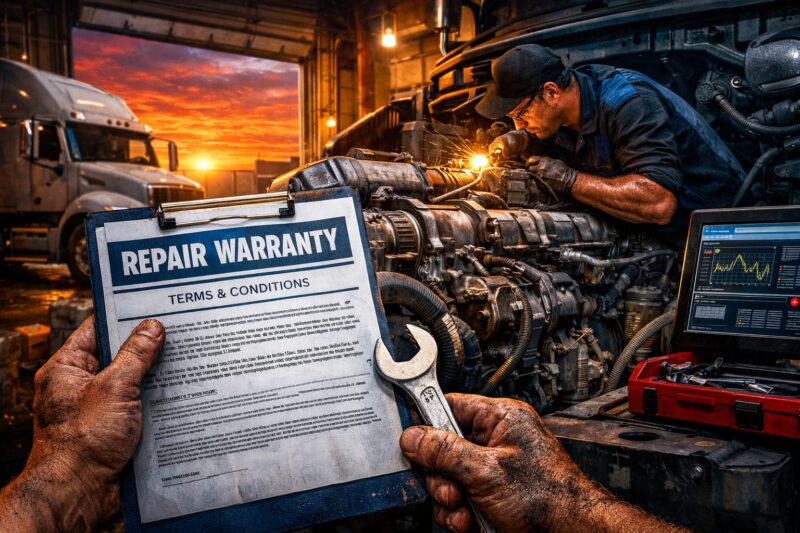
Knowing what a diesel engine repair warranty covers can prevent surprise bills after a breakdown. In plain terms, it is a promise from a repair shop to redo certain work, replace certain parts, or both, if the same issue comes back. It typically applies after the repair is completed, but the rules vary by shop and by the written terms. Understanding diesel repair warranties helps you avoid gaps in coverage and plan your next steps before you authorize repairs. If you searched for diesel repair warranties, you likely want to prevent “it should be covered” moments after the fact.
Most warranty disputes do not come down to goodwill. They come down to coverage scope, causation, and documentation. For example, “repair warranty” usually covers the work and parts the shop installed. A “vehicle warranty” from the manufacturer covers defects in the engine or systems. You need to understand both, because they do not work the same way. This guide walks through what to ask, what to document, and how to protect your claim.
What a diesel engine repair warranty covers and what it usually excludes
A diesel engine repair warranty usually covers the labor and parts related to the specific repair the shop performed. Many shops offer some combination of workmanship coverage and part replacement coverage. However, coverage is limited to the repair scope written on your repair order and warranty terms.
Labor coverage means the shop will redo the work if it fails again for a covered reason. Parts coverage means the shop will replace parts they supplied, or refund their cost, depending on the policy. Coverage may also include certain diagnostic time if the original cause was not correctly corrected. Still, the warranty is not a blank check for any symptom that appears later.
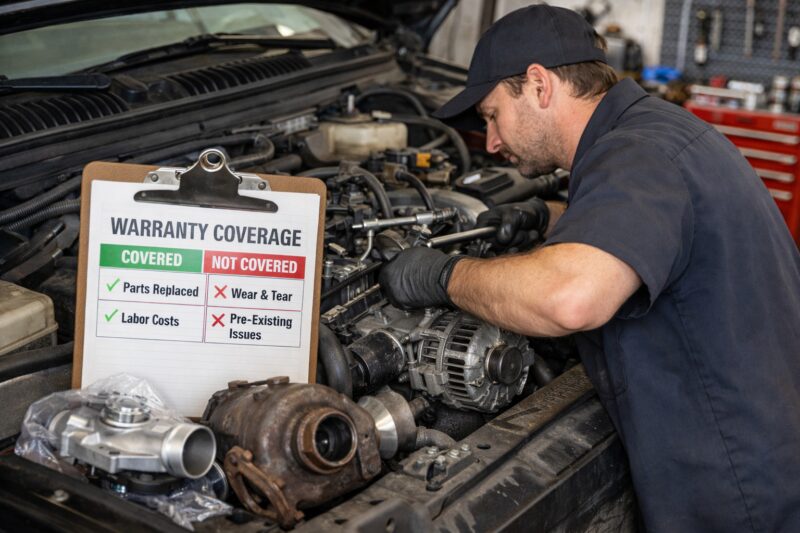
Most excluded items fall into predictable categories. For instance, pre-existing conditions often are not covered if the shop did not cause the original problem. Consumables and wear items may be excluded, such as filters or belts, because they do not fail the same way as repaired components. Improper fuel, incorrect fluid levels, or ignoring warning lights can also limit coverage.
Time and mileage or hour limits matter too. A shop might set a window like 12 months or a specific mileage range, measured from the invoice or repair completion date. Some policies use engine hours for certain equipment. A key nuance is that exclusions can be tied to root-cause findings. If a later failure is traced to fuel contamination or neglect, the shop may deny coverage even when symptoms look similar.
A common mistake is assuming “the same code” guarantees coverage. If the code returns for a different underlying cause, the warranty may apply only to the portion tied to the original repair scope. This is why good paperwork and diagnostic documentation matter before you need to file a claim.
How warranties start, how claims are triggered, and what notice rules apply
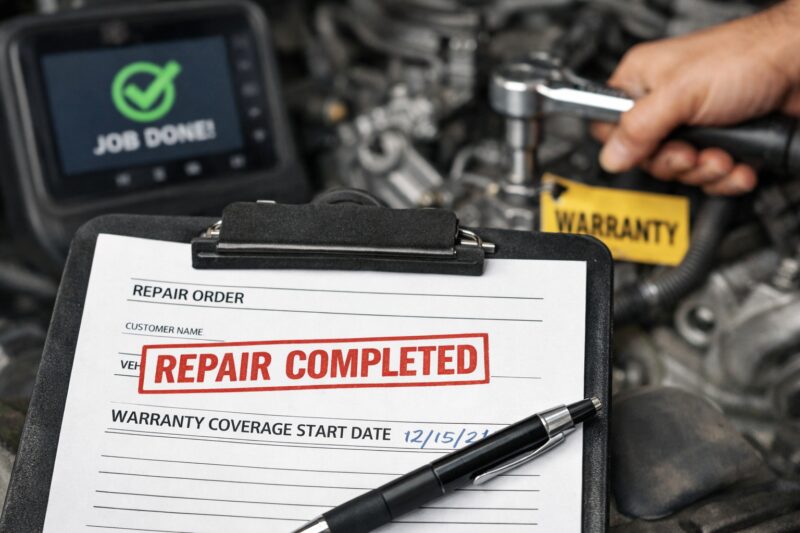
Warranty coverage usually starts when the shop completes the repair, not when the original failure first appears. In many cases, the policy uses the repair completion date or the invoice date. Because shops vary, your repair order should tell you exactly which date starts the clock.
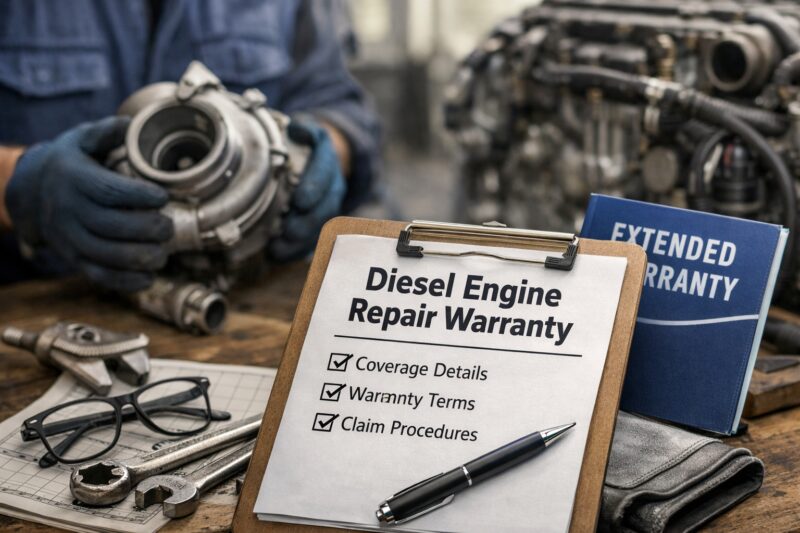
Claims are triggered when you report the issue promptly and allow the shop to inspect it. Most shops expect you to stop driving if the vehicle is unsafe. If you can drive safely, you still should contact the shop without delay. In practice, “reasonable notice” often means you call as soon as the failure happens again.
The claim workflow usually follows a simple sequence. You contact the shop, provide your paperwork, and schedule an inspection. Then the shop retests and may perform additional diagnostics to confirm causation. If the shop needs to remove and re-test parts, they will usually require you to bring the vehicle to their facility or allow inspection on-site where offered.
Approval rules also affect outcomes. For example, many shops require authorization before re-diagnosing or tearing into systems again. They may also require you to return failed parts if the shop provided them. If you replaced parts elsewhere, the shop may need proof of what was installed and when.
A deep nuance is causation disputes. A warranty claim often depends on why the failure happened. If the shop determines a different root cause, it may cover only the work that directly matches the original repair. Strong diesel repair warranties claims are usually built on consistent troubleshooting, not just matching symptoms.
How to choose a diesel repair shop warranty without guessing
You should evaluate a shop warranty before you approve the repair. That means you compare the written terms, not the promises made on the phone. A good policy clearly states what is covered and how to make a claim.
Start by asking what the warranty covers: labor, parts, or both. Then ask what is covered under each item. For example, parts coverage might apply only to parts the shop supplied. Labor coverage might apply only to the specific repair operation, not adjacent work.
Next, review the warranty on diagnostic work. Many shops charge for diagnostics, then apply a credit only under certain conditions. If the policy says “diagnosis is not covered,” it usually means the shop will not refund investigative time if causation is unclear. That is a tradeoff you should understand before you authorize any extra testing.
Then confirm how parts are sourced. Policies may specify OEM parts, approved equivalents, or remanufactured components. Warranty coverage can change if you choose a different part type without shop approval. For example, a shop may honor a warranty only when you install the specified part grade and matching fluids.
A common misconception is that “longer coverage” always means better coverage. A longer warranty with many exclusions can be less valuable than a shorter warranty with clear scope. Also look for conditional terms that tie coverage to specific fluids, filter intervals, or maintenance steps. Using a simple “off-road repair checklist checklist” approach can help you verify what the shop expects before you sign anything.
Protecting a warranty claim after repairs with maintenance and follow-up steps
After repairs, your actions can decide whether the warranty stays valid. Shops often deny claims when maintenance or operating conditions differ from what caused the failure. That is why you should follow the recommended service intervals and fluid specifications closely.
Fuel quality and correct fluids matter for diesel systems. If the vehicle uses DEF or urea, correct handling is critical. Use the recommended grade and keep it clean. If the vehicle uses filters, change them on schedule and keep receipts. Shops may ask for proof, because “I remember changing it” does not always help.
Driving and operating habits can also influence outcomes. Heavy towing, extended idling, and extreme heat cycles can stress repaired components. If the shop warned you about a condition, ignoring it can create a causation gap. In addition, keep an eye on warning lights. If a light returns, report it instead of continuing to drive until damage spreads.
When the symptom returns, document everything before you call. Take photos of leaks, monitor gauge behavior, and note when the issue started. Then provide your invoice and notes to the shop. This is often where “maintenance records for warranty eligibility” makes the difference between fast approval and a slow denial.
If you face a repeat repair pattern, return to the original shop when possible. They are best positioned to confirm root cause and compare new readings to the original work. If you must switch shops, request your diagnostic documentation and repair order in writing first. That helps prevent the “we cannot verify what was done” problem.
Common misunderstandings that lead to denied or limited diesel repair warranty claims
Many warranty denials come from mismatched expectations. One major misconception is that “if it fails again, it is automatically covered.” Most policies require a covered cause and a match to the repair scope. Another misconception is that labor is always free. Some policies cover labor only under narrow conditions.
Another common misunderstanding is that warranty coverage applies to any symptom that looks related. However, symptoms can share triggers. For example, a power loss can result from different fuel system problems, turbo issues, or electronic faults. If the shop finds a different root cause than the original repair, coverage can be limited.
Diagnostics are also misunderstood. A paid diagnostic often proves what is wrong, but it does not always qualify as warranty credit. Shops may refund diagnostics only if they meet specific policy steps. They might also require the vehicle to be brought back before clearing codes or making changes that complicate testing.
The “changed diagnosis” issue is where many claims break down. If later tests show an additional failed component, the policy might cover only the portion tied to the original repair work. If the new fault is downstream or upstream of the repaired component, causation can get complex quickly. In those situations, “diagnostic documentation for warranty claims” is key, because it shows what was found, what was ruled out, and what was repaired.
Edge cases also matter. For instance, code clearing before reinspection can remove useful evidence. Tampering with sensors or unplugging modules can also affect causation. If you lack records, the shop may treat the issue as unverified and limited.
Warranty vs. service plans vs. goodwill when you want predictable protection
Shop repair warranties are not the same as service plans, and goodwill is not a guarantee. A repair warranty is usually a written obligation tied to specific work and parts. A service plan is a broader product, often with its own eligibility rules. Goodwill is discretionary, so it depends on the shop’s judgment and can change at any time.
When comparing options, focus on scope and friction. A shop warranty often requires you to return to the provider for inspection. Service plans can be more flexible, but may still impose conditions and claim limits. Parts-only guarantees may cover replacement costs but not the labor needed to correct related faults.
Also consider how each option handles repeat repairs and causation disputes. Some policies cover repeat failures only if the original fix was properly completed and verified. Others may require proof of maintenance and correct fuel or fluid usage. As a result, a plan that looks generous on paper may still leave gaps.
Here is a simple comparison to help you think through tradeoffs before you authorize diesel work. Use this as a starting point, and then confirm details in writing.
| Option | What it typically covers | Common limits | How to keep coverage realistic |
|---|---|---|---|
| Shop repair warranty | Labor and parts tied to the repaired scope | Exclusions, causation limits, return-to-shop rules | Keep repair order, request written warranty terms |
| Service plan | Broader coverage depending on plan design | Eligibility rules, covered component definitions | Follow maintenance schedule and document compliance |
| Parts-only guarantee | Replacement of specified parts | Labor often excluded, diagnostic fees usually excluded | Ask what labor is included for rework |
| Goodwill offer | Discretionary assistance after review | No binding terms, may not cover all costs | Use it as bonus, not as your coverage plan |
Finally, aim for repeat repair alignment. Choose providers with structured re-test and clear claim steps, not vague promises. That matters most after multiple failures or when the diagnosis evolves.
Edge cases in diesel repair warranties: repeat failures, multi-component jobs, and shop changes
Edge cases often decide whether you get the outcome you expect. Repeat failures are the first big area. Many warranties treat early rework differently from later wear, but the exact rule depends on policy language and claim timing.
If a repair includes multiple linked components, the warranty may apply only to the part of the job that caused the failure. For example, a job that touches both an actuator and its control strategy might later show a different root cause. In that situation, coverage may follow the scope that the shop can prove.
Shop-to-shop transitions also create practical barriers. If you move the vehicle or use another provider, the original shop may require you to return for warranty work. A second shop can perform diagnostics, but it may be hard to connect findings to the original repair without full documentation. That is why you should request a complete repair order and diagnostic results when you change locations.
Upgrades and programming changes can also matter. If the shop required a specific approved procedure for calibration or reprogramming, your later changes might affect eligibility. Even if the hardware is repaired correctly, a calibration mismatch could lead to renewed faults that the shop did not cause.
A deeper nuance is mixed responsibility. A warranty may cover labor and parts within its direct scope. It may not cover “upstream” or “downstream” damage that was not caused by the original repair work. That is common in diesel systems with interconnected fuel, air, and emission components.
How warranty enforcement works in the United States: evidence, contract terms, and practical barriers
In the United States, warranty enforcement typically depends on the written contract terms and the evidence you can provide. Even when you feel the claim is obvious, the outcome often hinges on documented workmanship and causation. This is true for shop repair warranties because they are contract-based promises.
Therefore, the best approach is procedural and evidence-focused. Keep your repair order, warranty policy sheet, and all related invoices. If you need warranty reinspection, ask for it in writing or confirm the appointment details by email. Shops may treat phone calls as informal, even when you made the call quickly.
Shipping parts and towing arrangements can also affect outcomes. If the shop requires return of failed parts, delays in shipping can stall your claim. If towing is unsafe, you may need to move the vehicle only to safe locations and then document the circumstances. These steps can feel annoying, but they reduce “procedure” disputes.
Also recognize that consumer protection may help in some disputes, but it does not replace documentation. When the shop argues that the failure came from fuel contamination or neglect, you need “maintenance records for warranty eligibility” to show you did what you were supposed to do. In addition, you should provide “engine work warranty coverage details” so the shop and you stay aligned on scope.
In many cases, the dispute can narrow quickly once both sides see the same diagnostic documentation. That is why you should avoid clearing codes or making major changes before the inspection.
Frequently asked questions about understanding diesel engine repair warranties
What is included in a diesel engine repair warranty—labor, parts, or both?
Most diesel engine repair warranties include labor coverage and parts coverage, but not always both. Labor coverage usually applies to the specific repair operation the shop performed. Parts coverage often applies only to parts the shop supplied, and sometimes only to parts tied to the failure.
How long do diesel repair warranties last after the repair is completed?
Warranties usually last for a stated time and a stated mileage or hour limit. The clock often starts at the repair completion date or invoice date, depending on the policy. Your paperwork should list the exact start point and the exact end point.
Does a diesel repair warranty cover diagnostic fees if the problem returns?
It depends on the shop’s policy language. Many shops charge diagnosis separately and do not refund it, even if the later failure relates. Some policies provide a diagnostic credit only when the original repair and symptoms match their claim process.
What happens if the technician’s diagnosis changes after additional testing?
If the later testing shows a different root cause, coverage may apply only to the portion tied to the original repair scope. The shop typically documents what was found and what changed during testing. That is why you should request written diagnostic results and “diagnostic documentation for warranty claims.”
Can I use my diesel repair warranty if I drive the vehicle before contacting the shop?
You should contact the shop promptly, especially if warning lights appear or the vehicle runs roughly. If driving makes the condition worse, it can complicate causation. Continuing to drive can lead to a dispute, because the shop may argue additional damage came from continued operation.
Are pre-existing issues covered under a diesel repair warranty?
Often, pre-existing issues are excluded unless the shop’s inspection or repair order shows the issue was already addressed. Shops may compare the original diagnosis findings to what is failing now. If they determine the issue existed before the repair and was not corrected, coverage may be limited.
Will a diesel repair warranty be voided if I use aftermarket parts or fluids?
Some policies become conditional when you use non-specified parts or non-approved fluids. Even when coverage is not fully voided, the shop may limit it if the alternate components contributed to the failure. Keeping receipts and following the shop’s required maintenance helps you stay within eligibility.
What documentation should I keep to successfully file a diesel repair warranty claim?
Keep your repair order, warranty terms, and any paid invoices. Also save diagnostic printouts, photos, and maintenance records. When possible, include evidence like fuel or fluid receipts that show you followed the required service steps.
Do I have to return to the original shop for warranty work?
Many warranties require you to return to the provider for inspection and rework. Some shops may allow inspection at another location, but the claim process usually still requires their review. Read the policy and ask how they handle warranty work when travel is not possible.
Can a warranty cover repeated failures caused by contamination or maintenance problems?
Coverage can be limited when a later failure is traced to contamination or missed maintenance. Even if symptoms match, the shop may argue causation did not come from workmanship. Strong evidence from “maintenance records for warranty eligibility” often determines how that claim is decided.
Understanding diesel engine repair warranties is about more than finding a warranty term. You need to know what the shop will cover, what it excludes, and how the claim is triggered. Before repairs, ask for clear written terms and confirm the coverage scope for labor and parts. Then track the timelines carefully, and follow the maintenance rules that keep eligibility realistic.
In most disputes, the winner is the party with aligned documentation. Written terms matter, but evidence matters more. Save your invoices, keep your diagnostic documentation, and maintain consistent service records after the repair. If a repeat issue occurs, return quickly and request reinspection so the shop can verify causation.
Finally, compare your protection options before you need them. Decide what you want from engine work warranty coverage details and choose a provider that offers transparent claim steps. If you are weighing options, review the “Warranty vs. alternatives: how to decide between repair warranty, service plans, and goodwill” tradeoffs table and ask the shop to explain the “what counts” rules in plain language. Save your paperwork, ask warranty-specific questions upfront, and consult a qualified second opinion if a dispute arises.
Updated September 2026