
If your car needs urgent help in Stayton, Oregon, you should be able to get a clear diagnosis and a trustworthy repair plan without guesswork. When you’re searching for Auto Repair Stayton Oregon, you want three things first: a disciplined intake, transparent pricing, and verification before the keys change hands. You also want realistic expectations for scheduling and turnaround, especially when warning lights, strange noises, or a no-start situation show up suddenly.
This guide walks you through what “fast, reliable service” should look like in real life. You’ll learn how a good shop captures your symptoms, narrows the cause with the right checks, and then repairs and verifies the fix. Along the way, you’ll get practical questions to ask and red flags to avoid, so you can compare options around Salem and Stayton with confidence.
How drivers in Stayton, OR get trustworthy repairs quickly
Reliable auto repair starts with fast triage, not rushed parts swapping. A dependable shop treats warning lights, no-start issues, overheating concerns, and major drivability problems as priorities. As a result, you spend less time guessing and more time getting answers you can act on.
In practical terms, “fast” often means the shop can move your vehicle into a diagnostic queue quickly. Then the technician follows a staged plan: inspect first, confirm the concern, and only then recommend repairs. This approach matters because many car problems share symptoms. For example, a hesitation can come from fuel delivery, ignition, air intake leaks, or even sensor faults.
You can also speed up the process by giving the right inputs. Bring a short timeline of when the problem started. Mention whether it happens on cold starts, after rain, or only when climbing hills toward the Salem area. If you have photos or a scan printout, bring them too. Even a simple description like “rattle when braking” helps narrow the diagnostic path.
Keep in mind the difference between quick diagnosis and quick final repair. Parts availability, safety checks, and approval steps affect scheduling. Sometimes the shop can confirm the root cause the same day, but the repair waits for parts to arrive. Meanwhile, a good shop will explain that sequence clearly and give you a decision point before work expands.
The intake-to-repair workflow your car should go through in Stayton, Oregon
Your vehicle’s repair journey should follow a predictable workflow from first contact to final verification. A strong intake process captures your symptoms, reviews recent maintenance, and sets expectations for the diagnostic plan. Then it turns that information into a repair estimate you can approve with confidence.
Typically, the process looks like this. First, the shop records your concerns and performs an initial inspection based on those symptoms. Next, it builds a diagnostic plan tied to likely systems, such as battery and charging when starting is weak, or brakes and suspension when you feel vibration. Then it communicates a repair estimate with options before doing the work.
Pricing transparency should include line-item labor and parts when possible. Also, it should state what the shop will do first and what might come later after inspection. In addition, a reputable shop documents changes if it finds related issues once disassembly begins. That protects you from “surprise” costs and helps prevent repeat visits.
Diagnosis also means more than reading a code. Codes point to a subsystem, but they do not always reveal the cause. Therefore, a careful shop checks related components, test results, and real-world conditions. For example, a warning light can store due to a loose gas cap once, but it may return due to a real leak. The shop should confirm which scenario you have.
Finally, verification should be part of the job, not an afterthought. Look for steps like a road test, recheck with a scan tool, and basic inspection of fluid levels and leaks. When verification is skipped, the risk of “comeback” repairs rises, especially with intermittent faults.
Common problems we see in Stayton—and how reliable shops diagnose them
Most drivers recognize symptoms before they understand the cause. A reliable shop will match your symptom pattern to the correct diagnostic pathway. Then it confirms the cause with targeted checks instead of guessing.

Strange noises are a common example. A rattle may be a loose heat shield, worn mounts, a belt issue, or suspension hardware play. Meanwhile, a squeal can point to brake pad wear or moisture on rotors. The key is that the shop listens, inspects, and tests under conditions that reproduce the noise when it’s safe.
Warning lights work similarly, but with careful context. A check engine light may store a fault related to fuel trims, ignition, emissions components, or sensor readings. However, that code alone rarely tells the full story. A dependable shop checks freeze-frame data if available, reviews how your car drives, and then tests the systems most likely to match your complaint.
For breakdowns and poor performance, the diagnostic plan should prioritize safety and drivability. If the car overheats, it should not just be “turned back on.” If the brakes feel abnormal, the shop should treat it as safety-critical first. In addition, a professional shop watches for common misdiagnosis traps, like replacing parts from a code alone or ignoring tire and ground connections that mimic electrical faults.
A customer should also ask for documentation. A printed diagnostic report, part numbers used, and notes about before-and-after measurements build trust. If the shop provides “just replace it” recommendations, ask what it tested first and what results support the decision.
What to expect for turnaround time and scheduling in mid-Willamette Valley traffic patterns
Turnaround time depends on what the shop finds, what parts are needed, and how quickly it can schedule verification. In Stayton, Oregon, many drivers connect their service needs with the Salem area commute. So appointment availability can feel tighter during busy weekdays, especially when multiple cars need safety work at once.
First-available diagnostic timing is often separate from repair completion. For urgent safety concerns like a no-start condition, overheating, or brake problems, a good shop should prioritize a triage inspection sooner. Then it follows the diagnostic plan as parts are verified and approvals are confirmed. This prevents you from waiting blindly while the issue gets worse.
Communication cadence is also part of a fast experience. You should receive updates after the initial inspection and again when the estimate is ready. If new findings appear, the shop should explain the change and get approval before continuing. Therefore, “fast” should never mean “opaque.” It should mean decisions happen with clear next steps.
Intermittent faults and seasonal effects can change timelines. Wet winters can create moisture-related sensor issues, and dry summers can reveal cooling system weaknesses under load. Fog and wildfire smoke in the region can affect airflow and visibility symptoms, which matters for diagnostic testing like filter condition checks. A shop that plans for these factors will often reduce repeat labor.
To reduce delays, come prepared. Bring maintenance receipts if you have them. Tell the shop when the problem appears, like “only after driving toward Salem” or “only on cold mornings.” Those details can shorten diagnostic time by helping the technician reproduce the fault patterns.
What to look for when comparing auto repair options around Salem and Stayton
When you compare auto repair options, focus on how each shop handles diagnosis and approvals. Price matters, but the biggest difference is risk. A cheaper repair with unclear diagnosis can lead to repeat visits and higher total cost.
Start with four common shop types you’ll see in the area. Independent local shops often deliver faster communication and flexible scheduling. Dealership service departments may provide strong manufacturer-specific diagnostics for certain models. Mobile or at-home diagnostics can help when the car cannot move, but the scope may be limited for complex repairs. Chain centers can be consistent, yet you still should confirm the diagnostic plan and warranty details.
Use a simple checklist to compare how the shop works on day one. Ask how it will confirm the root cause. Ask how it structures written estimates. Ask how it handles approvals if it finds additional issues. Also check whether the shop documents work and returns parts or old components when appropriate.
For pricing transparency signals, look for itemized estimates and clear “approval before work continues” steps. In addition, a shop should explain why each test or repair step is necessary. If the shop cannot explain the “why,” it’s hard to trust the outcome.
Here’s a practical way to choose the best fit. If the issue is safety-related, prioritize verified diagnostics and warranty support. If the concern is mainly budget-driven, still demand a controlled scope and a clear plan to avoid unnecessary parts replacement.
If you want a quick way to organize your questions, keep your checklist to ask before booking handy. It helps you compare shops in a fair way and avoids rushed decisions under stress.
Staying confident in the quality: warranty, workmanship, and verification steps
Reliable service should come with proof, not promises. A quality shop backs its work with a warranty and supports it with verification steps that reduce repeat failures. That combination is what makes “reliable” real for drivers in Stayton.
Look for warranty coverage that clearly states what’s covered. Ideally, it covers parts and labor for the repair performed. Then it should outline how long coverage lasts and what voids it, like improper maintenance or damage caused by unrelated events. While every warranty differs, the key is that the shop communicates it clearly before you pay.
Workmanship quality shows up in the details. The shop should document what was replaced, what was tested, and what was checked. In addition, verification steps should match the repair type. For example, engine-related repairs should include scan-tool rechecks when appropriate, while brake work should include inspection measurements and a controlled road test.
One nuance many drivers miss is warranty timing and documentation. Save your estimate, invoice, and any diagnostic notes. Then report symptoms quickly if something returns. If the shop sees the return as a “same issue” rather than a new complaint, the claim process often goes smoother.
Also, ask about repeat-visit handling. A shop that takes verification seriously will treat comebacks as fix opportunities, not blame games. If the shop has a clear process for reassessment, it’s easier to trust the repair outcome.
If your repair involves suspension components, it’s smart to confirm suspension repair warranty details before approving work. You’ll want to know what’s covered, how it’s verified, and how the shop handles repeat concerns.
Auto Repair Services in Stayton, OR: practical local expectations and planning
Local expectations shape your experience as much as the technical work. In Marion County, Oregon, many drivers service their vehicles with the Salem area in mind. That means scheduling demand can increase during commuter-heavy weeks, especially when multiple cars need urgent diagnostics.
Stayton weather also influences what shows up in the shop. Wet winters often bring battery strain, water intrusion concerns, and moisture-related sensor faults. Dry summers can expose cooling system weaknesses or tire wear that only shows under load. When fog or wildfire smoke affects the region, it can also worsen visibility-related complaints tied to airflow and cabin filtration.
Because of this, a good shop prepares diagnostic tests for the conditions your car experiences. It should ask whether the problem happens after rain, during cold mornings, or after longer drives. In addition, it may recommend replacing consumables like filters when airflow issues affect performance and emissions-related symptoms.
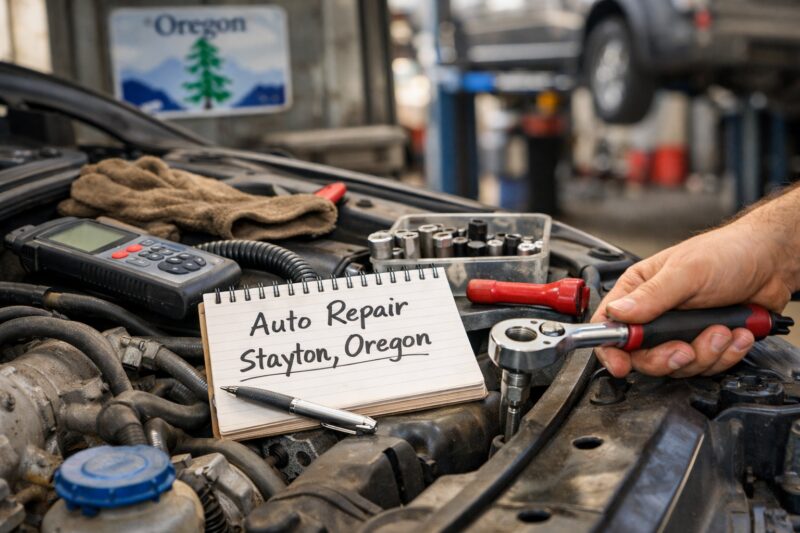
A practical example can help. A driver in Stayton may notice a “service engine soon” light after a wet commute from the Salem area. On the first day, the light may go away. However, a careful technician checks stored data, inspects related components, and verifies the fix with a road test. That staged approach reduces the risk of paying twice for the same underlying cause.
If you want to reduce back-and-forth, schedule ahead during peak project seasons. Bring photos of the warning light or the noise, plus any prior receipts from recent repairs. Also share any details about what changed recently, like new tires, recent fluid service, or a battery replacement.
When you ask for a clear plan, request the fair quote steps for repairs so you know what’s estimated first and what needs approval later. That keeps your visit aligned with a fast, reliable outcome.
Misconceptions that slow repairs or waste money in auto service
Some common beliefs make repairs take longer and cost more. The most damaging one is assuming that a warning light always means a major part failure. In many cases, a fault can be intermittent or caused by something simpler, like a loose connection or a maintenance-related issue.
Another misconception is that codes always tell the full story. A code points to where the system detected a problem, not why the problem happened. Therefore, a shop should confirm using real tests. Otherwise, you may replace a sensor that was only reporting a separate issue, like a vacuum leak or an electrical supply fluctuation.
Drivers also sometimes expect new parts to “always fix it.” Parts can fail, but a bad diagnosis is the bigger problem. When the technician skips inspection and goes straight to replacement, the repair may work briefly and then return. That leads to repeat labor and longer downtime.
Workload and approval timing can also affect speed. Some delays come from parts lead times. Others come from waiting on authorization for additional work once disassembly reveals extra wear. A reliable shop should explain those steps clearly so you can decide fast without feeling pressured.
Finally, there is the partial repair problem. Stopping after the first fix attempt can hide the root cause. A comprehensive shop reassesses the vehicle after changes and verifies the outcome with tests that match the concern you described.
If you want to avoid guesswork, ask the shop how it will communicate the diagnostic plan. Then ask how it will confirm results before billing, especially for repairs tied to complex driveability symptoms.
When parts, complexity, and intermittent faults change the plan
Some cars require a different approach because the problem itself changes over time. Electrical gremlins, sensor or charging issues, and transmission-related driveability concerns often behave intermittently. As a result, the diagnostic plan may be staged to reproduce the fault safely.
In these cases, the shop may test under specific conditions. For example, it may check battery voltage and charging system output, then retest during a road simulation. It may also inspect connectors for corrosion or looseness. Meanwhile, it will look for patterns in when symptoms happen, like after startup, during rain, or when driving at freeway speeds.
Parts availability also affects timelines and the repair approach. If a part is not in stock, the shop may order it and schedule the repair for the next available window. It might also use manufacturer or equivalent aftermarket parts, depending on your vehicle and the repair needs. In addition, substitute parts can require extra checks to confirm correct fit and function.
Customers sometimes push back by saying they do not want to pay for diagnostics. However, skipping diagnosis can cost more. A targeted diagnostic plan can prevent unnecessary replacements and shorten the total time your car spends out of service. Therefore, the best shops explain what the diagnostic work will prove, not just what it costs.
There are edge cases to expect. Warning lights may clear then return, and noises may change with temperature. Sometimes damage is only discovered after disassembly. A reliable shop communicates those findings clearly, ties them back to the original symptoms, and updates the estimate only with your approval.
If your vehicle needs a structured diagnostic workflow, you may also appreciate how a Corvallis auto repair process is often designed to reduce repeat labor through clear inspection steps and documented verification. Even if you’re booking in Stayton, the logic stays the same.
How much should auto repair in Stayton, OR cost?
Auto repair cost in Stayton varies based on the problem, how much diagnostic time is needed, and what parts the repair requires. In many cases, the shop will charge for diagnostics first, then provide a written estimate for labor and parts once it confirms the root cause. The range can shift if parts are in stock or if you need special ordering.
Transparent pricing should include a clear breakdown of what’s being replaced and why. It should also show any optional add-ons or related items found during inspection. For the most accurate total, ask for fair quote steps for repairs so you understand what’s included before you approve work.
How fast can I get auto repair service in Stayton?
Fast service usually starts with scheduling a diagnostic appointment and getting a triage inspection sooner for safety-critical issues. Typical timelines vary, but many shops can provide a diagnostic direction within the first day after intake. Then repair completion depends on parts availability and any approvals needed for additional work.
If your car has a no-start, overheating, or brake safety concern, ask about priority scheduling. In addition, provide the symptom timeline and any photos. That helps the technician narrow the cause faster.
What should I tell the mechanic when my check engine light comes on?
Tell the shop when the light appeared and what your car felt like driving at that moment. Mention whether it happens on cold start, after driving uphill, or after rain. If you have any scan tool codes or a printout, bring them along.
Also share related recent work, like battery replacement or recent fluid service. That context helps the technician avoid guessing and focus on the systems most likely to match your complaint.
Can you diagnose strange noises without guessing?
Yes, a reliable shop can diagnose noises by inspecting common failure points and testing under safe, relevant conditions. The key is matching the sound to how it changes, such as during braking, turning, or acceleration. A careful technician listens, checks wear items, and may use measurements to confirm the source.
If a shop suggests replacing parts without inspection, ask what it tested first. That question often reveals whether the diagnosis will be evidence-based.
What if the warning light turns off—can you still diagnose it?
Intermittent warning lights can still be diagnosed if the shop checks stored fault data and reconnects the symptoms to test results. The technician may also inspect related sensors and wiring for heat or moisture damage. Then it can verify the fix with a scan-tool recheck after the repair.

Because the fault can hide, the shop may use staged tests to reproduce the issue. Your symptom timeline helps a lot in this situation.
Is it better to repair immediately or wait for the next appointment?
Safety matters most. If the issue involves no-start, overheating, braking abnormalities, or severe handling concerns, you should prioritize immediate triage. If the problem is minor and the car drives normally, waiting may be reasonable depending on what the shop recommends after inspection.
When you do wait, keep notes on whether the symptoms worsen. Then call the shop if the behavior changes, especially if warning lights return.
Do you provide an estimate before starting repairs?
A reputable shop should provide an estimate before it begins repairs and should clearly separate diagnostics from repair work. First, it estimates based on what it finds during inspection. Then it may update the estimate if additional issues appear after disassembly.
Approval should be required before extra work continues. If the shop cannot provide written clarity, ask how it handles changes.
What warranty or guarantee should I expect after auto repair?
After a repair, you should expect a warranty that covers the parts and labor associated with the work performed. The warranty period and conditions vary by repair type and parts used. For example, some components may have manufacturer coverage, while labor coverage remains shop-backed.
To use the warranty smoothly, save your invoice and any diagnostic notes. If the same symptom returns, report it promptly so the shop can reassess.
How do I avoid getting overcharged or upsold for diagnostics?
To avoid overcharging, ask for the diagnostic plan and what it is meant to prove. Transparent shops explain likely systems first and then confirm with tests. They also communicate results before recommending repairs.
Also request a written estimate after diagnosis. If the shop tries to rush additional work without approval, that is a red flag.
Are repairs affected by wet winters or seasonal weather in Stayton, Oregon?
Yes, seasonal weather can affect what the shop finds and what tests it can run. Wet winters can contribute to moisture-related sensor faults and corrosion in connectors. Dry summers can reveal cooling and airflow issues under heavier loads.
In the region, fog or wildfire smoke can worsen airflow complaints, so the shop may check filters and related components. Tell the shop when symptoms happen relative to rain and temperature.
Auto Repair Stayton Oregon: Conclusion you can act on today
Fast, reliable auto repair in Stayton should feel organized and documented. You should get clear intake notes, a rigorous diagnostic plan, and a transparent estimate before approvals. Then the shop should verify the repair with tests that match your original symptoms.
As you compare options, focus on the signals that prevent repeat downtime. That means asking about turnaround expectations, warranty support, and how the shop handles comebacks. It also means checking that pricing is explained in a written, step-by-step way, not vague “trust us” promises.
If you want to move quickly, schedule a diagnostic appointment and bring symptom details, photos, and any maintenance receipts. Then ask for the diagnostic plan in plain language before you approve repairs. You’ll get the best outcome when your shop can confirm the root cause early and verify the fix before handing back your keys.
To stay in control of the process, reuse your checklist to ask before booking and request fair quote steps for repairs. If your repair relates to ride and handling components, confirm suspension repair warranty details up front.
Updated September 2026