
Professional auto diagnostics services pinpoint the real cause of a vehicle problem, then guide you to the right repair plan. In this article, we explain what “comprehensive” means in practice, so you can reduce guesswork and avoid repeat breakdowns. If you want auto diagnostics services that lead to accurate fixes, look for a shop that verifies findings with live data and targeted testing—not just code reading. Drivers usually arrive with warning lights, symptom notes, and recent repairs, which helps technicians narrow the search fast. When the process is done well, you get clearer next steps, better confidence in decisions, and documentation you can use later. In 2026, modern cars also rely on more modules and sensors, so a disciplined diagnostic workflow matters even more.
What comprehensive auto diagnostics include across the vehicle’s systems
Comprehensive auto diagnostics services cover the full network of systems that can create a symptom, not just the engine or one warning light. A reputable shop checks major control modules and related circuits because many faults overlap through vehicle communication networks. This matters because many “simple” problems are actually side effects of an underlying issue.
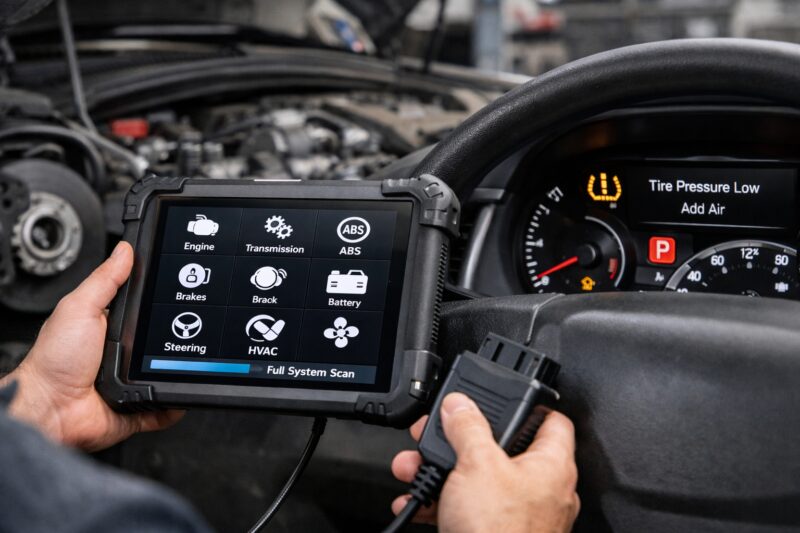
In practice, comprehensive coverage often spans the engine and fuel management, transmission control, brakes and ABS, airbags and occupant safety systems, steering and suspension modules, and power or charging systems. Shops may also review body electronics when relevant, such as lighting, wipers, keyless entry, and body control behavior. The goal is to connect the dots between what you see and what the vehicle’s sensors report.
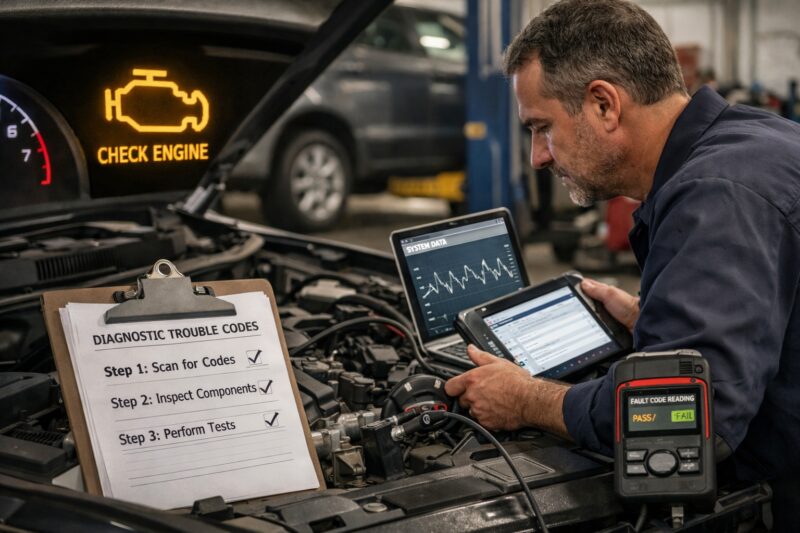
“Comprehensive” also means the shop uses a diagnostic workflow, not a single tool plug-in. Technicians typically start with a scan for diagnostic trouble codes, then validate those results with live data and test results. They review freeze-frame data and readiness or status information to understand whether a fault is current, intermittent, or historical. For example, a misfire-related code can point to an ignition coil, but it can also trace back to a fuel or air issue that changes combustion.
A key nuance is that stored codes may not equal the cause. Intermittent faults can log symptoms after a brief event, like low voltage or a momentary wiring connection change. A shop that skips verification may chase the wrong component, especially if the code history suggests a problem that no longer exists. Another limitation is that deeper testing depends on safety constraints and whether the concern can be reproduced.
Real-world scenario: your check-engine light appears after a recent battery replacement. A basic scan might show multiple codes across modules, but the root cause could be voltage stability or a grounding issue. Comprehensive diagnostics help by checking sensor plausibility, connector condition, and charging behavior before recommending repairs.
When technicians use a shop services checklist approach, they can standardize coverage across systems while still tailoring the plan to your symptoms. That reduces the risk of missing a module that is driving the complaint.
How diagnostics turn warning lights into a verifiable repair plan
Comprehensive diagnostics turn a warning light into an actionable plan by following a step-by-step process with verification at each stage. The point is to prove what caused the fault, not to guess based on the most common code definitions. This helps keep repairs targeted and prevents repeat visits.
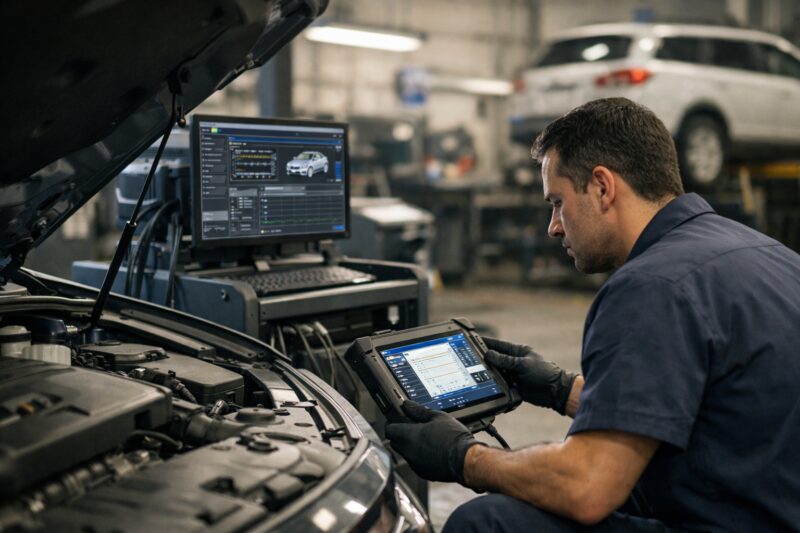
The process usually starts with an interview and visual inspection. Technicians confirm when the light appeared, whether the problem is steady or intermittent, and how it changes with driving conditions. They also inspect wiring, connectors, vacuum or hose routing, and any recent work that could affect systems. Then they scan for codes and capture live data to see what the vehicle reports during the fault window.
Next comes interpretation and targeted testing. Technicians correlate related codes, freeze-frame conditions, and readiness monitor behavior. They compare sensor outputs to expected patterns and check plausibility, such as whether an airflow sensor reads like the engine is actually receiving air. When the data suggests a specific circuit or component, they run targeted checks like electrical measurements or functional tests. They then verify repair closure by rescanning and confirming normal operation under test conditions.
Tooling matters, but methodology matters more. Most shops use OBD-II or EOBD scan tools to communicate with control modules. Advanced shops may use manufacturer-capable software that supports deeper diagnostics and, where appropriate, bi-directional control tests. They also use multimeters and, in complex cases, oscilloscopes to validate signal behavior. The tradeoff is that more advanced work takes longer and may cost more, but it can prevent unnecessary parts replacement.
Common mistake: a shop clears codes before completing root-cause validation. Clearing can remove useful history and delay the chance to capture the conditions that triggered the fault. It can also make an intermittent issue harder to confirm, which hurts decision accuracy.
Real-world scenario: you report harsh shifting and a transmission-related warning light. A code might point to a solenoid, but a comprehensive plan checks torque management signals, pressure behavior indicators, and relevant wiring before recommending any part. That keeps the repair process aligned with a fast accurate repair process instead of repeated component swaps.
Choosing a shop for reliable auto diagnostics services starts with the right questions
You can judge diagnostic quality by how clearly a shop explains its evidence and next steps. When a shop offers professional diagnostic services, you should expect transparency about what they will test first and how they will confirm root cause. This matters because unclear work often turns into guesswork, which increases cost and repeat downtime.
Before you approve work, ask what the shop will do to confirm cause versus symptom. A strong shop should review live data, explain how it ties to the codes, and document the specific tests performed. You should receive a diagnostic report or at least a written summary of findings and recommended tests, not just a parts list. This is where a what to ask before approach helps you choose wisely.
Look for signs of competence beyond generic code reading. The technician should be comfortable with multi-system faults, live data trends, and intermittent conditions. They should explain why certain tests are prioritized and how results change the plan. For intermittent concerns, they should discuss how they will reproduce the fault safely and how they will confirm it with repeated observation.
A deeper nuance is verification discipline. Shops that rely mostly on generic code lists often miss underlying circuit faults, connector issues, or voltage events that trigger misleading readings. Better shops use re-check steps, reproduce attempts, and signal validation. They also re-scan after repair to confirm that the problem is truly resolved and that related readiness or status behavior returns to normal.
Commercial reality matters too. Ask whether diagnostic labor carries a warranty and how it pairs with repair warranties. If results are inconclusive, a reputable shop should propose a second-level plan rather than pushing random parts. This reduces the risk that you pay twice for the same diagnostic work.
Real-world scenario: you see conflicting codes that blame multiple sensors. A transparent shop shows which tests narrow the likely fault path and which results are confirmed. That supports confident decisions, especially when safety systems like brakes or airbags are involved.
Common misconceptions that lead to expensive misdiagnoses
Many costly repairs start with a misunderstanding of how diagnostic trouble codes work. A code often indicates that a system detected something out of range, but it does not always prove the failed part is the cause. That gap between “symptom detection” and “root-cause failure” drives misdiagnoses.
The biggest misconception is that “codes equal diagnosis.” Codes can be side effects, especially when one upstream problem changes how multiple downstream sensors behave. For example, an air intake issue can produce fuel trim changes and misfire codes, even if ignition components are healthy. Another misconception is “clearing lights fixes it.” Clearing can temporarily remove warnings while leaving the true fault active, which delays discovery and complicates evidence gathering.
Problems also happen after recent repairs. If a sensor was replaced but the connector was not seated correctly, or wiring was damaged during installation, the same complaint can return. Some repairs also require learning or calibration steps before the system behaves correctly. When shops skip verification, they may interpret the first test result as proof instead of confirming it under real operating conditions.
A deeper insight involves low-voltage events and intermittent communication. Battery issues, alternator ripple, or poor grounds can cause modules to log errors that look unrelated. If a shop ignores power quality and electrical integrity checks, the technician might blame the wrong system. Common mistake: replacing multiple parts based on the presence of multiple codes.
Red flags to watch for include vague blaming without tests and refusal to show live data. If a shop cannot explain what evidence supports its component choice, ask for a clear test plan and confidence rationale. A disciplined approach supports accurate repairs and protects your budget.
Scan-only diagnostics and inspection-first options help, but they have limits
Not every situation needs the deepest diagnostic session to reach a useful answer. Some shops offer scan-only diagnostic services that can triage the issue quickly, especially when a warning light is clear and repeatable. Still, scan-only work has limits because it may not validate which test results actually prove root cause.
An inspection-first and guided scan approach is often better when there is visible damage, recent incident history, or obvious wiring concerns. This workflow starts with physical checks, then uses scanning to guide which measurements matter most. It can be especially helpful when the fault is tied to connectors, harness routing, fluid leaks, or component placement.
When symptoms persist and codes do not point clearly to a single cause, targeted diagnostic testing becomes the most effective path. This approach focuses on verifying specific hypotheses with measurements and functional checks. For example, if a code suggests a fuel delivery issue, the shop may run pressure and flow checks and compare results to expected behavior during the fault conditions.
Tradeoffs are real. A thorough process may take longer and cost more than a simple scan, especially if the issue is intermittent and hard to reproduce. However, uncertainty should be handled transparently. A quality shop explains what it can confirm, what it cannot yet prove, and what additional test step reduces risk.
A deeper nuance is knowing when more scanning is not beneficial. If the data does not change across conditions, the shop may pivot to wiring, ground checks, component access inspection, or road-test validation. That prevents endless code reading with no path to closure.
Real-world scenario: your car cranks but does not start, and the scan shows communication errors. A scan-only session might stop there, but targeted diagnostics checks power and ground integrity, connector condition, and module behavior to isolate whether the issue is electrical or mechanical.
Vehicle scenarios where comprehensive diagnostics prevent repeat breakdowns
Comprehensive auto diagnostics services are especially valuable when problems cross systems or repeat after a “successful” repair. Many drivers experience repeat breakdowns because the original cause was not fully verified. A strong diagnostic approach helps stop the cycle by confirming closure and preventing symptom reappearance.
Common high-value scenarios include drivability hesitation, harsh shifting, brake warning or ABS engagement, airbag light behavior, and charging or voltage anomalies. These often involve interactions between engine control, transmission torque management, wheel-speed sensors, sensor plausibility checks, and power supply stability. When multiple modules interpret the same signal differently, root cause can hide behind a more visible code.
Intermittent problems also demand verification discipline. If the fault only appears under certain loads, temperatures, or speeds, the shop needs a reproduce-then-verify method. Technicians may plan test drives or condition-based observations to capture the pattern. They should also document what conditions were present to help confirm the same behavior after repairs.
A deeper insight is software or relearning requirements after component replacement. Some sensors and actuators may need calibration steps for correct behavior. Even when the hardware fix seems obvious, the system can still behave wrong until learn steps complete. Shops should confirm operation after repair, including readiness or status behavior when relevant.
Real-world scenario: you see an overheating complaint with confusing codes. A comprehensive shop checks cooling system health and then cross-checks engine sensor behavior because the cooling issue can change readings across multiple systems. This reduces the chance that someone replaces a thermostat while missing a clogged radiator passage or fan control problem.
By building evidence instead of chasing assumptions, comprehensive diagnostics reduce repeat trips and help you plan repairs with fewer surprises.
Advanced diagnostics for complex electrical, sensor, and module faults require measured testing
Advanced diagnostic work focuses on proving signal behavior and power integrity when modern vehicles log complex or module-to-module errors. These cases often involve degraded sensor performance, intermittent communication, or harness issues that do not fail every time. The goal is to isolate the fault without replacing parts blindly.
Technicians use measured data trends from live data capture to validate whether sensors respond as expected. They may compare related sensor outputs to see whether one reading makes the others implausible. Harness integrity checks also matter, especially when signals show dropouts or noise. Power and ground verification can rule out voltage instability that triggers misleading module behavior.
Module-focused diagnostics go further by interpreting how a control unit reports input status and output requests. Communication errors might require checking bus health, verifying the module’s input sources, and confirming actuator responses. In some situations, technicians also consider software dependencies or calibration needs after hardware repairs. They should still verify actual operation, not just assume the software step “solves” the problem.
A deeper nuance is avoiding the “shotgun” parts strategy. Advanced shops use probability and isolation testing to narrow the fault path. For instance, they may disconnect and re-check connectors, trace a signal through the wiring path, or perform controlled tests that separate mechanical faults from electrical faults. This method reduces repeat labor and supports a fast accurate repair process.
After repair, verification closes the loop. Technicians typically re-scan, check readiness or status behavior, and monitor operation during a controlled test drive. They should document closure criteria so you and future technicians can see what was confirmed.
Real-world scenario: multiple modules log faults after a short route drive, then disappear. An advanced diagnostic approach captures the behavior under similar conditions, checks voltage stability, and inspects connectors that may flex with vehicle movement.
Keeping diagnostic results usable for future repairs protects your time and money
Good diagnostics produce results you can reuse, not just a memory of what was replaced. When a shop documents codes, test outcomes, and repair closure notes, it makes future diagnosis faster and more accurate. This matters because the same symptom can return with new context after battery work, maintenance, or weather exposure.
A useful diagnostic trail includes dates and mileage, the specific codes or symptoms logged, and what live data looked like during testing. It also lists which tests were performed and what they showed. If the shop recommends additional tests or defers them, the documentation should explain why. This helps if a warranty claim or future repair needs justification.
From a car owner perspective, you can support the process by tracking what you observed. Write down when the light appears, what the car does during the issue, and whether the fault repeats after cooling or after restart. If you have maintenance records or recent repair receipts, bring them because they help technicians interpret code history patterns. That context can prevent re-testing the same area and can reduce unnecessary parts work.
A deeper insight is managing intermittent faults carefully. The weather, temperature, load, and time since last repair can change when a fault triggers. Without that context, a shop might not reproduce the same condition and could miss the real driver of the problem. Strong shops align diagnostic documentation with a repair plan that prioritizes safety-related systems first.
Practical takeaway: after your , ask for a written summary you can share later. If you return for a related concern, that paper trail can shorten the next diagnostic cycle and improve decision accuracy.
For drivers who want repeatable service quality, a shop services checklist mindset in documentation helps you verify that findings are recorded consistently across visits.
Frequently asked questions about comprehensive auto diagnostics services
What should I expect during a comprehensive diagnostic appointment?
Expect an interview about your symptom timeline, warning light behavior, and any recent repairs or battery work. The shop will then scan for codes and review live data during key operating conditions. At the end, you should receive a findings summary and a recommended test or repair plan tied to those results.
How do auto diagnostics services determine the root cause?
They start with codes, then verify the true cause with live data, measurements, and targeted tests. For example, they may confirm whether a sensor signal matches expected behavior instead of assuming the first code points to the failed part. Root cause is confirmed when the evidence points to one system or circuit and verification proves the symptom is resolved.
Why do I still have a warning light after the codes were cleared?
Intermittent faults can return after clearing because the underlying cause still exists. Some systems also need time or specific conditions to complete checks and clear readiness or status behavior. Clearing can delay accurate identification, so a good shop verifies the condition rather than stopping after the light turns off temporarily.
Can a diagnostic scan find problems that aren’t showing symptoms yet?
Yes, it can reveal stored or history codes that indicate a fault detected earlier. Readiness monitors or status data can also show whether the vehicle has completed key self-tests since a reset. However, scans cannot reliably predict every future failure, especially if the fault is rare or depends on specific conditions.
What’s the difference between basic OBD scan diagnostics and comprehensive diagnostics?
Basic OBD scanning typically reads codes and may show a quick list of possible causes. Comprehensive diagnostics also analyze live data, freeze-frame context, and perform targeted electrical or functional tests. It often expands across multiple control modules and verifies results before recommending repairs.
How long should comprehensive diagnostics take when the issue is intermittent?
Intermittent faults often take longer because the shop must reproduce the concern under conditions that trigger it. Typical timelines can range from same-day triage to multiple days when safe reproduction or condition capture is needed. A reliable shop will explain the planned next steps when the fault cannot be duplicated during the first .
Do I need to bring my maintenance records or recent repair receipts?
Yes, it helps the technician interpret code history and avoid repeating work. Recent receipts can confirm what parts were installed, which connectors or sensors were handled, and whether relearn or calibration steps were completed. Maintenance records also help explain normal system changes that affect sensor behavior.
What if the diagnostic results are inconclusive—what happens next?
A quality shop should provide ranked fault candidates and a specific additional test plan. It should explain what evidence is missing and which next test reduces the uncertainty. If needed, it may broaden the scope across related systems using a structured verification approach rather than guessing.
Will comprehensive diagnostics change the cost compared with guessing or parts swapping?
Pricing varies because diagnostic time depends on system complexity and how hard the fault is to reproduce. Many drivers find that targeted testing reduces repeat labor and parts costs compared with guesswork. For a clear comparison, request a written diagnostic workflow and a detailed quote for both diagnostics and any proposed repairs.
How do I prepare my car and myself for the best diagnostic outcome?
Bring a symptom timeline, note when the light appears, and describe how the car drives during the fault. Include any recent incidents like fueling changes, battery service, or repairs. If possible, note whether the warning light is constant or intermittent, and tell the shop what conditions trigger it.
How to compare diagnostic quotes and decide what to approve
Good diagnostic work should feel structured, not vague. When you compare quotes, look for a clear scope of tests, what those tests are expected to confirm, and what will happen if the results are inconclusive. This keeps the process aligned with a fast accurate repair process and avoids paying for unnecessary round trips.
Ask how diagnostic pricing is calculated. Many shops charge by diagnostic labor time, then adjust the plan if new evidence appears. If a shop quotes a single flat diagnostic price, ask what conditions would add or reduce time. This matters for your budget because electrical and module faults can require longer measured testing than a simple triage scan.
For tradeoffs, consider risk and safety first. Brakes and occupant safety systems require priority verification, even if other complaints exist. After safety systems, focus on drivability and charging behavior, because those affect whether the vehicle remains reliable between repairs. Comfort and convenience items can often wait, unless they influence core signals or module states.
A deeper nuance is that “cheapest” often means least verification. A shop that promises immediate part replacement without evidence may reduce diagnostic time but can increase total repair cost. Choose professional diagnostic services that show how results guide decisions, especially when you suspect an intermittent electrical fault.
Real-world scenario: two shops offer different paths for the same warning light. One recommends parts after a basic scan, while the other uses live data validation and targeted electrical checks. In the second path, you still pay for diagnostics, but the plan is supported by measurements and likely reduces repeat breakdown risk.
Conclusion: comprehensive diagnostics help you reach reliable repairs in 2026
Comprehensive auto diagnostics services help you identify the root cause across key vehicle systems, then confirm it with verification before repairs begin. The result is a clearer plan you can approve with confidence, backed by evidence instead of guesswork. When diagnostics are done well, you reduce repeat breakdowns and avoid paying for random parts that do not solve the underlying issue.
To choose the right shop, prioritize transparency, documentation, and a structured test plan that uses live data and targeted verification steps. A dependable workflow should match your symptoms and address intermittency rather than stopping at the first code list. If you want a consistent experience, use a shop services checklist mentality and ask for a clear what to ask before conversation early.
Before any approval, request a diagnostic workflow and findings documentation, and ask how the shop will confirm closure after repairs. That approach supports your next decisions and keeps the repair process aligned with a fast accurate repair process. If you’re comparing options, choose professional diagnostic services that explain exactly what they checked, what they proved, and what you can expect next.
For additional background on how modern vehicle diagnostics and onboard reporting work, you can reference the U.S. Department of Energy Vehicle Technologies Office and the U.S. Environmental Protection Agency for general emissions and onboard diagnostics context. For device and diagnostic standards context, many shops also rely on guidance from SAE International, especially when interpreting diagnostic data concepts and communication behavior.
Updated September 2026