
If you’re looking for dependable auto repair in Molalla, Oregon—whether it’s brakes, an engine concern, a check engine light diagnosis, tires/maintenance, or electrical troubleshooting—you want a shop that tests first and communicates clearly. Choosing the right provider for Auto Repair Molalla Oregon matters because it directly affects safety, total cost control, and how likely you are to avoid repeat repairs.
This guide is built to help you compare shops, ask the right questions, and choose the correct repair type with confidence. You’ll learn how to vet a diagnosis plan, what documentation to request, and how to avoid common pitfalls like “parts-first” quoting that leads to estimate creep. You’ll also get a practical decision path for recurring or intermittent problems, pricing expectations for 2026-style estimates (including clearer diagnostic scopes), and a checklist of questions you can use before you approve work.
As you move forward, think of your next step as booking a diagnostic appointment or inspection visit with a plan to confirm the problem, document findings, and approve a written scope—so you’re not guessing when the issue comes back.
How to Choose the Right Auto Repair in Molalla, Oregon (Decision Path)
Choose an auto repair shop in Molalla by following a diagnosis-first decision path: clarify symptoms, confirm the diagnostic plan, compare written estimates, and only then approve repairs. If a shop jumps to parts replacement without testing, you’re more likely to pay for the wrong fix or repeat labor.
Start by clarifying what you’re experiencing. Write down when the issue happens (cold start vs after driving), what you feel or hear (vibration, squeal, misfire sensation, slow cranking), and any warning signals (check engine light, low oil warning, battery/charging alerts). This matters because Molalla drivers often experience a mix of long-term wear and intermittent conditions caused by heat, moisture, or voltage fluctuations—factors that can change how a fault presents.
Next, get a diagnosis plan before authorizing major work. A good shop explains the test sequence: what they will check first (battery/charging health, scanner data, freeze-frame readings, visual inspection, measurement-based checks), what results would change the next step, and how they’ll escalate if the first visit doesn’t reproduce the problem. This is where “diagnosis first” prevents the common failure mode: replacing common parts (sensors, starters, alternators, ignition components) without verifying the root cause.
Then compare estimates apples-to-apples. Ask for the labor hours, the parts list with part numbers, the quality option (OEM vs aftermarket vs remanufactured), and what documentation supports the findings (scan printout, measurements, brake thickness, alignment printout). Practical application: if two shops both quote “starter replacement,” ask which tests confirmed the starter as the cause and whether they checked battery capacity, voltage drop, and starter circuit readings first.
Tradeoffs are real. Some intermittent electrical or drivability issues may not fully reproduce during a single visit, so a reputable shop should propose a structured re-check process rather than guessing. For example, a misfire that happens only during acceleration on warm days may require a road test, data logging, or a follow-up visit. The common mistake most guides get wrong is treating “diagnosed” as a single event—truly good shops define decision gates: what counts as confirmation, what would be considered success, and what happens if the first repair doesn’t fully resolve the concern.
If you’re also evaluating nearby service approaches, you may find a local comparison framework useful—see a similar checklist for another area in the valley: Auto Repair Corvallis checklist https://nrtoffroadperformance.com/auto-repair-corvallis-oregon/ . For broader process thinking that translates across locations, review Car Repair Shop checklist https://nrtoffroadperformance.com/car-repair-shop/ .
Trust criteria should be more than “they seem nice.” Look for technicians who will explain options, demonstrate measurements, and document test results. If you need a quick way to organize questions for your specific vehicle situation, Automotive Repair checklist to ask https://nrtoffroadperformance.com/automotive-repair/ also helps you keep the conversation factual. When you’re comparing similar issues with a focus on communication and cost control, Auto Repair Dallas Oregon tips https://nrtoffroadperformance.com/auto-repair-dallas-oregon/ provides a useful example of how to reduce scope ambiguity.
Services You Can Book in Auto Repair Molalla Oregon (From Basic Maintenance to Diagnostics)
You can book everything from scheduled maintenance to advanced diagnostics in Auto Repair Molalla Oregon, but the right service type depends on whether you need prevention, repair now, or root-cause troubleshooting. The fastest way to avoid repeat costs is to match your symptoms to a documented workflow.
Scheduled maintenance is the foundation: oil service, filter changes, multi-point inspections, and wear-item checks. For brakes, shops can measure rotor thickness, pad remaining life, and brake function tests before recommending replacement. For tires, typical services include balancing, rotation, tread assessment, and alignment verification when steering pull or uneven wear is present. For battery and charging, a proper service includes battery testing, alternator output checks, and—often overlooked—starter draw and voltage drop tests under load.
For cooling and exhaust, look for inspection-based recommendations rather than blanket replacement. Cooling system work should be tied to temperature behavior, coolant condition, pressure tests for leaks, and confirmation of whether the concern is a thermostat, cap, radiator issue, or hose. Engine performance and emissions work typically begins with scanning and using live data to identify whether the issue is fuel, ignition, air intake, or sensor-related. Electrical diagnostics should include circuit checks, connector inspection, and verification of power/ground integrity—especially if you’ve had “new parts that didn’t solve it.”
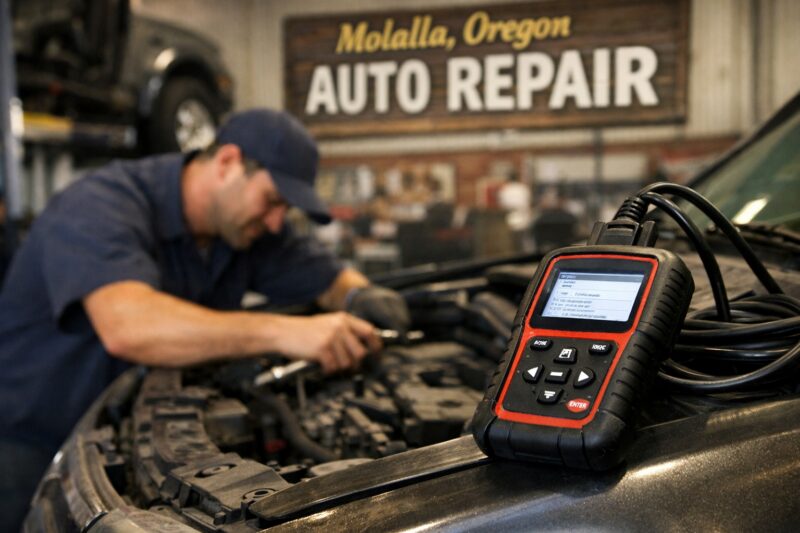
The check engine light nuance matters: codes indicate which system is reporting an abnormal condition, not necessarily what part is defective. A proper diagnostic workflow uses code information plus context like freeze-frame data, short-term and long-term fuel trims, misfire counters, and component measurements. Practical application: if a shop quotes “oxygen sensor replacement” immediately, ask what tests were performed to confirm sensor response and whether wiring, exhaust leaks, or fuel trim behavior points to upstream vs downstream issues.
When preventive service is smart: if symptoms are absent and wear items are within spec, preventive inspection helps budget and reduces the risk of a safety failure. When repair now is smarter: if you have grinding brakes, overheating, loss of power, persistent misfires, or charging warnings, delay increases risk and can damage other systems. A common tradeoff is time: stepwise diagnostics can take more initial labor than parts swaps, but it often saves money by preventing repeat repairs.
What to expect during the first appointment: intake with symptom history, VIN-specific verification, a visual inspection, test plan confirmation, and a written estimate presented with options. Reputable shops usually document findings with measurements or scan outputs so you understand what’s being replaced and why. For extra guidance on choosing a shop based on process and documentation, use Automotive Repair checklist to ask https://nrtoffroadperformance.com/automotive-repair/ as your talk-track when you schedule.
Pricing, Estimates, and Repair Costs Near Molalla (What’s Fair in 2026)
Fair pricing in Auto Repair Molalla Oregon starts with a structured estimate: clear labor time, parts pricing with quality/source options, and a documented diagnostic scope. If you can’t compare quotes apples-to-apples, you don’t yet have a fair comparison.
In 2026, many shops increasingly present estimates with clearer breakdowns for diagnostic steps, documentation expectations, and warranty details on both parts and labor. That’s good for you because “diagnosis” shouldn’t be vague. Expect an estimate structure that spells out whether there is a diagnostic fee, how many hours are allocated to troubleshooting, and what the shop will do with test results (for example, proceed to repairs only if confirmation thresholds are met).
To compare estimates correctly, request the same baseline information. Ask each shop to provide: (1) what tests they ran or will run, (2) the parts list with part numbers and quality tier, (3) labor hours by operation, (4) which items are optional vs required, and (5) warranty terms. Practical application: if one quote includes “brake service” and another includes “brake pads + rotors + machining,” you need a matching scope of measurement and recommendations. Otherwise, you’re comparing different repairs under the same label.
Managing budgets is about prioritization. Safety items like brake components, tires with reduced tread, overheating causes, and steering/control concerns typically come first. Convenience items or low-risk comfort repairs may be phased after diagnosis confirms the root cause. A deeper tradeoff: phased repairs can work well when the shop can define decision gates—yet they can become costly if the shop replaces components without confirming the underlying fault. That’s how “estimate creep” happens: the scope changes without a clear change order.
Legitimate additional costs can include fluids, shop supplies, wear items discovered during teardown, additional troubleshooting hours if the initial test doesn’t reproduce the fault, or replacement of related components that are required for safe installation. What matters is communication. Reputable shops explain why the additional cost is needed, show documentation (photos, measurements, test results), and obtain authorization before proceeding.
Two failure modes to watch for are estimate creep and scope ambiguity. Estimate creep usually appears when the estimate doesn’t define boundaries—like “diagnose until fixed” without a time cap or when required approvals aren’t requested. Scope ambiguity appears when the quote doesn’t define which parts are being replaced, what quality level you’re paying for, or what success looks like. For a process-heavy approach you can use to evaluate quotes consistently, Car Repair Shop checklist https://nrtoffroadperformance.com/car-repair-shop/ is a good reference point.
For cost-conscious comparison habits, you can also use a localized question framework—Auto Repair Dallas Oregon tips https://nrtoffroadperformance.com/auto-repair-dallas-oregon/—to learn how to structure your approval conversation around documentation and options.
What to Ask Before You Approve Work at an Auto Shop in Molalla
Before you approve work, ask for the diagnostic approach, parts/warranty details, and a written scope with time expectations. This is the fastest way to reduce risk and avoid surprise charges in Auto Repair Molalla Oregon.
Use a pre-authorization question checklist that focuses on process, not just price. Ask: “What tests did you run, and what did they show?” “What’s the next step if the repair doesn’t solve it?” “Which parts are optional, and why are you recommending them?” Practical application: if your car is overheating, you want to know whether the first step is a cooling system pressure test, thermostat evaluation, radiator cap test, and confirmation of coolant condition—not just replacing parts based on symptoms alone.
Parts decisions should be transparent. Ask whether the shop will use OEM, aftermarket, or remanufactured components and what warranty terms apply to each. If the shop recommends a remanufactured unit, ask for its warranty length and the verification method used before installation. If using aftermarket parts, ask about fit/function expectations and whether installation requires calibration or programming. This matters because electrical and drivability systems can be sensitive to part quality and software calibration choices.
Communication expectations should be explicit. Good shops tell you how often they’ll update you, how they’ll request approval for additional findings, and who will answer questions. Ask whether they’ll provide photos/video of findings, and whether they’ll document scan data or measurements so you can verify the logic. A common mistake is treating “we’ll call you if we find more” as sufficient—without written authorization processes, additional work can become a negotiation after the fact.
For tricky cases—especially transmission behavior, engine internals, overheating recurrence, or electrical diagnostics—“good” looks like decision gates and documented findings. Ask: “What evidence will determine whether we stop here or continue to the next test?” “If we can’t reproduce the fault, what re-check plan do you propose?” In uncertain faults, you want a test-and-escalate workflow with defined stopping points so you don’t pay for uncontrolled labor.
To keep your conversation structured, you can use a dedicated talk-track like Automotive Repair checklist to ask https://nrtoffroadperformance.com/automotive-repair/ . If you’re building a repeatable routine for managing shop approvals, the Car Repair Shop checklist https://nrtoffroadperformance.com/car-repair-shop/ is also a helpful reference for what “good documentation” should include.
For broader consumer protections related to vehicle service communications, it can help to understand general guidance around repairs and authorizations from established federal resources like Federal Trade Commission: Auto Repair and NHTSA: Ongoing Vehicle Recalls. These don’t replace a shop’s responsibility, but they reinforce what you should expect in terms of transparency.
Common Mistakes and Misconceptions About Auto Repair Molalla Oregon
The most expensive auto repair mistakes happen when you approve work without documented diagnosis, delay safety issues, or focus only on the lowest price. Avoiding these common errors can significantly reduce repeat repairs in Auto Repair Molalla Oregon.
One recurring pitfall is ignoring warning signs and continuing to drive with symptoms that indicate escalating risk. If you have soft or grinding brakes, overheating, severe vibration, or charging warnings, the delay can compound damage and raise the total cost. Practical scenario: driving with a failing cooling system can lead to additional engine stress beyond the original cooling component problem, making the final repair more complex than you expected.
Another mistake is authorizing parts based on assumption rather than test results. For example, replacing a sensor because a code appeared later to disappear is not a root-cause strategy. Codes can be triggered by temporary conditions—vacuum leaks, intermittent wiring faults, or voltage instability—and then clear. A reputable shop treats the scan results as a starting point, not a conclusion.
Misconception correction: “If the check engine light is off later, the issue is gone.” In reality, the fault can be intermittent, and the underlying condition may still exist. Misconception correction #2: “Any mechanic can diagnose electronics the same way.” Electronics diagnostics require disciplined test procedures: voltage drop checks, connector inspections, grounding integrity checks, and sometimes data logging. When that discipline isn’t present, you can end up chasing symptoms instead of fixing causes.
Negotiation mistakes also matter. Focusing only on lowest price often ignores warranty terms, labor guarantees, and documentation quality. If Shop A offers a low bid but uses a shorter warranty or cannot explain how they validated the diagnosis, the “cheap” repair can become expensive when it fails. Misunderstanding warranties is another pitfall: parts warranties and labor warranties can be different, and you need documentation and repair order details so claims are straightforward.
Edge case to consider: intermittent misfires or electrical gremlins. Most guides get this wrong by advising simplistic “replace the part that matches the code.” Instead, good troubleshooting includes a plan to reproduce, test under the right conditions, and verify the root cause before closure. If you’re preparing to compare shops for this type of fault, process-first checklists like Auto Repair Corvallis checklist https://nrtoffroadperformance.com/auto-repair-corvallis-oregon/ and Car Repair Shop checklist https://nrtoffroadperformance.com/car-repair-shop/ can help you spot whether the shop is disciplined about evidence.
Alternatives and Options: How to Compare Your Repair Choices Near Molalla
Compare repair options near Molalla by choosing the approach that matches the problem complexity and urgency—not just the shop’s reputation. The right choice can reduce diagnostic time, improve documentation quality, and keep your warranty protection intact.
Your main categories typically include an independent repair shop, a dealer service department, a specialty repair shop (for complex systems), and mobile diagnostics in select situations. Independent shops often excel at transparent communication and practical maintenance and repairs. Dealer service can be advantageous for vehicles that need OEM parts sourcing, software updates, or program access tied to manufacturer systems. Specialty shops may be best for complex drivability, transmission rebuilding, advanced electrical, or specific platform expertise.
Tradeoffs: dealer repairs can cost more, independent shops can vary in specialization, and mobile services may have limits on inspection depth depending on equipment access. For transactional decision-making, you should evaluate what each option can reliably document. A key question: will they provide the scan data, measurements, and a written diagnostic plan? This directly affects your ability to compare quotes apples-to-apples and to pursue warranty coverage if the repair doesn’t perform as expected.
When to choose which framework: for routine service, choose whichever shop offers consistent documentation and reliable scheduling. For safety repairs like brakes, tires, and steering, prioritize process maturity and inspection quality over sales pitch. For hard-to-diagnose drivability or electrical concerns, choose the option that can show test steps and decision gates—especially if your fault is intermittent. A common “what most guides get wrong” approach is discussing shop types only, instead of focusing on service type: if a problem needs documented diagnostic steps, you should pick based on process maturity and evidence capability, not brand impressions alone.
Practical comparison method: contact two or three providers and ask for the diagnostic workflow, the estimate structure, and the warranty terms before agreeing to work. If you want a consistent question structure for these comparisons, Automotive Repair checklist to ask https://nrtoffroadperformance.com/automotive-repair/ helps you avoid missing key details like labor warranty boundaries and documentation expectations.

When you’re dealing with a problem that may require escalation (like transmission concerns or repeated overheating), it can also help to review a structured decision template such as Auto Repair Dallas Oregon tips https://nrtoffroadperformance.com/auto-repair-dallas-oregon/ to learn how shops should communicate re-check criteria.
Advanced Considerations: Complex Repairs, Warranties, and Edge Cases Most Guides Miss
Complex repairs require more than a single repair attempt—they require a diagnostic workflow, documented verification, and clear warranty protection. If you want to reduce repeat repairs, insist on decision gates and root-cause confirmation before the final closure in Auto Repair Molalla Oregon.
For drivability concerns, overheating recurrence, and transmission behavior, stepwise diagnostics matter because these systems share sensors and control logic. For example, a cooling issue can present as repeated warning behavior, and a transmission complaint can be caused or amplified by voltage problems, throttle response differences, or sensor inputs. A disciplined shop separates these possibilities through test sequencing: verifying base conditions first (fluid condition/levels, temperature readings, scan data trends), then validating mechanical behavior under controlled conditions.
Advanced electrical “gremlins” are another edge case. They can come from wiring damage, connector corrosion, intermittent grounds, aftermarket accessories, or previous repair work. A shop that only clears codes and swaps parts without verifying circuit integrity can cause you to pay multiple times. Common mistake: treating a fault code as a direct indication of the component itself rather than evaluating whether the code is a symptom of voltage instability, a short to ground, or a sensor reference issue.
How warranties should be interpreted and protected: clarify what is covered (parts, labor, and whether it includes diagnostic time if the issue returns) and what documentation you must keep. Ask what constitutes “causation” for a warranty claim and whether the shop will provide repair order details, test results, and verification steps. Practical application: if the same issue reappears after a repair, you need documented proof of prior tests, what was replaced, and what was verified post-repair so the shop can re-check the root cause rather than repeating the same assumption.
Repeat-repair prevention comes from post-repair verification. Ask how the shop will confirm success before handing the keys back—road test expectations, scan verification, temperature stabilization checks, brake function verification, and whether they will record the final test results. What most guides miss is that closure should match the original symptom criteria, not just “we think it’s fixed.” If the issue was intermittent, success should be defined in terms of re-check conditions (time, temperature, load, or driving pattern).
Another advanced factor is vehicle history and liability: previous aftermarket parts, prior work by other shops, and modifications can change system behavior. A reputable shop inspects before replacing again—verifies wiring routing, connector condition, installed part condition, and whether prior repairs might have masked the true fault. For consumers who want a structured way to evaluate complex work and keep it documented, using a checklist approach like Car Repair Shop checklist https://nrtoffroadperformance.com/car-repair-shop/ supports safer approvals.
When you should request teardown or additional testing: ask whether deeper inspection is necessary to confirm root cause or whether incremental testing is more appropriate. A good shop will explain why additional labor is warranted (for example, a pressure test confirms internal failure risk) and when it should stop and re-evaluate. For warranty-related expectations, established consumer guidance from Federal Trade Commission: Auto Repair helps reinforce that clear authorization and proper documentation are essential.
Frequently Asked Questions About Auto Repair Molalla Oregon
How much does auto repair usually cost in Molalla Oregon?
Auto repair costs in Molalla depend on whether you’re paying for diagnosis, labor hours, and parts (and what parts quality you choose). A common approach is separating a troubleshooting/diagnostic fee from the repair labor and parts costs, then presenting required versus optional items. To get an apples-to-apples quote, ask each shop to provide the same test results and the same scope for the repair order.
What should I ask before I approve an auto repair estimate?
Ask what diagnostic steps the shop will run (or already ran) and what evidence supports the recommendation. You should also confirm parts quality options, warranty coverage terms, and the exact scope of work. Finally, ask for a realistic time estimate and what the next step is if the repair doesn’t resolve the issue.
Can I get a second opinion for auto repair near Molalla?
Yes—second opinions are appropriate when symptoms are intermittent, the diagnosis is uncertain, or the quote scope seems broad. Bring the repair order, scan printouts or code details, photos of findings, and any prior estimates so the second shop can review your documentation. Request a diagnostic review rather than only another parts quote.
Do shops charge a diagnostic fee before troubleshooting?
Many shops do charge a diagnostic fee, especially for engine light, drivability, or electrical issues that require scan tools and time-based testing. Some shops apply the diagnostic fee to the repair if you approve the work, while others keep it separate. Confirm the diagnostic fee model up front and ask whether troubleshooting hours are capped.
What does “warranty on parts and labor” actually mean?
“Warranty on parts and labor” typically means both the replaced part and the labor used to install it are covered for a specified period, but the terms can vary by shop and by manufacturer. Parts warranties may differ from labor warranties in duration and in what counts as a valid claim. Ask what documentation is required and whether re-diagnosis time is included if the problem returns.
How do I choose between OEM and aftermarket parts in Molalla?
Choose based on the warranty length, expected fit/function, and how critical the component is to safety or drivability. OEM parts can reduce compatibility risk, while aftermarket parts may be appropriate when they’re backed by strong warranties and have proven fit. If the vehicle requires programming, calibration, or integration, ask which parts options are supported and how the shop verifies performance.
What should I do if the check engine light comes back after a repair?
If the light returns, don’t immediately assume the same part failed—request a re-check focused on root cause rather than code clearing. Ask for a new scan, the freeze-frame data, and confirmation of whether the original conditions still exist. If the repair is under warranty, escalate within the warranty timeline and provide your repair order documentation.
Is it safe to drive if my brakes feel soft or squeaky?
Soft brakes can indicate a safety-critical issue such as air in the system, failing components, or fluid problems. Squeaking can be minor wear, but it can also point to uneven pad wear, rotor issues, or contamination. If braking feel has changed noticeably, prioritize inspection quickly and avoid hard braking until the cause is identified.
What are the signs I need transmission repair rather than routine service?
Look for delayed engagement, slipping between gears, shuddering under load, or unusual shifting behavior. Routine service may help if symptoms are mild and fluid condition supports maintenance, but drivability changes often require diagnostic confirmation. Ask the shop how they will verify fluid condition, scan transmission data, and determine whether the issue is electrical, hydraulic, or mechanical.
Prevent repeat repairs by insisting on circuit testing and verification of wiring, grounds, and connector integrity—not just code-based parts replacement. Ask for documentation of voltage, resistance, or signal checks and what test results changed the diagnosis. Scope control matters: approve work tied to confirmed evidence and ask for decision gates if the fault is intermittent.
What’s the best way to avoid surprise charges at an auto shop?
Avoid surprises by requiring a written scope with required versus optional items and confirming an approval process for any additional findings. Ask whether additional troubleshooting hours will require your authorization and what “extra findings” will look like in terms of documentation. If possible, request a time cap for diagnostic work and clarify how it impacts the final estimate.
Conclusion: How to Book the Next Step With Confidence
To choose Auto Repair Molalla Oregon successfully, focus on diagnosis clarity, transparent estimates, and warranty/documentation discipline before you approve any work. The best outcomes usually come from a process: clarify symptoms, confirm the diagnostic plan, compare written quotes apples-to-apples, and approve only a defined scope.
Use a transactional mindset when you schedule. Walk into the shop with a question checklist, ask for test results and measurements, and make sure you understand which parts quality level you’re paying for and what labor coverage looks like. This is how you reduce the top repeat-repair mistakes: approving parts without tests, ignoring documentation requirements, and choosing based only on the lowest price.
Your action step is practical: compare 2–3 estimates, ask each shop to provide the diagnostic approach in writing, and book the next appointment as a diagnostic/inspection visit rather than a vague “service.” If you want to keep your approval conversation consistent across visits, use Automotive Repair checklist to ask https://nrtoffroadperformance.com/automotive-repair/ and Car Repair Shop checklist https://nrtoffroadperformance.com/car-repair-shop/ as your reference so you always verify scope, warranty terms, and re-check criteria.
Updated May 2026