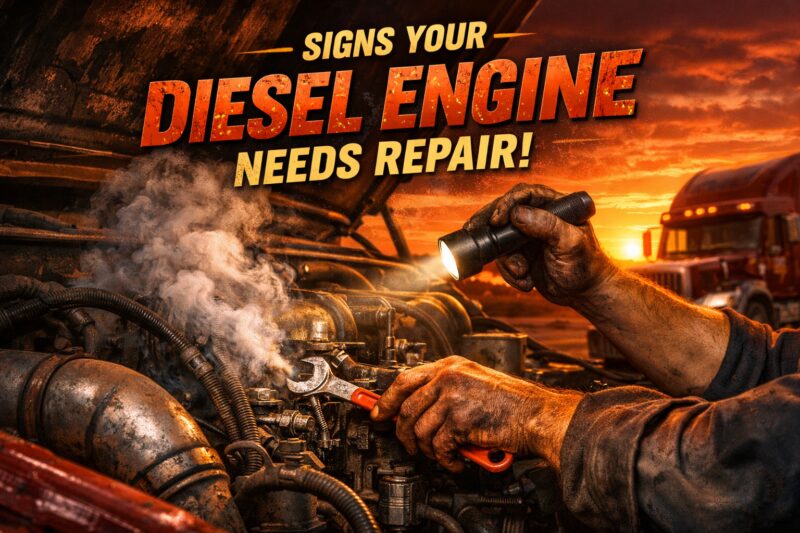
If your diesel engine feels “off,” the right diesel engine repair signs can separate a fixable issue from damage that snowballs. Here are the diesel engine repair signs that deserve attention, along with how to judge urgency. Some warning lights and noises point to simple issues. Others can mean oil, fuel, or cooling problems that progress fast. This guide helps you map symptoms to likely causes, what to check safely, and when to book service now. You will also learn how to talk to a shop using clear evidence, not guesses.
Delaying repair matters because diesels run harder under load. Even small faults can raise cylinder stress or contaminate fluids. In 2026, many vehicles and fleets log data through monitoring tools, but symptoms still matter when alerts are delayed or intermittent. You may also drive a pickup or work truck where no monitoring dashboard exists. Either way, you need a practical way to decide what is safe to monitor and what requires diagnosis.
As you read, keep two ideas in mind. First, some symptoms look alike across different systems. A rough idle might come from fueling, air leaks, or a sensor fault. Second, severity and pattern beat single clues. The context of temperature, load, and smoke often tells you more than a light on the dash.
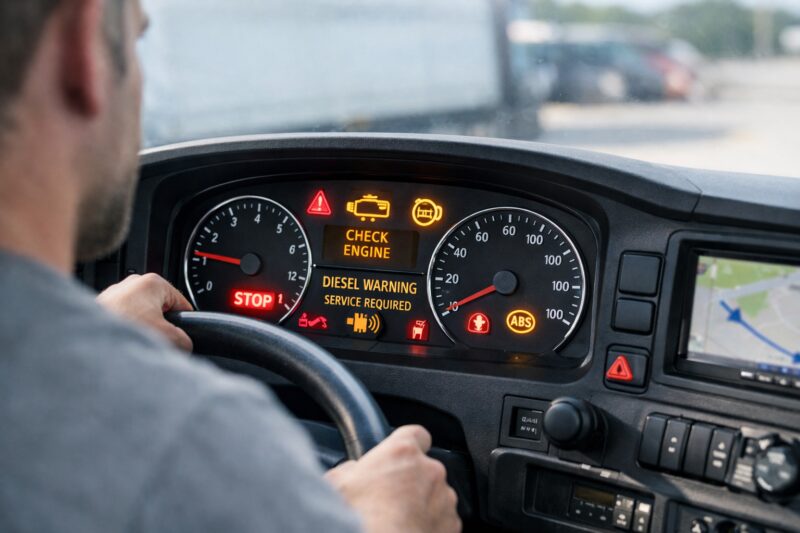
Warning lights, alarms, and other dashboard alerts often signal repair-needed conditions
Check engine lights and driver alerts can be the first diesel engine repair signs you notice. However, not every light means the same level of risk. Some codes relate to sensors or emissions systems. Others indicate issues that can damage the engine or leave you stranded.
When a diesel control module detects a fault, it stores a code and may illuminate a light. The engine still may run, but it can enter a reduced-power mode. Therefore, your real question is not “Is there a code?” It is “What is the code doing to drivability?” A mild drivability change can still warrant prompt service.
In practice, dashboard alerts often fall into a few categories. Glow plug and hard-start symptoms can relate to the starting system or combustion control. Boost or intake-related alerts can point to turbo plumbing leaks or actuator problems. Fuel system alerts can involve supply pressure and filter issues. Meanwhile, lights tied to overheating can involve coolant level, thermostat behavior, or radiator performance.
A key limitation is that codes can appear after the fact. For example, a weak battery can cause sensor readings to drift. A temporary voltage dip can also trigger multiple codes. As a result, the best approach is to capture when the light appeared and what the engine was doing at the time.
Edge case: you might see no light yet still have repair-needed symptoms. Intermittent faults can occur only under load or at certain temperatures. In that case, a scan may still find stored codes, but the light might never come on. Common mistake: clearing codes to “test.” That can erase useful history and delay the root-cause fix.
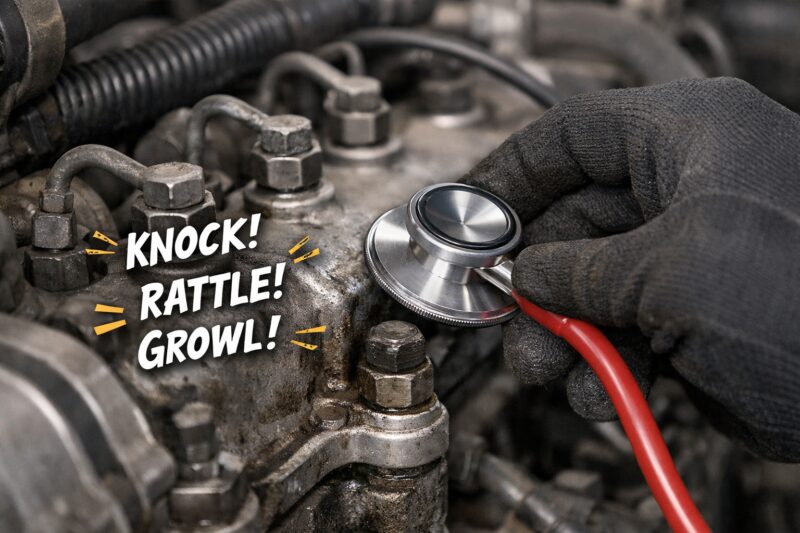
Knocking, rattle, growl, and other noises can reveal serious mechanical or fuel problems
Unusual diesel engine noises are often repair-needed signs, especially when they change with load or rpm. Knocking, metallic rattle, and loud growls deserve attention because they can reflect internal wear or abnormal combustion. If the noise starts suddenly, treat it as evidence, not background sound.
Diesels use compression ignition, so combustion quality matters. Incorrect fuel delivery can cause harder ignition events. That can show up as knocking or a sharp change in sound under acceleration. In addition, worn components like injectors, injector pump elements, or bearings can change noise patterns.
Practical listening helps. Note whether the noise is most noticeable at cold start, during acceleration, or at highway cruise. Also note whether it changes when you lift off the throttle. Those patterns narrow the causes. For example, a noise that appears only under heavy throttle can point toward fueling or turbo-related issues.
Tradeoffs exist because some noises can be benign. Belt squeal often relates to tension or accessory drive issues. However, belt issues can still strand you, so they remain worth addressing. Meanwhile, exhaust rattles can come from heat shields. Even then, you should not ignore persistent, escalating noise.
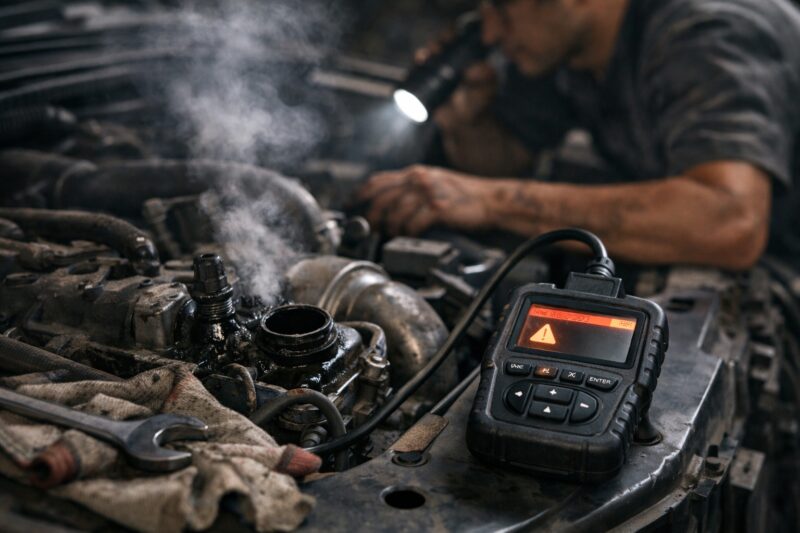
Real-world scenario: a work truck starts to “ping” when climbing a hill. The driver assumes it is normal diesel sound. But the sound grows louder and smoke increases. This combination often leads to a fueling or air-control fault that a proper scan can clarify.
always connect noise to behavior. A noise without performance change might be less urgent. A noise paired with loss of power raises the risk of mechanical damage. When that happens, schedule “diagnostics for drivability symptoms” promptly so the shop can test under conditions similar to your driving.
Rough idle, vibration, and uneven running often point to fueling, air, or sensor faults
Rough idle and vibration are common repair-needed symptoms, especially when they persist after warm-up. If the engine shakes, stumbles, or surges, something is disrupting smooth combustion. The cause can be fueling delivery, air metering, or control feedback.
How it works is fairly direct. Diesel engines need the right mixture of fuel and air at the right timing. If an injector sprays incorrectly, combustion can become uneven. If an air leak allows unmetered air, the control system may chase the wrong correction. Also, a sensor that reports incorrect temperature or pressure can push fueling in the wrong direction.
Practically, you should compare conditions. Check whether rough running happens only at cold start. Then compare with the behavior after the engine reaches operating temperature. You should also note if it occurs in neutral versus under load. Those differences help separate temporary warm-up issues from systemic control faults.
Tradeoffs matter because maintenance can mimic engine failure. Dirty fuel filters can cause unstable supply pressure. That can feel like a “bad injector.” In addition, clogged intake components can create airflow problems. These are still repair-worthy, but they may be quicker and less expensive than internal repairs.
Edge case: you may feel vibration only during a specific rpm range. That can point to accessory resonance, not combustion. Yet many combustion issues also show rpm-specific behavior. Common mistake: focusing only on feel while ignoring smoke and power changes.
Internal evidence helps. If you plan to ask for service, document when the roughness starts. Include engine temp range and whether the issue improves after a few minutes. This leads to better “expert engine repair next steps,” because the technician can prioritize the right tests.
Smoke changes, especially black or blue smoke, are key indicators that the engine needs diagnosis
Smoke color and amount can be among the most visible diesel engine repair signs. Changes in smoke often mean the engine is burning fuel differently or using oil in unintended ways. Therefore, smoke deserves early diagnosis when it worsens or appears with power loss.
Black smoke usually suggests too much fuel for the available air. That can come from overfueling, restricted intake airflow, or boost control problems. Blue smoke often suggests oil entering the combustion chamber. Common causes include worn turbo components or engine wear. White smoke can have multiple causes, such as fuel dilution or coolant-related issues, especially when it persists after warm-up.
How context matters is critical. Cold starts can produce some visible exhaust. However, smoke that continues after warm-up is more concerning. Smoke that increases only under load suggests fueling or air metering faults. Smoke that appears after a specific engine event can point to changes in sensor readings or control strategy.
Tradeoffs exist because smoke is not a perfect diagnostic by itself. Drivers often misinterpret “a little smoke” during heavy acceleration as normal. But if you also see reduced acceleration or strong fuel smell, the risk increases. A smoke change plus rough running is more repair-worthy than either alone.
Real-world scenario: a van used for deliveries starts to billow black smoke at every stoplight when the driver accelerates. The idle seems fine, but under throttle it worsens. This pattern often points to fueling and air control. A careful shop will verify airflow, boost, and injection quantity rather than replacing random parts.
exhaust aftertreatment issues can affect smoke behavior too. While you do not need to become an aftertreatment expert, you should still report when the smoke happens. Specifically, mention whether it occurs during steady driving or after idling. That detail helps narrow the diagnosis. Also, include any recent “check engine light repair guidance” you received or any code history the vehicle logged.
Loss of power under load, limp mode, or weak acceleration suggests repair is needed soon
A diesel that feels weak, slow to respond, or stuck in limp mode often needs repair. Power loss is not just an inconvenience. It can indicate fuel delivery limits, boost control faults, or protective engine strategies.
How power loss shows up depends on the underlying issue. Some faults cause gradual reduction in acceleration. Others trigger sudden reduced power when the engine senses a fault. In addition, intermittent boost and surging throttle can appear even when the engine still starts normally.
Practical logging helps you spot patterns. Note what happens during hill climbs, towing, or freeway merging. Check whether power improves after resetting the pedal or cycling the ignition. Also note whether the issue appears only at certain engine temperatures. Those details guide the technician toward either air, fuel, or control feedback problems.
Tradeoffs include the temptation to “drive through it.” Short trips can mask how severe the fault is. However, continued operation can stress components if the engine is running under abnormal conditions. If limp mode triggers repeatedly, you should treat it as repair-needed rather than a one-off glitch.
power loss can be related to both fueling and air systems. A fueling issue often shows up as smoke changes too. An air/boost issue often shows more “breathing” symptoms like delayed response. Yet both can coexist. That is why the shop should perform “diagnostics for drivability symptoms” instead of guessing from one scan result.
Oil, coolant, and fuel level changes can warn you that major repairs are approaching
Fluid-related symptoms are some of the most urgent diesel engine repair signs. Oil level drops, coolant loss, and strange fuel behavior can signal lubrication or cooling problems. Those systems protect the engine, so failures can become expensive quickly.
Oil issues often matter most for engine wear. If oil level drops without an obvious leak, you may have internal consumption. Blue smoke can accompany that risk. Also, contaminated oil can lose its protective properties. That contamination can be from fuel dilution, coolant intrusion, or improper oil change intervals.
Coolant issues also deserve priority. Overheating and coolant loss can indicate a leaking hose, failing thermostat, or internal head-related concerns. If you notice sweet odor, milky oil, or repeat overheating, the risk rises. In addition, coolant loss can combine with rough running if combustion gases enter the cooling system.
Fuel system clues can be just as important. Low or aerated fuel delivery can cause hard starting and unstable power. Air ingress at a connection can create intermittent performance. Even small leaks can matter because diesels depend on stable fuel pressure.
Practical checks should stay safe. Look for obvious external leaks, stains, and damp areas. Verify coolant level only when the engine is cool. Check oil level using the dipstick as directed in your manual. If you smell fuel strongly, note it and watch for smoke changes.
urgency comes from combinations. Overheating plus coolant loss plus increasing smoke can mean a serious fault. Oil level dropping with blue smoke can mean a protective margin is shrinking. If multiple systems show signs, schedule service immediately.
Deciding whether to troubleshoot now or schedule professional diesel engine repair takes a structured approach
You do not need to guess, but you do need a decision framework. First, judge safety and drivability. Next, collect evidence that helps a shop diagnose efficiently. Finally, choose whether limited checks are enough or you need professional diesel engine repair.
Start with stop-driving triggers. If the engine overheats severely, produces uncontrolled smoke, or knocks loudly, do not keep driving. If you see coolant spraying or lose oil pressure, treat it as an immediate stop. In many cases, continuing can worsen the damage and raise total cost.
Then decide between monitor and book service now. Monitor may fit if symptoms are mild, infrequent, and improve with basic behavior changes. Book service now fits if symptoms worsen, repeat under load, or involve smoke and power loss. Also book service if the issue appears right after a change like a fuel purchase, battery work, or filter service.
Practical communication helps. Bring a short symptom timeline. Include when the diesel engine repair signs started, what conditions cause them, and whether any dashboard alerts appear. Use that list to guide “expert engine repair next steps” and avoid wasted time. A shop can then run targeted tests instead of broad replacements.
Tradeoffs exist between fast parts swaps and root-cause diagnosis. Replacing injectors or turbo components without proof can waste money. Worse, it can delay the real cause, like a clogged filter or wiring fault. A proper diagnostic should connect your evidence to the actual system readings and test results.
your documentation can improve outcomes. When you talk to the technician, include engine temp range, load type, and smoke observations. This is the type of input that supports accurate “diagnostics for drivability symptoms.” If you previously received “check engine light repair guidance,” reference what you did and whether symptoms changed.
Common mistakes and misconceptions that delay real fixes can turn minor issues into failures
Many repairs stall because drivers use the wrong mental model. One symptom can have multiple causes. One warning light can have different severity levels. As a result, people delay service by assuming that a single clue tells the whole story.
A common mistake is mixing maintenance with repair. Filters and wear items need service, but they do not always cause severe symptoms. For example, a dirty fuel filter can cause hard starting and smoke. Yet a similar smoke pattern can come from boost control faults. Therefore, you should not treat maintenance reminders as automatic explanations.
Misconceptions about smoke also cost time. Some smoke at cold start can be normal. But increasing smoke under load, especially with power loss, is not. Another misconception is that “if it starts, it is fine.” Diesels can start while still running with unstable fueling or air control.
Tradeoffs appear in scan habits. Generic code reading without interpreting context can lead to wrong repairs. Codes can be side effects. For example, a sensor that detects abnormal behavior may trigger a code because another system is at fault. A good diagnostic process tests the related systems, not just the code text.
Another nuance is the “recent change” trap. A fresh fuel purchase, additive use, battery replacement, or sensor cleaning can correlate with new symptoms. However, correlation is not proof. Track what changed and when. Then give that timeline to the shop.
In addition, avoid clearing codes repeatedly. It erases history that can show how often the fault occurs. It can also remove freeze-frame data that helps interpret the failure. Instead, capture the symptoms and any codes before scheduling service.
if you are due for routine service, do not skip it. But do not wait for routine service if symptoms already indicate damage risk. For example, oil contamination risk can build during neglect. That is why “oil change for contamination risk” matters when you see symptoms like rough running and unusual smoke.
Comparing repair options helps you choose the right fix without “shotgun” spending
Repair options for diesel issues typically fall into categories you can compare. You might start with basic service corrections. Next, you might repair a specific component. Then, in more complex cases, you might address a full subsystem. In rare cases, engine replacement becomes part of the conversation.
How to compare options begins with expected symptom improvement. A correct repair should change the same symptoms you observed. If smoke and power loss do not improve, the root cause is likely still present. Therefore, ask for a clear explanation of what the shop believes is wrong and how they verified it.
Good diagnostics document more than the fault code. A quality shop should show test results, data trends, and component condition findings. Ask what they tested. Ask what measurements changed after the corrective work. This helps you understand whether you are buying a verified fix or a guess.
Tradeoffs are real in cost and risk. A cheaper fix can fail quickly if it does not address the underlying cause. For example, replacing parts in the fuel delivery path can fail if air is still entering the system. Similarly, addressing only an emissions symptom can miss a mechanical fueling or air problem.
Practical decision criteria include warranty and guarantees. Ask what parts and labor are covered. Also ask how post-repair verification will be performed. Ideally, the shop should confirm behavior under similar load and temperature conditions.
ask the shop to explain the “why.” Good answers connect your symptom pattern to a system mechanism. If their explanation stays vague, you might consider another opinion. This is also where your symptom log helps, especially for “expert engine repair next steps.”
Repeat faults after repair need a different mindset than the first diagnosis
When symptoms come back after work, you should not assume you are stuck. Repeat faults can mean misdiagnosis, incomplete correction, or a related cause that was not addressed. Therefore, your next step should focus on what exactly changed after the repair.
Repeat symptoms include returning smoke, recurring limp behavior, rough idle returning, or new noises appearing. These can happen for multiple reasons. A wiring harness might have an intermittent issue. A sensor can be misread if a connector remains contaminated. A replaced part can also be defective or incorrectly matched to the vehicle.
How to think through repeat behavior matters. Some systems adapt after repair. The engine may behave differently for a short period as it relearns parameters. Meanwhile, true failure recurrence often worsens with load or shows a consistent pattern. Pay attention to whether the issue appears in the same conditions as before.
Documentation is a powerful tool . Request before-and-after measurements. Ask for fault history details, including freeze-frame data if available. Also request any bench tests, flow tests, or component calibration notes the shop performed.
Tradeoffs exist between repeating the same diagnostic path and escalating. If the shop used limited test steps the first time, you may need deeper diagnostics. If symptoms match the original pattern closely, it can indicate the same root cause remains. In that case, escalation can save more money than repeating the same guesswork.
ask about communication gaps. Sometimes the diagnostic data was not fully shared, or the wrong parts got installed. Sometimes another related code was ignored as “not connected.” A good second pass checks what was corrected and what still looks abnormal.
Diesel engine repair signs look different in commercial vehicles than in personal vehicles
Commercial duty cycles can change how diesel engine repair signs appear and how urgent they feel. Fleet routes often include long idling, repeated starts, and consistent load. Personal vehicles often have more varied driving and more frequent temperature cycles.
In commercial settings, symptoms may appear as quick performance changes that affect productivity. A truck that enters limp mode can halt a delivery. A vehicle that develops intermittent smoke can create inspection issues in some jurisdictions. Therefore, fleets often prioritize fast diagnostic access and repeat-failure tracking.
How operational patterns influence symptoms can be subtle. Long idling can stress cooling and emissions-related performance. Stop-and-go use can reveal rough running issues that highway driving hides. Consistent towing or hauling can trigger boost and fueling problems that only occur under sustained load.
Practical fleet guidance starts with standardized driver reporting. Use a simple form that captures symptom start time, engine hours, load, and any smoke or noise description. When possible, pair it with monitoring alerts and recorded fault codes. This helps the shop correlate driver reports with logged data.
Tradeoffs include the speed of “acting on alerts.” Alerts can be helpful, but they can also be delayed or incomplete for intermittent issues. Also, the shop might see only the current codes, not the history that explains what happened earlier. For that reason, fleets should keep fault histories and repair work orders in a consistent format.
In many U.S. metro areas with diesel-heavy trucking, service availability and diagnostic capacity vary. Therefore, plan ahead for repeat issues. If you see the same diesel engine repair signs across multiple vehicles, it may point to a shared operational factor or maintenance gap. Tracking repeat failures by engine hour can help separate normal wear from true systemic issues.
Frequently Asked Questions About Diesel Engine Repair
What are the most common diesel engine repair signs I should not ignore?
Look first at symptom clusters that combine smoke, power loss, and overheating. Persistent black smoke, especially under load, can indicate fuel and airflow imbalance. Blue smoke with oil level changes can suggest oil consumption or turbo-related wear. Also, pay attention to loud knocking or escalating rough running, because those can signal mechanical stress.
Can a diesel engine show symptoms of repair even if there’s no check engine light?
Yes, because some faults are intermittent or only occur under certain loads. A control system can store a code without turning on a light immediately. In addition, some mechanical issues may not trigger a sensor code right away. Therefore, if the drivability feels wrong, rely on symptoms and not just the dashboard.
Why does my diesel smoke only when I accelerate or go uphill?
Load-dependent smoke often points to how the engine balances fuel and air at higher demand. During acceleration or uphill driving, the engine calls for more fuel and expects more boost or airflow. If boost control is weak, the engine can overfuel relative to available air, which creates black smoke. A shop will usually verify airflow, boost response, and injection quantity under load.
Is blue smoke always a sign the engine needs major repair?
Blue smoke usually means oil is reaching the combustion area, but the cause can range from minor to major. Common possibilities include turbo wear, valve seal problems, or engine wear depending on the pattern. If oil consumption is mild and the power remains strong, you still need diagnosis, but it may not be immediate engine replacement. Confirmation usually comes from a leak and intake path inspection plus compression and inspection steps.
What should I check first before I pay for a diesel diagnostic?
Start with safe basics: fluid levels, obvious leaks, and a clear symptom timeline. Check oil level and coolant level only when safe and allowed by your manual. Also note smoke conditions, whether the issue happens during cold start or only under load, and whether it worsens over time. Finally, review how recent maintenance and fuel changes relate to when symptoms began.
You can often narrow it by how the engine behaves and what the smoke does. Fuel-related issues commonly show up as hard starting, smoke changes with throttle, and unstable idle. Air/boost issues often show delayed response, power loss under load, and sometimes boost or intake-related fault codes. A proper shop verifies by measuring sensor readings and testing airflow or boost response rather than relying on guesswork.
What does it mean if the engine runs rough only at cold start?
Cold-start-only rough running often points to combustion warm-up and fueling stabilization. Possible causes include glow-related behavior, fuel quality, or sensor readings that change when the engine warms. If roughness fades as temperature rises, it can still be repair-worthy because it may indicate a sensor or control strategy fault. The shop should compare cold versus warm data during “diagnostics for drivability symptoms.”
When should I stop driving my diesel immediately?
Stop driving immediately if you see severe overheating, coolant loss, or oil pressure warning. Also stop if knocking sounds are loud and escalating, or if smoke becomes extreme and uncontrolled. If the engine loses power while towing or cannot maintain safe operation, do not continue. Continuing can increase damage risk, especially with lubrication or cooling failures.
What can cause power loss that comes and goes?
Intermittent power loss can come from sensor or actuator faults that only fail at certain temperatures or loads. Electrical connection issues can also cause control signals to drop in and out. Fuel delivery problems and air ingress can be intermittent too, especially after heat soak. A shop should check fault history and replicate conditions so the fix targets the true trigger.
Could recent repairs or fuel additives cause new diesel engine problems?
Yes, but you should evaluate what changed carefully. A new additive, battery work, sensor cleaning, or filter replacement can change performance correlations. For example, an additive can alter fuel behavior, and a wiring repair can introduce a connector issue if not seated correctly. Ask for the previous work documentation and compare it to the timing of the new diesel engine repair signs.
You can also support informed decisions with authoritative guidance on how diesel systems are monitored and serviced. For basic engine warning and diagnostics context, see U.S. Department of Energy resources on vehicle emissions and engine systems, and EPA for emissions program background. For general scan tool and emissions-related OBD concepts, CARB documentation can help you understand why codes matter.
Conclusion: Use symptom patterns and evidence to choose repair urgency wisely
The clearest path to repair decisions comes from combining pattern, context, and evidence. Diesel engines show repair needs through smoke behavior, power changes, noise, and fluid clues. When you notice those diesel engine repair signs, judge urgency by how the engine behaves under load and whether risks like overheating or oil loss appear.
Then follow a practical decision path. Start with limited safe checks, document symptoms with timestamps, and capture code history if available. Next, use that evidence to schedule professional testing when risk increases. That approach helps avoid “shotgun repairs” and reduces time spent guessing.
Finally, compare repair approaches based on verified root cause and post-repair confirmation. If symptoms return, treat it as a repeat-diagnosis problem, not a reason to repeat the same work. Book diagnostics promptly when high-risk signs show up, and bring your symptom log so the technician can move directly to the right tests as part of “expert engine repair next steps.”
Updated September 2026