
If you want a Comprehensive Auto Repair Services Hub, you need one place to compare service types, expect a diagnostic-first approach, and reduce the risk of misdiagnosis. This hub breaks down common auto repair services you can request and how to decide what’s necessary, not just what sounds appealing. You also need clarity on what paperwork and verification steps should be included, so repairs hold up after you pick your vehicle up. Coverage varies by vehicle type, so this guide also notes what changes for domestic and import cars, light trucks, and EV or hybrid systems where applicable. If you’re shopping for a shop in 2026, use the decision path and checklist criteria below to plan your next appointment with confidence.
Start with a symptom-to-system plan so repairs target the right cause
A comprehensive auto repair visit starts with symptoms, then maps them to likely systems before anyone replaces parts. That is what prevents guesswork and repeat problems. When a shop works like a hub, it treats your complaint as evidence and builds a diagnostic plan around it.
In practice, “comprehensive” means the shop does more than scan codes and sell parts. A solid plan connects your driving conditions to specific systems like engine, transmission, brakes, cooling, suspension, and electrical. It also includes verification steps that confirm the fix, not just the replacement. If you only pay for parts, you might miss the real fault that caused those parts to fail.
Use a simple criteria framework as you prepare for a . First, ask how urgent your issue is for safety and driveability, such as braking feel or steering stability. Second, look at complexity, meaning whether the repair is mostly labor or whether it depends on replacing and calibrating parts. Third, consider cascading risk, where one failure can trigger other failures, like low battery voltage affecting sensors and charging behavior.
You can also request an itemized estimate that separates diagnostics from repair line items. A transparent estimate lists what the shop will test, what it assumes, and what evidence would change the scope. This is especially important for edge cases where the “obvious” answer is wrong, such as a check engine light caused by an air leak that then mimics fuel trim issues. Another common mistake is repeating “scan and reset” without root-cause work, especially when faults are intermittent.
One nuance many drivers miss is that intermittent faults require time and repeatable conditions. If the symptom never appears during the first , the shop may need follow-up testing tied to when it occurs. In that situation, a comprehensive hub should explain stop points and what it will do next, rather than expanding scope blindly.
Build a full range of service coverage around diagnosis, maintenance, and verification
A true hub covers the whole vehicle system set, so you can address maintenance and repair in one coordinated experience. That includes diagnosis, repairs, and the confirmation that the problem is actually solved. When you compare shops, look for consistent verification practices across categories, not only across engine jobs.
Modern comprehensive shop services typically cluster into categories that work together. These include general maintenance, engine performance diagnostics, brakes, steering and suspension, driveline and transmission, electrical and charging, cooling, exhaust and emissions, and tires and alignment. A hub should show what outcomes each category is designed to produce, like restoring safe operation, stopping recurrence, improving drivability, or passing inspection where applicable.
Seasonal and usage patterns also change what “comprehensive” means. Winter traction components and brake system checks may matter more during cold months, while high-mileage wear items may require a broader inspection when symptoms appear. Fleet usage patterns can drive repeat inspections for charging health, oil condition, and cooling performance under load. The key is that the shop uses your context, not a generic list.

Verification steps are what separate thorough work from “it seems fine” fixes. For brakes, that might mean measured brake performance checks and inspection for leaks or component condition. For alignment, it should include confirmation beyond the initial adjustment, with attention to tire wear patterns. For cooling, it may include leak verification, thermostat and fan behavior checks, and pressure integrity testing where appropriate. Where services overlap, like suspension noise versus alignment or tire condition, a hub coordinates the evidence so one diagnosis does not contradict another.
A common misconception is that overlapping concerns mean “replace everything.” Often, it means the shop should inspect the whole system interface and verify which change fixes the complaint. For example, alignment can affect tire wear, but damaged bushings or worn bearings can also distort readings. A good hub explains those relationships clearly so you understand why each test matters.
Choose diagnostics that communicate hypotheses, evidence, and clear next steps
Accurate fixes depend on diagnostics that move from hypothesis to evidence, not from code reading to parts swapping. Your goal is to understand what the shop thinks is happening and what it will test to prove or disprove it. When shop communication is structured, you can approve the next step without feeling rushed.
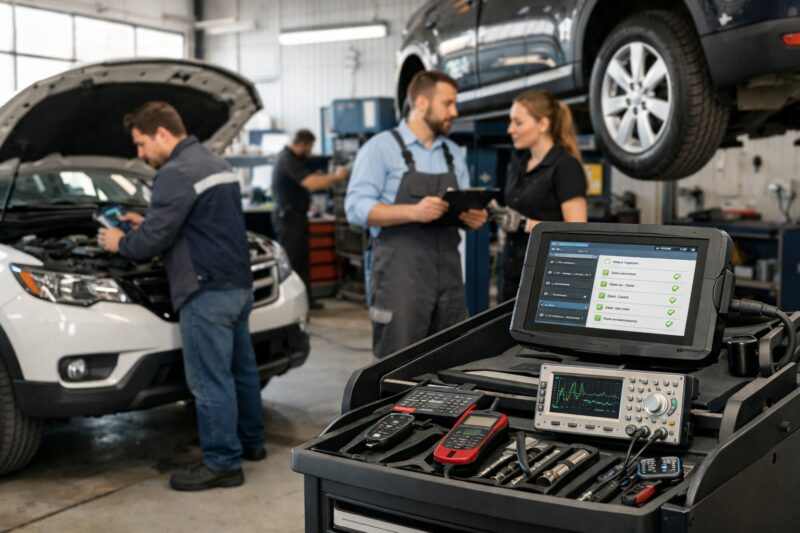
Common diagnostic approaches start with visual inspections and system checks, then use scan tools to review stored and live data. Shops may also run targeted functional tests, such as verifying sensor response under safe conditions. Pressure and vacuum tests can confirm leaks or flow issues, while electrical checks with multimeters can validate voltage, ground integrity, and continuity. Road testing remains useful when complaints depend on load, vibration, or speed range.
What “good” looks like is documentation of findings and a clear diagnostic path. The shop should explain what it inspected first, why it chose that order, and what results support or weaken each hypothesis. It should also provide stop criteria, meaning when the shop will pause testing and ask for authorization to go deeper. This guards against open-ended diagnostic spending when evidence does not justify extra teardown.
Guardrails also matter for estimates. Diagnostic charges should tie to measurable outcomes, like confirmed leak location or validated system performance. If findings are uncertain, the shop should explain which assumptions it used and what changes if those assumptions fail. Parts replacement should link to evidence, not just “most likely” guesses.
Intermittent and sensor-related issues deserve extra care. These problems often require repeated test conditions so the shop can reproduce the fault and confirm the fix. A common mistake is replacing a sensor because a code appeared once, then ignoring wiring stress, connection corrosion, or power supply variation. A comprehensive hub should address the full signal path when evidence points there.
For reference on how diagnostic reliability and data quality matter in modern systems, see guidance from the U.S. Department of Transportation on vehicle maintenance concepts and safe operation: NHTSA Vehicle Safety and supporting maintenance context from Federal Trade Commission auto repair resources. Shops also follow diagnostic and repair best practices informed by service documentation and manufacturer procedures, which is why asking for documentation is a strong buyer move.
Select the right service path based on symptom clarity and your risk tolerance
You can shop smarter by choosing a service pathway that matches how clear your symptoms are. Some issues need broad maintenance coverage, while others need deep diagnostic-led work to avoid repeating repairs. A comprehensive hub helps you pick the pathway that balances predictability, depth, and risk.
Start with realistic buying pathways. One pathway is standard maintenance or repair visits for known issues like worn brake pads or an overdue service. Another is a diagnostic-led visit when symptoms are unclear, such as a vibration that appears only under specific loads. A third pathway is preventive inspection packages when you want to reduce risk before the problem escalates. A fourth focuses on drivetrain or electrical repair plans when you have confirmed behavior, like a charging system fault or known transmission shift issue.
Tradeoffs are part of the decision. Maintenance and inspection can be predictable, but they may not address a sudden drivability problem. Diagnostic-led approaches can cost more upfront, but they reduce rework by targeting the evidence first. Speed versus thoroughness matters too, especially when a symptom could be caused by multiple systems. A fast “replace the part” approach can be cheaper today, but it may increase total cost if the root cause is different.
When you compare shops, use proof-based criteria. Look for clear documentation quality, transparent labor operations, and warranty terms that match the work performed. Labor operations should be written so you can understand what tasks the shop did, not just the parts it installed. This is where a reliable shop selection checklist can help you compare apples to apples across visits.
Shop size and capability also shape options. Independent shops may offer flexible scheduling and practical diagnostics, while dealer shops often have access to manufacturer-specific service procedures for certain models. Specialized shops may focus on specific categories like electrical or alignment-heavy repairs. The best fit depends on your vehicle’s systems and the type of failure you suspect.
A deeper nuance is knowing when “fast” is risky. If the symptom touches brakes, steering, or critical electrical behavior, earlier diagnosis often prevents cascading failures. Even if thorough work costs more, it can still be cost-effective by stopping recurrence.
As you shortlist options, use an auto shop finder checklist to confirm what the shop offers and how it explains scope. Then compare what each shop documents during intake, diagnostics, and completion so you can pick the path that matches your risk tolerance.
Prevent re-dos by avoiding common misconceptions about repairs and estimates
Many redo problems come from mismatched expectations, not from bad intentions. If a shop repairs to your assumption instead of your evidence, you can end up paying twice. A comprehensive hub reduces this risk by aligning what you request with what the shop plans to prove.
A common misconception is “replace it until it works.” This is especially risky when symptoms can share causes, like a charging issue mimicking sensor errors. Another pitfall is ignoring warning lights until the problem escalates. Early diagnostics are often cheaper than emergency repairs because the shop can inspect and test under normal conditions. If you wait for failure, the system may add secondary damage, making diagnosis harder.

Estimator mistakes also create surprise bills and rework. Vague quotes, missing labor assumptions, and “one size fits all” parts lists can fail when your vehicle needs seals, fasteners, or surface cleanup. Exclusions matter too, including what happens if additional damage is found during disassembly. If the estimate does not mention these possibilities, ask how the shop will communicate changes before doing extra work.
Warranty confusion is another source of re-dos. Coverage often depends on documentation and whether related parts were installed correctly and tested. Before approving repairs, confirm what the warranty covers and what conditions can void it. The right shop explains how it tracks work quality and what it documents for future claims.
Communication traps are preventable. You should describe when symptoms occur, what changed before they started, and any recent repairs, engine mods, or fuel-related events. If you skip intake details, the shop’s diagnostic hypotheses can start off wrong. For safety-related systems like brakes and steering, waiting can be more expensive and riskier than earlier diagnosis and evidence collection.
To standardize your expectations, follow a fast accurate repair checklist during intake. It helps you confirm what the shop will inspect, what it will test, and what proof you should receive before you authorize each repair step. When combined with a reliable shop selection checklist, it reduces the chance of misunderstanding the estimate.
Plan for hard cases by focusing on root cause and evidence thresholds
Complex and high-mileage issues require planning that targets root cause, not just the most visible symptom. A hub approach uses evidence thresholds and stop criteria so repairs do not become random. This is how you keep hard cases from turning into repeated re-dos.
Hard cases often include persistent drivability problems, multiple concurrent faults, mystery coolant or oil leaks, recurring electrical “gremlins,” and abnormal wear patterns. Root-cause planning asks a key question: what evidence would prove the cause, and what evidence would show it is not the cause? The practical way to do this is to set confirmation tests that must pass before moving to the next repair phase.
High-mileage vehicles bring additional nuance. Wear-induced tolerances can make symptoms subtle, and related components may be close to limits even if they have not failed fully. A comprehensive hub inspects connected systems together, such as suspension components that influence tire wear or cooling parts that influence thermostat and fan behavior. This reduces unnecessary replacement of parts that still meet safe specifications.
Failure mode cascades are where many guides fall short. One system’s failure can mimic another, like alignment errors accelerating tire wear, or charging issues destabilizing sensor readings. The hub should map these relationships and explain how the diagnostic plan checks for cascading causes. A common mistake is to correct one symptom without checking upstream or interface systems that can keep re-triggering the same complaint.
Parts availability and phased repairs also require careful scope control. If full service is not possible in one , the shop should phase work based on evidence and safety priority. For example, it might verify the leak source first, then plan replacement steps once parts arrive. The hub should keep each phase tied to documented findings so the final repair is consistent, not improvised.
If you are managing a fleet record or want future troubleshooting continuity, ask the shop how it will retain measurements and test results. That documentation becomes the “memory” of the case, helping prevent future misdiagnosis when symptoms return.
Know what a comprehensive experience looks like from intake to final verification
A comprehensive auto repair services experience should feel organized, documented, and verification-driven. From first contact to completion, you should know what the shop will do, what it expects to learn, and what proof it will provide before you pay. This is the customer journey your hub should deliver.
Start with intake. A good shop asks structured questions about when symptoms happen, how they present, and what recent work or changes occurred. It also sets boundaries on what it will inspect during the initial . That prevents “surprise discoveries” from feeling like scope theft.
Next comes the inspection and diagnostic plan approval. The shop should explain its diagnostic sequence and what it will do if results point in a new direction. Then you receive an estimate review that separates diagnostic work from repair tasks. If scope changes, a hub communicates updates and asks authorization before continuing.
Finally, verification should close the loop on the complaint. After repair, the shop should provide test results, measurements, or observations that match the symptom you reported. That could include scan tool outputs that demonstrate corrected behavior, brake checks that confirm pressure or feel within expected ranges, or alignment confirmation that matches tire wear concerns. This “completion proof” matters because it gives the next mechanic or warranty claim process a factual starting point if issues return.
Commercial needs deserve special clarity. If you drive for work, you need timeline explanations that include realistic constraints like parts availability or system complexity. If your vehicle is part of business records, the shop should provide paperwork that supports future service history. A comprehensive shop services approach can support consistency of quality when repairs repeat across your fleet.
Use a checklist mindset as you review your paperwork. Confirm itemized estimates, parts and labor breakdown, expected outcomes, estimated hours, documented findings, and post-repair test results. You can also keep notes by following a comprehensive shop services overview that matches how the shop explains intake, diagnostics, and completion.
Frequently asked questions about Comprehensive Auto Repair Services Hub
What should I ask a shop before approving any repairs?
Ask what diagnostics it plans to run first and what evidence would change the repair plan. Request an itemized estimate that separates diagnostic charges from repair line items. Also ask for stop criteria, meaning when testing pauses and you approve the next step.
How do I know whether I need diagnostics or just routine maintenance?
If a symptom started unexpectedly, warning lights appeared, or drivability changed, diagnostics are usually the safer start. Routine maintenance applies when you’re only tracking scheduled intervals and no new symptoms exist. A good shop can explain why it treats your complaint as symptom-based evidence rather than a generic service item.
What does a comprehensive auto repair services estimate include?
A comprehensive estimate should list parts, labor operations, and diagnostic work as separate line items. It should also include exclusions and assumptions, like seals or fasteners that may be required during disassembly. Finally, it should describe expected verification steps that confirm the fix.
Can a shop fix multiple issues in one visit without causing delays or rework?
Yes, if the shop sequences work based on evidence and coordinates overlapping systems. It should collect diagnostic data first when symptoms share causes, then plan repairs in a logical order. If new findings emerge, the shop should update authorization rather than bundling uncertain scope into one approval.
What should be in the final paperwork after my vehicle is repaired?
Your final paperwork should include what was inspected, what was repaired, and what verification confirmed the results. It should list parts replaced and the related labor operations, plus any warranty terms. Keep test results and measurements, since they are useful if symptoms return.
How do warranties usually work for repairs and replacement parts?
Most warranties cover the workmanship and the replaced parts for a stated time or mileage period. Coverage conditions usually require that repairs were performed correctly and that you can provide documentation. If you later modify related components or ignore recommended follow-up inspections, coverage may be limited.
Why do intermittent problems cost more to diagnose than constant ones?
Intermittent faults often require repeated test conditions to reproduce the issue reliably. That means more time observing, testing, and verifying after changes. The shop may need more than one attempt before it can confirm root cause and complete repair verification.
What’s the difference between fixing the symptom versus solving the root cause?
Symptom fixes target what you can feel or see right now, like a component replacement that temporarily stops the complaint. Root-cause repair confirms what caused the behavior, using evidence and confirmation tests. If the underlying cause remains, the symptom can return and lead to rework.
How long does a complete diagnostic and repair process typically take?
Timelines vary based on complexity, parts availability, and whether the issue can be reproduced during testing. Many straightforward repairs are completed within days, while complex drivability or electrical issues can take longer due to repeated verification. Your shop should explain what affects the schedule and how it estimates diagnostic time before teardown begins.
What should I do if the same problem comes back after repair?
Return to the same shop with your repair paperwork and describe when the symptom reappears. Ask for a warranty review that ties the comeback to the documented tests and measurements from the prior . If the shop needs re-diagnosis, request an updated evidence plan and confirmation steps before approving additional work.
Use a hub-first checklist to compare shops and reduce misdiagnosis risk
You can compare auto repair shops more accurately when you use a consistent hub-first checklist. Instead of relying on impressions, you focus on intake quality, diagnostic evidence, and verification practices. That approach protects you from guesswork and reduces the chance of paying for parts that do not solve the cause.
Start by evaluating how the shop answers key “proof” questions: what tests it runs, what data it reviews, and what documentation it retains. Then check how it handles uncertainty, such as intermittent faults, sensor noise, or overlapping system symptoms. A shop that treats diagnostic time as structured work will usually explain stop points and the evidence required to proceed.
Next, review how it quotes labor operations and parts scope. A reliable shop selection checklist helps you confirm whether the estimate is itemized and whether it includes realistic exclusions. It also helps you see whether the shop offers completion verification, such as scan-based results, leak checks, brake performance checks, or alignment confirmation when relevant.
If you are shortlisting multiple options, use an auto shop finder checklist to compare what each shop covers and what categories it can handle. Then ask each shop to describe its “completion proof” standard for your specific complaint. This is where a comprehensive shop services overview becomes practical, because it maps what should happen at intake, during diagnostics, and at final verification.
A final nuance is matching your risk tolerance to the diagnostic depth. If safety systems are involved, choose the pathway that prioritizes evidence over speed. If budget is tight, you can still request a hub plan that limits scope to what evidence supports, rather than abandoning root-cause work entirely.
Choose your next step: request an itemized estimate and require verification proof
The biggest advantage of a Comprehensive Auto Repair Services Hub is confidence: you get comprehensive coverage across systems, a decision path that starts with diagnostics, and verification that proves the repair worked. That structure makes it easier to compare shops and to plan your approvals with fewer surprises. For commercial needs in 2026, documentation and completion proof also help keep records consistent across repeat services.
As your next move, request an itemized estimate that separates diagnostics from repairs and states assumptions clearly. Then ask for the diagnostic plan and the stop criteria it will use when findings are uncertain. Finally, confirm what verification/testing you will receive after repair, so you know the work is closed-loop rather than assumed.
If you want to shortlist effectively, shortlist 2–3 shops and compare how they explain scope and proof using the same criteria. Use a reliable shop selection checklist to compare documentation quality, warranty terms, and labor clarity. This helps you pick the shop that minimizes rework risk by tying each repair step to evidence and completion proof.
FAQ pricing and timeline guidance for auto repair services
Cost for auto repair services varies because scope depends on symptoms, diagnostics needed, parts availability, and the evidence required before repair. For example, a basic maintenance visit can be predictable, while an intermittent electrical issue may require multiple test conditions and follow-up checks. Your best estimate will come from an itemized quote that separates diagnostic time from repair tasks.
Timelines also vary widely by complexity, parts sourcing, and whether the symptom can be reproduced during the initial diagnostic window. Many common repairs can be handled within a few days, but complex drivability or electrical issues can take longer due to repeated verification. Ask your shop to explain which factors affect schedule and how it updates you if new findings appear.
If your repair involves safety systems, timelines should not come at the expense of verification proof. A hub approach still aims to reduce rework by requiring confirmation testing and by documenting measurements for accountability. For any estimate, request the diagnostic plan approval process so you can authorize work in clear phases rather than one unclear total.
If you need help comparing options, keep using the auto shop finder checklist approach and ask for the same proof points from each shop. That standardization makes pricing and timeline conversations more meaningful, because you are comparing the same depth of diagnosis and the same verification expectations.
Sources: Federal Trade Commission auto repair guidance NHTSA vehicle safety AAA vehicle maintenance and repair information
Updated September 2026