
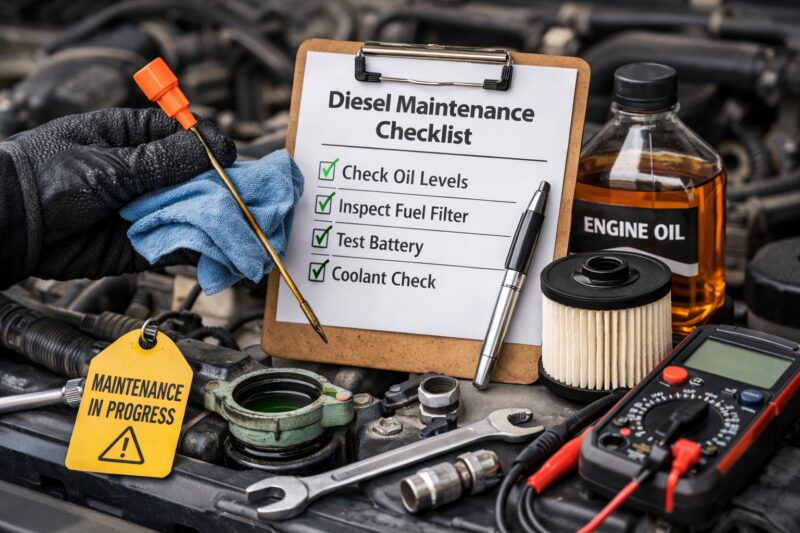
Good diesel engine maintenance prevents failures and extends service life by managing the main cause-and-effect inputs: fuel, lubrication, cooling, filtration, and aftertreatment health. That is exactly what “best practices” means in real-world use, not generic reminders. Even if you manage a fleet, a work truck, or an industrial unit, the logic stays the same. In practice, diesel engine maintenance is a disciplined loop of inspect, verify, adjust, and document based on measured trends. It also means knowing when to stop routine work and start diagnostics.
This guide is built for the way engines actually wear under duty. It covers planning decisions, the systems that most often fail, and the signals that tell you an interval should change. You will also see how short trips, dust, humidity, and storage habits can shift the risk picture. Finally, you will get clear decision criteria for when to involve a professional diesel engine service and how to evaluate the results. Sources are grounded in manufacturer and government guidance where available, including the U.S. Environmental Protection Agency on aftertreatment considerations and the American Petroleum Institute on oil analysis concepts.
Build a maintenance plan that matches how the engine actually works
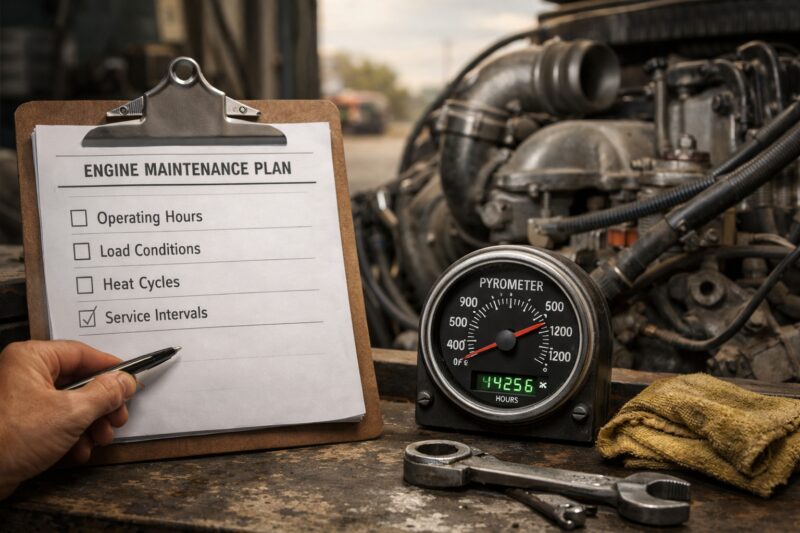
The best maintenance plan starts with how your engine is used, not how many miles it traveled. Diesel engines wear based on heat cycles, load, contamination exposure, and the time the engine spends in key operating zones. Therefore, “best practices” begin with duty cycle mapping and then convert that into inspection intensity.
First, map real duty: idle time, percent time at load, rpm patterns, stop/start frequency, and ambient temperature swings. Next, note whether the unit often does short work trips or runs long, steady routes. Short runs and frequent cold starts can increase oil dilution and keep aftertreatment from completing normal cycles. In addition, dust-heavy environments increase intake and filtration demands.
Then define your maintenance “inputs” that drive wear and risk. Fuel quality affects water and contamination. Oil protects when it stays clean and properly conditioned. Cooling and airflow control combustion timing margins and reduce thermal stress. Filtration determines whether contaminants stay out or circulate inside the engine. After that, aftertreatment health influences derate events and soot loading. These inputs work together, so skipping one can still cause trouble.
Document what matters, because trends beat snapshots. Track service history, measured wear indicators, filter restriction trends, oil analysis results, and aftertreatment events when applicable. Also log fault codes and derate or limp mode occurrences. A common mistake is using calendar intervals alone. For seasonal schedules or frequent short trips, the calendar can drift away from real exposure.
Use criteria to adjust intervals without guesswork. For example, trend filter restriction and oil condition. If restriction rises faster than usual, plan earlier service. If coolant tests show declining inhibitor performance, inspect cooling components sooner. If oil analysis suggests rising soot or fuel dilution, tighten sampling or change service frequency.
In an edge case, a unit may run many “calendar days” yet log low fuel burn. That can happen with light duty, but contamination exposure can still be high due to storage moisture. Meanwhile, heavy duty may burn more fuel in fewer days, accelerating filter and oil loading. Best practices handle both by using measurable indicators, not only dates.
Keep lubrication and filtration systems performing so wear stays controlled
Oil and filtration are the main line of defense against internal wear and varnish. If you get lubrication right and keep filtration tight, the engine can handle heat and load with less risk. As a result, this is one of the most practical areas for diesel engine maintenance best practices.
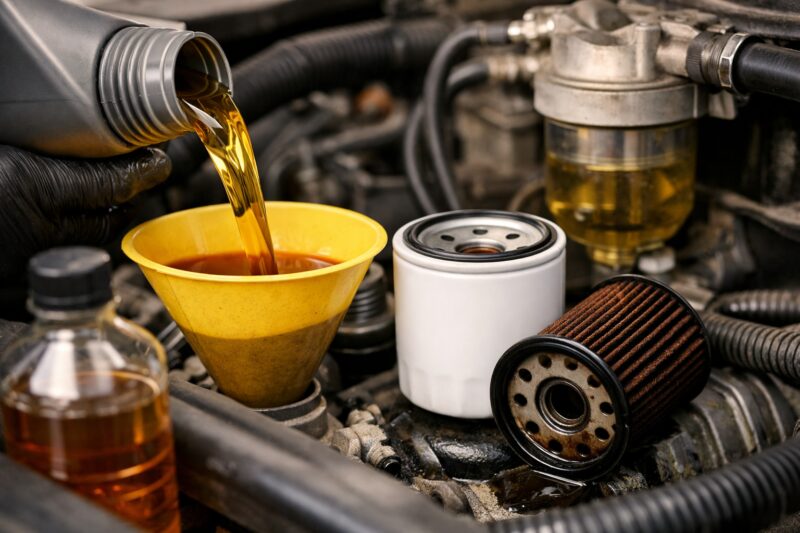
Use the correct oil specification and viscosity for your engine. Then monitor oil level and watch for abnormal consumption. Pay special attention to oil dilution, which often comes from repeated short runs or a fuel system issue. Oil analysis and interval planning become more valuable, because “changed oil” can still leave reduced protection if contaminants circulate too long.
Filtration best practices include using OEM-recommended filter specs and verifying seal integrity after installation. Also ensure there is no bypass path. Poor seal seating, damaged O-rings, or incorrect filter parts can create unfiltered flow during operation. That can circulate abrasive particles and accelerate wear even when the oil change interval looks correct.
Understand the difference between draining and restoring protection. If filtration was bypassing or if the system did not prime well, fresh oil can still pick up contaminants quickly. This often shows up as rising wear markers in oil analysis and inconsistent oil condition results. Therefore, maintenance should include checks after the filter change, such as leak checks and evidence of correct pressure behavior where you can measure it safely.
Common failure modes linked to lubrication and filtration include low oil events, wrong viscosity, neglected oil cooler maintenance, and fuel contamination that masquerades as “normal wear.” For example, a fuel injector leak can add fuel to the oil. The oil may look “okay” but still lose viscosity and protective film strength. Practical application means you treat fuel contamination as a root-cause problem, not just an oil change problem.
Operational guidance also matters. Avoid long idling when you can reduce it, because it can drive incomplete combustion and increase soot and dilution risk. Warm-up is also not the same as “revving cold.” If the engine is stored for weeks, follow manufacturer start-up and priming guidance before applying load.
For maintenance teams, keep the troubleshooting mindset. If a unit repeatedly needs oil early, investigate oil cooler performance and possible contamination sources. If pressure behavior is abnormal after service, do not “keep running and .” Stop, verify installation, and confirm pressure readings with proper tools.
Protect fuel quality and injection components to avoid hard-to-diagnose problems
Fuel problems are a top cause of confusing “engine wear” symptoms. The engine may run rough, smoke, or feel weak, yet the root cause can be upstream fuel contamination or restriction. Because of that, fuel protection is central to diesel engine maintenance best practices.
Fuel can bring water, particulates, and microbial growth in certain storage conditions. Even when microbial growth is not expected, water remains a reliable threat because it promotes corrosion and can clog filters. In addition, incorrect fuel type or wrong blend quality can change combustion behavior. You may see misfire patterns, unstable idle, or power loss that looks like ignition or mechanical issues.
Best practices for fuel system components start with water separation and filter service procedure. Use the correct service steps, including bleeding or priming as your manufacturer specifies. Then verify you removed air correctly after service. Inspect for leaks at fittings and connections. Also check for signs of restriction, such as slow starts, fuel pressure drops, or rapid filter loading.
Use diagnostics-forward thinking before replacing parts. If the engine smokes under load and then clears at steady speed, that can point to delivery issues. Rough idle may suggest combustion instability, but fuel restriction or injector performance problems can still be the driver. Therefore, confirm fuel delivery performance and filtration health before expensive injector work.
Here is a deeper nuance many guides miss. Symptoms often appear mechanical, but the root cause can be upstream. A partially restricted fuel line can reduce delivery and cause incomplete combustion. That raises soot and contaminates oil. The engine then “wears” faster, which makes people blame oil alone.
Who it applies to depends on how the unit stores and uses fuel. Lighter-duty owners may face more seasonal storage moisture risk. Fleets with bulk tanks should manage sampling cadence and keep contamination controls active. In either case, verify fuel condition with measurable checks, not smell or guesswork.
Real-world scenario: a work truck performs daily short trips, then intermittently struggles to restart after overnight cold. Many teams immediately suspect batteries or starters. However, a partially clogged filter with water can still cause hard starts. A proper water separation check and measured delivery verification often resolves the issue faster than random component swaps.
Maintain cooling and airflow so the engine stays in its designed temperature and burn window
Cooling and airflow set the temperature boundaries for stable combustion and reliable wear rates. If the engine runs too hot or unevenly cooled, internal stress rises even if oil changes are perfect. For that reason, cooling system inspection is a best practice you should treat as “wear prevention,” not just a leak check.
Start with correct coolant type and concentration. Verify fill levels and bleeding procedures. Then inspect hoses, clamps, radiator or heat exchanger surfaces, and pressure-cap condition where applicable. If an intercooler or aftercooler is used, inspect for external clogging and signs of oil residue. Small blockages can reduce heat rejection and raise intake temperatures.
Airflow matters as much as coolant. Intake restriction can shift combustion efficiency and increase soot formation. EGR-related mixing effects can also change soot and operating temperature. Even when you keep those systems general, the maintenance point is clear: protect the engine’s designed air path and keep filters and screens in good condition.
A deeper-than-obvious issue is how chronic overheating accelerates wear that oil changes cannot fix. For example, repeated short overheating events can damage cylinder liners, piston rings, and bearings through thermal cycling. Oil can still remain “within spec,” yet service life drops because heat damage accumulates.
Practical application includes a consistent inspection rhythm. Use visual checks for coolant loss and contamination. Track temperature trends from the engine data system. Watch thermostat behavior when you have a safe way to measure it. Also respond quickly to persistent temperature swings after parts replacement.
Tradeoffs exist with flushing. Aggressive flushing can remove deposits, but it can also dislodge debris into sensitive passages. Therefore, flush only when the situation calls for it and when you can confirm the correct chemistry afterward. In contrast, correct top-off and inhibitor maintenance can prevent scale and corrosion without frequent aggressive flushing.
In a common edge case, coolant loss seems small between services. Yet it can still cause localized hotspots at the cylinder head. That can lead to repeat sensor faults, intermittent power loss, and hard-to-find degradation. The best practice is to confirm loss sources early and use coolant test results to guide chemical correction.
Manage aftertreatment and emissions components as part of reliability, not just compliance
Aftertreatment health affects starting, power, fuel economy, and derate risk. If aftertreatment does not complete its cycles, soot and ash can accumulate beyond what routine service expects. Therefore, diesel engine maintenance best practices should include aftertreatment reliability checks.
Keep the focus on maintenance outcomes, not only light compliance. Follow manufacturer guidance for DPF, SCR, and related service procedures. Use the correct fluids for systems that require them, and track service procedures and regeneration events. Also watch for warning lights that indicate different severity levels. A “small” event that repeats often becomes bigger service work later.
The operating pattern is a key mechanism. Short trips and frequent idling may prevent successful aftertreatment cycles. As a result, incomplete soot burn can increase loading. Meanwhile, reduced regeneration effectiveness can raise exhaust backpressure and increase fuel penalty during later attempts to clear the system.
Failure modes to watch include repeated limp mode episodes and persistent derate symptoms. If the engine enters a protective mode more than once in a short period, treat it as a reliability issue. Next, investigate why the regeneration strategy is not working, such as restrictive airflow, fuel quality issues, or insufficient operating conditions.
Decision boundaries matter. Some aftertreatment work is preventive and can be handled with inspections and scheduled service. Other conditions require professional diesel engine service and diagnostic work, especially when faults point to sensor plausibility or control system limits. Also, do not reset faults blindly, because the root cause often persists.
Real-world scenario: a fleet runs delivery routes with frequent stops and short segments. The DPF warning may appear, then clear after longer highway time. If the pattern repeats, the aftertreatment system is learning the same incomplete cycles repeatedly. Best practices here include planning route operating windows when possible and verifying that regenerations can actually complete under realistic duties.
For additional context on how EPA rules relate to emissions control systems, see U.S. Environmental Protection Agency — your manufacturer’s service strategy still controls practical maintenance steps.
Choose the right service intervals and inspection depth using measurable indicators
Good diesel engine maintenance uses layered intervals plus trend verification. Instead of relying on a single schedule, you combine routine checks with deeper inspections based on measurable indicators. This is where “best practices” become evidence-based.
Start with the minimum routine set. That typically includes oil and filter service per your engine’s plan, visual inspections, and basic checks for leaks. Then add scheduled deeper inspections when data suggests higher risk. For many engines, oil analysis and interval planning provide a strong evidence layer when performed consistently.
Measurable indicators include oil analysis results, filter restriction trends, coolant test results, and fuel system performance readings. Also use fault history from the engine control module and any recorded derate or regen events. Track not only whether faults occurred, but also frequency and operating context.
Deeper nuance: interval adherence is not the same as condition verification. A fleet can hit every calendar service date and still miss deterioration. That happens when usage changes, fuel quality varies, or maintenance practices drift. Therefore, you should treat the interval as a starting point and adjust based on verified condition data.
Set criteria for escalation so you know when to go deeper. If oil analysis shows rising fuel dilution or soot loading trends, act sooner. If filter restriction rises faster than normal, inspect for contamination sources. If coolant tests show inhibitor depletion, plan cooling system service before corrosion accelerates.
In 2026, modern data sources can support discipline. Telematics can show temperature trends, idle time, and load patterns. Maintenance management systems can enforce documentation and make comparisons easier across units. Still, best practices require you to interpret data correctly, because sensors can drift and logs can miss short events.
For foundational guidance on oil analysis concepts, reference American Petroleum Institute — and always follow engine and oil supplier recommendations for sampling frequency and interpretation limits. If a result is out of range, confirm the sampling procedure before concluding the engine is failing.
Avoid common misconceptions that turn routine maintenance into recurring failures
Routine service prevents many failures, but it cannot compensate for missed root causes. A common misconception is that changing oil and filters automatically stops diesel engine problems. In reality, fuel contamination, overheating, and aftertreatment cycle disruptions can still damage components.
Consider the mechanism. Oil and filters protect against wear particles, but they cannot fix repeated fuel dilution. If injectors leak or fuel delivery is restricted, contaminants enter the oil stream. Similarly, coolant issues can accelerate thermal damage even when oil condition seems acceptable.
Another misconception is that “any downtime is fine.” In practice, storage can be a risk factor. Moisture in fuel and air can create corrosion and microbial growth conditions. Batteries and charging systems also matter because weak cranking can cause incomplete starts and higher exhaust soot loading.
Here is an overlooked failure pathway. Incorrect reassembly after service can create leaks. Wrong torque, improper seal seating, or reused gaskets can allow air or coolant leaks that only show up under load. As temperatures rise, leaks expand and symptoms appear later. That leads to repeated repairs because the true cause was created during service.
Small warning signs deserve respect. Minor smoke, odor, slight performance changes, or early filter loading can signal an upstream issue. Waiting until the engine derates can turn a minor fix into a deep diagnostic and larger component repair.
For DIY versus professional work, be realistic. Basic tasks like checking oil level and visual inspections are low-risk. However, pressure and flow testing, calibration-related diagnostics, and aftertreatment fault isolation require the right tools and procedures. If you lack those tools, you can create uncertainty that wastes time and money.
Edge case: a unit returns “fine” after a routine service, then fails within days under the same duty. That often points to a procedural issue like incorrect priming, improper filter installation, or a bypass condition. Best practices include verifying the system state immediately after work, not days later.
Compare maintenance approaches so you can pick what fits your equipment and budget
Different maintenance strategies can still achieve best-practice outcomes. The key is choosing the approach that matches your duty cycle and your ability to verify condition. Therefore, compare OEM-scheduled plans, condition-based methods, fleet window planning, and outsourced diagnostic-led maintenance.
OEM-scheduled maintenance provides baseline predictability. Its strength is consistency across units. However, it may not reflect your real load profile, fuel variability, or short-trip patterns. As a result, you could be late on filtration or early on service, depending on how the engine actually runs.
Condition-based maintenance uses measured indicators to optimize service. Its strength is interval reduction when risk is high and interval extension when conditions are stable. Its limitation is discipline and sampling capability. You must do oil analysis and interpret results correctly, and you must track restriction trends and coolant test outcomes.
Fleet strategy and planned service windows reduce downtime and increase scheduling control. Its benefit is operational planning. Its limitation is that it still needs measurable indicators. Otherwise, you might schedule late service for a subset of units with high contamination exposure. In best-practice fleets, some inspections are still on-condition, even during planned windows.
Outsourced diagnostic-led maintenance can resolve root causes faster when symptoms appear. Its benefit is speed to clarity, especially when you need pressure testing or aftertreatment diagnostics. Its limitation is communication. If you do not provide a complete duty history and maintenance record, you may see repeat visits and repeated parts guessing.
When evaluating providers, ask for evidence and measured findings. A professional should show test results, measured observations, and the rationale for parts replacement. Also verify that they discuss upstream inputs, not just downstream repairs. If a shop only offers “replace and reset,” that is a red flag.
Tradeoff to consider: adding condition-based checks costs money upfront. But it can reduce total cost by preventing repeat work and catastrophic failures. For many operators, the best path is hybrid: scheduled service plus targeted condition checks where the risk is highest.
Diesel engine maintenance in real-world locations: how environment and duty change the plan
Environment changes what “best practices” look like because contamination and temperature swings change risk. Dust, humidity, freezing temperatures, and heat all influence filtration loading and fuel moisture exposure. As a result, even identical engines can need different inspection depth across seasons.
In dust-heavy regions, air and intake filtration become more critical. You should monitor filter loading indicators or restriction data when available. Also inspect intake connections for leaks, since unmetered air can increase soot risk. During long hauling in dry seasons, fuel stability and bulk tank controls still matter because water ingress can happen through storage venting and condensation.
In humid or monsoon-like seasons, water separation deserves extra attention. Fuel filter elements may load faster if water and particulates rise. Therefore, keep sampling cadence and verify draining practices. Also check for signs of microbial growth conditions, especially if tanks sit unused for weekends or seasonal gaps.
In colder conditions, start-up routines and storage discipline matter. Cold starts can increase fuel and soot loading if cranking is slow or if warm-up is interrupted early. Consider battery health checks and ensure correct fuel handling. Also verify coolant concentration to protect against freezing and to keep corrosion inhibitors effective.
Here is a deeper nuance. One region’s best practice can fail elsewhere. Over-flushing cooling systems in a place where proper coolant top-off is stable can increase risk if debris dislodges. Meanwhile, under-maintaining filtration in a dusty region can quietly raise soot and fuel dilution, which later shows up as aftertreatment issues and oil analysis red flags.
Practical takeaway: adapt the plan annually using historical data. Review filter loading patterns across seasons. Compare coolant test trends and oil analysis results by month. Confirm that aftertreatment events match operating patterns, not just calendar dates. This makes your maintenance plan an audit-ready system, not a set of guesses.
If you need help implementing this kind of data-informed approach, look for a team that offers professional diesel engine service with measured findings and a clear inspection checklist process, including cooling system inspection checklist steps.
Staying ahead with diesel engine maintenance helps you reduce downtime and keep performance steady, but it’s also what makes the next step—answering common questions in the FAQ—more practical. When issues do show up, reliable engine trouble diagnostics support can guide you toward the right checks, whether you’re noticing changes in starting, power, or fuel economy.
As you move into the FAQ section, focus on the same best practices you use day to day: consistent inspections, correct service intervals, and careful attention to warning signs. This approach makes it easier to confirm what’s normal versus what needs action, so your maintenance decisions stay accurate and your troubleshooting is faster.
Frequently Asked Questions About Diesel Engine Maintenance: Best Practices
What are the most important diesel engine maintenance tasks to do every service cycle?
Every cycle should include oil level verification, oil and filter service, and a visual inspection for leaks. You should also check air and intake paths for restriction and confirm that fuel water separation is functioning as expected. After service, verify the system is assembled correctly and watch for abnormal pressure or smoke behavior on the first run. Finally, log what you did so trends can be compared later.
How often should I change diesel fuel filters, and what signals mean they’re due early?
Change fuel filters based on restriction and condition signals, not only mileage or calendar dates. Common early-due indicators include faster filter loading, fuel pressure drop, hard starts, or unstable idle. Water risk from storage or seasonal humidity can also make filters due sooner. After replacement, bleed or prime correctly to avoid air-related delivery problems.
Does short-trip driving require different diesel engine maintenance than highway driving?
Yes. Short trips often increase oil fuel dilution because the engine may not reach conditions needed for stable combustion. They also can prevent effective aftertreatment cycles, increasing soot and backpressure risk. Therefore, inspect aftertreatment events, monitor oil condition more closely, and verify coolant and airflow remain stable.
What oil condition signs suggest my diesel engine maintenance schedule should change?
Oil analysis trends that show rising soot loading, increased fuel dilution, or viscosity shifts can mean the schedule should tighten. If contamination markers rise faster than in prior samples, filtration or fuel delivery may be failing. Also watch for repeated abnormal results after routine service, because that can indicate sampling or installation issues. In that case, you may need deeper checks rather than only more frequent oil changes.
Can poor fuel quality cause long-term damage, and how do I prevent it with maintenance?
Poor fuel quality can cause corrosion, water-related damage, clogged filters, and combustion instability over time. It can also increase soot production, which then loads the oil and strains aftertreatment. To prevent this, prioritize water separation, sample fuel when variability is likely, and maintain filtration with correct service procedures. Then verify fuel delivery performance with measurable checks before replacing injection components.
What are the best practices for preventing diesel engine overheating between scheduled services?
Between services, check coolant level, inspect for leaks, and monitor temperature trends on your engine data display. Also look for airflow restriction at the radiator or intercooler, since blocked heat rejection can mimic coolant failure. If temperature climbs during normal operation, escalate quickly by verifying coolant concentration and checking thermostat or sensor plausibility. Use a cooling system inspection checklist approach so you do not miss small issues like hose weakness.
How do I maintain aftertreatment components without causing unnecessary downtime?
Track aftertreatment warning light history and regeneration or maintenance events. Best results come when you manage operating patterns so regeneration can complete, especially for units used on short trips. Use manufacturer-guided service procedures, and avoid resetting faults without resolving the root cause. If symptoms repeat, request professional diagnostics so you minimize repeat downtime.
What common diesel engine maintenance mistakes lead to repeating repairs?
One mistake is assuming oil and filters alone prevent problems even when fuel contamination or overheating is present. Another mistake is skipping trend data, so you do not catch filter restriction or oil condition changes early. A third common cause is service reassembly errors, like improper torque or seal seating, which can create leaks later. These issues lead to repeated repairs because the root cause is never addressed.
When should a mechanic perform diagnostics instead of routine service?
Diagnostics are needed when you see warning lights with repeated severity, repeated limp mode events, or symptoms that return right after service. They are also required when measurable indicators contradict expectations, like abnormal fuel pressure behavior or oil analysis results that worsen after an oil change. If fault history points to sensors or control strategy limits, routine service alone will not resolve the issue. A diagnostic-led approach is often faster than parts guessing.
What long-term diesel engine maintenance steps matter most for fleets and heavy-duty use?
Long-term success depends on consistent recordkeeping, condition-based adjustments, and disciplined fuel and storage controls. Use oil analysis and interval planning with stable sampling procedures and compare results across units. Track filter restriction and coolant test trends so intervals match actual exposure. Also set provider accountability expectations by asking for measured findings and a clear explanation of root cause. That is how fleets avoid repeating the same repairs cycle after cycle.
Conclusion: turn best practices into an auditable plan for 2026
Diesel engine maintenance best practices focus on the inputs that drive wear: lubrication, fuel quality, cooling, filtration, and aftertreatment health. When you match inspection depth to duty cycle and environment, you prevent failures instead of just reacting to them. Therefore, the strongest plans are built on measurable indicators, not only calendar schedules.
Start by documenting duty context and building a decision path for when to service and when to diagnose. Then reinforce routine work with targeted verification like oil analysis and interval planning, trend tracking, and a cooling system inspection checklist mindset. Use professional diesel engine service when symptoms repeat or when measurable indicators conflict with expectations.
As your next step, review the engine’s maintenance history and identify the top risk inputs. Then choose an OEM-scheduled baseline, add condition verification where it matters most, or adopt a hybrid strategy that balances downtime and evidence. With an auditable record of what you inspected and why you adjusted intervals, your maintenance program stays reliable even as operating patterns change.
Updated September 2026