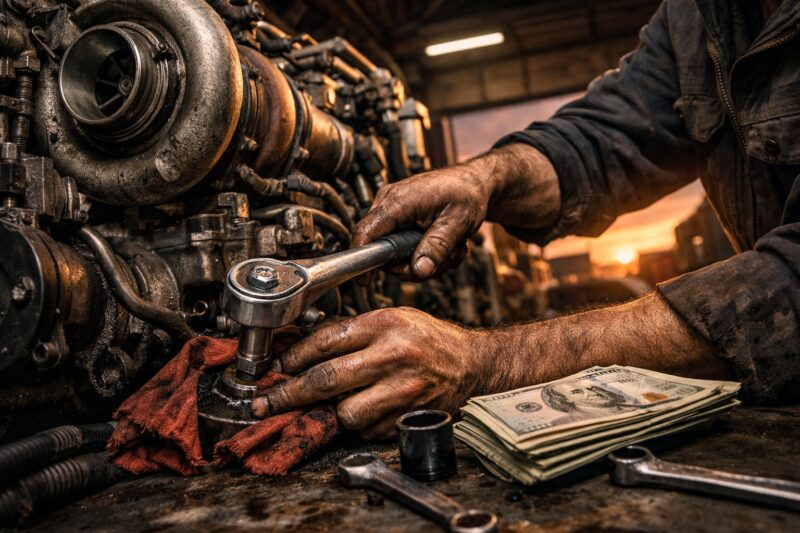
Diesel engine repairs can range from a few hundred dollars to several thousand, depending on the failed system and how far the damage spread. That is why diesel engine repair costs vary so much from one estimate to the next. Expect prices to swing based on diagnostics, parts availability, labor time, and whether contamination or heat damage affected more than one component. In 2026, rates and parts pricing may also reflect ongoing supply-chain changes and differences between dealer and independent shop pricing.
In this guide, you will learn realistic cost ranges for common diesel issues. You will also see what actually drives the bill, how to compare quotes, and how to avoid surprise scope growth. Finally, you will get a practical checklist for discussing repair options and pricing, plus FAQs that address the questions most diesel owners ask before authorizing work.
How much should diesel engine repairs cost for common problems
Most diesel repair bills fall into broad bands, not one fixed number. The same symptom can involve different root causes, so the system and severity matter more than the fault code alone.
To estimate your likely budget, think in terms of “symptoms → systems → price band.” For example, hard starting plus low power often points to fuel delivery, glow assistance, or injector control issues. By contrast, repeated overheating usually signals cooling system failure or internal top-end damage. This approach helps you compare quotes that may list different parts, yet still target the same underlying cause.
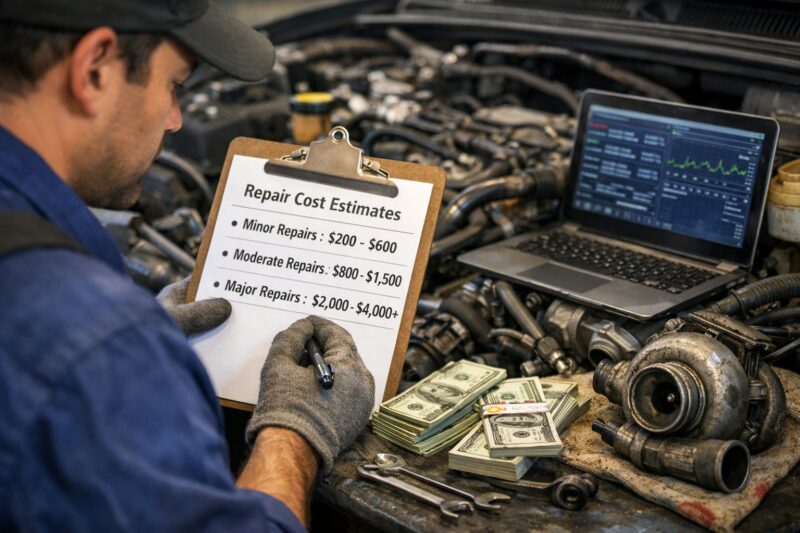
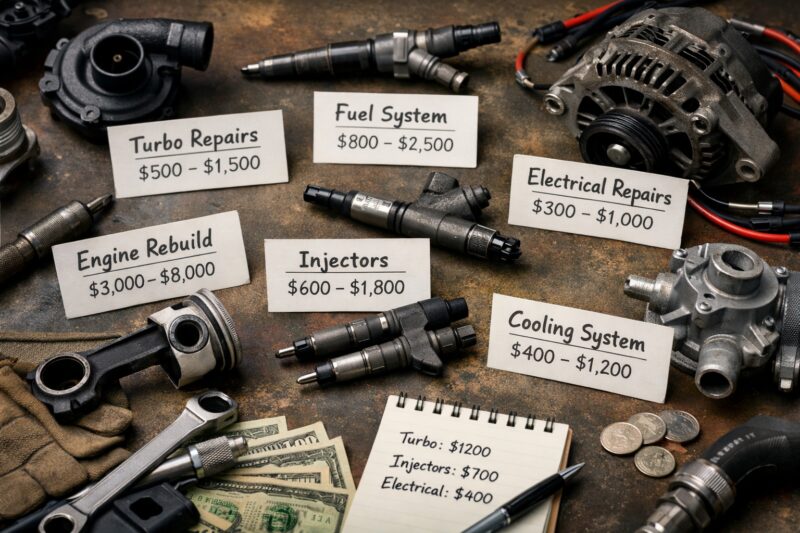
Below are realistic categories you might see on invoices. The exact cost depends on your engine’s configuration and parts tier. In practice, the low end often reflects a single component replacement or cleaning. The high end often includes deeper inspection, multiple parts, and rework risk if contamination or heat damage is present.
One important nuance is the difference between repair cost and total incident cost. A single failed injector, for example, can contaminate others, clog the fuel return path, or overload the turbo by changing airflow control. Meanwhile, an emissions fault like soot loading can damage the turbo or EGR components after the initial trigger. A shop that only prices the first failed part may miss the follow-on damage.
A common misconception is that the “most expensive-looking part” is the whole problem. Yet diesel failures often start with a cheaper root cause, like a sensor or valve sticking. Then the vehicle continues to run, and the downstream components suffer. If you want to avoid under-budgeting, ask whether the shop will confirm the root cause with diagnostics first.
Common diesel engine repair categories and typical price ranges
Diesel engine repair costs can be easier to predict when you group repairs by system and expected labor depth. The categories below reflect what many shops price most often, especially for passenger cars and light-duty trucks.
Fuel system issues usually start with diagnosis of pressure, return flow, and injector control. Low-fuel-pressure problems, clogged filters, and leaking lines can cause rough idle and hard starts. Typical pricing may be lower when it is a filter and lines job. It rises when injectors require testing and replacement, or when rail and pump performance checks show deeper wear.
Glow system repairs often cover glow plugs, relay control, or wiring. Symptoms can include difficult cold starts, white smoke on startup, or frequent glow warnings. If the issue is limited to one or two plugs, the bill stays moderate. However, if the shop must chase wiring damage or carbon buildup, labor climbs quickly.
Turbocharger repairs vary widely because they can range from actuator adjustments to full replacement. If you have boost leaks, stuck vanes, or oil contamination, the shop may need careful inspection of hoses and charge-air piping. Costs increase when the turbo needs replacement and the system must be flushed to remove debris.
EGR and DPF-related repairs often become more expensive once soot loading has spread. Exhaust gas recirculation (EGR) helps reduce nitrogen oxide formation. A diesel particulate filter (DPF) traps soot. When sensors or valves fail, the DPF can clog and require regeneration verification, cleaning, or replacement. The bill climbs further when multiple emissions components need repair after the vehicle has operated in a fault state.
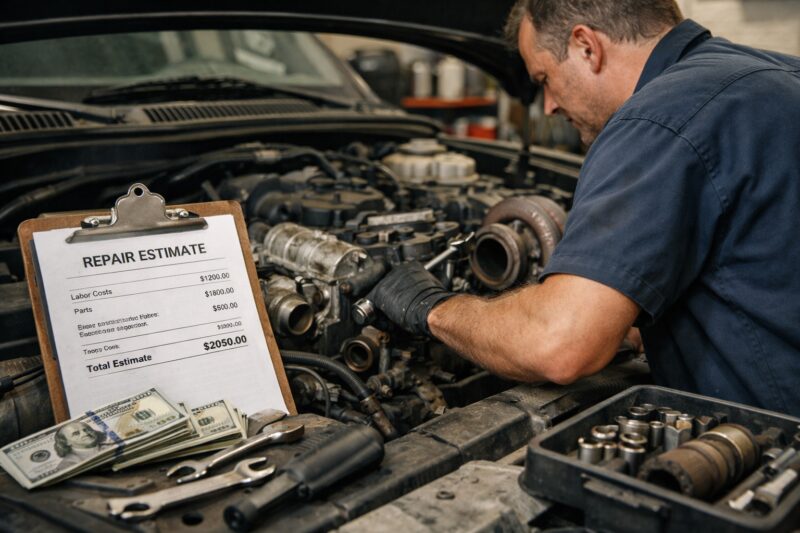
Injector-related work is another major cost category. Some faults are fixable with cleaning or refurbishment, while others require new injectors. Prices also depend on whether one injector is replaced or multiple are matched. Contamination can force the shop to test the fuel system more deeply and replace additional parts to prevent recurrence.
Crank and cam sensors often cost less than injectors or turbos, yet they can still drive up the total. If a sensor fault caused limp mode for long enough, other systems may have adjusted fuel and airflow in ways that left carbon deposits. That is why diagnostics matter before parts swaps.
Overheating and cooling system repairs can escalate fast. A failed thermostat or radiator fan switch may be manageable. But repeated overheat events can damage head gaskets or warp surfaces. In those cases, the job becomes top-end work, which is usually among the higher-cost diesel repairs.
Finally, head gasket and top-end repairs often involve the most labor. These repairs typically require careful teardown, surface inspection, and replacement of seals. Costs also depend on whether coolant intrusion caused contamination and whether additional parts show wear. This category is why you should address warning lights quickly, before damage spreads.
Why the same diesel repair can land at the low or high end
The same symptom does not always mean the same repair. Differences in parts quality, diagnostic depth, and damage severity can move your total cost by thousands.
Parts tier is one driver. OEM parts usually cost more than high-quality aftermarket. Still, OEM parts can be important for fitment and calibration compatibility. Refurbished components can reduce cost, but only if the shop tests them to confirm they meet specs.
Severity also changes labor time. A small leak might take minutes to find. Yet if soot has coated sensors, you may need extra cleaning and re-test cycles. If the shop finds contamination in multiple lines, it may require flushing and additional seals.
Another factor is whether the shop charges for extended diagnostics. Some faults are “indirect,” meaning one sensor reports a problem that the ECU triggers due to something else. For example, boost control faults can appear alongside other families of errors. If the shop correctly follows the full logic path, the diagnostic bill can be higher, but the final repair can be more certain.
A real-world scenario shows this well. Imagine a “check engine” and limp mode after a hard drive. A quick quote may propose a single sensor. But if the underlying issue is a charge-air leak, replacing only the sensor can lead to repeat warnings and a second appointment. In contrast, a shop that performs diesel diagnostics and leak tests before parts swaps can prevent that cycle.
Electrical and module faults add nuance too. A damaged ground or connector can create symptoms that look like mechanical failures. If the shop treats it as mechanical at first, it may replace parts unnecessarily. Therefore, a good quote should describe how they will confirm the root cause before authorizing the expensive work.
One more limitation is missing history. If prior injector or turbo work was done years ago without records, the shop may need more testing to confirm compatibility. That can raise labor time even when the “new” fault seems simple.
What drives diesel repair bills: diagnosis, labor hours, parts, and calibration
Most of your cost comes from four buckets: diagnosis, labor, parts, and any required programming. Each bucket can expand when the fault is complex or the damage is widespread.
Diagnosis usually starts with scan tool readings and live data review. Shops then run targeted tests. Those tests may include fuel return checks, compression testing, leak-down evaluation, and pressure testing. In many cases, diesel diagnostics and leak tests are what separate guesswork from a confirmed root cause.
Labor hours are the next major driver. Diesel engines often require more disassembly because components sit deeper or are bundled with emissions hardware. Therefore, two shops may see the same fault yet list different labor totals based on access time and tool needs.
Parts cost varies based on whether the shop uses OEM, aftermarket, or refurbished components. Consumables can be overlooked by owners until they appear on the invoice. Expect seals, fluids, filters, clamps, and gaskets to show up in the parts line.
Programming and calibration can also matter. Some diesel systems require software updates or parameter resets after component replacement. That is especially true when work involves emissions controls or injector-related components. If immobilizer or security procedures apply, labor may increase due to module access steps.
Severity can multiply the cost in ways that are easy to miss. Contamination from a leaking injector may travel through the return circuit. Then it can affect fuel pressure stability and injector spray quality. Heat can damage rubber hoses, seals, and charge-air connections. As a result, the shop may need extra “clean and verify” steps.
Repeated diagnostics can feel like wasted money. However, it can also be the price of avoiding a wrong repair. A common mistake is not sharing complete symptom history, such as when the fault appeared and whether it happened after towing. That can cause the shop to revisit diagnostics because the first pass lacked key context.
How to choose a repair path that controls diesel engine repair costs
You can control your budget by choosing a repair path based on confirmed root cause, not on parts guesswork. The best approach is disciplined: confirm first, scope second, then repair.
Start with a triage plan. Ask what the shop will check first and why. Next, ask how they will confirm the root cause before replacing parts. This is where a clear check engine light diagnostic plan helps you understand what they will test, what results they will document, and what decisions those results support.
Then compare options in a way that keeps quotes apples-to-apples. Confirm whether both quotes use the same diagnostics outcome. Also confirm the same parts quality tier and warranty terms. If one quote replaces components immediately and another verifies system performance first, the low quote may carry more rework risk.
Repair path categories usually fall into replace, rebuild, or refurbish. Replacing a component can reduce downtime and simplify warranty. Rebuilding may lower cost for components with controlled wear, but it can depend on availability and test standards. Refurbished units can help too, especially when they come with documentation and verification testing.
The tradeoffs are real. Replacing often costs more upfront but can reduce risk if the part is clean and updated. Rebuilding can be cost-effective if the shop has a proven process. However, if contamination caused multiple failures, rebuilding only one part may not fix the full issue.
A common scenario involves injector work. The cheapest option might propose replacing one injector. Yet if the shop finds evidence that multiple injectors are contaminated, the “cheap” path can lead to recurring faults. Therefore, request a written scope that ties each part decision to a specific test result.
Common mistakes that inflate repair costs for diesel engines
Several predictable mistakes can raise diesel engine repair costs without improving the outcome. Most stem from skipping verification, delaying action, or approving unclear estimates.
One mistake is assuming the fault code points to the exact failed part. Diesel systems often show indirect symptoms. A boost or airflow fault can trigger other error families. If you replace the first sensor without checking for charge leaks or control issues, you can end up paying for repeated parts and labor.
Another mistake is running the vehicle after serious warnings. If you keep driving with limp mode or overheating indicators, damage can spread. Then the repair changes from a small job to top-end or emissions aftermath work. Invoices grow, but the underlying root cause did not change.
Quote comparisons also go wrong. Some estimates list parts only and leave diagnostics undefined. Others include diagnostics but do not state what “success” looks like after the repair. Therefore, you should ask for the test they will perform to confirm the fix. Also ask what data they will record, like measured values before and after repair.
Documentation gaps can add cost too. If a shop cannot confirm what has already been replaced, it may need extra verification tests. That is why having service records helps. It also helps the shop avoid unnecessary rework.
Finally, owners sometimes overlook labor line items that are actually safety steps. For example, some injector and emissions procedures require careful cleanliness and verification. If those steps are removed to lower the estimate, the probability of repeat failures rises.
To prevent this, use engine repair options and pricing discussions that require clarity. Ask for a scope boundary and a contingency plan if new damage is found mid-repair. This keeps the job aligned with your budget goals.
What alternatives can reduce costs before you commit to a major diesel repair
Alternatives can reduce cost, but only if they still protect the chance of a correct fix. The goal is not to choose the cheapest part. It is to choose the best value for your engine’s condition.
One alternative is using rebuilt or refurbished components. These can be a strong option when they include testing and come with a real warranty. Yet you need to ask how the component was tested and what standards it met. Without that, “rebuilt” can mean “installed,” not “verified.”
Another alternative is choosing the right shop type. A dealer may have OEM tooling and direct parts access. An independent diesel specialist may offer more flexibility with diagnostics and parts options. In many cases, the best fit depends on complexity. For high-tech emissions and module work, dealership access can help.
Some owners ask about short-term workarounds. These might get you back on the road if the vehicle is drivable and the risk is explained. However, a workaround should never replace root-cause diagnosis. Instead, it should buy time while you plan a proper repair.
Used or recovered parts can also be discussed. Sometimes, used parts make sense for low-risk items. For example, certain non-critical components may be serviceable. Yet for systems tied to contamination and internal wear, used parts can backfire because the failure mode may return.
To negotiate scope, ask for a “replaced parts list” and written boundaries. You can ask for photos of findings, plus a summary of test results. Then ask what would justify expanding scope. This is especially important when emissions components are involved, because soot loading can create downstream damage.
Finally, remember that module and security procedures can change the budget. Programming steps can add time and equipment needs. Therefore, include those costs in your evaluation from the start when you ask about engine repair options and pricing.
Edge cases that dramatically increase the total price of diesel engine repairs
Some diesel problems expand into multi-system repairs. These edge cases often cause diesel engine repair costs to jump because the damage is no longer limited to one component.
Repeated overheat events are a common budget-buster. If the engine overheats multiple times, a head gasket may fail or metal surfaces may warp. Then the repair can include teardown, resurfacing, and a full seal replacement set. Catching overheating early often keeps the repair in the cooling system range.
Water ingress or fuel contamination can also escalate. If water enters the fuel system, injectors and high-pressure components can suffer. If the contamination is severe, the shop may need more extensive flushing and replacement of additional parts. Meanwhile, damaged seals can leak again, leading to repeat diagnoses.
Timing-related failures and major internal wear add another layer. When internal timing components fail, the engine can require top-end repair. If multiple faults appear at once, the job may require controlled teardown to confirm what truly failed.
Emissions aftermath can be especially costly. DPF and EGR faults can allow soot to accumulate and heat soak into components. Therefore, cleaning decisions and verification steps matter. If the shop just resets codes without confirming soot levels and flow, the issue may return quickly.
Inspection depth changes pricing. Some shops can access components with less teardown. Others need endoscopic checks, boroscope access, or controlled disassembly. If the shop performs these checks, the diagnostic line may rise. Yet it can prevent installing parts that will fail again.
Intermittent faults are another edge case. They can be hard to reproduce and may require multiple test cycles. That can increase labor time. A good approach includes a phased estimate, with decision points based on measured results.
Ask how the shop handles “found damage.” You want a contingency plan that explains what they will do if they discover more damage mid-repair. This reduces surprises and helps you approve only what is justified.
How to evaluate quotes and invoices for diesel repair accuracy
You can spot weak estimates by how clearly they explain diagnosis, labor hours, parts, and warranty coverage. A good quote tells you what will confirm the root cause.
Start with the diagnosis fee. Many shops charge for inspection and scan time. Then they may credit that fee toward repairs if you authorize the job. Ask whether diagnostics are billed as a flat fee or hourly rate. Also ask what tests are included.
Next, review the labor hours and tasks. Labor should reflect diesel engine access needs, not vague time blocks. If the estimate says “labor for repair,” ask what that labor covers. For example, does it include removal, inspection, cleaning, torque-to-spec work, and reassembly checks?
Then check the parts list. Confirm part type and quality tier. Ask whether parts are OEM, aftermarket, or refurbished. Also ask whether any parts are being cleaned or verified instead of replaced. That matters when the shop offers a cleaning option versus a full replacement.
Warranty details deserve special attention. Ask about parts warranty and labor warranty separately. Also ask about warranty exclusions, like contamination caused by continued driving. If the fault returns, ask what verification tests they will perform and what documentation you will receive.
Request diagnostic documentation when possible. A strong shop provides scan data, measured values, and post-repair verification results. This helps you confirm the vehicle is actually fixed, not just reset.
Finally, watch for lump sum quotes without diagnostic transparency. A fixed price can be fine when scope is clear. But if the shop cannot describe what they will test and what triggers extra cost, you risk paying again after repeat failures. Clarify before you approve.
How regional factors and shop type affect diesel repair costs
Costs vary by region mainly because of labor rates, parts distribution, and shop overhead. The same repair may cost more in high-cost markets and less where labor supply is stronger.
In the United States, dealer shops often charge higher labor rates. They may also use OEM parts more consistently. Independents may offer competitive labor pricing and broader parts choices. However, a specialist shop can be expensive too if they focus on complex diesel systems and detailed diagnostics.
Access also matters. In rural areas, towing and travel can add fees. If fewer specialists exist nearby, you may need to schedule longer or pay emergency service premiums. Still, you can reduce total cost by choosing a shop that provides clear diagnostics and a realistic scope plan.
Even within the same engine family, costs can differ. Emissions variant and software calibration can affect parts selection and programming steps. Model year and regional emissions configuration can also change what the shop needs to verify after repairs.
To benchmark quotes, compare based on engine specs and required tests. Do not compare based on sticker prices alone. Instead, compare diagnostic outcomes, parts quality tiers, warranty terms, and labor scope. When quotes align on these factors, differences often reflect real pricing and efficiency variations, not guesswork.
For 2026, be aware that parts pricing and labor availability can still shift. Supply-chain effects can influence lead times and part costs. Therefore, ask if parts prices are fixed or subject to change at the time of ordering.
When planning for diesel engine repair costs, it helps to understand that pricing often depends on what failed, how difficult the access is to the affected components, and whether parts and labor are straightforward or require specialized diagnostics. Many drivers are surprised by how quickly small problems can expand into bigger repairs if they’re not addressed early, especially when performance symptoms show up under load.
Staying ahead with maintenance to prevent diesel issues can reduce both the likelihood of breakdowns and the chance you’ll need costly, time-consuming work. As you move into the FAQ section, consider the questions that match your situation—such as how technicians diagnose issues, what common repairs tend to cost, and how to protect your engine after service—to set realistic expectations for timing and total expense.
Frequently Asked Questions About Cost of Diesel Engine Repairs
What is the typical diesel engine repair cost for injector problems?
Injector repair costs usually depend on whether the issue is one injector or a system-wide contamination problem. A shop should confirm fuel pressure, return flow, and injector balance before replacing parts. If testing points to multiple injectors, the budget rises quickly because calibration and additional parts may be needed. Parts quality also matters, since OEM injectors usually cost more than aftermarket or refurbished units.
Why do diesel repair quotes vary so much for the same fault code?
Fault codes can be indirect, meaning the ECU detects a symptom rather than the exact failed component. One shop may follow a longer diagnostic path using live data and leak checks. Another shop may replace a likely sensor first. Also, programming or calibration requirements differ by vehicle variant, which changes labor and parts costs.
How much should I budget for diesel engine diagnostics before repairs start?
Diagnostic fees vary by shop and by how long the testing takes. Many shops charge a flat diagnostic fee that includes scan tool time and initial checks. Good diagnostics should include tests that can confirm the root cause, such as pressure, return flow, and targeted leak checks. Ask whether the diagnostic fee is credited toward repairs once you approve a confirmed scope.
Are rebuilt diesel parts worth the savings compared with new?
Rebuilt parts can be worth it when they include testing, documented standards, and a real warranty. Without those, the cost savings can vanish after a repeat failure. Expect core charges for many rebuilt components, too. Also confirm fitment and whether programming steps are required after installation.
When is it smarter to replace a diesel engine component rather than rebuild it?
Replacement is often smarter when the component shows internal wear beyond what a rebuild can reliably restore. Shops may recommend replacement if teardown reveals heat damage, scoring, or contamination that cannot be safely corrected. Also, if the rebuild process would take longer than a replacement with verified parts, downtime costs can outweigh savings. A clear test result should guide the decision either way.
What causes a small diesel issue to become a much more expensive repair?
A small issue becomes expensive when the vehicle keeps operating and the problem spreads. Contamination can travel through the fuel system and affect multiple components. Heat can worsen seal failures and lead to cooling or top-end damage. In emissions systems, soot loading can also damage parts after the initial trigger.
How can I compare two estimates to see which is actually better value?
Compare the diagnostic method, not just the parts list. Both estimates should describe what tests will confirm the root cause, and what success criteria will verify the fix. Confirm parts quality tiers and warranty terms match. Also check that labor scope covers the same verification steps, such as post-repair checks and measured performance results.
Dealership repairs often cost more due to higher labor rates and OEM parts pricing. The premium can be justified when programming access, OEM tooling, or updated software procedures are required. Dealerships may also be better for warranty support or complex emissions module work. Ask whether your repair requires OEM-specific procedures before assuming the higher cost is unnecessary.
Yes, emissions-related faults can lead to higher costs because soot and heat can damage downstream components. A DPF or EGR issue may cause increased backpressure or airflow problems that affect multiple systems. Therefore, cleaning versus replacement decisions should be based on measured results, not just codes. A good shop should explain how it will verify flow and regeneration behavior after the repair.
What should I do if the repair doesn’t fix the problem the first time?
Return to the same shop and ask for a structured re-check, including what tests they will run to confirm the root cause. Use your diagnostic data and warranty terms to guide the claim process. A reputable shop should repeat verification testing and document what changed. Also ask for an escalation path if the fault is intermittent or requires a phased approach.
Conclusion
Diesel engine repair costs swing mainly because diagnostics and severity determine how much damage has spread. A disciplined diagnostic approach helps you avoid paying for parts that do not solve the root cause. In addition, disciplined quote evaluation prevents surprise scope growth when new findings appear mid-repair.
When you compare estimates, focus on the diagnostic plan, the parts quality tier, and the warranty terms. Ask whether the shop will confirm the fix with verification tests, not just a reset. This is especially important for indirect diesel codes that can point to multiple potential causes.
Finally, consider alternatives like rebuilt components or phased repair work if they are paired with proper verification. Gather your engine details and symptom timeline before your appointment. Then request a written diagnostic plan and scope boundaries, so you can compare engine repair options and pricing with clarity.
Work with a qualified diesel technician if you have loss of power, overheating, heavy smoke, or repeated fault codes. With the right questions and documentation, you can forecast a realistic budget focused on root-cause confirmation rather than only the parts line item.
Updated September 2026