
If your check engine light comes on, don’t guess. A trained technician should diagnose the cause, recommend the right repair, and verify the fix so the light stays off. In this guide, we cover check engine light services—what they include, how repairs are chosen, and what “verification” really means in 2026-era vehicles with more sensors and emissions monitoring. That way, you can interpret urgency, get an accurate diagnosis, choose the best repair path, and confirm the issue is truly resolved. We also explain how a shop avoids repeat visits by prioritizing root causes instead of clearing codes and hoping.
What a check engine light means for your next steps
A check engine light is your vehicle’s warning system telling you the engine or emissions controls detected an issue. Sometimes the car still runs normally. Other times, the problem can damage components fast. Your next step should match the severity and any driving symptoms, not just the presence of the lamp.
Most check engine light triggers fall into a few system groups. Misfire and fuel or air issues are common, including spark ignition problems and fuel delivery faults. Oxygen sensors and air-fuel ratio control relate to how the engine mixes fuel and air. EVAP and other emissions system codes often appear when fuel vapors or purge flow do not meet expectations. Engine temperature and airflow faults can also raise the light, as can catalytic converter concerns when emissions conversion efficiency drops.
Timing matters because the same light can appear for different severities. A fault detected as “likely to harm emissions” may be treated differently than a fault detected as “likely to damage the engine.” That difference changes urgency and what a technician should test first. It also explains why two cars can show the same basic code label but need different repair approaches based on context and severity.
Act immediately if the lamp is flashing, the engine runs rough, or you notice loss of power. Stop and protect the engine if you feel overheating, hear unusual noises, smell fuel strongly, see smoke, or detect burning odors. Even if the light turns steady, symptoms like stalling or strong vibration need attention soon. A good shop will ask about when the light appears, what you were doing, and whether other alerts came with it.
A common misconception is that “it runs fine, so it’s harmless.” Intermittent faults can show up during specific conditions such as hot soak, heavy acceleration, cold starts, or uphill driving. A shop needs that driving context because it guides which tests and live data checks are most likely to reproduce the fault. This is why diagnosis should include a conversation first, not just a scan report.
How code reading becomes a real diagnosis, not a guess
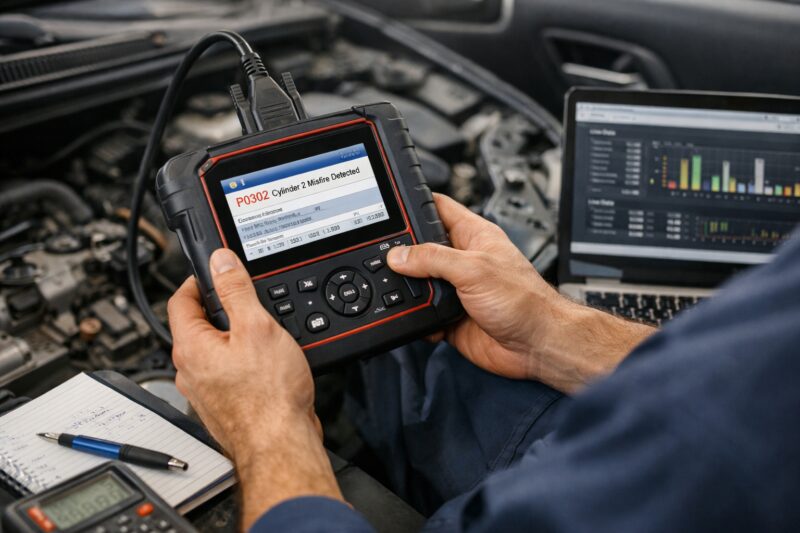
Professional check engine diagnosis starts with evidence, not the code name alone. The technician scans for diagnostic trouble codes and captures the vehicle’s “freeze-frame” snapshot, which shows conditions at the time of the fault. Then they correlate those details with what the engine and emissions systems were doing.
Shops also sort codes by type. Some codes are manufacturer-generic, which can mean one meaning across many brands. Others are manufacturer-specific, which can reflect different test strategies or thresholds. Even when two cars share the same label, the underlying sensor behavior and expected ranges can differ. That means the repair decision should follow the data and tests, not only the label.
A strong diagnostic workflow uses a customer interview, scan results, visual inspection, and targeted testing. The technician looks for related causes like intake leaks, loose connectors, damaged wiring, and obvious vacuum issues. They then use system tests and live data comparisons to check whether sensor outputs match expected behavior. This is the point where “good diagnosis” looks different from parts replacement.

Modern vehicles can provide live information for fuel trims, sensor voltages, misfire counters, purge control, EGR behavior, and more. A technician may compare readings against expected ranges to spot which system is out of line. Some faults require component testing under certain conditions. Others can be confirmed through passive monitoring when the vehicle is stable. That tradeoff is why a shop may suggest a short drive or staged test plan rather than immediate parts.
Another deep issue is “code chasing.” If multiple codes are present, replacing parts for each stored code can waste money and still fail to fix the root cause. Skilled technicians prioritize likely root systems and verify which faults are primary versus secondary. For example, a vacuum leak can create fuel-air imbalance that then triggers oxygen sensor and fuel trim codes. Fixing the leak can resolve several codes at once.
To keep everyone aligned, many reputable shops use a fast accurate repair checklist approach. It helps technicians track what they checked, what readings they saw, and which tests support the final recommendation. That also supports clear communication if a repeat visit is needed later.
What a reliable service path looks like from scan report to verification
A trustworthy check engine light service turns scan data into a repair plan and then verifies results. Customers should expect clear scan findings, an explanation of suspected causes, and a repair estimate based on evidence. The process should not end when the light is cleared.
First, you receive a scan report explained in plain language. The technician should point out active versus stored codes, which ones align with symptoms, and which ones may be leftover history. Then they should outline suspected causes and the recommended repair steps. If multiple repairs are possible, the shop should explain why it chose one path and what evidence supports it.
Next comes repair execution and approval. Many shops confirm parts and labor details before work starts, then document what was replaced or adjusted. After the repair, verification should include code clearing strategy and a re-scan to ensure the faults do not return. In many cases, it also includes running a drive cycle or completing readiness monitors used by emissions testing systems.
In 2026, more vehicles rely on emissions monitor readiness and connectivity-driven alerts. Some vehicles report additional context when a system fault occurs, especially if the car can communicate diagnostic history through connected services. That context can help a technician validate the fix in the conditions where the fault first appeared. It also means verification must be thoughtful, because clearing codes without completion can lead to delayed reappearance.
Customers should ask what documentation they will receive. A solid service includes a diagnostic findings summary, parts and labor details, before-and-after readings where relevant, and a note on readiness status. Edge cases happen when monitors have not completed yet, so the light may not behave the same way on every trip. A reputable shop explains what to expect next and how to follow up if monitors do not complete.
For businesses, standardization matters too. Fleet managers often need consistent communication to reduce rework and warranty disputes. That is why services checklist before you choose is a helpful concept when you compare shop processes. It ensures the shop can show what they did, what tests they ran, and how they will confirm the repair held under real driving.
Choosing the right repair solution when the root cause is unclear
The best repair solution addresses the root cause, not just the symptom that triggered the light. After diagnosis, the technician should connect the test evidence to the specific system likely responsible. That connection is what keeps you from repeat visits.
Solution categories typically fall into a few buckets. Sensor and component replacement often includes oxygen sensors, air-fuel ratio components, MAP or MAF sensors, EVAP purge valves, or related electrical parts when tests confirm failure. Fuel and air system service can involve cleaning or repair of components affecting flow, pressure, or vapor control. Ignition and misfire repairs can include spark plugs, coils, and mechanical checks if misfires originate deeper in the engine. Emissions system repairs may involve catalytic converter-related checks, EVAP repairs, or other exhaust control issues when confirmed by testing. Mechanical inspection can also reveal engine issues like compression problems or airflow restrictions.
Shops also decide between repair now and monitor if safe. That decision depends on severity, whether the light is flashing, and whether drivability symptoms are present. If a problem risks catalyst damage or engine damage, the safest plan is often repair first. If it is emissions-related and the engine runs normally, careful monitoring may be appropriate while a technician gathers enough evidence.
Cost and scope vary because one scan can reflect multiple fault paths. For example, a fuel trim code may tie back to a leak, a sensor drift, or a fuel delivery issue. Good diagnosis narrows the path by targeting the most likely root system and verifying it with tests. That is how “diagnosis and repair solutions” should work as a practical, evidence-based chain, not a vague promise.
Intermittent faults complicate solutions, and they deserve realistic expectations. A wiring connector might open only under heat soak. A vacuum leak might appear only with certain throttle positions. A misfire might show up only when the engine is loaded. Technicians handle this by documenting the conditions, checking electrical integrity, and using targeted tests that mimic real driving. That’s why one visit fixes everything is not always realistic, especially for intermittent issues.
For high-mileage or fleet customers, the priority is often preventing repeat failures that disrupt routes. That can mean choosing repairs that restore reliability and reduce future likelihood, not only solving the single code at that moment. When you ask how they will prevent a return light, you are asking the right commercial question.
Why some repairs fail and the light returns quickly
Repeat check engine light visits usually come from incomplete diagnosis or incomplete verification. When customers clear codes without fixing the evidence-based cause, the problem often returns. Even when a part is replaced, the repair can fail if the shop did not confirm the root system under relevant conditions.
Common customer mistakes include ignoring rough running, waiting too long with overheating risk, or assuming a code is the same thing as the failed part. Another mistake is authorizing repairs that target “the obvious” without understanding how the technician arrived at the recommendation. Shops also make avoidable errors. Relying only on a stored code can lead to unnecessary replacement if the code is old history. Skipping inspection steps like checking connectors and vacuum lines can leave the true cause untouched.
A frequent deeper issue is not checking related data. Many systems affect each other, so oxygen sensor codes can show up because of air leaks or exhaust flow issues. That is why symptom mismatch happens: the light points to a sensor system that reports abnormal behavior caused elsewhere. A vacuum leak can create apparent sensor faults by changing fuel-air ratios that the sensor then reports.

Intermittent issues create the illusion of a “repaired” problem. If the technician did not replicate the conditions that triggered the fault, the light can come back once the vehicle heats up, loads the engine, or returns to its original driving patterns. Heat soak faults, vibration-related connector problems, and EVAP behavior tied to tank conditions often need careful testing and documentation.
Another misconception is that clearing the code “resets everything.” Clearing removes the stored history and can reset monitor timing. It does not repair the underlying issue. That is why verification after repair matters and why documentation should show before-and-after evidence.
Alternatives to standard diagnostic testing and when each fits
Not every situation needs the same depth of testing, but every customer still deserves an evidence-based plan. Alternative options can help when you need a basic direction quickly. They can also save money when symptoms are minimal and the light appears stable with clear evidence.
Basic code scan services can retrieve codes and sometimes confirm whether a fault is active. This can be useful for narrowing down system areas before you commit to deeper testing. However, a basic scan alone often cannot prove which specific component is failing when sensors share symptoms or when multiple related faults exist.
DIY scan tools can work when you pair them with disciplined testing. You can view live data, check misfire counts, and watch fuel trims during normal operation. The limitation is access and skill, especially for tests that require specific command states or deeper inspection steps. DIYers also risk clearing codes accidentally, which can erase the context a technician needs.
Mobile diagnostics can help fleets and busy schedules. An on-site visit can speed up gathering basic evidence, especially when vehicles cannot be easily driven. Yet mobile setups can face limits depending on equipment, access to test equipment, and the need for specialized inspections. Still, a good mobile service should provide documentation and a verification plan that aligns with how monitors and codes will behave.
Manufacturer or dealer-level paths can be advantageous for complex systems, unique diagnostics, or when you suspect wiring, calibration, or emissions-control edge cases. The tradeoff can be higher labor rates and longer scheduling. Even then, the key remains the same: they should explain tests, evidence, and verification steps.
To avoid inflated long-term costs, ask any option to include more than “clear and .” The shop should provide a diagnosis summary, a test-based repair rationale, and an expected next step if the light returns. If the approach does not include evidence and verification, costs often rise through repeat visits and rework. Compare options using a services checklist before you choose mindset.
2026 edge cases that make check engine light solutions more complicated
Some 2026 scenarios do not resolve with simple parts replacement because the fault depends on conditions. Emissions monitor readiness delays are a common example. Readiness monitors determine whether the vehicle has completed internal tests used for emissions-related evaluation. If they do not finish, the light or related code behavior can seem inconsistent after repair.
Another edge case involves multiple code persistence after a repair. A root fix can reduce some faults but not all, especially if related systems have stored history. A skilled technician distinguishes active faults from residual codes and explains which outcomes matter for your goal. If your repair is correct, you should see a clear verification pathway, not just a cleared screen.
Connected vehicle alerts can add context, but they also increase confusion for customers. A technician can use those logs as extra clues about when the system fault occurred. Still, the solution must rely on physical evidence or verified test results, because alerts can be triggered by sensor behavior rather than direct component failure.
Intermittent electrical issues can be harder than mechanical ones. Connector corrosion, harness chafe, and broken wires may show up only during specific temperatures and engine vibrations. Visual inspection plus electrical checks help confirm the connection integrity and prevent repeat failures. When the technician documents wiring checks, you reduce the odds of “return light” surprise after the next temperature cycle.
Recent work can also change interpretation. A fresh battery replacement, component installation, or recent maintenance can affect sensor adaptation and readiness timing. A reputable shop asks about recent service and checks whether the fault aligns with that timeline. This prevents false assumptions and improves the accuracy of diagnosis and repair solutions.
Hybrid and EV-related modules can add unique constraints. Some driveline and emissions-related subsystems have different control strategies and diagnostic expectations. When the fault involves those modules, specialized diagnostic knowledge may be needed to avoid misinterpretation. In those cases, you should ask the shop how they will verify the fix in the specific module and system affected.
Common mistakes that create repeat check engine light visits
Repeat check engine light visits often come from shortcuts that ignore how modern diagnostic logic works. The most expensive mistake is clearing codes without fixing the verified cause. That approach can hide the symptom while the root issue continues, then the light returns once the monitors run again.
Customers commonly replace what “sounds right” without confirmation. They might request a part based on online code name guesses or prior experiences. They may also continue driving with flashing behavior or overheating symptoms until the situation worsens. Shops can repeat the same mistake from the other side by relying too heavily on stored codes, skipping inspection, and not checking related systems or live data.
A common shop error is not confirming readiness or monitor completion when verification should include it. If monitors remain incomplete, the light behavior can appear inconsistent across trips. Another mistake is failing to document what was tested and why it supports the repair. When documentation is missing, troubleshooting becomes harder if a second fault appears.
Aftermarket parts and modifications can also cause misinterpretation. Changes to intake, exhaust, sensors, or wiring may alter signals in ways the factory diagnostic logic flags as faults. A careful technician considers modification history to avoid chasing the wrong root cause.
Symptom mismatch can happen when the light points to one system but the cause is indirect. A vacuum leak can create fuel-air imbalance, which then triggers oxygen sensor faults. An ignition issue can cause misfire behavior that also affects catalyst performance monitoring. The nuance is that “code says X” does not always mean “replace X first.”
Frequently asked questions about check engine light services and solutions
What should I do the moment my check engine light turns on?
Check how the engine feels first. If the light is flashing, reduce risk immediately by stopping and getting help rather than driving far. If it is steady and the car runs smoothly, schedule a diagnostic scan soon and note any symptoms you notice. Many drivers start with a scan or inspection to capture active versus stored faults.
Can a check engine light come on even if the car seems to run fine?
Yes. Intermittent faults can occur during certain conditions like cold starts, hot soak, or acceleration loads. Emissions monitoring can detect issues before drivability feels different, so “running fine” does not guarantee safety. A diagnostic scan plus live data checks can reveal whether the problem is active now.
How long does check engine light diagnosis usually take?
Most diagnoses take from a couple of hours to a same-day , depending on symptoms and how many codes are present. More complex cases may require additional testing across a drive cycle or staged inspection. Ask the shop what they need to confirm the root cause and what could extend the timeline. Clear shops should explain their plan before starting the repair.
Will clearing the code turn off the check engine light permanently?
Clearing the code often turns the light off temporarily, but it does not fix the underlying fault. The light usually returns if the issue still triggers the vehicle’s test conditions. Clearing can also affect readiness monitors used for emissions evaluation, so it may delay confirmation. A better approach is diagnosis first, then repair plus verification.
What does readiness not complete mean after repairs?
Readiness monitors are internal vehicle tests that must complete after certain repairs. “Readiness not complete” means the vehicle has not finished running all required monitor tests yet. This can make the light or related emissions behavior confusing during the first trips after repair. A good shop explains what drive cycle or conditions are needed and what timeframe to expect.
Do I need to fix every stored code or only the ones showing right now?
You usually should prioritize active codes tied to current faults and any drivability symptoms. Stored codes can include old history that may or may not relate to the current problem. A skilled technician reviews which codes share related systems and which tests confirm the root cause. Then they prioritize repairs by severity, safety risk, and likelihood of returning.
How do I know if a shop’s check engine light services are trustworthy?
Look for documented findings, not just a scan printout. Trustworthy shops explain what tests they ran and why they recommend specific repairs. They also confirm verification steps, including a re-scan after repair and readiness monitor status when relevant. Ask how they handle intermittent issues, and whether they provide a clear follow-up plan.
Is it safe to drive if the check engine light is flashing?
Flashing usually indicates a more urgent misfire risk or a condition that can harm the catalytic converter. You should avoid extended driving and seek service promptly. If you must move the vehicle, drive conservatively and minimize load until you can get help. A flashing light is a “protect the engine” scenario.
What should a diagnostic report include before repairs start?
A strong report includes the codes found and whether they are active or stored. It should include the test results and live data evidence that support the suspected cause. It should also include a plain-language root-cause rationale and the proposed repair plan. Finally, it should provide an estimate and the next steps for verification.
Why did my check engine light return after the repair?
The light may return if the root cause was not fully corrected or if verification was incomplete. Intermittent faults may not have been reproduced during testing, so the problem can reappear after different driving conditions. Sometimes related underlying issues were missed, especially when multiple faults exist. Wiring problems and sensor behavior under heat or vibration can also cause repeat codes.
Can cold weather or humidity cause a check engine light?
Yes. Cold starts can trigger misfire-related logic or change how fuel and airflow systems behave. Humidity and temperature swings can affect EVAP behavior, sensor readings, and fuel vapor conditions. A technician should incorporate environmental context and compare sensor data to expected behavior for your conditions.
Prices and timelines depend on symptoms, code complexity, and how many tests are needed. For cost, shops may quote a range based on diagnostics time, parts type, and labor scope; ask for an itemized estimate and what verification is included. For turnaround, basic checks can be same-day, while confirmation that involves a drive cycle or readiness monitors may take longer. In 2026, those verification steps can matter as much as the repair itself.
Repair costs and turnaround expectations you can plan around in 2026
Planning helps because diagnostic time and repair scope change when faults are intermittent or multiple systems interact. Most shops quote based on the evidence they find during inspection, not on a one-size estimate. That is why a clear diagnostic plan is part of trusted check engine light services.
For pricing, expect variables like the number of codes, whether the issue is active, and the type of testing required. Labor can rise if the technician needs extra inspection time for wiring, airflow systems, or emissions components. Parts cost also varies widely depending on the failed component, such as sensors versus mechanical repairs. Ask for an itemized estimate that includes diagnostic work, repair labor, parts, and verification steps.
For timelines, many diagnoses start same-day, especially when a fault is active and easy to reproduce. If the issue requires drive-cycle confirmation, readiness monitor completion, or staged testing, the timeline may extend across days. A reputable shop will give a best-possible estimate and explain what could change it. They should also tell you when re-checking will occur and what the next step is if the light returns.
To reduce surprises, ask what documentation you will receive and whether the shop will verify after repair. This is especially important for emissions-related faults and for vehicles with readiness-monitor behavior. If a shop can’t explain what “verification” means in your case, ask more questions before authorizing repairs.
If you are comparing options in your area, ask whether they have experience with your vehicle’s make and model generation. For example, customers searching for auto repair in Yamhill often want shops that communicate clearly and document diagnostic evidence. The best fit is the shop that can explain how it will confirm the light stays off, not just how it will clear codes.
Reliable check engine light services should diagnose root cause, propose evidence-based solutions, and verify that the fix holds. Start with the right-now safety mindset when symptoms are urgent, then choose the path that matches your situation: a standard shop, mobile diagnostics, dealer-level expertise, or careful DIY with disciplined testing. Trust signals are consistent across every choice. Look for documented findings, test evidence, and a verification plan that explains readiness expectations and follow-up if the light returns. If you want confidence, request a diagnostic explanation and verification plan, compare options, and schedule service with a shop that can demonstrate how it will solve the underlying issue.
Updated September 2026