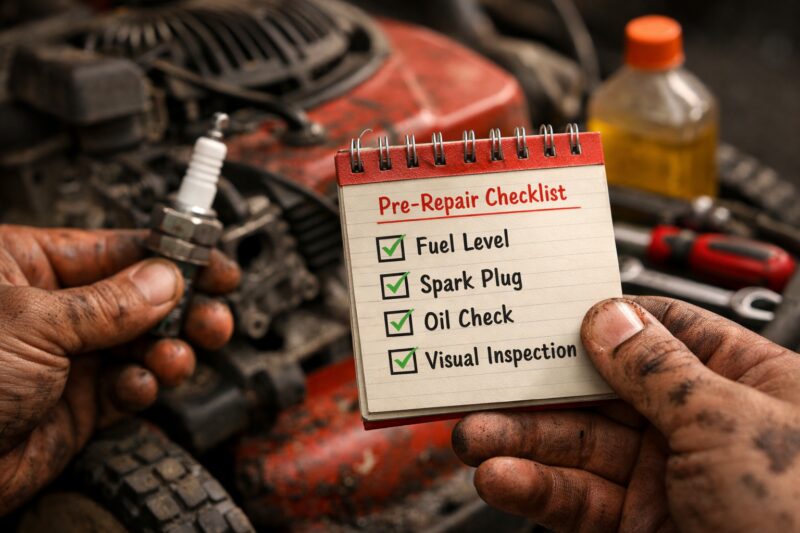
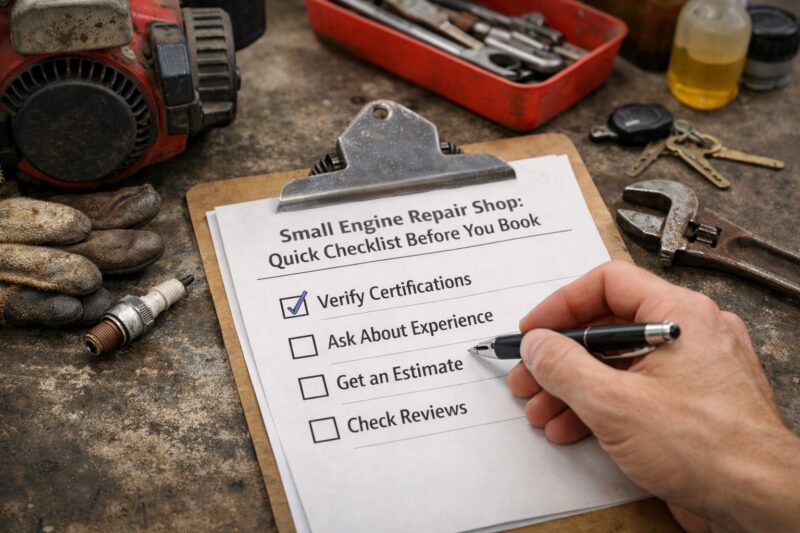
If your small engine won’t run again, the fastest way to get accurate pricing is to walk into (or call) the Small Engine Repair Shop with the right details already gathered. This Quick checklist before you book helps you avoid wasted trips, repeated tear-downs, and estimates that change after the shop finds “new” issues. If you’re located in the U.S., you’ll also notice seasonality affects availability and parts sourcing in 2026, so planning now can translate into faster turnaround. Below is a step-by-step pre-booking flow that shows exactly what to check first, what information shops actually use for diagnostics, how to confirm your machine falls within their service scope, and what red flags to watch for when you authorize work.
Top 10 questions about Small Engine Repair Shop: Quick Checklist Before You Book
Before you book any small engine repair appointment, answer ten practical questions that directly affect diagnostic time, parts availability, and the likelihood you’ll get a stable repair. In commercial terms, these questions help you “qualify” the shop and “pre-qualify” your machine so you can confirm service scope and estimate structure before you authorize teardown.
Here’s the pre-booking mindset: a small engine shop isn’t guessing—it’s testing. The more precisely you describe the symptom pattern (for example, “cranks but won’t fire” versus “starts then stalls after 10 seconds”), the more efficiently technicians can rule out fuel delivery, ignition, compression, and safety interlock faults. This is why a symptom timeline and basic identification (make, model, and engine displacement/size) often matters as much as the brand name on the deck or cover.
In practice, you’ll use this checklist in two moments: first, when you call or submit photos, and second, when the shop provides their diagnostic plan and authorization threshold. A reliable intake process includes an intake form, a diagnostic authorization policy (often with a fee), and a written estimate before parts are replaced. If any of those steps are unclear, you have a decision point before downtime grows.
Tradeoff: the more “complete” your input, the fewer surprises the shop encounters later. But even with great documentation, edge cases happen—intermittent hot-start issues, storage-related contamination, and owner modifications can force technicians to expand testing. You reduce the risk of going in circles by aligning expectations: ask what tests they will perform first, not only what they hope the fix will be.
For related upkeep planning, pair your booking checklist with a preventative routine so you reduce repeat failures—see <a href="https://nrtoffroadperformance.com/small-engine-service/">Service checklist today</a>. If you are comparing nearby options, also use a structured selection approach like <a href="https://nrtoffroadperformance.com/offroad-repair-near-me/">Choose trusted nearby shop</a>.
How do I book a Small Engine Repair Shop appointment faster?
To book a Small Engine Repair Shop appointment faster, prepare your machine ID and a symptom timeline before you contact the shop. Shops move quickly when they can verify scope, estimate diagnostic time, and order the right parts sooner rather than later.
How it works is straightforward: you submit the minimum viable details first, then the technician confirms the likely diagnostic path. Start by gathering make, model, and engine size (or displacement if available), plus the serial tag location and a photo of that label. Next, document the exact symptom sequence: what it does when you try to start, what happens after it starts (if it starts), and whether symptoms change when you apply throttle or move under load.
Practical application: before calling, check fuel type and basic oil condition (level and obvious contamination), and record when the equipment last ran successfully. Note storage conditions too—seasonal garage storage versus outdoors changes the odds of varnished fuel, water intrusion, and corrosion. If you can, also provide any “just changed” events right before failure (new fuel, battery replacement, air filter service, blade strike, belt replacement, or a sudden jump in engine noise). That “what changed” detail helps technicians focus on the most probable systems first.
Tradeoffs and limitations: many shops cannot promise same-day service during peak seasonal demand, and parts ordering may add lead time. But you can reduce delays by clarifying whether you need pickup/drop-off, whether you can deliver when they request, and whether they accept intake photos for a preliminary assessment.
Common mistake: calling without documenting the symptom pattern, then repeating it multiple times. Even small wording differences can change the first test they perform. For example, “won’t start” usually prioritizes ignition and fuel delivery checks, while “starts then dies” often shifts attention toward carburetion, venting, or safety interlocks.
To keep your future bookings faster, you can connect diagnosis outcomes to prevention—reliable routine care supports Reliable starts less wear.
What information should I bring to a Small Engine Repair Shop before dropping off?
Bring your machine identification, a symptom log, and photos of key components to a Small Engine Repair Shop before dropping off. This reduces diagnostic time and helps technicians produce a written estimate that matches what they find.
Why it matters: small engines share similar external parts, but the internal fuel and ignition systems differ by design and year. When you provide make/model and serial tag photos, the shop can look up correct diagrams and compatibility. Symptom documentation also prevents misdiagnosis cycles—especially with issues that mimic each other, like carb problems that actually originate in ignition weakness or governor linkage misalignment.
How to use it: record fuel type (gasoline mix ratios for 2-stroke, unleaded vs “premium,” ethanol content if known), oil level and condition (clean amber vs dark/contaminated), and any recent maintenance dates. Add the “last time it ran” conditions: temperature, humidity, incline, and whether you used it right after storage. If there’s visible evidence—fuel leaks, loose hoses, clogged cooling fins, or a damaged air filter—photograph it.
Practical application: if the shop asks for the serial tag location, identify where it is on your machine and show it in at least one clear image. Also capture the fuel shutoff position, filter condition, and any wiring/harness connector you can safely access without disassembly. If you have already checked spark, note it: “spark present on grounded plug” or “no spark observed,” along with what you used to verify.
Tradeoff: fully disassembling the machine before diagnosis can slow things down. Technicians lose context and may need additional time to reassemble for testing, which can alter diagnostic conclusions. If you must disassemble for transport, document what you removed, take photos of routing, and keep fasteners labeled.
Safety note: handle fuel carefully during transport and prevent spills; technicians are responsible for safe work practices, but you can reduce liability and mess by delivering the equipment in a stable state.
Use your intake preparation as a repeatable workflow and follow the Quick checklist before call. That page’s approach pairs well with the details above.
How do I prepare my machine to avoid extra charges at a Small Engine Repair Shop?
Prepare your machine by documenting symptoms, checking basic wear items, and avoiding irreversible disassembly to avoid extra charges at a Small Engine Repair Shop. The goal is to reduce diagnostic rework, not to “pre-fix” parts blindly.
Why it matters: extra charges often come from diagnostic delays, repeated tear-downs, and uncertainty about what was changed since the last attempt. If you clean the exterior lightly, remove obvious debris around cooling fins, and safely prevent fuel leaks, you help technicians inspect components faster. But if you strip parts without knowing what you’ll need to put back, you create extra labor that may not be covered under diagnostic time.
How it works: shops typically start with a baseline inspection—fuel system, air intake, compression where applicable, ignition checks, and safety interlocks. Your preparation influences that baseline. If the machine is extremely dirty, technicians spend more time clearing debris before tests. If you leave old fuel to slosh around in hoses or bowls, they may need additional cleaning steps to verify contamination levels.
Practical application: do a “no-tools required” pre-check—confirm fuel valve/shutoff position, check the air filter for being severely clogged or cracked, and observe whether the spark plug wire is seated firmly. Then stop: don’t remove carburetor components just to “help,” unless you already have shop-approved guidance. If you are unsure, call first and ask what the shop wants you to do.
Tradeoffs: preparing too much can backfire. For example, removing the carb without noting linkage and governor adjustments can create new symptoms. Similarly, opening sealed fuel system parts can introduce leaks that did not exist before.
Common mistake: skipping exterior prep and then expecting fast estimates. Another mistake is sending the shop a box of parts with no context instead of the machine itself. A good intake includes the machine plus your documented observations, not an improvised parts mystery.
If you want a forward-looking plan, schedule routine maintenance so you don’t repeatedly reach for emergency fixes—start from Service checklist today.
What do small engine repair shops actually need to quote a job?
Small engine repair shops need machine identity, symptom behavior, and enough context to choose a diagnostic route before they can quote accurately. Without those inputs, shops often provide broad estimates that change once they find the real fault.
Why it matters: a quote is only as good as the assumptions behind it. A “carburetor cleaning” estimate sounds simple, but the underlying cause might be fuel contamination, an ignition weakness, restricted venting, or a safety switch misadjustment. Shops reduce uncertainty by gathering details that map directly to their test sequence.
How it works: they match your symptoms to likely systems, then confirm by inspection and basic tests. For example, “won’t start” typically leads to checks for spark, fuel delivery, and basic air/fuel mixture readiness. “Starts and stalls” often leads toward fuel delivery/air leaks, venting, or choke-related conditions. “Surges” or “bogs under load” frequently points to fuel starvation, governor response, or clogged filters and vents.
Practical application: give the exact symptom wording you observe, plus any pattern changes. “Won’t start” versus “starts then dies” is not just semantics—it can change the parts list and labor hours. Provide your equipment’s year if known, because small design revisions can affect parts compatibility and calibration needs.
Tradeoffs and limitations: shops may quote diagnostic time separately from repair authorization. Some use time-and-materials for labor and itemize parts; others use flat-rate repair packages for common jobs. Either approach can be valid, but you should know what triggers an estimate change—like discovering a broken fuel line, stripped mounting hole, or damaged safety interlock components during teardown.
Real-world scenario: a mower that “won’t start” after sitting all winter may require more than carb cleaning if the fuel system has varnish and corrosion. A shop can still estimate, but their confidence depends on your storage history and fuel freshness details.
If you prefer to reduce future repeat diagnoses, align your notes and repairs with a maintenance plan for Reliable starts less wear.
How can I get an accurate estimate from a Small Engine Repair Shop?
You get an accurate estimate from a Small Engine Repair Shop by providing consistent symptom documentation, machine ID, and a clear description of what changed right before failure. Then confirm the shop’s diagnostic authorization and estimate policy before work begins.
Why it matters: accurate estimates aren’t only about prices; they’re about scope and boundaries. Many repairs start as “diagnose first, then authorize” because the initial cause can’t be confirmed without testing. When you know how the shop handles diagnostic fees, authorization thresholds, and communication cadence, you can evaluate whether their process reduces surprises.
How it works in a good process: intake form first, then diagnostic-first testing, then a written findings summary. A written estimate should identify labor and parts categories, plus what the shop believes is “most likely” versus “possible.” Ask for what success looks like—for example, “starts on first pull within cold conditions” or “holds throttle without surging under load for X minutes.”
Practical application: share your “last run” conditions and the failure progression. Did it fail after mowing one section of lawn, after a rain shower, or after hitting a stump? Did it run fine at idle but bog under load? Provide any observation from spark test, air filter inspection, and fuel shutoff/line condition. These details narrow the root cause and reduce diagnostic time.
Tradeoffs: the cheapest intake quote can lead to higher final costs if diagnostics are deferred or if parts are replaced without verifying root cause. Conversely, a higher diagnostic fee can be cost-effective if it leads to fewer incorrect parts orders.
Common mistake: asking “how much to clean my carburetor?” without providing symptom details. Carb issues are often a symptom, not the root cause. A surge problem can be fuel delivery, governor linkage, or a restricted vent.
If you want a practical framework, use Service checklist today to help keep fuel and filters in a consistent state, which improves estimate accuracy next time.
The must-have details for faster diagnosis are your machine’s make/model/engine size, serial tag information, and an exact symptom description with a timeline. When combined with fuel/oil context and “what changed before failure,” these details dramatically shorten the diagnostic loop at a Small Engine Repair Shop.
Why it matters: technicians can’t select correct parts or verify design-specific tests without machine identification. Symptom wording helps categorize the fault domain: fuel delivery, ignition, compression, or operator controls/safety interlocks. Fuel and oil context matters because storage problems often mimic “carb failures,” and contamination can require more than cleaning.
How to capture the details: record the make and model number exactly as printed, and note the engine size or displacement if listed. If the serial tag location is known, photograph it, and include the year if you can. Then write the symptom behavior in plain language: won’t start, starts then dies, stalls after warm-up, surges at throttle, bogs under load, or runs only with choke. Add whether the issue is intermittent and whether it varies by temperature or incline.
Practical application: list fuel type and approximate age (for example, “stored in garage with stabilizer for 4 months” versus “fuel from last season, untreated”). Describe oil condition—level and whether it looks milky or excessively dark. Mention recent maintenance: air filter clean/replace, belt replacement, blade strike, battery install, governor adjustment, or belt tension changes. Those “just changed” facts act like breadcrumbs during diagnostic testing.
Tradeoffs and limitations: even with good data, some failures are intermittent and require “runs under load” validation. Shops may need to test with your actual operating conditions, not only bench-start runs, especially for surging and bogging complaints.
Common mistake: reporting only one symptom clue, such as “it needs a carburetor,” without describing whether it idles smoothly or fails under load. What most guides get wrong is treating symptoms as separate causes instead of patterns that map to systems.
As part of ongoing prevention, tie your intake details to a maintenance calendar—start from Reliable starts less wear.
How should I describe symptoms so a Small Engine Repair Shop doesn’t guess?
Describe symptoms with a timeline, including how the engine behaves at start, under idle, and under load, so a Small Engine Repair Shop can test efficiently instead of guessing. Precise wording reduces diagnostic branching and helps the shop pick the right starting tests.
Why it matters: symptom phrasing is diagnostic signal. “Won’t start” suggests problems in ignition spark, fuel delivery, compression, or safety interlocks before combustion can occur. “Starts then dies” often points to fuel flow instability, mixture issues, venting, or choke/safety settings. “Surges” can be governor or air/fuel regulation; “bogs under load” can be fuel starvation, restricted intake, or weak ignition under higher demand.
How it works: technicians build a fault tree based on your description. If you say “won’t start,” they can begin with spark and fuel checks. If you say “starts then stalls after 20 seconds,” they will also think about bowl level, venting, or vacuum/line routing. The more you tell them about when and how the behavior changes, the less they rely on trial parts.
Practical application: use short, factual phrases tied to time and conditions. Example phrasing you should consider: “Cranks normally but won’t fire; I hear no sputter” (no ignition), “It starts with choke then immediately dies when choke opens” (mixture/air regulation), or “It idles, then bogs when I engage the blade or throttle up” (load-related fuel delivery or governor behavior). If the issue happens after rain or heat soak, mention that too.
Tradeoffs: overly dramatic descriptions don’t help if they omit timing and control positions. Similarly, vague phrases like “it runs rough” are hard to map to tests.
Common mistake: assuming all carb issues present the same way. What most guides get wrong is implying carb cleaning is universal; the real fault could be fuel-injection control, magneto weakness, vacuum leak, governor linkage drift, or compression loss.
For a consistent call workflow you can copy, use the approach in Quick checklist before call.
How can I confirm compatibility: match my machine to the shop’s service scope?
Confirm compatibility by asking whether the shop services your specific equipment category, ignition/fuel system type, and start method before you book. The goal is to ensure they can diagnose your exact design without unacceptable substitutions.
Why it matters: “small engine repair” covers a wide range—from lawn equipment to generators and off-road machines—and service scope varies by shop. Some technicians focus on lawn mowers and pressure washers; others specialize in outdoor power equipment with certain engine families. If the shop can’t source parts, doesn’t handle electric-start models, or only repairs carbureted systems, your job may stall after intake.
How to do it: identify what you have—lawn equipment, pressure washer, generator, go-karts/dirt bikes (small displacement), snow blowers, or log splitters. Then ask what systems they handle: 2-stroke versus 4-stroke, electric-start versus pull-start, carbureted versus fuel-injected, and magneto/coil-style ignition if applicable. Avoid brand-only assumptions; confirm they can work with your ignition type and safety interlock system.
Practical application: if your machine has aftermarket modifications—an aftermarket carb, exhaust, governor change, or non-standard wiring—mention it. Those changes can affect calibration and warranty, and they can lead to incorrect parts if the shop assumes OEM configuration. A shop with a clear diagnosis process will still work through edge cases, but they need to know what’s been changed.
Tradeoffs: some shops will accept diagnostic work but may decline warranty-related work on modified machines. Others may service it but charge more diagnostic time due to altered schematics and expected compatibility differences.
Set expectations on timing: diagnostic lead time depends on backlog and parts sourcing. Ask whether they can start diagnosis immediately or if they will schedule it after peak season. In 2026, seasonality can significantly affect scheduling and parts delivery.
If you want to evaluate whether a shop’s scope fits your needs, start by comparing their service categories and policies using Choose trusted nearby shop.
What is the right small engine repair shop process to ask about before you commit?
Ask about the repair shop process before you commit by requesting their diagnostic-first workflow, written estimate method, authorization thresholds, and communication cadence. A reliable Small Engine Repair Shop will explain what happens between intake and repair approval.
Why it matters: without a defined process, you can end up with surprise labor charges or unclear repair outcomes. A good shop sequence prevents rework—diagnose the system, confirm findings, propose the repair, and verify before returning the machine. This matters especially for intermittent failures and issues that can have multiple root causes.
How it works in a structured approach: (1) symptom clarity and safety check, (2) service scope confirmation, (3) diagnostic authorization and fee policy, (4) written estimate with parts and labor line items, and (5) turnaround timeline. The shop should also explain how they handle estimate changes during teardown—such as discovering damaged fuel lines, broken mounts, or worn internals that weren’t visible during intake.
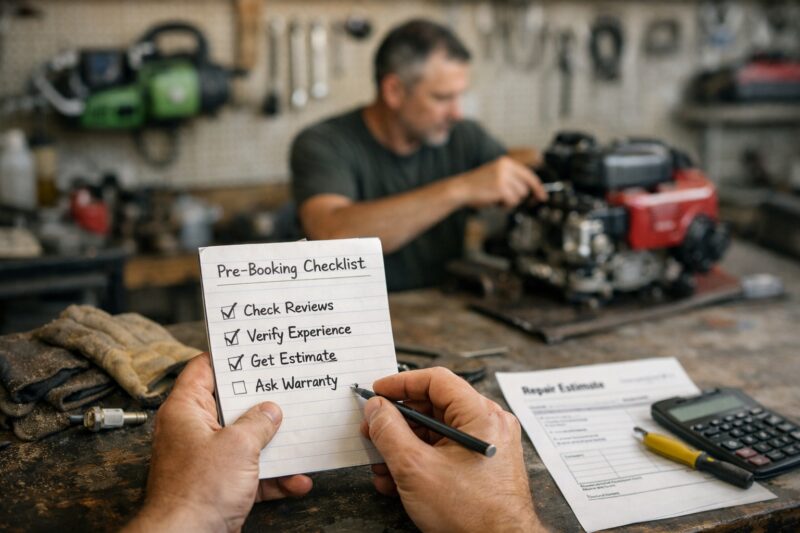
Practical application: evaluate their intake documentation and how they communicate. Do they provide a written summary after diagnosis? Can you reach them by phone/text/email? Do they return replaced parts upon request? Those details correlate with accountability and fewer “mystery repairs.”
Tradeoffs: time-and-materials repairs may cost less initially, but flat-rate packages can reduce uncertainty for common repairs. If you dislike uncertainty, ask how often they need to change estimates and what triggers additional approvals.
What most guides get wrong is focusing only on the lowest diagnostic fee. Instead, consider what that diagnostic fee covers. A higher diagnostic fee can reduce guesswork, which can be cheaper in the long run.
If you’re trying to reduce future downtime, combine the shop’s process with preventative scheduling from Service checklist today.
What questions should I ask when I call or drop off my equipment?
When you call or drop off equipment, ask about diagnostic fees, authorization thresholds, warranty terms, and what they consider “success” for your specific symptom. These questions help you avoid paying for work that doesn’t match your goal.
Why it matters: small engine repairs often involve systems that can fail in multiple ways, so shops need approval boundaries. If authorization is unclear, you may be billed for additional teardown. If warranty terms are vague, you may get stuck paying again for repeated symptoms.
How to structure your call: provide a short script including the symptom timeline, model/serial, maintenance dates, and “last time it ran” conditions such as temperature and fuel age. Then ask logistics questions—whether you can transport it, pickup/delivery options, and how to handle fuel safely. Finally, ask policy points: diagnostic fee amount, whether it is credited toward repair, warranty on parts and labor, and the level of changes requiring your approval.
Practical application: request specific examples of what you already checked, because it speeds testing. If you already performed a spark test, say whether it was present and what you used to verify. If you inspected the air filter or noticed a fuel leak, mention those observations. These details help the shop decide what to test first.
Tradeoffs and limitations: shops may not guarantee a same-day diagnosis, but they should provide an expected start time and update cadence. If you’re local and can drop off during quieter hours, you can sometimes reduce diagnostic lead time.
Common mistake: asking only “How much?” without asking “What is the diagnostic plan?” Cost without process is risky because the wrong repair can fail twice.
If you want to keep your future calls organized, use a repeatable script consistent with the Quick checklist before call.
What are common mistakes and misconceptions that cost money at a Small Engine Repair Shop?
Common mistakes that cost money include skipping basic pre-checks, documenting symptoms incorrectly, and assuming one fix fits every symptom. Misconceptions like “carb cleaning fixes everything” can lead to repeated parts replacement without resolving the root cause.
Why it matters: small engine failures are often system-to-system. A carburetor problem can be caused by contamination in fuel lines, a weak ignition coil/magneto, venting issues, restricted cooling airflow, or incorrect governor/safety interlock settings. When you skip the diagnostic phase, you can end up paying for parts and labor that don’t address the failure mode.
How it works: shops follow a diagnostic order—fuel delivery, spark/ignition, air intake, and mechanical readiness—then confirm under load. If you bring a vague description, the shop’s test sequence becomes broader, increasing labor time. If you arrive with missing identification (or the wrong model year), parts ordering delays can add more costs.
Practical application: distinguish between “no-crank/no-spark” and “cranks but won’t fire.” The first likely triggers starter/interlock/ignition power circuit checks; the second shifts focus to spark quality, fuel delivery, and mixture regulation. Also watch for failure modes like unauthorized teardown charges, unclear warranties, and repeated returns for the same symptom.
Tradeoffs: replacing worn parts “because it’s cheap” can be costly if it delays accurate diagnosis. Sometimes cleaning the carb is sufficient, but sometimes internal diaphragms, jets, seals, or fuel supply issues are the real cause.
What most guides get wrong is recommending universal parts swaps without verifying system behavior. A better guide is symptom-pattern mapping: match the observed behavior to the test plan and confirm with “runs under load,” not only idle.
Prevent repeat breakdowns by supporting your equipment with consistent routine care from Reliable starts less wear.
Compare your options: repair shop vs DIY vs parts/online help
Choose between a Small Engine Repair Shop, DIY troubleshooting, or parts/online help by comparing risk, time urgency, and how confident you are about the root cause. Each option can be reasonable, but the “cheapest” choice often becomes expensive when compatibility or hidden calibration issues are ignored.
Why it matters: DIY and online help are best when you can verify a fault domain quickly. For example, if you can confirm spark absence and you know the correct ignition module for your engine family, a repair may be straightforward. But if the failure is intermittent or load-related, diagnosis may require more than basic tools, and parts swaps can escalate.
How it works: professional shops typically diagnose first, then replace only what testing confirms. DIY often starts with a suspected component like a carburetor or spark plug, which may fix the symptom but not the cause—especially if the fuel system is contaminated or venting is incorrect. Parts/online help can work for replacement assemblies, but some replacements require adjustment and calibration (carb settings, governor linkage, or safety interlock alignment).
Practical comparison (use this to decide your next step):
| Option | Best for | Tradeoffs |
|---|---|---|
| Small Engine Repair Shop | Intermittent failures, stalling under load, repeated carb “fixes,” suspected internal damage | Diagnostic fee and wait times; still can require parts sourcing |
| DIY troubleshooting | Clear symptoms, access to manuals, ability to test spark/fuel/air and follow spec procedures | Higher chance of buying wrong parts; hidden calibration issues |
| Parts/online help | Known part failure (e.g., starter, belt, common filters) where compatibility is certain | May not confirm root cause; returns can be slow |
Real-world scenario: a mower that surges after throttle increase can tempt owners to clean the carb repeatedly. A shop may find a clogged vent or misadjusted governor linkage during diagnostic testing, which restores stable running. That’s why “hidden compatibility” matters—some parts require correct linkage alignment or setup to behave correctly.
If you’re trying to weigh local shop options, use Choose trusted nearby shop to compare turnaround policies and warranty terms before you book.
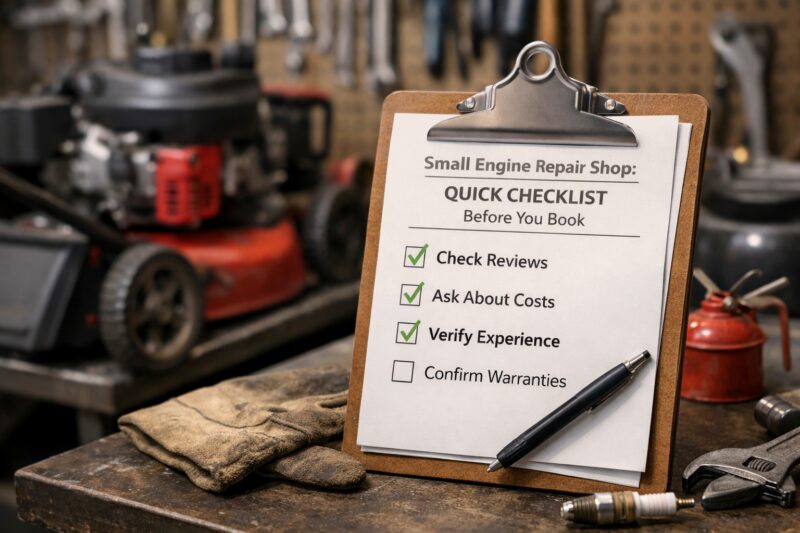
Expect edge cases such as fuel contamination, venting/pressure issues, compression problems, and ignition timing or magneto faults—especially when symptoms are intermittent or seasonal. Advanced diagnostics are where a Small Engine Repair Shop earns its value.
Why it matters: many failures that look like “carb issues” are actually system interactions. Fuel contamination can clog jets and also degrade fuel system seals. Compression problems may present as hard starting or short-run stalling. Ignition faults can cause symptoms that vary with temperature or after vibration and load changes.
How it works: a careful shop categorizes faults by system, then confirms via targeted tests. They may inspect vent lines, check fuel delivery stability, verify ignition components, and evaluate whether safety interlocks and governor mechanisms are correctly set. If you stored the machine poorly, the fuel may have turned to varnish; that affects both cleaning effectiveness and parts replacement probability.
Practical application: prepare a storage history—seasonal/off-season conditions, fuel age, whether equipment sat with fuel in lines, and whether it was in a garage versus outdoors. For hot-start problems, mention whether it starts cold but fails after heating. For cold-start issues, mention whether starting behavior changes with choke position.
Tradeoffs and limitations: some “repair that doesn’t stick” causes aren’t obvious during intake. Examples include improper torque on mounts, reused gaskets or O-rings that later leak, bad grounds for ignition, or misrouted hoses/wiring harness connectors that affect air/fuel flow. Shops may need a follow-up adjustment after reassembly to confirm correct routing and settings.
What most guides get wrong is ignoring the operator environment: inclines, blade engagement load, and cooling airflow obstruction can create symptoms that don’t appear at idle. A technician may need to validate “runs under load” to ensure the repair holds up in real use.
To reduce recurring edge-case failures, maintain consistent pre-season routines and fuel practices using Service checklist today.
Geography: what to expect from a Small Engine Repair Shop in your area
What you can expect from a Small Engine Repair Shop varies by region due to seasonality, parts availability, and local staffing patterns. If you want predictable scheduling in 2026, plan around peak demand months and confirm parts sourcing timelines early.
Why it matters: lawn equipment rushes often spike in late winter/spring for many U.S. regions and can intensify again around fall cleanup. Snow blower and generator demand can create different peaks. When shops are backed up, intake may be quick but diagnostic start times may be delayed.
How geography affects service: local climate changes common failure modes. For example, areas with frequent freeze-thaw cycles may see more fuel system condensation issues and corrosion. Areas with heavy seasonal use may see faster wear of belts, blades, and filters. Parts lead time also depends on what distributors are nearby and whether the shop can source OEM components or approved equivalents.
Practical application: ask the shop how they order parts (OEM vs equivalent), whether they can substitute, and how they handle compatibility when exact part numbers vary by model year. If the shop ships parts or uses expedited delivery, confirm how that affects total cost and turnaround time.
Tradeoffs and limitations: remote areas can mean longer diagnostic scheduling or reliance on intake photos for preliminary assessment. If you’re far from the shop, ask about drop-off instructions, whether they accept remote intake documentation, and what safety expectations they have for fuel transport.
Common mistake: assuming the same turnaround as an online review from another season. What most guides get wrong is ignoring that 2026 scheduling policies and parts pipelines can change year-to-year.
If you want to compare shop readiness locally, start with criteria-based selection using Choose trusted nearby shop.
Frequently Asked Questions About Small Engine Repair Shop services and booking
What should I check before I book a Small Engine Repair Shop?
Before you book, document the symptom behavior (won’t start, starts then dies, stalls under load, surges, or bogs) and note the exact timing. Gather machine identification (make/model, engine size, and serial tag location) and record fuel type and oil condition. If safe, do basic pre-checks like confirming fuel shutoff position and observing the air filter condition. This preparation helps the shop choose the right diagnostic steps quickly.
How do I get an accurate estimate from a small engine repair shop?
Provide the machine ID and a precise symptom timeline, then ask how the shop structures estimates (diagnostic fee versus repair estimate). Confirm what work requires your authorization before parts are replaced. Request a written estimate that separates parts from labor and explains what might change the estimate after teardown.
Will a Small Engine Repair Shop charge more if I bring it already disassembled?
They might, because disassembly can increase diagnostic time and remove the context needed for testing. Some shops also need to reassemble components to run safe tests, which can add labor. Policies vary, so ask whether they accept partially disassembled machines and whether you must keep parts labeled with photos for reassembly.
What’s the difference between carburetor cleaning and real carburetor repair?
Carb cleaning is often a surface-level remedy when issues come from minor residue or clogged jets. Real carburetor repair involves diagnosing and correcting internal faults like diaphragm damage, worn seals, or incorrect jetting components. Shops confirm which approach fits your symptoms through fuel system and mixture behavior tests.
Why does my small engine start then stall after repairs?
Common causes include fuel delivery instability, venting problems, incorrect choke or safety interlock settings, or governor linkage misalignment. It can also be an ignition issue that works at start but fails under load. A good shop validates the fix under the same load conditions you use in real operation, not only at idle.
Should I ask for OEM parts or aftermarket parts at a repair shop?
You can ask, and a reputable shop should explain warranty implications and compatibility needs for both OEM and aftermarket options. In many cases, aftermarket parts can work well, but fitment and adjustment requirements vary. Ask for equivalency in writing and confirm whether the shop will test calibration after replacement.
How can I tell if the shop will diagnose correctly before replacing parts?
Look for a diagnostic-first approach with clear findings and a written plan before parts replacement. Ask whether they return replaced parts and how they communicate suspected causes. If the shop replaces multiple components without explaining tests or symptoms, you may be taking on higher risk.
What long turnaround times usually mean for small engine repairs?
Long turnaround can mean a diagnostic backlog, parts sourcing delays, or seasonal demand spikes. It may also indicate that the issue is intermittent and needs repeated validation runs under load. Ask for an updated start date and what the shop expects to confirm next in the diagnostic process.
Is it normal to pay a diagnostic fee before repairs begin?
Yes, many shops charge a diagnostic fee because testing takes skilled labor even when no repair is authorized. Often the diagnostic fee is credited toward the final repair, but not always. Confirm this policy before authorizing the diagnosis so you know what you pay for if you decline repairs.
Do I need to clean my equipment before bringing it to the shop?
You should do practical exterior cleanup so technicians can inspect cooling fins, intake areas, and obvious damage quickly. You should also prevent fuel spills and handle fuel safely during transport. Avoid irreversible disassembly or removal of components the shop would need for proper diagnosis.
Conclusion: how to book with confidence and avoid repeat repair cycles
To book a Small Engine Repair Shop appointment with confidence, start by documenting symptoms and machine ID, then confirm scope and process before you commit. This approach helps you get faster diagnostics because the shop can map your symptom pattern to the correct fault domains and verify compatibility with less guesswork.
Second, align your expectations with a real shop workflow: diagnostic authorization, written findings, a clear estimate structure, and communication cadence. When you ask about authorization thresholds and what triggers estimate changes during teardown, you reduce surprise costs and avoid repair cycles that don’t “stick.”
Third, compare your options—repair shop, DIY, or parts replacement—with the tradeoffs clearly understood. DIY can be cost-effective when you can verify a root cause quickly, but a professional diagnosis usually pays off for stalling under load, intermittent hot-start issues, or repeated carb-related symptoms.
Next step: before booking, run your “Quick checklist before call” and request the shop’s diagnostic plan and timeline; then compare at least one additional local option, especially for recurring or intermittent problems in 2026. If policies or parts availability shift seasonally, your best move is to confirm current turnaround and sourcing details directly with each shop.
For additional alignment with future prevention and smoother starts, build your routine around Reliable starts less wear and your intake notes with Service checklist today.
Sources that support safe, system-aware preparation include the U.S. Consumer Product Safety Commission safety guidance and the EPA information on fuel and emissions considerations. For general equipment stewardship and manufacturer documentation practices, consult OSHA guidance on hazard prevention when handling fuel and moving parts.
Updated May 2026