If you need Off-Road Repair Near Me in 2026, the fastest path is to choose a shop that verifies the failure, itemizes the scope, and backs labor with a real warranty—before you authorize any work. This article gives you a step-by-step off-road repair checklist for selecting a trusted Off-Road Repair shop, the exact documents to request, and how to compare estimates so you do not pay twice or suffer repeat failures that strand you again.
When off-road driveline, suspension, or 4×4 systems break, downtime quickly becomes a safety issue and a cost multiplier—especially if the cause is hidden (shock-loaded bearings, misalignment, bent components, or contaminated seals). You should move quickly, but not blindly: the goal is to reduce risk of scams, delays, and “replace-first” repairs that only partially fix the problem.
To keep it practical, we focus on decision criteria and verification steps you can apply immediately: what to ask, what to verify in writing, and how to structure an estimate request. You will also learn how to distinguish a shop that “can work on off-road vehicles” from one that understands off-road failure modes—so your repair matches how your truck actually breaks in the field.
Off-Road Repair shops near you: what “trusted” actually means (and how to verify it)
Trusted Off-Road Repair Near Me is not just “good reviews”—it is competence you can verify, pricing you can audit, and accountability you can enforce when something goes wrong. In practice, a trusted shop produces documented diagnosis findings, gives itemized estimates, and stands behind labor with clear warranty terms.
Why it matters: off-road repairs often involve damage that is not obvious at first glance. For example, a bent control arm may only become clear after teardown and measurement, or a differential issue can present as a noise that changes with load, speed, and turning angle. If a shop skips measurements and jumps to parts, you may pay for components that do not address the true failure mode, then face a comeback once the vehicle is back under trail conditions.
How it works: a strong shop typically begins with a structured inspection plan, then performs targeted tests (road/torsion checks, play checks, runout and backlash measurements, scan tool diagnostics for 4WD/Axle control systems, and leak verification). They should explain what they tested, what they observed, and why those findings point to a specific repair approach. This is where the “trusted” label becomes measurable: you should be able to repeat their logic from their paperwork.
Practical application: when you call or visit, confirm the service scope before you authorize repairs. Ask whether they provide itemized estimates that separate diagnosis labor, parts, and labor hours; and request proof of past work on off-road or 4×4 systems where similar symptoms occurred. If the shop can only describe generic repairs (or refuses to put estimates in writing), that is a signal to keep searching.
Tradeoffs and limitations: some shops are fast and cheap because they minimize diagnosis, but that can increase your risk of paying again. Others take longer because they measure and verify—this may cost more upfront, but it protects you from repeat failures and hidden damage.
Real-world scenario: you hear a vibration after a lift and tire change. A trusted shop will consider driveshaft angles, wheel bearing preload, balance, hub/axle runout, and alignment geometry (not just recommend a tire re-balance). What most guides get wrong is assuming one symptom equals one cause—vibration is often multi-factor. A general “replace the nearest part” approach can worsen outcomes if the real cause is geometry or bearing damage triggered by off-road shock loads.
Deeper insight: use your verification time wisely. Confirm whether they understand off-road failure modes, such as bent knuckles, diff carrier damage, shock-loaded axle seals, or sidewall/bead issues after hard impacts. If a shop tells you they “can install parts” but will not document findings or measure critical specs, you should not treat that as equal to expertise.
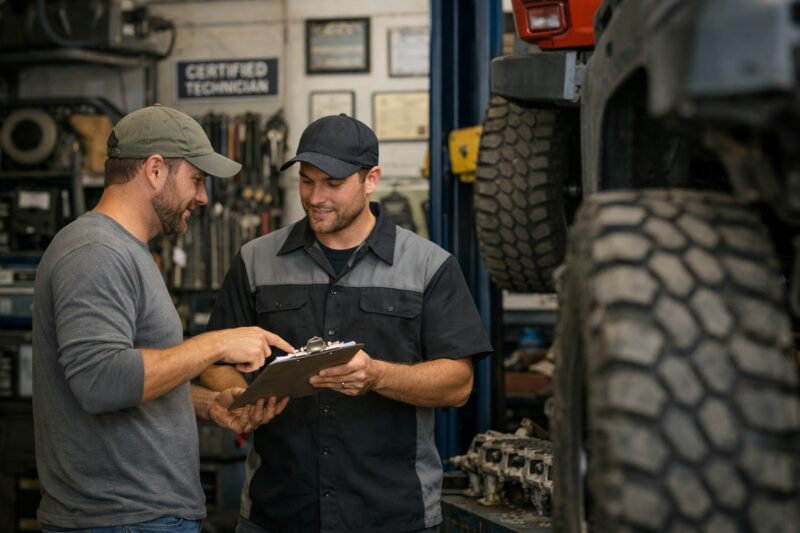
To make an informed decision about your repair needs, consider using a comprehensive guide to evaluating 4×4 repair shops to ensure the shop provides trusted diagnostics and quality driveline repairs. This approach helps confirm that your vehicle is truly "off-road ready," focusing on the process rather than just the equipment available.
The fastest decision path: from breakdown to estimate with minimal risk
The fastest way to get an estimate for Off-Road Repair Near Me is to collect the right details up front, then request written quotes from 2–3 shops that clearly separate diagnosis from repair. A trusted shop will give you a plan and a timeline before you approve work—not after.
Why it matters: off-road failures often escalate during towing, repeated attempts to drive, or continued use under warning lights. A drivetrain that is already damaged can suffer secondary harm if you keep operating it, turning a manageable repair into a more expensive teardown. Minimizing guesswork also reduces delays, because the shop will not need to re-interview you or redo diagnostics once you bring the vehicle in.
How it works: start with an info packet you can share. Collect vehicle make/model/year, drivetrain configuration (2WD/4WD, transfer case type, lockers if equipped), lift and tire size changes, and exactly when symptoms started. Note whether you experienced a trail impact, water crossing, or hard throttle event, and whether symptoms are intermittent. If warning lights appear (ABS, 4WD, traction control), record the exact message and whether it stayed on or cleared. If you cannot scan codes yourself, still document what the dash showed.
Practical application: when requesting an estimate, structure your request like a controlled experiment. Ask for a written estimate that includes diagnosis fee clarity, parts sourcing options (OEM vs aftermarket), labor line items, and “what’s included/excluded.” A key off-road repair checklist step is to require a clear approval gate: what will they do if they find additional damage during teardown, and who authorizes the change?
Deep nuance: the “diagnose first” trap is real, but so is the “replace immediately” trap. When a shop refuses diagnosis and pushes parts, you risk buying unnecessary components. Conversely, if you demand parts replacement without tests, you may pay more than needed. A good shop will explain uncertainty and propose an inspection sequence that targets the highest-probability causes first.
Edge cases: intermittent symptoms can look like “nothing is wrong,” which is exactly why a methodical shop uses load and condition-based tests. Vibrations that shift with braking may involve brake rotor condition, hub issues, or driveshaft behavior under deceleration. ABS/4WD lights can indicate sensor or control module issues, but off-road contamination can cause intermittent signals—so ask whether they will record codes and freeze-frame data where available.
Finally, match your urgency to your risk. If the vehicle is unsafe (clunking driveline, severe pull, overheating, or loss of 4WD function), towing is often the cheaper path than continued driving. For more process-oriented support, the article’s off-road service center checklist can help you confirm you are getting inspection-based repairs rather than “swap-and-hope.”
What to ask before you book off-road repairs (so you don’t pay twice)
Before you book off-road repairs, ask questions that force a shop to prove scope, workmanship, and accountability. If you cannot get specific answers in writing, you are at high risk for repeat failures and “change order” costs—especially after teardown reveals additional damage.
Why it matters: “pay twice” usually happens when labor is not aligned with the real cause. Common examples include improper torque procedures, misaligned suspension geometry, or skipping critical brake bleed and sensor calibration after component replacement. Off-road stress (impact shocks, repeated torque spikes, dust contamination) makes proper installation details non-negotiable.
How it works: a trusted shop should answer the same questions across every repair—diagnostics approach, parts selection, labor process, and documentation. Ask whether they will pressure-test components, inspect related wear items, and measure before replacing. For suspension and steering work, ask whether they will measure alignment/axle angles and confirm specs are restored. For driveline repairs, ask about backlash checks, bearing preload practices, seal handling, and brake system procedures.
Practical application: use a grouped question set during your call or walk-in. For diagnostics, ask what tests they will perform and what evidence they will document (photos, measurements, scan logs). For parts, ask whether they use OEM or reputable aftermarket, how they handle warranties on non-OEM parts, and whether they will confirm part numbers before installation. For labor, ask for estimated hours per job and whether they include procedures like brake bleeding, alignment, and calibration when relevant.
Tradeoffs and limitations: some shops may be hesitant to share detailed procedures. That is not always malicious, but it can signal weak process control. Your goal is to understand enough to validate that the repair will hold under off-road conditions, not just under parking-lot driving.
Real-world scenario: you repair a wheel bearing after off-road trail debris exposure. A low-detail shop may replace the bearing but neglect hub inspection, seal seating quality, and correct preload/torque sequence. The result is a comeback: noise returns after a few trail runs. What most guides get wrong is focusing only on parts replacement, rather than on “comeback prevention” workmanship details like torque specs, thread prep, and correct seal installation.
Customer protections to require: written warranty terms for labor and parts, a clear return policy for parts, and an approval process for additional findings discovered mid-repair. If you want a framework for comparing shop behavior, you can review resources like choose the right technician guidance to verify you are selecting process-minded staff rather than only a storefront.
Comparing repair options near you: dealerships, independents, and specialty off-road services
The right place for Off-Road Repair Near Me depends on the repair type—do not choose only by distance or the lowest quote. Use a simple decision rule: pick the shop category most aligned with your vehicle system and failure mode.
Why it matters: different shop types optimize for different strengths. Dealership service departments are often best for OEM-correct parts and warranty-friendly repairs when OEM documentation is critical. Independents can offer flexibility, faster scheduling, and value—but their diagnostic rigor can vary widely. Specialty off-road services tend to understand lift geometry, drivetrain shock loads, and suspension behaviors, but they may still subcontract certain systems depending on capacity.
How it works: dealerships typically excel in scan tool workflows, OEM part sourcing, and factory procedures. Independent general repair shops can be strong for routine diagnostics, electrical issues, and many mechanical repairs, but you should confirm experience with 4×4 architecture and off-road modifications. Specialty shops often excel at measurement-heavy repairs—alignment after suspension work, axle and CV problems after impacts, and geometry corrections after tire and lift changes.
Practical application: compare not just price but included process. Confirm whether the shop will diagnose first, provide an itemized estimate, and document findings before ordering parts. If a suspension shop says they do drivetrain work, ask who performs transfer case diagnostics, differential inspection, and internal drivetrain measurement. This “hybrid problem” is common: some shops specialize in suspension but sublet complex drivetrain steps, and you need to know who is accountable for the critical measurements.
Tradeoffs and limitations: specialty shops may charge higher labor rates, but the value is risk reduction when the failure mode is complex. Dealerships may be slower or pricier but can be worth it for OEM calibration and parts accuracy. Independents can be cost-effective if they prove diagnostic rigor and provide strong written warranties.
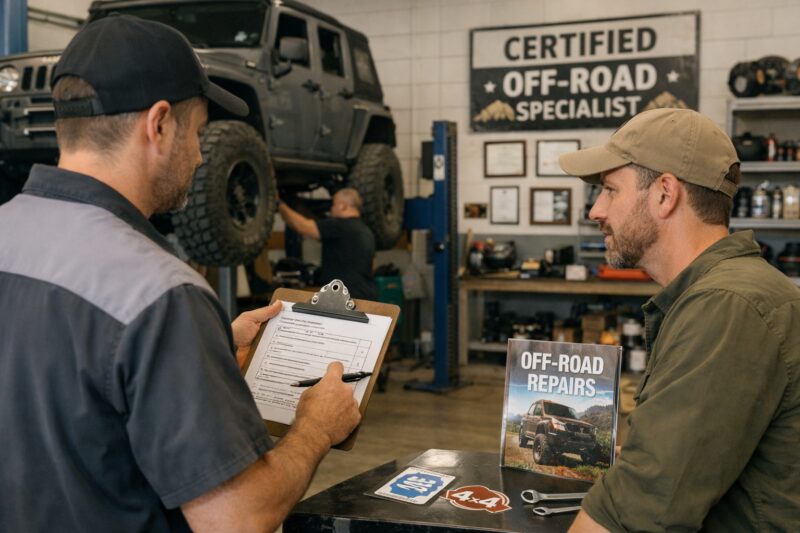
Real-world scenario: a 4WD system engages inconsistently after a water crossing. A dealership may be best if OEM scan procedures and parts matching are essential. A specialty off-road shop may be better if they have experience with axle seal contamination, breather routing, and suspension lift impacts on sensor behavior. What most guides get wrong is assuming that any “competent mechanic” is equal for 4×4 issues—4×4 and transfer case diagnostics can require different test thinking than standard engine jobs.
Below is a quick comparison to help you match your shop category to your repair need.
| Shop type | Strengths | What to verify before you book |
|---|---|---|
| Dealership service department | OEM-correct procedures, parts, calibration, warranty documentation | Itemized estimate, diagnosis steps, and labor warranty terms for off-road systems |
| Independent general repair shop | Value, flexible scheduling, broad diagnostics for many mechanical issues | Experience with 4×4 architecture, documented measurements, and how they handle lifted vehicles |
| 4×4/off-road specialist | Off-road failure mode understanding, suspension/geometry, measurement-heavy workmanship | Who performs transfer case/differential work, and whether they document before/after specs |
| Suspension/drivetrain-focused specialist | Alignment, steering, axle/CV work, vibration diagnosis | Brake bleeding, calibration, driveshaft angle considerations, and warranty documentation |
To keep your comparison consistent, use a off-road repair checklist style approach: scope clarity, diagnostic documentation, and a warranty you can enforce. That method makes the “best” shop obvious even when prices differ.
Common mistakes when searching for Off-Road Repair Near Me (and how to avoid them)
Most people searching for Off-Road Repair Near Me lose money by choosing shortcuts—distance, vague reviews, or authorizing repairs without an itemized estimate. Avoid those mistakes and you will dramatically reduce repeat failures and surprise invoices.
Why it matters: off-road repairs are rarely one-part fixes. A worn component can cause secondary damage (for example, misalignment accelerating tire wear and stressing wheel bearings; a failing hub affecting ABS readings; a differential issue contaminating seals). If you authorize work based on incomplete scope, you essentially accept uncertainty without protections.
How it works: the biggest mistakes usually happen at three moments—when you pick a shop, when you approve the first teardown, and when you receive the final invoice. Choosing based on distance alone often correlates with lower specialization and weaker process. Relying on generic reviews can hide whether the shop measures and documents. Authorizing work without a written, itemized estimate removes your ability to dispute scope changes.
Practical application: protect yourself with concrete demands. Ensure the shop provides an itemized estimate with parts numbers (or at least part sourcing method), labor hours, and diagnosis scope. Ask whether “free estimate” includes diagnosis or whether a diagnosis fee applies once you authorize teardown. Confirm how they handle parts markups and whether they disclose OEM vs aftermarket options clearly.
Tradeoffs and limitations: sometimes you will pay more for diagnostics, but that cost is smaller than paying for unnecessary parts and repeat labor. Another common error is assuming “off-road parts are always stronger.” Wrong fitment from lift geometry changes, axle alignment, or driveshaft angles can worsen failures—even when the parts are marketed as “heavy duty.” Fitment and measurement matter more than marketing claims.
Real-world scenario: your vehicle vibrates after a suspension upgrade. A generic shop may rebalance wheels and replace a driveshaft component without checking alignment and hub runout. The vibration returns because the core issue was geometry or bearing damage triggered by improper install. What most guides get wrong is advising “start with the cheapest replacement part” instead of forcing the shop to verify with measurements.
Communication mistakes also drive cost. If you do not get a timeline, update schedule, and clear approval process for additional findings, you can inherit extra costs without consent. If towing/storage fees apply, ask for the policy in writing because those fees can change the cost equation quickly—especially during trail seasons when shops are booked.
For a structured way to avoid these pitfalls, a off-road service center checklist can help you standardize what you verify before authorizing work, regardless of which category of shop you choose.
Advanced considerations: off-road systems that require deeper inspection (beyond basic repairs)
Some off-road repairs cannot be solved by “replace the obvious part,” so Off-Road Repair Near Me should include deeper inspection when driveline, alignment, or pressure-sensitive systems are involved. If a shop does not measure and document, you are more likely to get repeat failures.
Why it matters: off-road stresses components differently than highway driving. Impact loads can bend parts, shock torque can damage driveline bearings, and dust contamination can accelerate seal wear. Cooling systems may behave normally at idle but fail under sustained off-road load, leading to intermittent overheating that a basic inspection misses.
How it works: a proper shop uses measurement-heavy steps for systems like 4WD/transfer case, differentials/lockers, axles/CV joints, and wheel bearings. For example, driveline vibration diagnosis typically requires more than code reading—it can require checking wheel balance, hub runout, driveshaft condition, axle angles, and mount integrity. Suspension repairs should include alignment and geometry checks, especially after lift and tire changes.
Practical application: ask what measurements they will take and what the targets are. For alignment-related work, confirm they measure toe, camber, caster, and any axle angle specs appropriate for your setup. For drivetrain repairs, ask whether they check backlash, rotating assembly condition, and seal seating. If the repair involves brakes, confirm whether they will inspect rotor condition and perform any bleeding or calibration procedures required by the vehicle.
Tradeoffs and limitations: deeper inspection takes time, and the shop may need you to authorize a staged approach. But staged authorization can be safer than one-time “do everything” work. The key is clarity: define what you approve at each stage and require documentation of findings.
Edge case: intermittent vibrations that appear only under certain throttle positions. Many shops miss this because they test under static conditions. A trusted shop may conduct condition-based testing—checking behavior with load changes and verifying whether symptoms correlate with braking, acceleration, or steering angle.
Common mistake: assuming one symptom equals one cause. Vibration can be balance, bearing preload, driveshaft angle, alignment geometry, or even tire sidewall damage from trail impacts. What most guides get wrong is recommending a single “first guess” component replacement without asking for evidence-based testing.
Documentation you should expect: photos, before/after measurements, scan logs, and part numbers. If the shop cannot provide any record beyond a receipt, you may have difficulty with warranty claims later. A measurement-based repair also helps protect against comebacks and supports future maintenance planning.
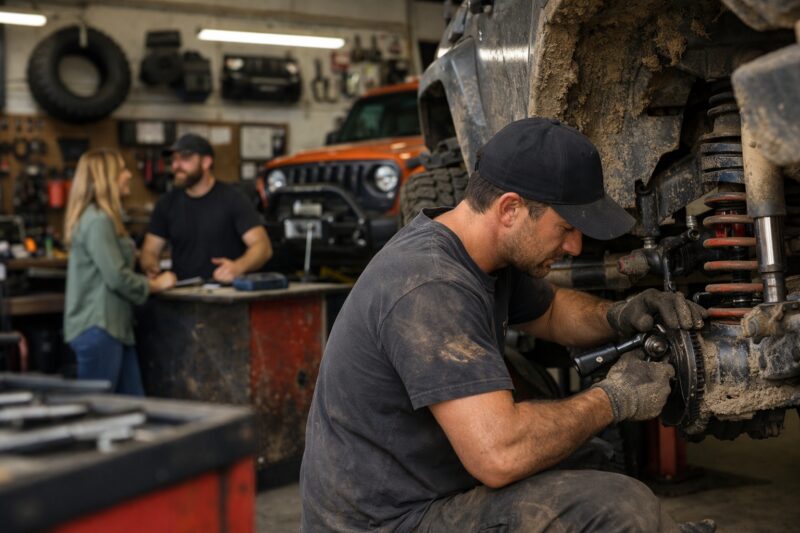
If you want a ready-to-use verification workflow for measurement-based repairs, the steps in the 4×4 repair shop checklist align well with advanced inspection expectations.
Off-road repair in the real world: turnaround time, warranty terms, and paperwork you should require
Real-world Off-Road Repair Near Me decisions come down to three things: turnaround clarity, enforceable warranty terms, and paperwork that matches your approved scope. Before you sign off, make sure the final invoice and the warranty documentation align with what you authorized.
Why it matters: turnaround delays often happen because parts are ordered, diagnostics uncover hidden damage, or scheduling is impacted by weekends and trail-season demand. Warranty disputes often happen because the repair shop cannot point to documented findings or because exclusions are unclear. Paperwork gaps can turn a warranty claim into a time-consuming argument.
How it works: compare shops using consistent signals. Ask what the estimate range is for labor and parts, and clarify what “in-stock” means versus “ordered.” Then ask for the planned diagnostic timeline and the approval steps for add-ons discovered during teardown. A trusted shop will set expectations about how quickly they can confirm root cause and when they will contact you for authorization.
Practical application: verify warranty expectations upfront. A reasonable warranty should specify coverage for labor and parts, include duration limits, and clearly list exclusions (for example, improper use or additional modifications that contradict the repair). Ask how warranty claims are processed—do they require inspection, do they recheck measurements, and how quickly will they rework covered items.
Deep nuance: scope creep is a major issue in complex off-road repairs. Ensure the shop has an approval process for additional findings mid-repair and that they do not assume implied consent. If additional work is required, they should provide an updated written estimate for your approval rather than simply proceed and adjust the final invoice.
Papers to require: the written estimate, a work order that references your approval, parts receipts with part numbers, and the warranty card or written warranty terms. When appropriate, ask whether you can receive replaced components, especially when warranty coverage could matter. After the repair, confirm the final invoice matches the approved scope and that any deviations are documented.
Real-world scenario: your differential repair requires seal replacement and careful reassembly. If the shop does not document torque specs, seal part numbers, and reassembly procedures, you may not have a strong basis to claim warranty coverage for a leak that appears later. What most guides get wrong is treating warranty as a vague promise rather than as written terms plus documented workmanship.
For help organizing these requirements, use a off-road service center checklist approach to confirm you receive the exact paperwork that protects you after pickup.
Frequently Asked Questions About Off-Road Repair Near Me
How do I choose an off-road repair shop near me fast?
Choose 2–3 shops and ask for a written off-road repair checklist-style response: diagnosis scope, written estimate, turnaround estimate, and labor warranty terms. Before you commit, verify they can explain likely failure modes for your symptom (for example, vibration vs ABS/4WD light codes) and confirm they will document findings, not just install parts.
Ask whether the shop charges for diagnosis and whether the diagnosis results are documented (photos or measurements). Request an itemized estimate that clearly lists parts sources, labor hours, and an approval step for additional findings discovered during teardown.
Is it better to diagnose first or replace parts immediately?
Diagnose first is usually safer because off-road symptoms often have multiple causes (geometry, bearings, driveshaft angles, and contamination). Replacing parts immediately can be reasonable only when the cause is obvious and the shop explains why they are skipping measurements and still provides a warranty on labor and workmanship.
What does a trustworthy off-road shop warranty cover?
A trustworthy warranty clearly states labor coverage and parts coverage and provides a timeframe and claim process. It should also list specific exclusions and explain what documentation you will receive to support a warranty claim.
Off-road suspension repair—do I need an alignment afterward?
In most lifted or tire-and-wheel-changed setups, you need an alignment after suspension work because geometry changes and affects steering response and component stress. Confirm the shop measures alignment/axle angles and documents before/after results, not just “it feels straight.”
Can a general auto shop handle 4×4 transfer case problems?
They can sometimes, but you must confirm competence by asking what diagnostic steps they use and who performs critical measurements and assembly procedures. A shop that cannot explain how it tests transfer case behavior under load, or that won’t provide documentation, is a red flag.
How do I compare quotes for off-road repairs without getting overcharged?
Compare itemized estimates that separate diagnosis, labor hours, and parts sourcing (OEM vs aftermarket). Ensure you are comparing “apples to apples” by checking what is included, what is excluded, and whether the labor warranty is comparable across shops.
What are red flags when looking for off-road repair near me?
Red flags include estimates that are not itemized, vague timelines with no update process, refusal to provide written warranty terms, and a shop that avoids documenting diagnostic findings. Another common warning sign is pushing parts immediately without testing, especially for vibration, noise, or intermittent warning light issues.
Do I need OEM parts for off-road repairs to keep reliability?
Not always, but compatibility and fitment matter more than brand labels. A trusted shop should explain when OEM parts are recommended (calibration, critical fitment, or warranty requirements) and how reputable aftermarket or reman parts are selected and warranted.
Will off-road tire and lift modifications affect repair warranty coverage?
They can, especially if modifications contributed to the failure or if the repair depends on specific geometry settings. The best approach is disclosure: tell the shop about your lift, tire size, and install history, and request written warranty exclusions so you know what is covered and what is not.
Conclusion
To choose trusted Off-Road Repair Near Me in 2026, your goal is simple: verify competence, require itemized scope and enforceable warranty documentation, and compare options based on your specific failure mode—not just distance. When the vehicle is down and safety is uncertain, the right shop helps you recover quickly with fewer comebacks.
Use the decision path you can execute immediately: shortlist 2–3 shops, request written estimates that separate diagnosis from repair, confirm turnaround expectations and warranty terms, and only then authorize the correct scope. Protect yourself from repeat failures by insisting on measurement-based workmanship and documented before/after results wherever geometry, driveline, or alignment is involved.
If you want a consistent action plan for your next call, start with the off-road repair checklist and the shop verification prompts like choose the right technician. Then move forward with the shop category that matches your repair type—dealership for OEM-critical needs, independents for value with strong process control, and specialists for measurement-heavy off-road systems.
For additional context on repair documentation and consumer protections, you can review guidance from FTC and general vehicle repair disclosure practices from Consumer Reports and NHTSA for recalls and safety-related checks.
Updated May 2026