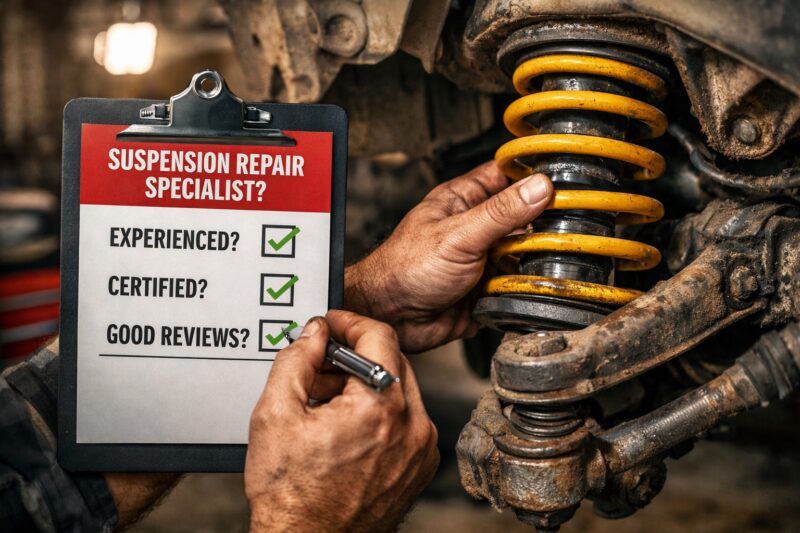
To choose the right suspension repair specialist, you need a shop that diagnoses correctly, repairs safely, and matches the parts to your vehicle. The goal of “choose suspension repair specialist” is simple: avoid guesswork, reduce repeat issues, and get proof that the fix addressed the root cause. Suspension repair is more than swapping worn parts. It includes inspection, diagnosis, repair or replacement, and alignment considerations when needed. This guide gives you a decision checklist, red flags to watch, and questions that help you validate work before you approve it.
Know what a specialist should accomplish from the first visit
A good suspension repair outcome starts with the correct diagnosis, not with random part replacement. When you book, ask yourself if the shop plans to determine why the problem happens. Then they should choose the safest repair that matches the symptoms and your driving goals.
Suspension problems often have multiple causes, which is why “replace the obvious part” can fail. For example, worn bushings can create clunks that people blame on shocks. Leaking shocks can worsen steering feel, which then exposes other worn links. In addition, tire wear and alignment drift can mimic handling complaints that feel like suspension damage.
A specialist should begin with symptom intake, then run an inspection method designed to confirm or rule out likely causes. This includes checking for play, leaks, torn boots, damaged brackets, and corrosion at key fasteners. Also, the shop should document findings, so you can see what they found and why they recommended a specific repair scope.
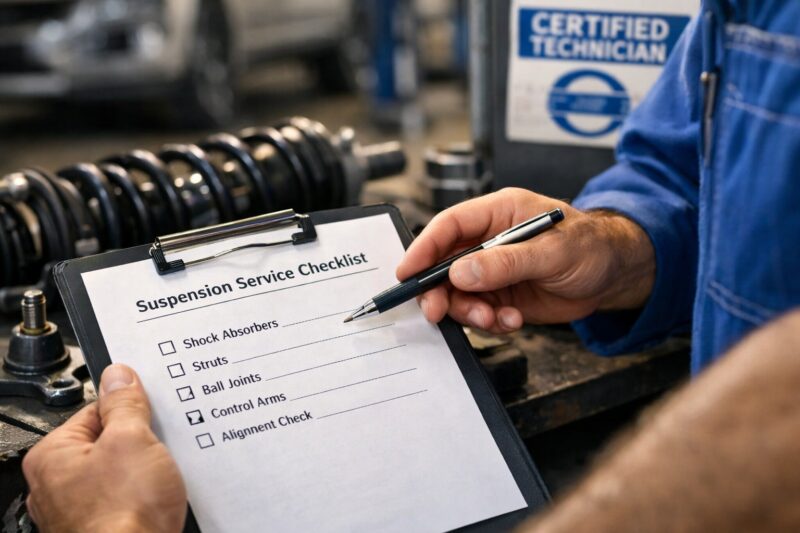
Repair scope can vary a lot, even for the same basic complaint. Some cars need reconditioning of joints, while others need replacement of entire assemblies. Therefore, you want a shop that explains service levels in plain language. A good mechanic shop checklist-style approach makes that easier, because the findings and next steps are consistent and reviewable.
Evaluate a shop’s diagnosis workflow before you approve any repairs
You should pick a suspension repair specialist based on their diagnostic process quality. The best shops do not guess. They gather evidence, test logically, and connect the evidence to the recommendation.
Start by asking how the inspection works from start to finish. A thorough workflow often includes visual checks, under-vehicle inspections, and measurements where the vehicle and symptoms warrant it. Next, the technician checks related components, because suspension parts rarely fail in isolation. They should also confirm whether noise or vibration truly comes from suspension, or from brakes, steering linkages, wheels, or tires.
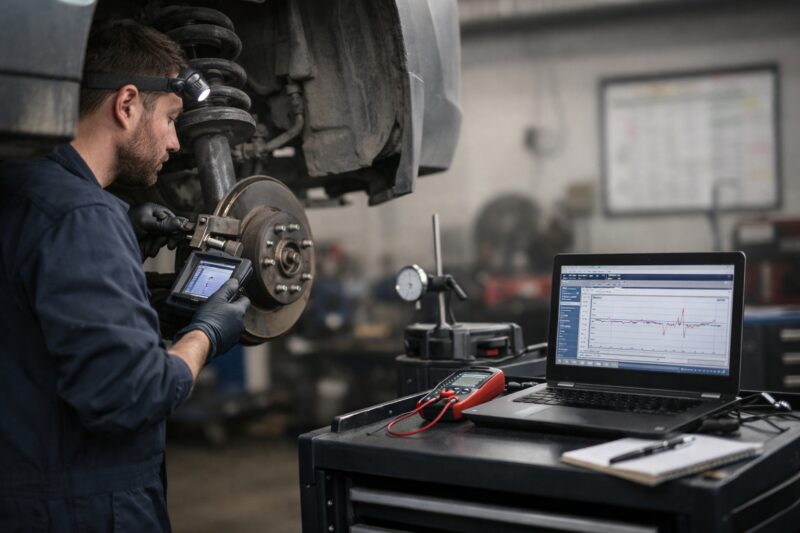
Look for evidence you can verify. Photos of worn boots, cracked bushings, or leaking shocks help you understand the condition. Measurement readouts and written notes make the diagnosis easier to trust. Test-drive notes also matter, because they connect what you feel to what they find.
Then assess their decision logic. A good shop can explain when they recommend inspect-only first, when they recommend repair or replacement, and what would change their plan if they find something else. As a limitation, even strong diagnostics can miss intermittent faults. However, good shops address this with a re-check plan and clear authorization steps.
Common misdiagnosis patterns include blaming shocks for worn control arm bushings, or assuming alignment caused a clunk that comes from a seized joint. Another mistake is jumping to “replace everything” without confirming the failure source. If you want a framework to compare shops, the automotive repair checklist mindset helps you judge consistency and documentation.
Match the parts and repair scope to your suspension design, not just the symptom
Choosing the right parts is where many suspension repairs succeed or fail. Your suspension repair specialist should select parts that fit your exact application and match the way your suspension is built.
“Right parts” means more than a correct part number. It includes fitment for your model year, drivetrain, and trim. It also includes compatibility with the rest of the system. For example, replacing only one side with a different component generation can create uneven wear patterns that return the same complaint.
Ask what parts category they plan to use. Options often include OEM replacement parts, reputable aftermarket parts, and remanufactured components in certain cases. Each category has tradeoffs. OEM often aligns well with original design and can come with clearer fitment documentation. Aftermarket can offer value, but you should confirm warranty terms and quality control practices.
Your specialist also needs to decide the repair scope. Sometimes that means replacing one side first. Other times it means doing components in pairs or sets to restore balance and handling consistency. Uneven wear matters because it can change how load transfers through the suspension. Also, if one side shows extreme corrosion or seized hardware, you may need extra work to restore safe operation.
Request the scope in writing. Ask for part names, part numbers, labor line-items, and the warranty terms. That way, you can verify that the recommended work matches what you approved. This is especially important when the shop uses a parts supply source you did not choose. If you hear vague language like “we’ll decide later,” treat it as a risk signal.
Edge cases happen. Some vehicles have discontinued components, so your shop may propose alternatives. They should explain safety impact, expected longevity, and any hardware reuse concerns. Reusing hardware can be okay in some cases, but suspension fasteners can stretch or degrade. A safe shop tells you when new hardware is required and why.
Get clear estimates, realistic alignment plans, and warranties you can understand
Estimates and warranties reveal how professional a suspension repair specialist really is. A clear plan reduces surprises and helps you confirm that the fix addresses what you felt.
An estimate should start with the diagnostic fee clarity. Then it should break down labor and parts. Parts markup should be transparent. Also, you want to know if alignment is included, required, or recommended as an add-on. Many suspension repairs affect alignment targets, especially when steering-related components are replaced. However, not every job requires alignment, so you should ask how the shop decides.
Warranty essentials deserve careful attention. You want to know what is covered: parts, labor, and the installation. You also want duration and exclusions. For example, a warranty might not cover improper maintenance, collision damage, or unrelated failures. In addition, it should explain what happens if the original symptom returns.
“Proof of workmanship” is another key topic. Before-and-after documentation helps you see the condition and the repair results. Proper torque and specification compliance matter for safety. Finally, post-repair checks should include what the shop verified. When alignment is relevant, the shop should provide alignment verification results after the repair, not just before.
One tradeoff to understand: a shop can offer a low estimate but omit key scope items. That can lead to repeat appointments. If you see “we’ll see if it needs alignment” with no re-check plan, ask for the decision criteria in writing. A vague warranty or “everything is fine” attitude can leave you with no path to fix persistent symptoms.
Compare shop types by evidence quality, tooling, and consistency of documentation
You can compare service options without obsessing over brand names. The shop type matters only if it changes diagnosis quality, parts sourcing quality, or documentation depth.
Independent specialists often excel at hands-on diagnosis and focused repair processes. They may also be flexible about parts sourcing, which can be helpful if OEM parts are hard to find. Dealership service departments can be strong when you want OEM procedures and factory spec familiarity. Mobile inspection Services can help with initial triage, especially when you want preliminary findings before committing to full labor.
However, “compare the quote” is not enough. Compare the explanation. Ask each option for the root-cause reasoning that links findings to symptoms. Also ask how they handle disagreements with diagnosis. A professional shop should describe what additional evidence they would collect if the first theory does not match the car’s behavior.

Tradeoffs exist. Some shops require a minimum job scope. Others may need you to approve parts ordering before they can proceed. Warranty terms can vary based on parts category. Finally, availability matters when you need specific components quickly. Still, you can keep control by requiring clear scope parity between quotes.
A common mistake is trusting the lowest quote when it omits related wear items. For example, if one estimate includes new sway bar links and bushings while another does not, the cheaper job can become more expensive after you return for repeated work. Use a simple comparison rule: scope should match. If you need a reference point, a “near you suspension repair” search can help you shortlist options, then you compare them using evidence standards rather than price.
In your evaluation, pay attention to how the shop talks about repeat issues. Do they offer reinspection when symptoms persist? Do they explain what they will measure next? A shop that aims for fast accurate repair without skipping documentation often costs less over time because you avoid redo work.
Spot red flags that lead to repeat suspension problems
Several red flags predict repeat suspension issues. If you see these early, your best move is to ask for clarification or choose another suspension repair specialist.
One major pitfall is replacing parts without a documented diagnosis. Another is unclear scope changes. If the shop says “it’s probably this” but cannot show photos, measurements, or inspection notes, you risk paying for parts that do not fix the root cause.
Upselling unrelated work is also a problem. Some shops recommend repairs that sound reasonable but do not connect to the symptom. That is why a good inspection method matters. The specialist should explain cause and effect and show how the recommended work affects the specific noise, vibration, or handling change.
Behavioral red flags matter too. Refusing to show findings, discouraging written estimates, or pushing you to approve immediately can signal weak process. Also, vague warranty terms are a risk signal. You should be able to answer what is covered, how long it lasts, and what happens if the symptom returns.
Safety concerns require special attention. If the shop finds bent components, damaged brackets, or signs of improper prior installation, they should explain the safety risk and propose a fix that restores correct geometry. A good response includes explaining why the repair must be more than a simple replacement.
Deeper nuance often comes from timing misconceptions. Some symptoms show up only when cold, after rain, or at specific speeds. A correct repair can still require follow-up verification in those cases. If the shop promises a permanent fix with no re-check plan, be cautious. Ask what they will do if the symptom persists after the repair.
Plan for hard-to-diagnose cases like corrosion, intermittent noise, and overlapping symptoms
Some suspension issues require extra care because the cause is hidden or intermittent. When you face corrosion, hard-to-reproduce noises, or overlapping system complaints, choose a suspension repair specialist with a method for complex diagnosis.
Corrosion can cause grabbed fasteners and seized joints. That can change how parts move, which changes the way the suspension behaves. In addition, corrosion can hide cracks by making surfaces look intact. A good shop adapts with additional tear-down and careful confirmation steps rather than forcing a quick guess.
Intermittent vibrations also demand patience. For example, a noise may happen only on turns or only at certain temperatures. Therefore, your specialist should propose a plan that collects more evidence during the relevant conditions. Communication matters . They should explain uncertainty clearly and describe decision points like “if we find X, we will replace Y.”
Overlapping symptoms are common. Sometimes what feels like suspension is actually wheel balance, tire damage, brake pulsation, or steering play. Meanwhile, suspension components can wear in ways that feel like tire problems. A strong diagnostic workflow separates causes methodically using evidence and test results.
Edge cases also include abnormal hardware fitment from prior repairs. If an earlier shop installed parts incorrectly, the new replacement may not align with your vehicle’s intended geometry. A specialist should recognize signs of prior work. They should also explain whether hardware reuse is safe or whether replacement is necessary for longevity.
Finally, complex cases often involve parts availability limits. A professional shop should manage expectations and explain how the plan changes if parts are delayed. Ask for authorization steps for any additional labor found during tear-down. That keeps approvals clear and avoids surprises.
Frequently asked questions about how to choose a suspension repair specialist
What should I ask a suspension repair shop before they touch my car?
Ask what inspection steps they will perform and how they will document findings. Request a written estimate that separates diagnostic work, labor, and parts. Also ask whether alignment is included or required for your specific repair scope.
In addition, ask how they source parts and what warranty applies to parts and installation. If they find additional issues, ask how they will get your approval before doing more work. Finally, ask what re-check steps they recommend if the symptom remains after repair.
How do I know if a shop is actually diagnosing the problem or guessing?
You can look for evidence like photos of worn components, measurement readouts, and inspection notes. Then listen to how they connect findings to the symptom you reported. A diagnosing shop explains cause and effect with a clear logic chain.
Also, ask what they would do if their first theory is wrong. If they cannot describe alternative checks, they may be guessing. A strong diagnostic workflow also includes checking related components, not only one suspect part.
Should I replace suspension parts in pairs or only the side that’s worn?
Many repairs recommend matching components to restore balance across the axle. If one side is much more worn, replacing only one side can create uneven ride and handling. However, the correct choice depends on the specific component and your vehicle’s suspension design.
A good suspension repair specialist explains why they recommend one-side replacement or pair replacement. They should also consider uneven wear patterns, alignment effects, and how the repair changes load transfer. Ask them to show wear evidence that supports the decision.
What does a suspension inspection usually include, and what should it not skip?
A suspension inspection should include checks for play, leaks, torn boots, damaged mounts, and visible wear. It should also check related components like links and bushings that can cause similar symptoms. For many vehicles, it should also review how the problem changes under driving conditions.
It should not skip the documentation piece. You should receive notes or photos showing what they found. If the repair affects steering geometry, the shop should also discuss an alignment review as part of verification.
A low estimate can be risky if it omits alignment or related wear items that your inspection identified. Suspension work often changes angles or load paths. Therefore, alignment might be required even if the original complaint sounded like “noise only.”
Ask what evidence supports their choice to skip alignment. Also ask whether related components will be inspected during tear-down and whether any add-ons could be necessary. Compare scope parity so you judge the total job, not just the headline price.
What are common reasons suspension repairs don’t fix the original noise or vibration?
Misdiagnosis is a common cause. For example, a shop may replace shocks for a clunk when worn bushings or control arms are the real problem. Incomplete scope can also leave the root cause untouched.
Overlapping causes matter too, like tire damage, brake issues, or wheel balance problems. Finally, some symptoms are intermittent and require re-check verification after the initial repair. A good shop addresses this with a reinspection plan rather than ignoring the complaint.
How does the warranty work if the problem returns after suspension repair?
A solid warranty should cover parts and labor for the work performed, and it should define how long coverage lasts. Ask whether the warranty applies to the symptom you originally reported. Also ask what proof the shop needs to process a claim.
If the issue returns, the shop should reinspect and document findings again. They should explain whether the repair failed, whether a new issue appeared, or whether the original cause was different than expected. Clear documentation makes the warranty claim process smoother.
Is it better to use OEM parts or aftermarket parts for suspension repairs?
OEM parts can be a good choice when you want factory-level fitment and design match. Reputable aftermarket parts can also work well, especially when they offer clear fitment data and warranty coverage. The best choice depends on your vehicle, your goals, and the quality controls of the supplier.
Ask the shop to explain the warranty differences and how they ensure correct fitment. Also ask whether any reused hardware affects safety and longevity. If the shop can’t explain these points, choose a different option.
How can I compare two suspension repair specialist recommendations when they disagree on the cause?
Ask each shop to provide evidence, including photos, measurements, and the inspection notes that support their root-cause theory. Then ask what tests they used to separate suspension causes from related systems. Also ask how the plan changes if their theory turns out to be wrong.
If one recommendation feels vague, request specifics like which components are worn and why. A professional shop should be able to explain decision criteria and expected verification steps after repair. You can also ask whether both shops will perform the same alignment review when relevant.
What should I do if the shop finds additional issues during repair?
Ask them to pause and show you the new findings before approving any extra work. Request an updated estimate that lists the additional parts and labor. Also ask whether the new issues change the diagnosis or simply expand the repair scope.
Keep approvals clear. If the shop needs authorization for hardware reuse decisions, ask for a description of which items will be reused and which will be replaced. Good communication reduces surprises and helps ensure the repair stays focused on the root cause.
Make your final decision using a structured checklist and proof of verification
You can choose the right suspension repair specialist by focusing on four pillars: diagnosis quality, documented findings, correct parts and scope, and clear verification. If any pillar is weak, ask more questions or consider a different shop.
Start by requesting an inspection and a written estimate. Then compare what each shop says about root cause and the evidence behind it. Ask about alignment plans when relevant, and confirm warranty terms that cover both parts and labor.
Next, use a structured Mechanic Shop checklist approach to evaluate documentation and communication. Look for photos, measurement notes, and a re-check plan if symptoms persist. Also, watch for red flags like unclear scope changes, vague warranties, and pressure to approve work immediately.
As a final step, insist on verification. That can include alignment results when the repair affects steering geometry, plus a road test with notes. If you want to find options, a near you suspension repair search can help you shortlist candidates, but you still need evidence-based comparison.
If you want fewer repeat issues, aim for a fast accurate repair process that does not skip documentation. For many drivers, that means choosing the shop that can explain cause and proof, not the shop that promises a quick fix. When you follow this approach in 2026, you reduce risk and improve your odds of a lasting ride.
To keep your decision consistent, request an inspection and written estimate, ask targeted questions, and verify alignment and post-repair checks when relevant. If symptoms do not improve, insist on a reinspection process rather than accepting “it should be fine.” This structured approach helps you confidently choose suspension repair specialist options that match your vehicle and goals.
External sources: National Highway Traffic Safety Administration — vehicle safety resources and recall context; Federal Motor Vehicle Safety Standards — official safety standards framework; ACDelco — general guidance on suspension component care and maintenance concepts.
Updated September 2026