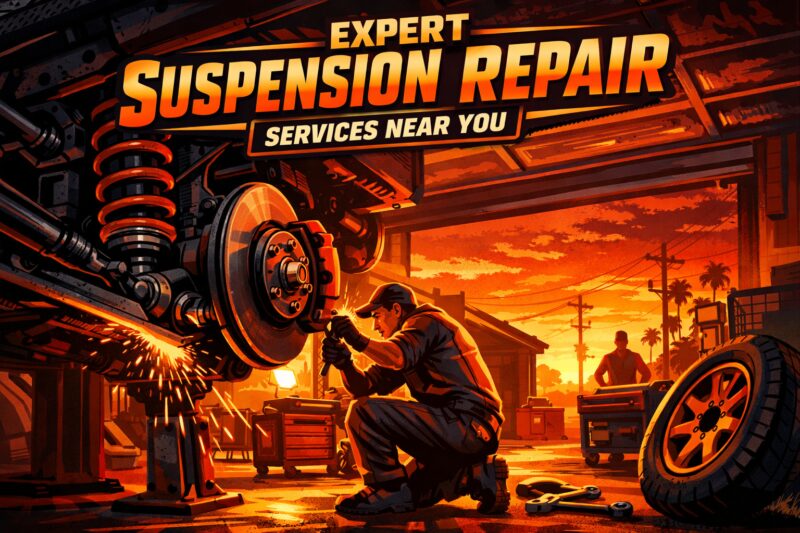
If you need suspension work, the fastest path to a safe result is choosing a shop that performs real diagnostics, uses correct vehicle-specific parts, and verifies the fix after installation. That is how you find expert suspension repair services near you that can fix your car right the first time. Local car owners often search for suspension repair services because they want accountability, easier rechecks, and documentation they can rely on. In practical terms, “expert” means inspection beyond a quick visual look, measured findings tied to the symptoms, and a repair plan that includes alignment verification when it is required. It also means the shop explains what failed, what else is at risk, and what you should expect to feel after the repair. When local shops back their work with a clear warranty and a reinspection process, you can reduce guesswork and avoid repeat visits.
Suspension problems also affect tire wear, steering feel, and braking confidence. That is why proximity matters. When your suspension repair includes post-work verification, a nearby shop can inspect again after a short return trip, and they can correct issues while the evidence is still fresh. In 2026, many shops also provide digital estimates, itemized invoices, and inspection notes you can review before you approve the work. You should leave the process with proof, not promises.
This guide helps you choose the right shop, ask better questions, and avoid common mistakes that cost money. You will also learn what a proper diagnostic and repair workflow looks like, how vehicle type changes the job, and what “done correctly” should mean for steering stability and ride control. Use it to separate true expertise from a parts-only approach.
How to choose expert suspension repair shops near your location
Expert suspension repair starts with diagnostics that match your exact symptoms to the most likely causes. A trustworthy shop will not just guess which part looks worn. Instead, they will confirm the condition of shocks or struts, springs, bushings, joints, and mounts with a structured inspection.
“Expert” also means the shop clarifies scope before they tear anything apart. They should explain whether they plan to inspect for worn control arms, ball joints, sway bar links, or related hardware. They should also tell you what they expect to find and what might change once they see the components in person. That conversation is the difference between a repair and a gamble.
Correct fitment is another major indicator. Suspension parts must match your vehicle’s trim, wheel size, and platform design. The shop should discuss OEM versus aftermarket choices and explain what changes in ride feel, longevity, and compatibility. They should also use the right installation procedure and torque specifications, because incorrect torque can cause clunks and premature wear.
Finally, look for evidence of real competence, not sales pressure. The shop should be willing to explain findings in plain language and show you the damaged areas. You can also use a trusted approach like a trusted off-road repair checklist mindset, where you ask for stepwise evidence rather than vague assurances. If a shop refuses to show you worn components or measurements, treat that as a warning sign.
One common scenario is a “cheap fix” that replaces one visible part while the real cause sits elsewhere. For example, a worn bushing can create play that damages the control arm. If the shop only swaps a component and skips a deeper check, the vehicle often returns quickly with the same noises. Good shops focus on root cause because that is what prevents repeat repairs.
The diagnostic and repair process that should happen before any suspension work
A strong suspension repair process begins with symptom intake and ends with verification you can feel and measure. A reputable shop follows a logical workflow instead of jumping straight to parts replacement. The goal is to connect your complaint to a specific mechanical cause before they start disassembly.
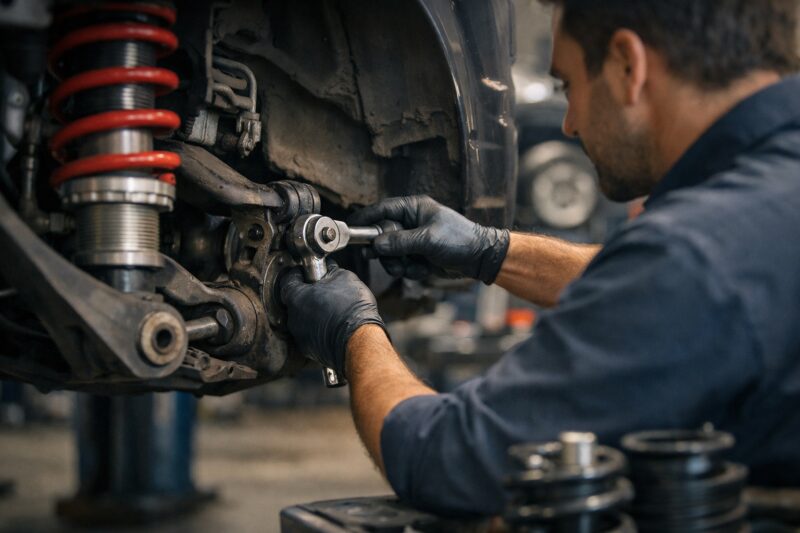
First, the technician collects details about when symptoms happen and how they show up. They ask about braking pull, speed-related vibration, cornering noises, and bump-related clunks. Then they perform an inspection that includes visual checks, play tests, and measured assessment of component condition. They also look for related issues such as fluid leaks at shocks, torn boots on joints, and uneven wear patterns on tires.
Next comes test-driving and characterization. The shop should note whether the vibration or noise changes with speed, steering angle, braking, or road input. That helps distinguish a suspension cause from alignment, wheel balance, tire cupping, or brake-related pull. This step matters because “symptom mismatch” is common. People may describe “steering shake,” but the shake can come from tires, wheels, alignment geometry, or looseness in suspension joints. A good shop separates the possibilities before replacing parts.
Suspension work also ties directly to alignment in many cases. If they replace control arms, tie rods, struts, or other steering-related components, alignment verification is part of a correct repair. The shop should confirm the final settings match your vehicle specifications and document the results. Without that, the car may ride fine for a short time and then drift, wear tires, or feel unstable. This is where a fast accurate repair process shows up in real life.
Tradeoffs exist, but they should be explained clearly. For example, some shops may propose a stepwise plan if parts are hard to source. Still, they should not skip key inspection steps. If the shop cannot explain how they decide the repair plan, you are not getting expert-level diagnosis.
Suspension repairs vary by vehicle type, setup, and driving conditions
Suspension repairs are not one-size-fits-all because vehicle design and usage change what wears and why. Sedans, SUVs, trucks, and performance cars often share parts names, but their geometry and stress paths differ. That is why an expert shop tailors the inspection to your platform.
In most vehicles, the usual component categories include shocks or struts, springs, bushings, ball joints, control arms, sway bar links, and mounts. Shocks and struts manage motion control and comfort. Springs support ride height and load. Bushings and joints allow movement while controlling unwanted play. When any of these wear, your vehicle can feel loose, bounce, clunk, or drift. The shop should explain which component category fits your symptoms.
Driving conditions change the priority of checks. Pothole-heavy routes, rough parking lots, and frequent impacts increase shock and bushing wear. Towing or carrying heavy loads can stress springs and mounts and can alter how quickly components degrade. If you have a history of hitting curbs or driving with misalignment, joints may wear in patterns that a quick look will miss.
Modern suspensions can also include electronic damping or height-related setups, depending on the vehicle. When those systems exist, the shop must check for calibration and compatibility issues. Otherwise, you can end up with abnormal ride behavior or warning lights. Even if the repair “fits,” it may not match your vehicle’s operating logic.
Edge cases also happen when other systems mimic suspension faults. Uneven tire wear can create vibration that feels like a bad strut. A drivetrain mount can create a clunk under load that sounds similar to a worn suspension joint. Brake pull can feel like steering instability. This overlap is why good diagnostic workflow matters and why the shop should confirm before replacing multiple parts. A common mistake is blaming everything on suspension when tire balance, alignment, or brakes are the real trigger.
What to compare when evaluating suspension repair services (options and tradeoffs)
When comparing suspension repair services, focus on the repair approach, documentation, and warranty coverage. Two shops can quote different totals because one includes alignment verification, post-work checks, and proper parts sourcing. The lowest number can be cheaper for a reason, especially if it skips key steps.
Start by comparing repair strategy. Some repairs fix one worn component, while others refresh a whole related set to restore proper behavior. A related-set approach can be smart when wear is uneven across the axle or when multiple components show play or cracking. A shop that offers “while you’re in there” recommendations should also explain why the additional work benefits your symptoms, not just their parts margins.
Next, compare OEM versus OEM-equivalent parts. OEM parts often match exact fitment and finish, which can support predictable ride feel and longevity. OEM-equivalent parts can work well too, but the shop should describe how they confirm compatibility with your specific vehicle. They should also mention how warranty handling works if you choose aftermarket components. This helps you avoid surprises later.
Alignment packaging should be another clear comparison. If the shop replaces steering or suspension components that affect geometry, the estimate should state whether alignment is included and how they verify results. Some shops offer alignment once, while others include follow-up verification if there is an early recheck need. The best shops document the before and after alignment readings and tie those numbers to your vehicle’s spec.
Warranty expectations are part of the tradeoff. You should get coverage for parts and labor, along with what triggers a voided claim. The shop should also describe how re-inspection works if the symptom returns. For complex repairs, it is normal to propose a stepwise plan, but it should be transparent and documented.
A deeper nuance is that upgraded parts do not always produce better outcomes if they are mismatched. Incorrect spring rate, wrong left-right components, or improper installation can create new issues. This is why the shop must verify fitment and match parts correctly, not just pull from a generic catalog. If they cannot explain compatibility checks, your risk rises.
Common misconceptions and mistakes that cost drivers time or money
Many suspension repair problems repeat because the diagnosis is incomplete or the repair is treated like a simple parts swap. The biggest mistake is replacing what looks worn without confirming the cause of the looseness, noise, or vibration. When the underlying issue stays, the symptoms return.

A common misconception is that alignment fixes everything. Alignment adjusts geometry, but it cannot correct loose ball joints, worn bushings, or damaged mounts. If suspension components have play, the car can still drift and wear tires even after alignment. A reputable shop explains what alignment can improve, and they also describe what alignment cannot fix.
Another mistake is skipping measurable pre and post checks. “Better” should look and feel different, and a good shop shows why. They should discuss what changes you should notice after repair, such as reduced bounce, quieter bumps, or improved steering stability. If a shop cannot point to preexisting wear and post-work verification, it is hard to confirm the repair succeeded. This is where trusted mechanic verification steps become valuable: ask how they confirm outcomes, not just that they installed parts.
Drivers also sometimes fall for the “cheapest parts” trap. Low-cost components can fail sooner or fit differently, which can lead to quicker wear or noise. That does not mean you must choose the most expensive option, but you should choose appropriate durability and correct fitment for your vehicle. If pricing seems unusually low, ask what is not included. Misleading estimates often skip alignment verification or skip the deeper inspection that finds the real cause.
Safety-critical failures deserve special attention. If a ball joint, sway bar link, or control arm is dangerously loose, delaying repairs can worsen damage to tires and steering components. A good shop will communicate urgency based on measured condition and steering safety risk, not just sales pressure.
When suspension symptoms keep coming back after a repair
Recurring suspension symptoms usually mean the root cause was not fully identified or the repair verification was incomplete. When clunks or vibrations return quickly, do not assume the shop “did it wrong” automatically. Instead, ask for a re-inspection that targets why the symptom came back.
Common recurrence reasons include reused damaged hardware, incorrect torque or installation steps, or missing alignment verification. Parts matching also matters. If left and right components are not matched correctly, you can create uneven behavior that feels like the original problem. Another factor is that some symptoms have multiple causes. For example, tire cupping plus slightly worn bushings can create a combined vibration that feels like a single issue.
Your best next step is to document details before the shop repeats work. Write down when the symptom happens, what road input triggers it, and whether it changes after braking. If you can, take photos of the condition the shop describes, and keep copies of your invoices. This makes the re-check more accurate and reduces time spent re-guessing.
A good redo plan includes measurable checks and a transparent root-cause hunt. The shop should schedule a re-inspection, road-test again using your documented symptom details, and explain what changed since the first repair. If the shop offers a reinspection route with warranty coverage, it should also explain the steps they will take to prevent a repeat. This is how they handle the multiple causes scenario without dismissing your concerns.
Wear-in can happen, but it should not be unlimited. Some new components may settle and quiet down after a short period. True failures, however, should not keep worsening. If the symptom grows or if new warning lights appear, treat it as an issue that needs immediate diagnostic attention.
Why local matters in 2026: accountability, warranty support, and follow-up verification
Local suspension repair services give you practical accountability because you can return for rechecks without long delays. When suspension work affects ride and safety, follow-up verification matters. A nearby shop can confirm their work again and adjust it if the symptoms persist.
In 2026, many shops support smoother consumer workflows. You should expect itemized estimates, clearer inspection notes, and documentation for alignment readings when the job requires it. Digital communication can also help you coordinate a reinspection if parts arrive late or if the road test reveals something new. That reduces the gap between diagnosis and the outcome you experience.
When you call a local shop, ask a focused set of questions. For example, ask how they diagnose before replacing parts, what components they inspect for your specific symptoms, and whether alignment is included. Also ask how they handle warranty and what the reinspection process looks like if the issue returns. This question set helps you compare shops objectively and supports a trusted off-road repair checklist mindset even for street-driven vehicles.
Transparency also matters. A reputable local shop will explain uncertainty when a stepwise plan is needed. They might start with key inspections and then recommend additional work once they confirm what is actually worn. Watch for upselling without explanation, especially when multiple unrelated parts are proposed without clear evidence. The best shops communicate in a way that supports trust but verify, using measurable findings and documented results.
If you are in the Portland area, one example of local relevance is Portland Oregon suspension repair options. Proximity helps when you need a quick follow-up after alignment or if you want a second look on a noise you can still reproduce. It also makes scheduling easier if you need re-torque checks or reinspection after the first test period.
How much should suspension repair services cost, and what affects pricing
Suspension repair costs vary widely because the job can range from replacing one worn bushing to rebuilding multiple assemblies and doing alignment verification. Your estimate depends on which components are worn, whether hardware must be replaced in sets, and what diagnostics are needed to find the true root cause. In most cases, labor and parts both drive the total, and a shop’s documentation affects how accurately you can plan your budget.
Pricing also changes with parts sourcing and complexity. OEM-equivalent components may cost less than OEM parts, but the shop should explain fitment differences and warranty coverage. Some vehicles require special hardware, matched components, or additional inspection time because access is harder. If the job includes alignment verification and possible re-checks, that also affects the total.
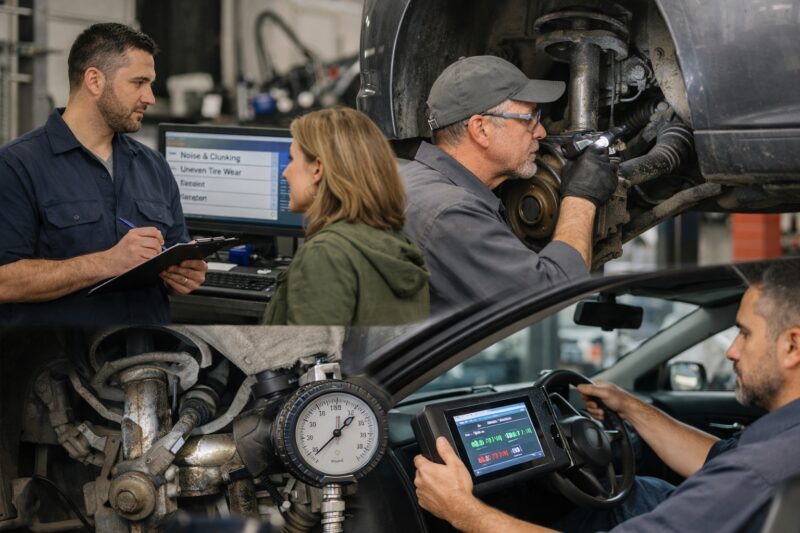
Another factor is how much of the suspension system the shop needs to assess. If your symptoms point to multiple possibilities, diagnostics take more time. A reputable shop will still connect the cost to evidence, such as measured play, boot condition, and wear pattern analysis. Avoid estimates that sound like they already know the answer without describing what they will measure first.
Local shops may offer different pricing structures, including diagnostic fees. You should ask whether the diagnostic finding becomes part of the repair cost if you approve the work. If they give an “inspection included” quote, confirm what the inspection covers. Also ask whether alignment is included when required.
Because every vehicle and symptom set is different, you should expect the final number to depend on component count, parts type, and alignment needs. Ask for an itemized estimate and a plain breakdown of parts, labor, and alignment. If you want budget guidance, the shop can often provide a range after they review the inspection findings and your vehicle’s specific setup.
How long does suspension repair typically take, and what affects scheduling
Suspension repair timelines depend on how much work is needed and whether alignment verification must be scheduled after parts install. Many repairs can be completed within a short service window when parts are in stock and the inspection confirms the likely cause. However, complex issues or parts backorders can extend the schedule.
The first variable is diagnostics. A shop that performs a proper inspection, road test, and measurement steps takes time, but it reduces the odds of repeat visits. If the technician needs to verify multiple systems that mimic suspension symptoms, they may expand the inspection. That can add hours to the first appointment but often saves money later.
Second is parts availability and compatibility. Suspension components often require vehicle-specific fitment. If you drive a trim with unique suspension hardware, the shop might need to order matched components. When springs, mounts, or specialty bushings are involved, the waiting time can increase. The shop should communicate any delays early and show you the parts plan.
Third is alignment scheduling. Alignment often needs to occur after the suspension parts are installed so geometry starts from the corrected baseline. If you need follow-up verification, that can add another . Ask whether the shop includes alignment in the same appointment or schedules it after inspection and installation. That answer helps you plan your week.
Tradeoffs are normal. A shop may choose a stepwise plan where they install the confirmed components first, then align once parts arrive. A dependable shop will explain the reason for scheduling choices and what you should expect during rechecks. If they promise a guaranteed date without explaining dependencies, that is a risk signal.
Frequently Asked Questions About Expert Suspension Repair Services Near You
How do I know if I need struts or just shocks?
Strut replacement is more common when your vehicle uses a MacPherson strut design, where the strut assembly supports steering and suspension together. Shocks may be separate components on some vehicles, often paired with springs and control arms. A trustworthy shop will inspect mounting points, listen for clunks, and check for leaking or internal wear to identify which assembly is failing. They should also confirm the design on your specific make and model before quoting parts.
What should a trustworthy suspension estimate include?
A trustworthy estimate should be itemized for both parts and labor, with a clear list of what is being inspected and what is being replaced. It should reference the diagnostic findings that justify each component. If alignment is needed due to the parts being installed, the estimate should state how alignment will be handled and whether results will be documented. It should also explain parts sourcing and the warranty terms for parts and workmanship.
Do I need an alignment every time suspension parts are replaced?
You often need an alignment when the repair affects suspension geometry, especially when replacing struts, control arms, tie rods, or other steering-related components. Some jobs that replace isolated elements may not require alignment, but the correct decision depends on what changed. A good shop will tell you what in your repair impacts geometry and will document alignment verification when appropriate. If the shop skips alignment without explanation, ask why it is unnecessary for your specific setup.
Can worn tires or brakes make suspension feel “bad”?
Yes. Worn or uneven tires can create vibration and pull that feels like suspension trouble, especially at certain speeds. Brake issues can also cause steering pull under braking, which many drivers mistake for bad shocks or alignment. A competent shop separates these causes with inspection and road testing so they do not replace suspension parts for a tire or brake problem.
What’s the difference between OEM and aftermarket suspension parts for reliability?
OEM parts typically match the manufacturer’s original fitment and specifications, which can support predictable ride and longevity. Aftermarket parts can be reliable too, but you should choose equivalents that the shop can confirm for your exact vehicle and trim. Reliability also depends on correct installation and matching components on left and right. Always ask what warranty the shop and the parts supplier provide with each option.
Why does my car shake at certain speeds even after suspension work?
Speed-related shake after repairs often points to wheel balance, tire issues, or alignment still being off rather than suspension failure alone. Loose or worn joints can also cause a vibration that returns if the underlying cause was not fully identified. A good shop should re-check tire condition, confirm wheel balance, and verify alignment settings that match vehicle spec. They may also inspect for loose hardware if the clunk or vibration pattern did not fully change.
How long does suspension repair typically take, and what affects scheduling?
Many suspension repairs take a service day once parts are available, but timelines increase with complex diagnostics and parts ordering. Alignment scheduling is another common dependency because the suspension must be set before geometry can be measured. If the shop expects a reinspection due to unusual symptoms or multiple potential causes, plan extra time for verification. The final timeline should be clear in the estimate before work begins.
Will a suspension repair fix clunking over bumps permanently?
It can, if the shop identifies the clunk’s root cause and installs the correct parts with proper torque and verification. Clunks can come from bushings, ball joints, sway bar links, control arm mounting points, or even drivetrain mounts that mimic suspension sounds. A reliable repair should be confirmed with a road test and post-work checks so the symptom is reproduced and resolved. If the clunk returns, the shop should re-inspect to find the missed or overlapping cause.
What questions should I ask a local shop before they start work?
Ask how they plan to diagnose your symptom, including what they will inspect and how they will test-drive the vehicle. Ask which components they expect to replace and why, and whether they will include alignment verification when needed. Also ask about parts sourcing, warranty coverage, and how they handle reinspection if symptoms come back. If you want to compare options, ask what changes when you choose OEM versus OEM-equivalent parts.
How do I choose suspension repair services when my mechanic recommends a partial rebuild?
A partial rebuild may be appropriate when an assembly can be repaired with documented parts and inspection, or when wear is localized rather than system-wide. The shop should support the recommendation with inspection evidence and explain what they will rebuild and what they will not. They should also provide documentation for what was replaced and how they verified correct operation afterward. Red flags include recommendations without measurements, vague parts lists, or skipping alignment verification when geometry changes.
What should I do if the problem returns right after the repair?
Return to the shop quickly and describe the symptom with precise timing and triggers, like which speed or road input causes it. Bring your invoices and note what changed after the repair. Ask for a reinspection that focuses on the root cause rather than repeating the same parts replacement. A reputable shop should provide a recheck plan and warranty support if the symptom is linked to the original work.
Conclusion: choose a verified repair plan, not guesswork
The right decision path for expert suspension repair services near you is simple: choose a shop that performs real diagnostics, offers a clear repair plan, includes alignment where it is required, and documents results after the work. You should expect evidence of worn components, measured findings tied to your symptoms, and a verification step you can confirm on the road. If the shop cannot explain why a part is being replaced, pause before approving the work.
Trust but verify by asking for itemized estimates, confirming part fitment, and reviewing how warranty terms protect follow-up reinspection. Local accountability is especially valuable in 2026 because it makes rechecks practical when symptoms persist or when alignment needs additional verification. Use proximity to reduce downtime and avoid waiting while a problem worsens.
If you want a next step, request an itemized estimate and compare the diagnostic findings, not just the final total. Schedule work only after you confirm the repair plan and the verification process. When you do that, you replace uncertainty with documentation and give your car a better chance of a safe, stable ride. For Portland-area drivers, exploring Portland Oregon suspension repair options can also make follow-up verification easier when you need a recheck.
To keep your process consistent across visits, use the same request points each time you call. Ask for the diagnostic method, the parts plan, alignment inclusion, warranty terms, and a clear reinspection process if the problem returns. That is the most practical way to keep your repair aligned with your vehicle’s needs.
Updated September 2026