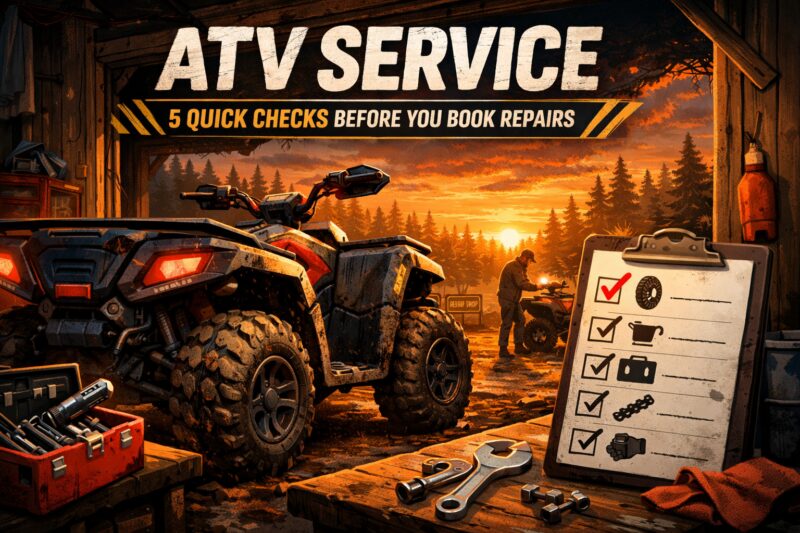
If you’re deciding whether you’re ready to book ATV Service, the fastest way to prevent delays and repeat visits is to complete five quick pre-booking checks: document the failure pattern, inspect safe basics, compile model/service history, understand estimate and turnaround reality, and confirm the shop’s diagnostic and communication fit. Before you schedule ATV Service, verify what changed, what you already tried, and what you need to provide so the technician can diagnose (not guess) quickly—without risky testing. These checks are designed to be practical in real life: they do not require advanced tools, and they help the shop avoid parts/order mistakes that can waste days.
Skipping pre-booking preparation often creates the exact commercial problems customers want to avoid: longer turnaround, unnecessary disassembly, incorrect parts ordering, and cost overruns from re-diagnosis. ATV Service should be treated like a decision that affects both price and downtime. Planning the intake information up front makes the whole process cleaner for the technician and safer for you.
Safety matters: some checks should only be done with the engine off, the ATV stable on a level surface, and no unsafe “running tests” in a garage or driveway. If anything involves fuel leaks, exposed wires, or overheating risks, prioritize safe observation and photos over experimentation. Your goal is evidence collection and smart readiness—not troubleshooting on the side.
1) What should I verify before I book ATV Service so I don’t waste time or money?
Before you book ATV Service, confirm the exact symptom pattern, capture safe visual “basics,” gather model and service history, ask how estimates and diagnosis work, and choose a shop that communicates clearly. These five quick checks help the shop move directly into triage and diagnosis, which reduces delays from wrong parts, repeated intake questions, or redoing previously attempted work.
This matters because ATV problems rarely behave like a single, clean failure. An engine that “turns over but won’t start,” for example, can involve battery/charging issues, fuel delivery, spark, intake restrictions, or sensor faults. If the shop does not get the failure pattern (when it happens, how it behaves, what changed), the diagnostic path becomes guesswork—especially for intermittent electrical and drivetrain issues. In commercial terms, guesswork increases labor hours, delays parts sourcing, and often leads to partial fixes that do not fully resolve the root cause.
How it works in practice: pre-booking checks improve the intake workflow. You provide evidence for triage, the shop narrows likely systems, then the technician confirms with targeted testing before ordering parts. When you also ask about diagnostic fee policy and turnaround drivers, you align expectations early. A good shop can’t guarantee a precise outcome for unknown faults, but a good intake reduces the range of uncertainty.
Tradeoffs and limitations exist. If your ATV is fully unsafe to handle or the symptom is truly non-reproducible, the shop may still need time for evaluation in controlled conditions. Also, your safe pre-checks can’t replace professional diagnostics—especially where “test under load” is required. Still, real-world scenarios show that preparation can cut days off the schedule: customers with clear intake notes often get faster diagnosis and more accurate estimates because technicians can confirm hypotheses sooner.
Deeper insight: the symptom is not the same as the cause. Guides that say “it won’t start” miss the critical difference between “won’t crank,” “cranks but no start,” and “starts then stalls.” The latter can point to fuel pressure, air supply, overheating, or sensor logic. Your pre-booking checks are how you preserve that distinction. For additional background on shop processes that rely on emissions and onboard diagnostics, you can reference U.S. EPA OBD information (useful for understanding why onboard sensor logic matters in diagnostic workflow).
2) What do the 5 pre-booking checks for ATV Service actually accomplish?
The five pre-booking checks help ATV Service start faster with the right triage, the right readiness details, and the right shop selection. Done well, they reduce repeat visits and parts mistakes by giving the technician cleaner inputs before the first hour of labor begins.
Each check maps to a typical service workflow. First, triage: confirming the failure pattern and symptom context helps the technician narrow which system to start with (fuel/air/spark/electrical/drivetrain). Second, readiness: gathering model info, history, and what you already attempted helps prevent duplicate labor and reduces estimate variance. Third, selection: understanding estimate and turnaround reality and verifying shop capability helps you pick a place that can actually diagnose your problem methodically.
Practical application: if you’re a new ATV owner or you’ve inherited an ATV with “mystery issues,” Check 1 and Check 3 do most of the heavy lifting. If your ATV has intermittent faults—like dying after bumps, bogging only under load, or charging that works “until it warms up”—Check 1 becomes more valuable because you can document the pattern. If you use the ATV for work or frequent riding, Check 4 and Check 5 matter most because downtime and schedule predictability are commercial realities.
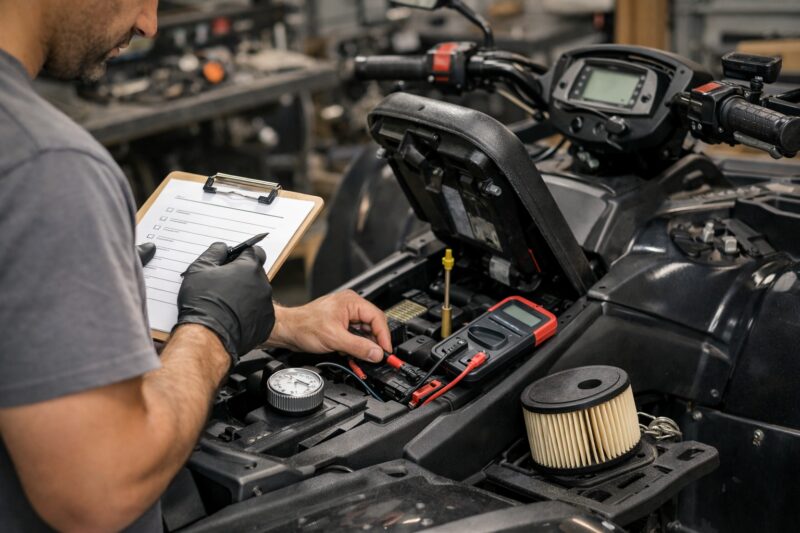
Deeper nuance: early evidence can prevent “guesswork repairs.” For example, “hard start when hot” can suggest heat soak, vapor lock conditions, weak fuel pressure, or sensor behavior that changes with temperature. If you only report “it’s hard to start,” the shop may start with battery checks or plugs, which might be incomplete. Another common failure mode is skipping evidence and authorizing a parts list too early. That can lead to unnecessary disassembly, especially for buried components like intake sensors, harness connectors, and electrical ground points.
What most guides get wrong is treating preparation as optional. In reality, it’s part of the service transaction. Shops that use documented diagnostic steps benefit from better inputs because it improves throughput and reduces friction. If you want to understand why communication and process documentation matter in repair workflows, OSHA’s general guidance on hazard communication (specifically about consistent information and labeling) offers a useful analogy: good process reduces errors.
3) Check 1: Confirm the symptoms and failure pattern before you request ATV Service
Before you request ATV Service, document exactly what the ATV does (symptoms) and when it happens (pattern), because that’s what turns an unknown problem into a diagnostic path. Without this, technicians often spend time re-asking questions or broadening the test range.
Start with a clear symptom timeline. When does it happen—cold start, hot restart, after a ride, or only when the ATV is loaded? What triggers it: acceleration, bumps, idling, riding in water/dust, or switching modes? Is the problem consistent or intermittent? Even basic details like “it starts after 5 minutes of cooling” or “it only happens on inclines” help the shop narrow whether the issue leans toward heat-related fuel behavior, grounding/contact faults, or drivetrain load sensitivity.
Add quick evidence you can collect safely: unusual sounds (clicking, knocking, grinding, popping), smells (burning electrical smell, fuel odor), visible leaks, warning lights, and performance changes (surging, loss of power, stalling). If your ATV has a tachometer or dash indicators, note exactly what the rider sees. In many diagnostic workflows, the dash indicators and fault-code behavior are not “extras”—they’re direct inputs to system narrowing.
Deeper insight: distinguish symptom from cause. “Surging” can come from fuel delivery instability, intake air restrictions, ignition gaps, or throttle body/actuator behavior—so the shop needs to know whether surging happens at steady throttle versus transitions, and whether it changes with temperature. An edge case is multiple faults: a failing battery could cause weak cranking while also triggering sensor instability, or a previous repair could create a new harness contact issue. Record both observations without assuming one root cause, and explicitly mention what you believe is related.
Common mistake: assuming that one likely failure explains everything. If you already replaced the battery and the symptom changed but did not fully stop, say so. Another failure mode is relying on online symptom lists without adding your pattern details. The shop doesn’t need your diagnosis guess—they need your evidence.
4) Check 2: Inspect safe basics you can do before ATV Service (without masking the issue)
Before ATV Service, do a safe visual and functional inspection with the engine off and the ATV stable, focusing on high-yield items that do not require risky testing. This helps the technician avoid surprises and prevents you from accidentally “washing away” evidence like leak origins.
Keep this check intentionally limited. Engine-off observation is the rule: look for leaks, loose fasteners, damaged cables, obvious wear, and anything that signals an immediate safety or catastrophic risk. Check tire condition and pressure, brake pad wear, and the general condition of the chain/belt/drivetrain components where accessible. If the ATV has visible fluid sight points, verify levels you can confirm without disassembling. If you cannot safely verify a fluid or you suspect contamination, note what you observed and stop.
Practical application: many “service delays” start with avoidable intake gaps. If your engine oil is low, or a vent hose is disconnected, or a battery terminal is loose, the shop needs that information early. Even a simple note like “brake lever feels soft” or “there’s a clicking from the front when turning” guides the diagnosis toward hydraulic issues versus mechanical binding. This reduces the chance of a shop spending the first hour chasing the wrong system.
Tradeoffs and limitations: avoid over-cleaning. If you wash the ATV thoroughly before booking, you may remove the visual cues that help identify where a leak originates or how a residue pattern forms. Also, do not perform unsafe running tests. If you see fuel smell or active leaks, your safe next step is to take clear photos and tell the shop—do not continue riding or revving.
Deeper insight: shops often have to differentiate normal wear behavior from mechanical defects. For example, normal brake fade under repeated hard use is different from a seized caliper or failing pad material. Common mistake: “it’s just worn brakes” when the real issue is uneven pad wear from a sticking slide pin. Your job is safe observation and documentation, not final diagnosis.
5) Check 3: Capture service-ready specifics—model, history, and what you already tried
Before booking ATV Service, compile the ATV’s make/model/year, basic engine details, hours or mileage, and a concise service history of repairs and diagnostic attempts. This is one of the highest ROI checks because it reduces rework and improves estimate accuracy.
Start with the essentials the shop needs to select the correct diagnostic logic and parts compatibility. Gather the exact make/model/year, engine type, and approximate hours/mileage. If the ATV is under warranty or subject to coverage rules, note that status up front. Also collect the date the problem began and any major changes: recent maintenance, storage duration, winter salt exposure, aftermarket parts installation, or belt/chain service.
Then document what has already been attempted. If you replaced spark plugs, checked compression, swapped relays, cleaned connectors, or installed a new battery, list what was done and when. Include what changed after each attempt. This is critical nuance: “what you already tried” can rule out some diagnostic branches and adjust the repair path. Without it, technicians can waste diagnostic time confirming what you already confirmed.
Deeper insight: modifications can alter diagnostic assumptions. If you have an aftermarket exhaust, intake, ECU/controller, or non-OEM sensors, disclose that clearly. Aftermarket parts can change fuel/air behavior and cause symptoms that mimic stock failures. Edge case: intermittent electrical issues may worsen under certain harness routes or added accessories, so details about additions matter.
Common mistake: providing only a broad description like “the shop looked at it already.” Instead, provide specifics: what parts were replaced, what tests were performed, and what symptoms remained. Even a short timeline of events can help a shop deliver a tighter estimate and reduce unnecessary disassembly. If you want to understand how manufacturers design official service information workflows, you can review OEM service and recall resources at NHTSA (useful for understanding how official documentation impacts maintenance and diagnostics).
6) Check 4: Understand estimate and turnaround reality before you book ATV Service
Before you book ATV Service, ask how the shop handles diagnosis fees, how they build itemized estimates, and what factors affect turnaround time. This prevents surprises and helps you plan downtime realistically.
Commercially smart questions reduce misalignment. Request an itemized estimate range that separates diagnostic time, labor, parts, and consumables where possible. Ask whether diagnosis is credited toward repairs if you approve the work, and clarify how the shop treats reinspection if additional symptoms appear. You should also confirm whether the shop diagnoses first or starts with a parts-initiated approach.
Turnaround depends on factors the customer can plan around: parts availability, technician throughput, and whether the shop requires controlled conditions to reproduce the fault. For common repairs, turnaround can be straightforward when parts are on hand. For intermittent electrical and sensor faults, turnaround can extend because the technician may need time for multi-test evaluation and controlled verification. This is not “padding”—it’s risk management for uncertainty.
Deeper insight: the “lowest quote” can cost more if it includes incomplete diagnosis or assumes a part is bad without confirming. A parts-first approach can create a chain reaction: replace one component, later discover the original root cause damaged another part, and now you’re paying for additional labor and more parts. Tradeoffs exist: diagnosing longer can increase upfront cost, but good diagnosis often reduces total cost by preventing repeat labor and wrong parts.
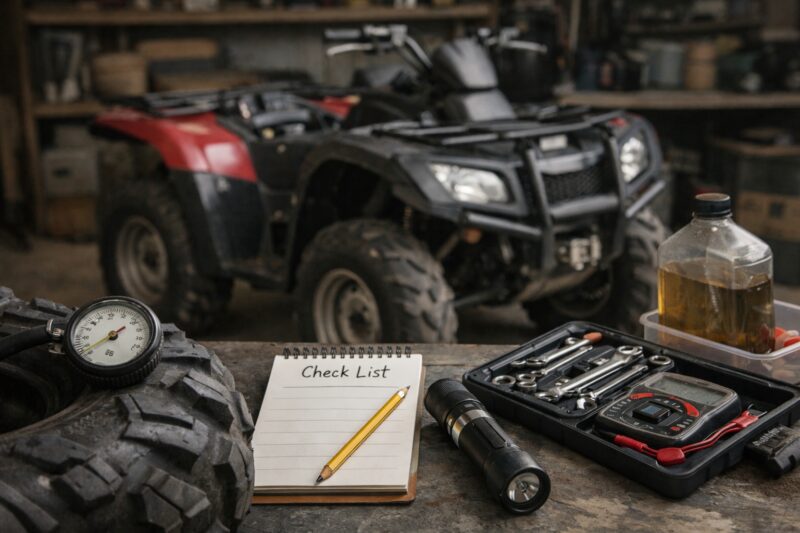
Failure mode to avoid: booking without clarifying what the quote includes. Ask whether fluids are included, whether gaskets/consumables are separate, and whether incidental labor is covered. If the estimate doesn’t mention these categories, you are relying on assumptions. Your pre-booking checks should reduce those assumptions.
7) Check 5: Verify shop fit—capability, diagnostics approach, and communication expectations for ATV Service
Before booking ATV Service, verify the shop’s capability for your ATV type, their diagnostic approach, and how they communicate findings and approvals. Shop fit is a commercial decision because it determines whether your repair is handled methodically or through repeated trial-and-error.
Evaluate capability without vague promises. Ask what diagnostic process they follow, how they document test results, and whether they confirm parts before ordering when the failure is uncertain. Focus on the shop’s method and tools capability rather than brand names. For example, can they test electrical integrity, inspect harness connectors, verify sensor outputs, and validate repairs with functional checks? If your problem is intermittent, ask how they plan for evidence collection and staged verification.
Communication expectations should be explicit. A shop that reports findings clearly will tell you what they found, what they tested, and why they recommend specific parts or labor. Ask whether they call for approval before ordering expensive parts, and whether they send photos of evidence (leaks, wear, connector condition) and provide replaced parts back or documented serial/part numbers where relevant.
Warranties and guarantees matter too. Ask what is covered, how long the coverage lasts, and what documentation you receive. For edge cases like intermittent electrical faults, warranty terms can be critical because the fault might recur. Deeper insight: “diagnose-then-repair” versus “parts-changes-first” is a meaningful difference in risk. You can ask a direct question: “If you’re not confident about the root cause yet, will you diagnose further before ordering?” A good shop will explain the uncertainty and propose a test plan.
Common mistake: assuming proximity equals capability. Some shops handle routine maintenance extremely well but may not be staffed or too busy for controlled diagnostics. Another failure mode is poor documentation—if you receive no test results and no replaced-parts reasoning, you can’t validate or understand the repair later.
8) How do I go from symptoms to booking the right ATV Service (without overpaying)?
Go from symptoms to booking the right ATV Service by triaging safety-critical problems first, documenting the pattern for intermittent issues, and choosing a service category that matches your uncertainty level. When you align the shop’s diagnostic method with your evidence, you reduce both downtime and overpayment.
Think of it like a decision path. If your symptom suggests safety risk—brake issues, overheating, fuel leaks, steering or drivetrain binding—prioritize immediate inspection. If the problem is intermittent, your goal is to provide the shop with a pattern they can test for: when it happens, what conditions trigger it, and what changed since the last confirmed good ride. If you can’t reproduce it, ask what evidence-based plan they use—photos, video, connector inspections, and controlled tests.
Choose between service categories based on what you already know. Diagnostic-first service is best when symptoms are vague or multiple systems could be involved (no start + dash behavior, inconsistent charging + battery age history, vibration with unclear drivetrain origin). Parts-targeted repair is best when you have strong evidence that a specific component is failing (for example, visible damage, confirmed code plus corroborating inspection). General maintenance with symptom correlation can be appropriate when the issue plausibly overlaps with routine maintenance—like low fluids, worn consumables, or a loose vent/cable causing performance drift.
Ask “what would change the direction of the repair?” A good shop should be able to explain how the next test narrows the possible causes and how they decide whether to proceed to parts ordering. Deeper insight: when evidence suggests multiple faults (for example, after a previous incomplete repair), it can be smart to pause repairs and confirm the plan. This avoids the chain reaction problem where one failed component damages another, creating cascading costs.
Practical example: imagine your ATV bogs under load and only does it after warming up. You record that it starts fine, then power fades after 10–15 minutes, and you notice a fuel smell sometimes. You ask whether they will test fuel delivery and air intake behavior before replacing ignition components. That approach is more likely to produce a correct fix quickly than “replace what’s common” strategies.
9) Common mistakes and misconceptions that derail ATV Service bookings
Common mistakes that derail ATV Service bookings include waiting too long, riding through warning signs, failing to document the symptom pattern, and asking for “fix it now” without allowing diagnosis. These missteps increase misdiagnosis risk, repeat labor, and delays caused by wrong parts ordering.
One major mistake is continuing to ride after warning signs that can worsen the underlying issue. A small vibration can mean a worn bearing, misalignment, or belt/joint damage; ignoring it can turn a repair into a bigger teardown. If you notice fuel odors, overheating, repeated stalling, or unusual electrical behavior, stop riding and prepare for inspection. Commercially, “saving time now” by continuing to ride often creates longer downtime later.
Another misconception is “if it starts, it’s fine.” Starter behavior can mask other problems. A weak battery can still start the engine but cause sensor instability under load; a failing fuel pump can start cold but fail once pressure demand rises. Deeper insight: symptoms can look stable while root causes are still present. Your documentation should therefore include conditions (cold/hot, idle/load) rather than only the general outcome.
What most guides get wrong is pushing generic internet symptom matching without evidence collection. Shops need your failure pattern, not a guessed category. Also, many customers expect immediate repairs, but the shop method may require diagnose-first for accuracy. You can align expectations by asking about diagnostic steps and what information they need from you. Finally, clarify deliverables: a good service outcome should include a returned estimate explanation, replaced parts list, and what tests were used to validate the repair.
Failure mode to avoid: assuming the technician will infer your history. If you had a recent belt replacement, aftermarket additions, or a connector cleaned, mention it up front. Otherwise, the shop may repeat work or follow the wrong diagnostic assumptions.
10) What alternatives to standard ATV Service should you consider?
Alternatives to standard ATV Service can include full diagnostic inspection, maintenance plus targeted repair, phased repairs, or diagnostic-only evaluation—depending on your goals and how uncertain the fault is. Choosing the right alternative can improve cost control and reduce downtime, especially when parts or schedules are constrained.
Start by separating realistic options. A full diagnostic inspection is best when you do not know which system is failing. Maintenance plus targeted repair makes sense when the symptom correlates with basic service needs (for example, fluid issues, worn consumables, or a known recurring failure that you can tie to your history). For some owners, parts sourcing support or guidance for DIY-capable work can be a good middle ground—particularly when you can safely perform installation but need correct parts identification and compatibility confirmation.
If you need cost control, ask about diagnostic-only visits or phased repairs. Diagnostic-only can clarify the root cause and reduce the “pay for guesswork” risk. Phased repairs can work when uncertainty exists but there are immediate priorities—like stabilizing a safety concern first, then addressing secondary issues after parts arrive. Tradeoffs exist: intermittent faults may require controlled conditions, so some alternatives that skip diagnosis can be less reliable.
Deeper insight: the safest alternative often still includes evidence-based diagnosis, especially for electrical and drivetrain complications. If your ATV has an intermittent sensor fault, an ultra-fast “parts replacement” option can lead to chain reaction costs when the real cause is a wiring or grounding issue. To visualize the tradeoffs, here is one comparison table of service approaches.
| Service option | Cost risk | Speed | Accuracy likelihood | Best for |
|---|---|---|---|---|
| Diagnostic-first | Lower total risk | Medium | Highest | Vague, intermittent, or multi-system symptoms |
| Maintenance + targeted repair | Moderate | Fast | Medium–high | Symptoms correlate with wear or basic service items |
| Phased repairs | Moderate | Fast for priority | Medium | Budget/timing constraints with a safety-first priority |
Common mistake: assuming diagnostic-only means “no work.” Often, it means a structured test plan followed by recommendations. If you plan to approve repairs later, confirm how reinspection and results documentation will be handled so you do not lose your evidence.
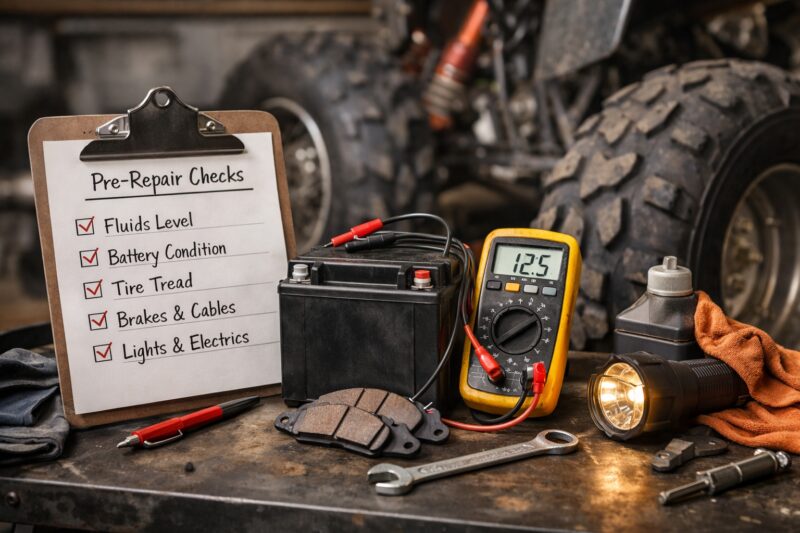
11) Advanced considerations: edge cases and objections in ATV Service
Advanced ATV Service decisions matter most when faults are intermittent, electrical, or drivetrain-related—because uncertainty increases the need for evidence and staged decisions. Address objections upfront by asking about diagnostic costs, parts approvals, and how the shop prevents chain reaction repair expenses.
Intermittent electrical/charging problems often require multi-test diagnostics. Battery age, jump-start history, charging system load behavior, connector condition, and grounds can all affect whether the issue appears during evaluation. If you prepare for this by documenting when the fault occurs and whether it correlates with temperature or riding conditions, you help the shop reproduce the logic path. Edge case: a charging issue can create secondary symptoms that look like engine problems—dim dash behavior, unstable sensor readings, and intermittent starting failures.
Drivetrain complications also create confusion. Vibrations, belt/clutch symptoms, bearing noise, and alignment can mimic engine issues. A worn bearing may not only produce noise—it can alter belt tracking and create additional wear. That is why a diagnostic-first approach can be financially wiser for complex vibrations: the shop should confirm whether the vibration source is engine-driven, drivetrain-driven, or something like tire imbalance and traction variation.
Objections you may hear—or need to answer—include “Why does diagnosis cost?” and “Will you replace parts without approval?” A solid shop explains diagnostic fees as the cost of narrowing uncertainty with evidence, not a way to sell parts. Ask how they handle approvals: they should pause parts ordering until they confirm a repair direction, especially for expensive components. Deeper insight: chain reaction problems happen when one failed component damages others. You can ask the shop what steps they take to prevent cascading costs—for example, verifying related surfaces, checking alignment, and inspecting adjacent components once a primary part is found faulty.
What most guides get wrong is treating aftermarket modifications as an afterthought. Aftermarket ECU, exhaust, and intake changes can alter sensor expectations, fuel tables, and even diagnostic behavior. Disclosing modifications early (in your Check 3) prevents the shop from following a stock-first assumption that can waste time.
12) Choosing ATV Service in your area: how to evaluate shops nationwide, then shortlist locally
To choose ATV Service in your area, evaluate shops based on consistent diagnostic and communication standards, then shortlist locally by lead times, parts availability timelines, and transparent warranty policies. Capability and process matter more than distance when the fault is complex.
Nationwide quality criteria tend to be consistent: diagnostic approach (test-before-order), parts sourcing reliability, communication clarity, and warranty documentation. A shop that can explain what tests they will run, how they decide on parts, and how they track outcomes is likely to handle your ATV correctly regardless of region. If you compare shops only on proximity, you can end up paying for repeated diagnostics elsewhere or waiting longer due to poor scheduling practices.
For a local shortlist, focus on measurable intake questions. Ask about lead times for diagnosis and repair work, and confirm whether parts are typically available or whether they can estimate lead time ranges. Compare their published warranty/guarantee policy: length, coverage scope, and documentation requirements. Deeper insight: regional parts availability affects turnaround; a shop that can’t get parts quickly may still diagnose early, but your repair completion time will depend on sourcing.
Before reaching out to a repair service, it's important to follow a specific set of steps for effective communication. Begin by clearly stating the model and year of your ATV, and provide a detailed summary of the symptoms, including whether they occur when the engine is cold or hot and any known triggers. Mention any troubleshooting steps you've already attempted and consider including photos or short videos for clarity. When contacting the repair shop, it can be helpful to inquire if they offer an initial diagnosis service when the situation is uncertain, and discuss what kind of communication you can expect throughout the process. Moreover, asking them to estimate potential schedule impacts due to parts availability is wise. For a comprehensive guide on these preparatory steps, consider referring to this small engine repair pre-call checklist to ensure you have all the necessary information ready before contacting a professional.
Common mistake: choosing a shop only because it’s the closest pickup option. If your issue is intermittent electrical or drivetrain vibration, you need a shop with a documented diagnostic process and strong communication so you can approve repairs with confidence.
13) Frequently Asked Questions About ATV Service
What should I check before booking ATV Service for engine starting issues?
Check the pattern: does it fail on cold start, hot start, or both, and does it crank normally or sound weak? Verify battery/charging basics you can do safely, and note whether there are warning lights or fault indications. Provide a short timeline of what changed and what you already tried (new battery, swapped plugs, checked fuel odor). This helps the shop separate fuel delivery, spark, and electrical logic faster.
How do I prepare my ATV for a service appointment fast?
Write down your symptom pattern and triggers (cold/hot, acceleration, load, bumps), then take clear photos of leaks, warning lights, and any visible wear. Gather the ATV’s make/model/year, estimated hours/mileage, and a brief history of prior repairs. If it’s intermittent, record when it happens during your rides. Do simple safe checks only with the engine off on a stable surface.
Will ATV Service cost more if the problem is intermittent?
It can, because intermittent faults may require multiple tests and sometimes controlled conditions to confirm root cause. The shop should manage uncertainty with a test plan and communicate options if the fault can’t be reproduced. You can help by providing evidence about when the issue appears and what environmental factors correlate. A transparent estimate should explain how diagnostic time may vary.
Do I need to bring my ATV to the shop if I can’t reproduce the problem?
Not always, but usually bringing the ATV is valuable when the shop needs controlled evaluation, especially for electrical and drivetrain symptoms. If you can’t reproduce it, provide videos, dash indications, and photos from when the fault occurs. Ask what evidence they can use remotely versus what requires in-shop testing. Be realistic: non-repro cases may lead to a diagnostic-first process and re-checks.
What questions should I ask to confirm transparency in ATV Service estimates?
Ask whether the diagnostic fee is credited toward repairs, and request an itemized estimate separating diagnostic time, labor, parts, and consumables. Confirm what requires additional approval before work continues. Ask about turnaround drivers like parts lead times. Finally, clarify warranty scope and what proof you will receive.
How do I know if my ATV needs diagnostic-first service or parts replacement?
Choose diagnostic-first when symptoms are vague, intermittent, or could be caused by multiple systems (no start plus inconsistent dash behavior, surging under different conditions, charging that “sometimes works”). Parts replacement is more appropriate when there is strong corroborating evidence (visible component damage, clear fault codes plus matching inspection findings). If you have a clean record of prior tests and replacements, it can reduce the need for broad diagnosis. When uncertainty is high, diagnose-first is the safer commercial bet.
Can I get ATV Service if my ATV has aftermarket parts or modifications?
Usually yes, but you should disclose all modifications upfront, including ECU/controller changes, aftermarket exhaust, intake, and any non-OEM sensors. Modifications can change how symptoms appear and can affect parts compatibility and diagnostic assumptions. If the shop understands your configuration, they can adjust the test plan and avoid wrong-part recommendations. Tell them whether warranty coverage applies and what documentation you have for the modifications.
Often yes when the symptom could involve multiple systems or when previous repairs didn’t fully resolve the issue. Diagnostics can prevent repeat labor and reduce the odds of ordering the wrong parts, especially for electrical and intermittent faults. However, if the failure is clearly identifiable and a diagnostic is unlikely to add value, some shops may recommend a targeted repair first. The key is to ask how they will confirm the diagnosis before parts ordering.
What should be included in a good ATV Service warranty or guarantee?
A good warranty should state the coverage scope (parts and labor), the duration, and what conditions or exclusions apply. It should also specify how to handle repeat failures and what documentation you must keep. Ask whether the shop will recheck the repair if the issue returns and whether they will provide proof of the work performed. Clear documentation helps if you need warranty support later.
How long does ATV Service typically take in 2026 for common repairs?
Typical timelines vary by repair type, parts availability, and shop workload. Simple maintenance or on-hand parts repairs can often be quick, while diagnostic-first evaluations and repairs requiring special-order components can take longer. Intermittent faults may extend because the shop may need multiple checks to confirm the root cause. Ask the shop for a realistic schedule range and what will happen if parts arrive late.
Conclusion: Use the 5-check plan to make ATV Service faster, clearer, and safer
The commercial win from ATV Service planning is straightforward: use the five checks to provide accurate evidence, safe visuals, and service-ready details before you schedule. When you confirm symptoms and failure patterns, inspect basic high-yield items safely, compile model and history, understand estimate and turnaround reality, and verify shop fit, the technician can diagnose with less guesswork and fewer ordering mistakes.
Recap the outcome of each check: Check 1 reduces diagnostic branching by clarifying symptom versus cause. Check 2 prevents intake surprises and avoids masking evidence. Check 3 reduces estimate variance and prevents redoing what was already attempted. Check 4 protects your budget and schedule by clarifying diagnostic fees, approvals, and turnaround drivers. Check 5 ensures the shop’s process, communication, and warranty terms match the risk profile of your specific problem.
Finally, reinforce the decision framework: diagnose-first when uncertainty is high, and consider phased repairs when budget or timing is constrained. The best next step is practical—shortlist 2–3 shops, call with your five-check notes and your photos/video evidence, and compare transparency on diagnostic approach, estimate clarity, and warranty terms. That is how you reduce downtime and make your ATV Service booking a confident commercial decision in 2026.
Updated May 2026