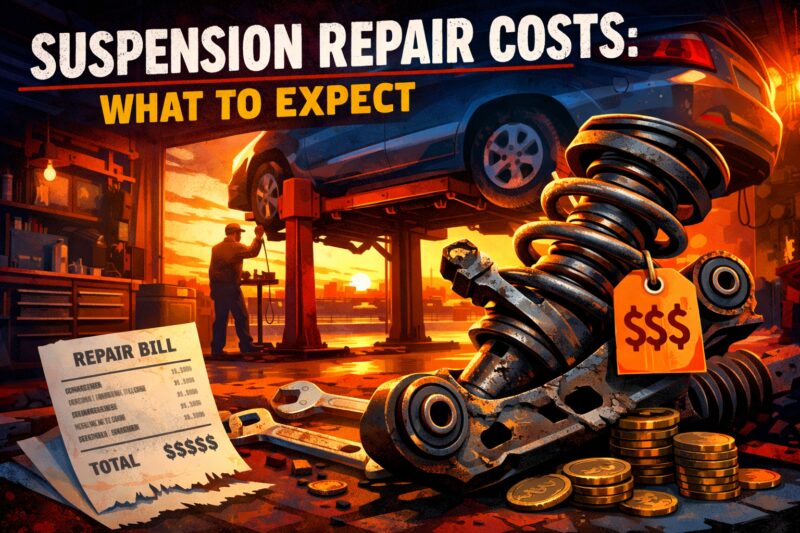
Suspension Repair Costs usually range from a few hundred to well over a thousand dollars once you include parts, diagnosis, and alignment. In most cases, the bill grows as more components prove worn, especially when rust makes fasteners harder to remove. If you are trying to budget, the key question is not just “what parts are bad,” but “what scope will the shop recommend once they inspect everything.” That’s why suspension repair costs vary so much from one estimate to the next, even for the same symptom.
This guide explains what drives pricing, how shops build an estimate, and what you should ask for before work starts. You will also learn the common cost “step-ups” that happen when one bad bushing, strut, or link exposes additional wear. We will walk through realistic price ranges by repair type, then cover edge cases like rusted mounting points and uneven tire wear.
How much should you budget for suspension repairs in 2026?
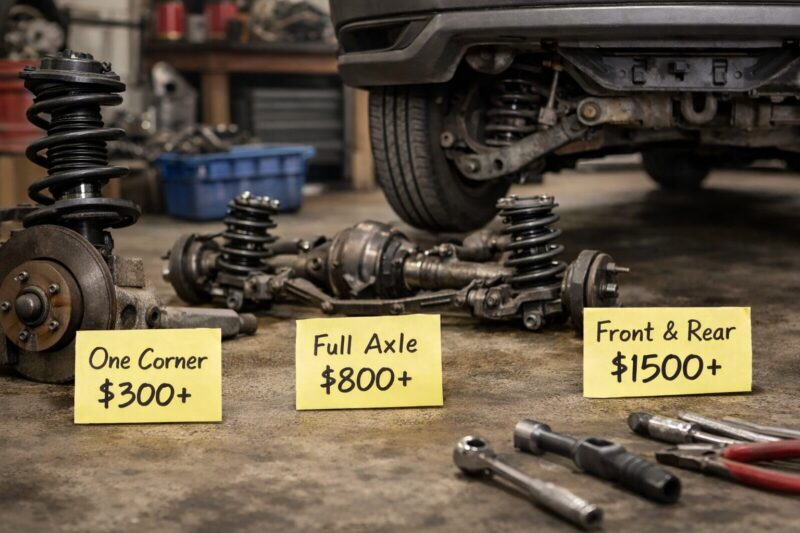
Your budget depends on scope: fixing one corner is different from refreshing an entire axle or the full front and rear system. Many drivers start with a single failing part, then end up paying for alignment and extra matching components. As a result, suspension repair costs are best estimated as ranges, not a single number.
In general, the cheapest outcomes come from “replace one component and confirm” jobs. For example, replacing one failed sway bar link may still require inspection time and an alignment check if wear has already changed tire angles. On the other hand, problems like worn control arm bushings or leaking struts often cause the suspension geometry to drift, which can trigger additional parts and tire-related line items.
Practical budgeting starts with how your car is set up. A simple strut layout can be a smaller job than a multi-link system with more arms and bushings. Vehicle size also matters because heavier vehicles often need more labor time to access components under the wheel well. If you drive a lifted truck, the job can also take longer because clearances, angles, and hardware condition change.
Finally, keep expectations realistic. Even a good quote can change if the shop finds corrosion or hidden damage once the old parts come off. Therefore, the best plan is to request an itemized estimate and ask what triggers a change order. If you are searching for service, working with a shop you can trust matters, so use guidance like a choose a trusted mechanic approach and verify the quote is line-item based.
For context on what makes vehicle inspections more reliable, you can also reference general automotive safety guidance from NHTSA. While it does not set repair prices, it supports the idea that worn suspension can affect handling and safety, which influences why diagnosis should not be skipped.
What drives the price of suspension repair up or down?
Suspension repair costs rise when more components are involved, when access is difficult, or when corrosion forces extra labor. Costs also drop when the diagnosis is clear and the parts list is short. That is why two quotes for the “same” problem can differ greatly.
First, your vehicle and suspension layout change the labor effort. Cars with MacPherson struts often use fewer serviceable items per side. Meanwhile, some multi-link suspensions include several arms and bushings, which can expand both time and parts count. Next, axle coverage matters. A front-only repair usually costs less than a refresh that includes both front and rear.
Second, labor time is not just “turning wrenches.” Shops spend time testing play, checking for torn boots, and confirming whether the noise comes from a bushing, a joint, or a damper. Access also affects time. Rusted pinch bolts, seized control arm hardware, and damaged fasteners can turn a routine job into an hours-long repair.
Third, parts pricing depends on source and fitment. OEM parts often cost more, but they may be the easiest route to correct fit and warranty coverage. Quality aftermarket parts can be cheaper and work well, but the shop must confirm compatibility for your exact year and trim. Rebuilt or used assemblies can reduce price, but you should confirm warranty terms and verify the replacement specs match the original function.
Finally, symptoms influence scope and timing. Uneven tire wear can indicate that alignment drift already happened, which can raise total cost. A clunk that worsens over bumps often points to worn links or bushings. A bouncing or sagging corner can point to a weak strut or spring, which then may require additional matching parts.
Many shops describe this as a “step-up” pattern. One failed component can lead to alignment corrections, then additional worn pieces, and finally tire replacement if tread wear is uneven. A fast trustworthy repair checklist you keep in your notes can help you track whether the quote includes diagnosis, parts, alignment, and verification before approval.
How labor and diagnosis time impact suspension repair cost estimates
Diagnosis time often decides whether your quote stays small or expands. A careful inspection can spot the true root cause, while a quick guess can lead to change orders. Therefore, labor is not only the installation hours.
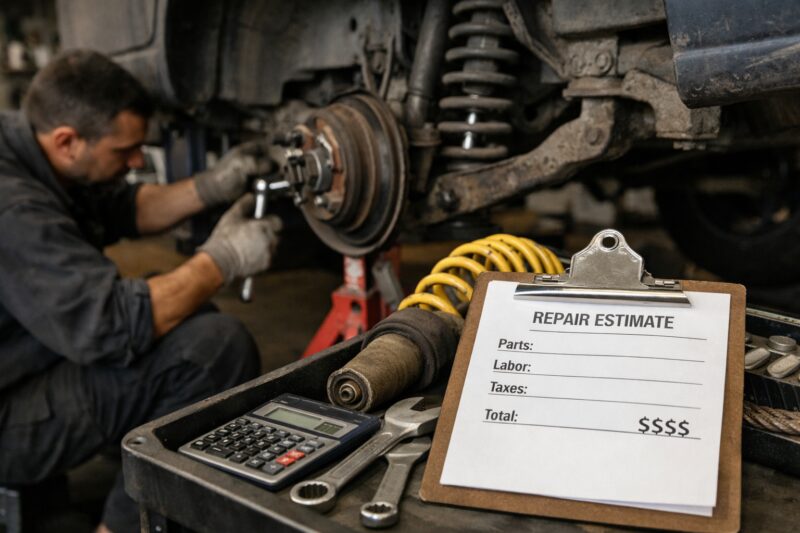
A quality diagnostic usually starts with confirming the symptom under real conditions. The tech may road test for clunks, steering drift, or vibration. Then they lift the vehicle and check for movement at joints and bushings. They also inspect boots and seals for leaks or tears, because those details predict what will fail next.
Access and corrosion then drive labor. A seized fastener may require cutting, drilling, or replacing hardware. In addition, rust can damage the mounting area, so the shop may need extra work to repair or reinforce before the new parts can seat correctly. If your car has been in harsh climates, this risk rises and can change the total cost even if the same component was originally suspected.
Practically, this is why good estimates are itemized. Ask for the labor hours for each step, such as inspection, disassembly, replacement, and verification. Also ask whether alignment is included and what measurements will be recorded. If the quote is only “labor $X and parts $Y,” you have less clarity if rust or hidden damage appears.
For related safety context, you can review NHTSA topics on vehicle safety and handling. While it does not quote repairs, it supports the idea that suspension issues can affect control. In day-to-day terms, that is why verification steps like torque checks and post-repair test drives matter.
If you are comparing shops, keep an eye on documentation quality. This is where “lifted truck repair timeframes” can become relevant, since higher ride height can change access and component alignment during service. The right shop will explain what they expect to find and how long each step should take.
What parts pricing includes: OEM, aftermarket, and rebuilt components
Parts cost is not only the sticker price. It also includes how well the part fits, how it performs over time, and whether it comes with a warranty. That’s why suspension repair costs can shift when you choose OEM, quality aftermarket, or rebuilt assemblies.
OEM parts usually come with tight fitment and direct-spec compatibility. For example, a strut or control arm bushing may match the original dimensions so the geometry lands where it should. However, OEM pricing can be higher, especially when multiple components must be matched across left and right sides.
Quality aftermarket parts can be a strong value. Many brands aim to match original performance, but fitment can still vary by vehicle build details. Therefore, you should ask the shop to confirm the part numbers for your exact vehicle and explain their warranty coverage. If a quote lists a generic “equivalent” part without specifying brand or grade, ask for that detail.
Rebuilt or used components can reduce cost in some cases. For instance, certain assemblies may be available as remanufactured units. However, the key is verifying the rebuild spec, the return policy, and what is covered if the part fails early. Also consider that used parts can have unknown wear, which may affect how soon you need another repair.
Real-world scenario: a driver replaces one strut with a lower-cost option. The other side remains weak, so the ride height difference causes continued tire wear. Next, the shop recommends replacing both sides for balance. In that scenario, the “saved” parts cost disappears after the scope expands.
This is also where alignment and verification connect to parts choice. If a part seats differently or has slightly different tolerances, the shop may need extra measurement to confirm correct settings. That is why an estimate should include alignment when geometry has likely changed.
How different symptoms change the repair scope and total cost
Symptoms guide scope, but they do not fully determine it. A clunk, drift, sag, or uneven tire wear can each point to different worn parts. That is why a good diagnosis matters before you approve any work.
For example, uneven tire wear often signals alignment drift, which can happen when bushings soften or a suspension arm geometry shifts. If you only replace a single worn part without checking alignment, the new parts may still leave the vehicle pulling or wearing tires quickly. Therefore, the total can include alignment, tire rotation planning, or even tire replacement if tread is already compromised.
A clunk over bumps commonly relates to loose links, worn ball joints, or failing bushings. If the tech finds torn boots or play, they may recommend replacing paired components. This keeps the left and right side in similar condition, which affects steering feel and wear patterns.
Drifting or steering pull can relate to suspension geometry, but it can also involve tire condition or brake issues. The shop should differentiate these causes during inspection. Meanwhile, bouncing or sagging usually points to a weak damper or spring, which can require coordinated service to restore ride height and handling.
Deeper nuance: suspension problems often show up in steps. A torn bushing may start as a slight knock, then later causes misalignment. After that, you might feel vibration, then see more wear, and finally need additional parts. The repair cost rises because the problem evolves, not because the shop is trying to upsell.
A common misconception is that “noise means replace the first part you hear.” In reality, you need to confirm where the motion happens and why. That is why a fast trustworthy repair checklist can help you verify the shop is testing movement at each suspected joint, not just replacing parts based on guesswork.
Suspension repair price ranges for common repair types
Suspension repair costs vary widely by repair type because they change the number of components, the labor hours, and the chance of needing alignment and tires. Instead of looking for one magic price, use ranges by category to sanity-check your estimate.
Single-component repairs often sit in the lower end. A single tie rod end, sway bar link, or one bushing replacement can be less expensive if hardware comes out cleanly. However, even then, alignment may still be recommended if the repair affects steering angles or if tire wear already looks uneven.
Corner service typically costs more. Replacing a strut assembly on one side may require additional labor for spring and mount components, plus careful torque verification. Control arms, ball joints, and wheel-bearing-related repairs also often fall into this tier because they involve disassembly and careful reassembly steps.
Axle-level work can increase the total because you are matching left and right. For instance, replacing both front struts or multiple control arms restores balance and reduces uneven wear risk. If more than one component is worn, the shop may recommend a “set” rather than a piecemeal approach.
Hidden line items often surprise drivers. New hardware fasteners can be required, especially for critical joints. Corrosion remediation can include cleaning mating surfaces or addressing damage to mounting points. In addition, uneven tread patterns may mean tire replacement, not just rotation, because geometry problems can already affect tire life.
Practical application: when you receive a quote, map each line to a scope category. If the shop replaced one corner but lists alignment and tire work, ask why. If they propose “front only” but your tires show cross-wear patterns, ask whether the rear needs inspection as well.
If you are searching for a near you suspension repair service, use the same sanity-check rules. A clear line-item breakdown and an explanation of what is included, plus what is excluded, are usually stronger value signals than the lowest number.
How to get an accurate estimate before approving suspension work
The best way to avoid surprise suspension repair costs is to get an estimate that states the diagnostic results and proposed scope. A strong estimate answers what is worn, what will be replaced, and what you will pay if scope changes. Therefore, clarify this before you authorize the first bolt to be removed.
Start with a decision path. The shop should verify the symptom, then inspect and measure the affected areas. Next, they propose parts and labor with reasoning, such as confirming play in a specific joint or finding a leaking strut. Finally, they provide an out-the-door total that includes alignment and any verification steps.
Ask what the diagnostic includes. A thorough inspection often covers visual wear, movement tests, and checking for torn boots or leaks. In many cases, the shop also references alignment measurements, or at least confirms whether angles may be out of spec based on observed wear. If you are told “we will look,” ask for specific checks and how they document results.
Then confirm the quote structure. You should receive itemized labor hours and specific parts brand or grade. Ask about warranty terms on both parts and labor. Also ask whether the shop will re-check the repair after installation, especially for noise, steering response, and component seating.
Tradeoff to consider: “replace just what’s failed” can be cheaper short-term. However, it can cost more later if adjacent parts are worn and need replacement to match performance. A shop that explains failure cause helps you choose intelligently. For example, a leaking strut can overload springs or bushings, so fixing only the leak might not restore original wear patterns.
Finally, ask for authorization rules in writing. Changes due to rust or hidden damage should be approved by you before additional parts are installed. That is the practical backbone of a fast trustworthy repair checklist.
What actually happens during suspension repair and why time affects cost
Suspension repair time affects your bill because the job is more than swapping parts. The repair includes inspection, disassembly, careful reassembly, and verification. Rust and seized hardware often stretch those steps.
A typical workflow starts with an inspection and, sometimes, a road test. Then the vehicle gets lifted and the tech confirms which components have motion or leaks. After that, the shop disassembles the affected assemblies, replaces parts, and reassembles with correct torque.
Corrosion is a major time driver. When bolts seize, the tech must spend extra time cutting, drilling, or replacing the hardware. Worse cases can involve damaged mounting points, which may require additional repairs or more parts than planned. This is why your initial quote should include a contingency policy.
Alignment and verification can add time, but they protect your results. Most suspension work that changes geometry benefits from an alignment. That step helps restore tire wear and steering consistency. After assembly, a test drive confirms noise resolution and checks for abnormal binding or movement.
Edge case: parts fitment issues can add cost. For example, if related brackets or mounts are bent, the new component may not seat correctly. You may then need additional parts or even corrective work before the alignment can be dialed in. Ask the shop to document any damage found during disassembly.
For drivers who own lifted vehicles, keep an eye on process differences. Lifted truck repair timeframes can be longer because angles change access and component alignment during installation. A reliable shop explains expected differences and how they will confirm the repair on the road.
To better understand how vehicle systems relate to safety outcomes, you can review NHTSA resources on vehicle safety. It reinforces why a post-repair test and correct torque matter for control.
Common mistakes that inflate suspension repair costs
Many overspending problems happen before the shop ever touches the vehicle. The biggest mistakes are under-scoping the repair, approving non-itemized quotes, or skipping alignment when it is needed. As a result, the repair “works,” but the outcome is still expensive.
First, do not assume you only need to replace the exact failed part. If one side has failed, the other side often has matching wear that will soon catch up. Therefore, shops may recommend left and right pairing for struts, control arms, and certain linkages. Ignoring this can lead to repeated visits and a second alignment.
Second, avoid approving a quote without inspection detail. If the estimate does not explain which components were measured or checked, you may get change orders later. Also, a non-itemized quote makes it harder to compare options or spot missing components like alignment or consumables.
Third, do not treat symptoms as proof of the exact part. A clunk can come from bushings, links, or joints. A bounce can relate to springs, dampers, or mounts. If diagnostics are rushed, you can end up replacing parts that do not fix the root cause.
Fourth, remember tire and alignment knock-on effects. Uneven tread often means alignment drift already happened. If you skip alignment, you may pay for tires again sooner. In addition, mismatched component wear can keep the vehicle unstable even after a repair.
Deeper nuance: mixing parts grades can cause inconsistent feel. For example, one side with OEM components and the other with a cheaper alternative can lead to uneven damping. That can make steering feel slightly different and may change how tires wear. A better approach is consistency in the repair scope, unless you truly have a matched replacement strategy.
If you want a structured way to avoid these mistakes, use a fast trustworthy repair checklist mindset. Make sure the shop explains what was inspected, what is being replaced, and what checks will confirm the fix.
Choosing the right repair scope: single, corner, axle, or full system refresh
The “best value” option usually depends on how many components are worn, not just which one failed first. Suspension repair costs change sharply based on whether you fix one component, one corner, one axle, or the whole vehicle system. Therefore, decide based on wear level and safety impact.
If the inspection shows localized failure with minimal matching wear, single-component or corner repairs can make sense. For example, replacing one failed sway bar link may restore the noise and improve handling without needing a broader refresh. However, the shop should still check for alignment drift and matching side condition.
Axle-level repairs often work better when left and right wear is uneven. Replacing both front struts or multiple front control arm components can restore balanced geometry. This can also reduce the chance of early tire wear repeating the same problem. The tradeoff is a higher upfront cost.
Full system refresh is the most expensive but can be practical in some cases. For example, on older vehicles with multiple weak points, the safest and most predictable approach may involve replacing wear items as a set. Shops may propose coordinated service when bushings, springs, mounts, and steering components show age-related decline.
Practical checklist factors include mileage, vehicle age, corrosion level, and how you drive. Daily commuting over potholes differs from towing or rough-road use. If the vehicle carries heavy loads, suspension components can fatigue faster, which can justify broader replacement earlier.
Common misconception: “cheapest now is always cheapest overall.” That is not always true. If a partial repair accelerates wear on adjacent components, you may pay more later. Also, you might need repeat alignment after additional work, which adds cost even if parts were cheaper initially.
This is also where “near you suspension repair” searches should lead to clarity. A shop that explains scope options and their reasoning can help you choose the option that fits your budget and your vehicle’s safety needs. If needed, choose a trusted mechanic who can explain tradeoffs without vague promises.
Some suspension repair costs jump because the shop discovers problems that were not obvious during the initial look. Rusted mounting points, damaged brackets, and hidden wear can all expand the scope. Therefore, plan for edge cases when you budget.
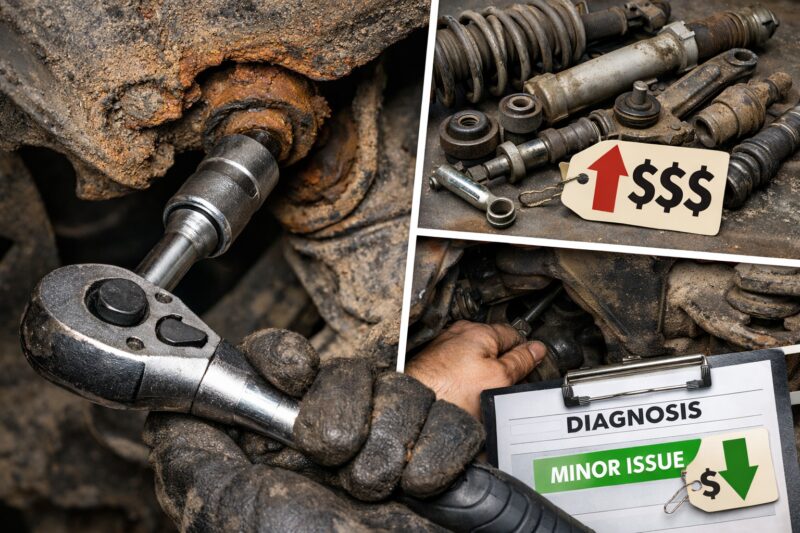
Corrosion affects removability first. When fasteners seize, removal takes longer and often requires replacing hardware. Then, corrosion can affect the mounting structure. If the mounting point is compromised, the shop may need additional repairs so the new parts install safely and correctly.
Damage can be easy to miss until disassembly. For example, a cracked bushing pocket or a bent bracket may only show after the old components come off. If a seal is leaking, the shop might also find that adjacent components were working in a stressed condition. As a result, they may recommend replacing more than one component in the same assembly area.
Wear beyond the obvious is another cost factor. Uneven tire wear can change steering response and increase vibration complaints. Brake-related disassembly can also affect cost if calipers or rotors must be moved to complete related service safely. Therefore, a quote should explain what parts may need to be disturbed.
Uneven ride height and sag add another dimension. If the vehicle is sitting lower on one side, springs or mounts may be uneven. In those cases, the shop might recommend coordinated replacement so ride height and geometry come back into balance.
A common objection is: “Why do I need alignment if the steering wheel feels straight?” The steering wheel can still look fine while tire angles remain off. That misalignment can shorten tire life and reduce stability, especially under braking or on uneven roads. So alignment is not just about the wheel position; it is about tire wear patterns and steering geometry consistency.
For drivers with high-clearance vehicles, consider that labor risk can change. Lifted truck repair timeframes can increase when corrosion exists on high-mounted components or when additional clearance changes how parts are removed. A reliable shop should document findings and explain why the scope changed.
To support the broader safety rationale for alignment and suspension health, you can review NHTSA materials on vehicle safety. It helps connect why suspension issues should be addressed correctly, not just temporarily masked.
Frequently Asked Questions About Suspension Repair Costs
How much should I budget for suspension repair on a typical car?
A common starting point is to budget a few hundred dollars for smaller, single-component repairs. However, if symptoms point to struts, control arms, or multiple bushings, the total can move into the higher range once parts and labor stack up. Ask for an itemized estimate that includes diagnosis time and alignment, since those often change the final number.
What’s included in a suspension repair quote besides parts and labor?
A solid quote should list inspection steps, shop labor hours for disassembly and reassembly, and the specific parts brand or grade. Many shops also include hardware or consumables like new fasteners and any corrosion cleanup required. After installation, alignment and verification steps like torque checks and a test drive can be included or called out separately.
Do I really need an alignment after replacing struts or shocks?
Often, yes, especially when the repair involves components that affect steering angles or ride height. Struts and related mounts can change geometry, which can shift tire angles even if the steering wheel looks centered. Alignment helps restore stable handling and protects tire life from cross-wear patterns.
Why are suspension repair costs higher on older vehicles?
Older vehicles usually face more corrosion on fasteners and mounting points, which increases labor time. They also often have multiple worn items at once, such as bushings, links, and springs, so parts scope grows. In some cases, damaged mounts or brackets are discovered during disassembly, which adds repair steps and additional parts.
Can I replace only the left or right suspension component?
Sometimes, but it depends on what failed and how worn the matching side is. For many safety and wear reasons, shops recommend pairing components so both sides have similar performance. If the other side is still healthy, the shop may approve single-side replacement, but a measurement-based inspection should guide that decision.
What symptoms indicate my control arms or bushings are failing?
Common signs include clunks over bumps, a vague steering feel, and uneven tire wear that seems to worsen over time. You may also notice vibration or increased play when the wheel is turned or when the vehicle hits uneven pavement. A diagnosis should check for torn boots, visible cracking, and movement at the bushings and ball joints.
Are aftermarket suspension parts safe compared with OEM?
Aftermarket parts can be safe when they are from reputable brands and match your vehicle’s fitment and specifications. The key is verifying part compatibility by year and trim, plus confirming warranty coverage. If the shop cannot provide brand and grade details, ask for that before approving the repair.
How do I prevent suspension repair costs from escalating during the job?
Start by requesting an itemized diagnostic plan and a line-item estimate before approving work. Ask how the shop handles rust, seized hardware, and damaged mounts if they appear during disassembly. Also confirm alignment and tire implications up front, since uneven wear often changes what you need after installation.
What does a thorough suspension inspection include before repair work starts?
A thorough inspection usually includes a visual check for leaks, torn boots, and cracked components. Then it includes movement tests to find play at joints and bushings. Finally, many shops also review alignment measurements or signs of geometry drift based on tire wear and steering behavior.
What should I ask the shop to confirm in writing to avoid surprises?
Ask for written confirmation of the parts brand or grade, the labor hours, and whether alignment is included. You should also request warranty terms for parts and labor. In addition, confirm how change orders are authorized if rust or hidden damage is found during disassembly.
Closing advice to manage suspension repair costs with confidence
Suspension repair costs depend most on scope, not on one failed part alone. The final number usually reflects the number of components replaced, how accurate the diagnosis is, and how corrosion affects removal. Alignment and tire follow-through also heavily influence what you pay at the end.
To stay in control, ask for an itemized estimate with a clear diagnostic plan and written scope before you approve work. Choose repair scope based on wear and balance, not just the cheapest first step. If the inspection suggests paired replacement for left and right performance, it can prevent repeat repairs and additional alignment charges.
Finally, use a practical next step. Consult a trusted alignment-capable shop, request line-item quotes, and compare OEM versus quality aftermarket options with clear warranty and fitment details. That approach helps you get the outcome you want, not just the parts you can .
If you are looking for help from a local shop, searches like near you suspension repair can be a start. Then follow up by asking questions that match a choose a trusted mechanic standard, and keep notes using a fast trustworthy repair checklist. For special vehicle setups, also ask what affects lifted truck repair timeframes so your budget matches reality.
Source references used for safety and reliability context:
- NHTSA
- Federal Motor Vehicle Safety Standards overview
- Car Care Council
| Repair type | Main cost drivers | Often included |
|---|---|---|
| Single component | Parts price, fastener condition, labor access | Inspection, installation labor, torque verification |
| Corner service | Strut/control arm complexity, bushings, mounting hardware | Disassembly and replacement, hardware, post-checks |
| Axle-level work | Matching left/right wear, alignment adjustment needs | Alignment, verification after replacement |
| Full refresh | Parts count, corrosion repair, multi-system diagnostics | Comprehensive inspection, alignment, test drive validation |
Updated September 2026