
If you want to prevent breakdowns as your car racks up miles, plan maintenance around how the vehicle is wearing, not just the odometer. That is the heart of high-mileage vehicle maintenance: planned checks, smarter intervals, and early fixes before small problems grow expensive. In 2026, the basic rules still come from your owner’s manual, but you can modernize how you spot risk with OBD-II scan data, better logging, and condition-based observation. The goal is simple. You will know what to do now, what to watch, and what can wait safely.
Preventive maintenance means you inspect key systems on a schedule and act when condition signals show wear. It is not “more stuff, more often.” Instead, it is a mix of fixed interval service and targeted inspections for parts that age faster in your driving. As components wear, tolerances tighten and fluids lose their protective properties. Small changes in temperature, contamination, or lubrication can become failure points.
In this guide, you will build a maintenance plan that matches your real use, not generic advice. You will also learn how to inspect fluids as a system, keep cooling and charging healthy, and protect safety items like brakes and suspension. Finally, you will follow a decision path for “service now, monitor, or defer,” plus a list of common mistakes that waste money on high-mileage cars.
Build a maintenance plan that matches how your high-mileage vehicle is actually being used
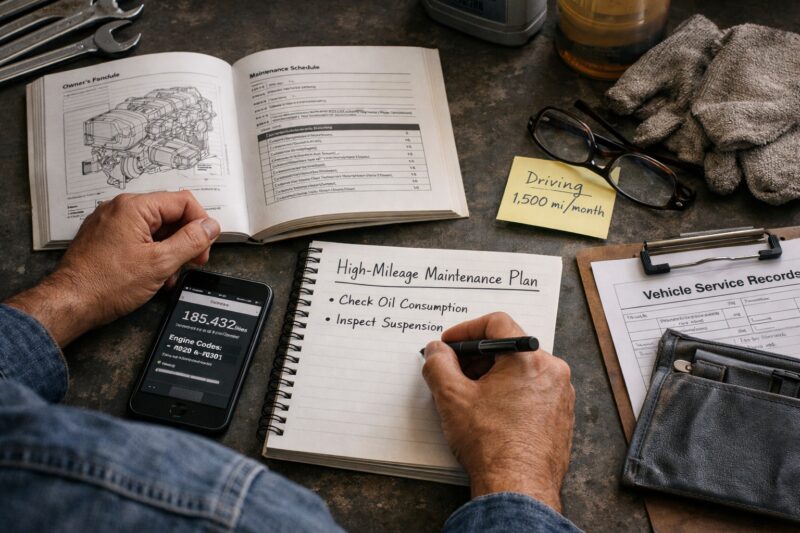
Your high-mileage plan should start with evidence, not a copy of someone else’s schedule. Begin with your owner’s manual and then adjust based on service history and current condition. This approach prevents both under-maintenance and unnecessary parts swapping.
First, gather three inputs. Check the interval guidance in your owner’s manual. Then review your service records for what was done, when, and which fluids were used. Finally, note current condition signals like rough shifts, coolant loss, slow starts, or uneven tire wear.
Next, use a two-layer strategy. Layer one is fixed interval basics like oil changes, filter replacements, and major fluid services when specified. Layer two is condition-based inspections for wear items that accelerate with age and use, such as cooling hoses, suspension bushings, and brake hardware.
Do not assume every high-mileage vehicle needs the same cadence. Treat mileage as a risk profile, not a magic number. A 90,000-mile commuter with long highway runs may have different wear patterns than a 90,000-mile vehicle that towed loads, idled in traffic, or saw dusty roads.
Many owners also miss when to tighten intervals. Short trips can keep systems from fully warming up, which increases moisture and contamination in oil and other fluids. Frequent towing raises thermal stress in engine cooling and automatic transmissions. In hot or cold extremes, components expand, contract, and age faster.
A common misconception is that “high-mileage” equals “same service cadence for everyone.” In reality, it helps to map likely failure modes. For example, cooling system fatigue often shows up as temperature spikes or recurring coolant loss. Suspension wear often shows up through tire edges wearing unevenly, even when alignment looks “close enough.”
Inspect and maintain fluids like a system, not isolated components
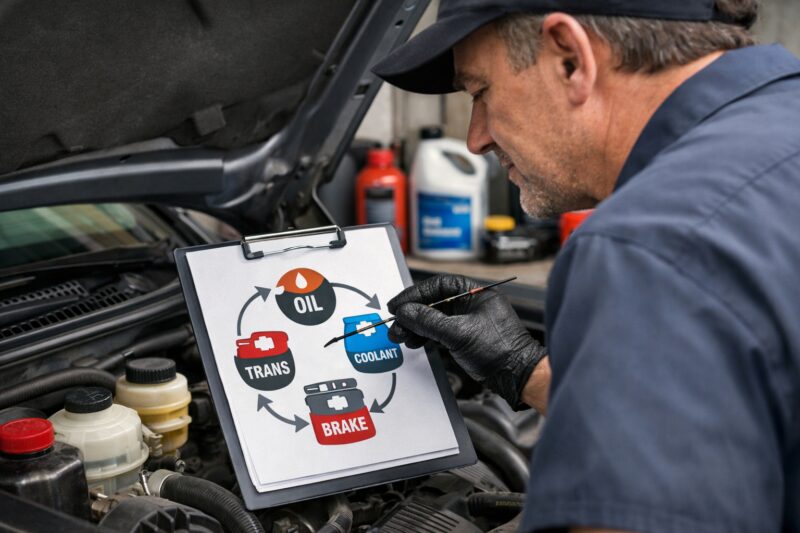
Fluids should be treated as a protective system, not separate checkboxes. When fluids degrade, they can trigger chain reactions across lubrication, cooling, braking, and shifting. That is why fluid condition-based inspections matter more as parts age.
Start with the core fluid set most vehicles share. Inspect engine oil, coolant, brake fluid, and transmission fluid where applicable. If your vehicle uses power steering fluid or a differential or transfer case, include those too. Your goal is not just the level. You also want the condition and any contamination signs.
Look for contamination and stress clues. In engine oil, a metallic sheen or burnt smell can hint at internal wear or overheating. In coolant, cloudiness, oil film, or frequent low-level readings can signal leaks or internal contamination. Brake fluid that darkens early or feels moisture-heavy can lead to corrosion and weaker brake performance.
Decide between service methods based on history and current behavior. A drain-and-fill replaces a known portion and is often appropriate when you have no baseline for contamination. A more involved service may be needed if the fluid is out of spec or has a clear contamination pattern. A full flush can sometimes disturb deposits, especially in older systems with unknown service history.
Safety matters with both braking and cooling. Bleeding a brake system correctly and maintaining correct coolant mixture ratios are not optional details. If air remains in hydraulic lines or the coolant mix is wrong, you can create failures that did not exist before.
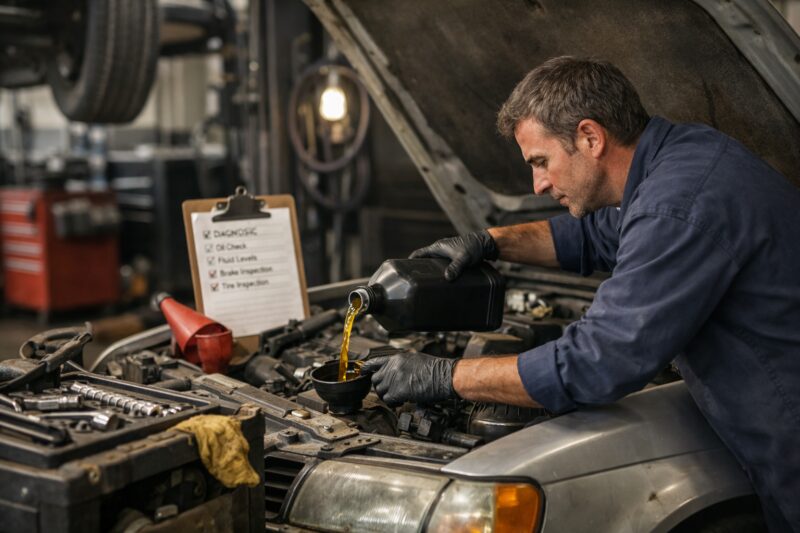
Here is an important edge case. If a neglected transmission is already shifting poorly, you should not jump straight into aggressive service. For some vehicles, incorrect procedures or sudden fluid changes can worsen symptoms if the underlying issue is deeper. When behavior suggests internal problems, start with diagnosis and inspect related causes first.
Keep the cooling, charging, and ignition health under control as components age
High-mileage cars often fail from temperature and power instability before you ever see a dramatic breakdown. That is why cooling, charging, and ignition deserve tighter observation. Track patterns, not just one-off symptoms.
For cooling preventive actions, inspect hoses, radiator condition, and thermostat-related behavior. Check coolant level and confirm the mixture is correct for your vehicle. Also inspect belt-driven components like the belt and tensioner. If you have an overflow bottle, make sure it is intact and not leaking around caps and seams.
Charging health affects everything from starting to sensor stability. Inspect the battery age and look for corrosion at terminals. Check the alternator belt and examine grounds and wiring for looseness or heat damage. As vehicles age, small resistance changes can show up as slow starts or intermittent warning lights.
Ignition and the air and fuel path influence misfires and drivability. Check spark plug condition at the interval in the owner’s manual, and inspect the air filter. For fuel systems, follow specified service intervals for filters when they apply. If symptoms include misfires or reduced power, do not guess. Start with inspection and then confirm what parts are actually failing.
Use failure prevention logic. Temperature rises that repeat after specific conditions can point to cooling restrictions or fan control issues. Slow starts with clean terminals may point to battery health or charging output. Misfires that follow a pattern after moisture exposure can point to ignition components or air leaks.
Be careful with temperature sensors and fan control nuances. A faulty sensor can make the engine “think” it is hotter than it is, which can cause unnecessary fan behavior. Conversely, a wrong reading can delay fan activation, which can lead to real overheating. That is why diagnosis beats parts swapping.
Protect drivability and safety with brake, suspension, and alignment-focused upkeep
Safety systems deserve a preventive mindset, even when your vehicle still feels fine. On high-mileage vehicles, brakes and suspension can wear quietly. Then one day you notice noise, vibration, or changes in steering feel.
For brakes, inspect pad and rotor condition on a cadence you can sustain. Include checks of caliper slide movement and hose condition. Brake fluid moisture management matters because water contamination can reduce boiling resistance and accelerate internal corrosion.
Suspension checks should include bushings, ball joints, control arms, and shocks or struts. Look for boot tears, uneven wear, and abnormal bounce after bumps. These signs often show up visually before they become “major” repairs.
Tires and alignment act like one system. Uneven tread wear can point to misalignment, worn suspension parts, or even tire defects. Rotate tires using a strategy that matches your tire type and vehicle spec. Then check alignment after major impacts or if pulling worsens over time.
Know when to stop driving. If you hear grinding, feel strong vibration, or see warning lights related to braking or traction, inspect quickly. If a pull gets worse over days, it is a sign the underlying cause is not stable.
A common mistake is blaming alignment for all tire wear patterns. However, suspension wear can create the same tread shape. Alignment alone cannot fix torn boots, loose joints, or worn dampers. A proper inspection confirms the root cause.
Preventative maintenance for high-mileage vehicles should include belts, hoses, and air intake—and a plan for “wear-out” items
Belts, hoses, and air intake components are classic wear-out parts on aging vehicles. They often fail without warning, and they can also mimic other problems. A preventive plan reduces both breakdown risk and “mystery” drivability issues.
Inspect belts for cracks, glazing, fraying, and proper tension. Follow the routing and verify tensioner and pulley condition where accessible. Hoses should be checked for softness, surface cracking, bulges, and clamp integrity. If your service history includes water pump or auxiliary pulley work, factor that into your next interval.
Air intake maintenance is also high impact. Replace the air filter based on your owner’s manual guidance, or sooner if you drive in dusty conditions. Inspect the intake tract for leaks that can introduce unmetered air. A clogged filter can reduce airflow and feel like weak acceleration, which can tempt owners to replace unrelated parts.
Exhaust systems deserve a quick check too. Look for rust, leaks near manifolds or downpipes, and damage to heat shielding. Exhaust leaks can reduce performance and can also create cabin fume risks.
Build a wear-out calendar that prioritizes items with predictable service lives. Instead of “wait for failure,” plan inspections and replacements around how long the system has been in service. This approach works best when you know what was replaced and when it was installed.
Be mindful of parts quality and fitment. Aftermarket belts and hoses are not automatically wrong, but mismatched specs can lead to premature wear or overheating. Mixed-quality components can also create compatibility issues that look like “electrical” or “cooling” failures.
Use a decision path to know what to service now, what to monitor, and what to defer
A decision path keeps your spending logical and your risk controlled. It is the difference between proactive care and random replacement. You gather data first, then categorize tasks by urgency and evidence.
Start by collecting information. Use your inspection findings, recent symptoms, and any diagnostic codes. If you need electronics help, use appropriate tools and consider professional support for complex issues. When owners want guidance, it helps to focus on check engine diagnostics you need rather than guessing from a single light.
Then categorize each item into one of three groups. “Must-do for safety” includes brake hardware issues, severe coolant leaks, and anything that creates immediate drivability risk. “Should-do soon” includes fluid services that are due soon, worn suspension parts, and cooling components showing early degradation. “Monitor” includes stable symptoms that do not worsen and components that look healthy on inspection.
Now decide on interval adjustments. If you see repeating temperature changes, short-trip contamination patterns, or frequent warning lights, you may tighten inspections even if you are not yet due for major service. If a system looks stable and your history is solid, you can sometimes defer non-critical work without increasing risk.
OBD-II codes can guide triage, but they do not always equal immediate failure. Some codes reflect a sensor reading outside limits that may still be caused by wiring, airflow leaks, or fuel quality issues. A smart approach is to pair codes with physical inspection and real driving context.
Finally, watch the “while you’re in there” temptation. If labor overlaps with another job, it can be efficient to replace a wearable part. If there is no wear evidence, forcing extra work can waste money. Choose based on wear evidence, not just the chance to access the area.
Common mistakes and myths that increase repairs for high-mileage cars
Several myths cause high-mileage owners to either ignore real risks or replace parts that are not actually failing. The result is often more repairs and less reliability. Fixing these habits improves outcomes fast.
One common myth is that you should change oil only when it is due. Many vehicles can run to that point, but high-mileage conditions can make oil performance more sensitive to short trips, overheating history, or heavy contamination. If your oil has frequent moisture exposure or you drive hard, a conservative oil change service schedule helps you maintain protection.
Another myth is that a fluid flush is always better. A flush can move old deposits around and disturb sediment in systems that have been neglected. In some cases, a drain-and-fill and then monitoring produces safer results, especially when service history is unclear.
Some owners ignore small leaks because they “seem minor.” A coolant seep, valve cover seep, or power steering seep often grows after repeated temperature cycling. Small leaks also concentrate contamination in one area, which accelerates wear.
Another pitfall is chasing symptoms without inspection. Replacing sensors or plugs repeatedly can fail to address the real cause, like wiring damage, air leaks, or fuel delivery problems. Instead, inspect hoses, connectors, intake seals, and fuel quality signals first.
Records can also mislead. Partial service history, incorrect intervals, or earlier use of low-quality oil can change your current risk level. If you do not know what happened before, start with closer inspection and conservative monitoring rather than aggressive “catch-up” work.
Maintenance choices: options to consider (and how to choose the safest, most effective approach)
Not all maintenance providers deliver the same quality. The best choice depends on your comfort level, diagnostic access, and how clearly they document findings. You can protect yourself with smart questions and good records.
Compare dealership service, independent shops, and DIY work. Dealerships often have strong brand-specific experience, while independents may offer faster turnaround and flexible scheduling. DIY can be great for filters and visual inspections, as long as you can do safe work and follow proper torque and bleeding procedures.
Good maintenance has a consistent pattern. The shop shows inspection findings, explains evidence, and links recommendations to your vehicle’s condition. Ask for measurements when possible, not just opinions. You want transparency, not pressure.
Service approach choices also matter. Some jobs are better with drain-and-fill because they avoid aggressive disturbance. OEM-spec parts are ideal when fit and performance are critical. Equivalent quality parts can be fine if the specs match and the installer uses correct procedures.
Tools vary by job. A basic scan tool may be enough for clearing codes and viewing live data. However, diagnosing intermittent cooling or electrical issues can need deeper check engine diagnostics you need capabilities. If symptoms are hard to reproduce, a pro inspection can save money.
To avoid upselling, request inspection results before authorizing work. Also confirm which parts were measured or tested. If a recommendation does not match the owner’s manual or your observed condition, ask for clarification and evidence.
| Choice | Best Fit | What to Verify |
|---|---|---|
| DIY basics | Filters, visual checks, safe fluid level inspections | Correct parts spec and safe procedures |
| Independent shop | Repairs plus maintenance with clear inspection notes | Evidence-based recommendations |
| Dealer service | Brand-specific diagnostics and complex recalls where relevant | Documentation tied to your vehicle |
Winter and heat extremes change what preventive maintenance should prioritize in 2026
Temperature extremes amplify wear and make early problems harder to ignore. In winter, moisture and salt exposure can accelerate corrosion. In summer, heat stress can reveal cooling system weaknesses.
For cold-weather months, prioritize battery health and starting reliability. Confirm coolant freeze protection and verify mixture strength before severe cold. Inspect belts and look for signs of cracking. Also keep an eye on brake response since salt can affect surfaces and components.
For hot-weather months, protect your cooling system and engine bay heat management. Check fan operation and thermostat-related behavior when temperatures rise. Inspect hoses and overflow bottle integrity. If the cooling system runs high more often than before, schedule an inspection instead of waiting.
Driving patterns in extremes matter. Short trips in cold or idling in heat can increase moisture and contamination. That can degrade oil and other fluids faster than you expect. As a result, you may need tighter condition checks even if you are not yet out of interval.
A counterintuitive scenario happens when owners delay maintenance because the car “still runs fine.” Corrosion can start under belts or hoses and then worsen after repeated temperature cycling. A small coolant seep can look like “nothing” until it suddenly becomes a bigger leak.
In 2026, you can modernize how you handle extremes. Log coolant temperature behavior and charging voltage if your vehicle supports it. If you track these trends, you can spot early anomalies sooner than before.
Maintenance after repairs: how to reset the routine when something has already failed
After a failure, preventive maintenance becomes more than routine. It becomes a way to prevent recurrence. You should adjust your inspection plan based on what the failure reveals about root causes.
Start by verifying the repair and then re-check related systems. Some work creates short-term changes, such as new fluid levels, new leak risks, or relearn steps where applicable. If the system was opened, inspect for proper sealing and look for seepage. Then confirm the symptom does not return.
Track what the failure reveals. If cooling failed early, the root cause could be a restriction, incorrect coolant mixture, or a fan control issue. If a brake repair keeps needing replacement pads quickly, alignment or suspension issues may be involved. If shifting worsened after service, fluid level and condition may be the problem.
Update your decision path after major repairs. Tighten inspection intervals for systems related to the failure mode. For example, after a cooling repair, monitor coolant level trends and temperature behavior. After transmission work, watch shift quality and check for leaks and correct fluid condition.
Verify success with measurable outcomes. Temperatures should stabilize. Shifts should return to normal feel and timing. Brakes should feel consistent without warning lights or vibration changes.
Finally, plan for cascading risks. Cooling system neglect can contaminate other components over time, even after one part is replaced. That means one fix is not always the whole solution. A smart follow-up preventive maintenance inspection checklist helps you avoid repeating the same mistake.
How often should I check my fluids once my car reaches high mileage?
Check fluid levels more often than you replace them, especially oil, coolant, and brake fluid. A good practice is to inspect condition during routine intervals and then again at the mid-point between service dates if you drive hard. Also look for contamination clues like darkening, foamy oil, or coolant cloudiness.
Should I switch to a different engine oil for high-mileage vehicle maintenance?
Follow the viscosity and spec listed in your owner’s manual first. If your current oil matches that spec and your vehicle runs well, switching brands usually has less impact than keeping the right change interval. If your engine has oil consumption or sludge risk, discuss options with a shop and base changes on evidence.
Is a fluid flush safe for a high-mileage transmission?
A flush can be appropriate in some cases, but it depends on service history and current behavior. If the transmission has unknown maintenance or symptoms like harsh engagement, inspect first and consider drain-and-fill service instead. When symptoms suggest deeper internal issues, aggressive service may not fix the cause.
What are the earliest signs my cooling system is failing on a high-mileage car?
Early signs include temperature rising patterns, frequent coolant low readings, and fan behavior that changes without a clear reason. You may also notice sweet odor, steam from the engine bay, or wetness near hoses and clamps. If the issue appears after specific driving conditions, note the pattern and inspect before overheating worsens.
When should I replace spark plugs on older, higher-mileage engines?
Use your owner’s manual interval as the starting point, then inspect plug condition when due. Signs like misfires, rough idle, or increased fuel consumption can justify earlier inspection. Plug wear can also reveal problems like wrong ignition heat range or oil contamination.
Do tire rotation and alignment matter more after 100,000 miles?
They matter because suspension and alignment drift can accelerate as components wear. Rotate tires at the interval you can follow, and watch for uneven tread patterns. If you feel pulling, vibration, or rapid wear on one edge, schedule alignment checks after inspecting suspension parts.
What maintenance can I do at home without special tools?
You can do visual checks like hoses, belt condition, tire wear patterns, and fluid level verification when safe. You can also replace accessible filters, such as cabin or air filters, if you follow safe procedures. Avoid DIY cooling system work that requires correct pressure control and bleeding unless you have experience.
How do I avoid paying for unnecessary work when a shop recommends service?
Ask for inspection evidence such as measurements, photos, or live data readings. Confirm that recommendations match the owner’s manual and your current symptoms. If you feel pressure, request time for review and ask what changes if you defer the work.
How should I adjust my preventive maintenance routine if I mostly do short trips?
Short trips can increase moisture and contamination, so you may need tighter checks for oil condition, coolant status, and fluid cleanliness. Watch for signs like milky oil residue or recurring fluid smells. Adjust interval decisions based on condition signals rather than mileage alone.
What OBD-II codes are most urgent on high-mileage vehicles?
Urgency depends on the system and the vehicle behavior, not the code text alone. Codes related to misfire with drivability changes or overheating warnings should get prompt inspection. If a code appears with stable running and no symptoms, it may still need attention, but you can triage using live data and inspection first.
Use a winter-proof and heat-smart checklist to stay ahead of wear cycles
A practical way to stay consistent is to create a seasonal checklist that ties directly to the systems most likely to fail in extreme temperatures. Use it to confirm battery health, cooling behavior, and air intake condition before problems become failures. Then update it when your driving changes.
In winter, focus on battery performance, correct coolant freeze protection, and corrosion risk around cooling components and underbody areas. Also pay attention to how brakes feel after salt exposure and repeated cold starts. Meanwhile, in hot weather, focus on cooling fan control, hose condition, and overflow bottle integrity.
Next, connect your seasonal checklist to your decision path. If you see repeated temperature anomalies, treat it as evidence to inspect sooner. If your signals stay stable, you can follow your planned oil change service schedule and other intervals with confidence. This also helps you avoid random replacements based on fear.
For owners who want an organized workflow, a preventive maintenance inspection checklist can reduce missed steps and keep notes consistent across seasons. If you share records with a shop, bring the checklist and your observations so recommendations stay grounded in facts.
Finally, if you live in Wilsonville and your commute includes mixed highway and stop-and-go traffic, build your plan around the way your vehicle experiences thermal cycles. High-mileage maintenance in Wilsonville can vary based on your routes and driving habits, so let your condition signals lead your schedule.
High-mileage vehicle maintenance works best when you treat the car like a system. Build your plan from your owner’s manual and real condition signals, then inspect wear items that age faster with your usage. Keep fluids and temperature behavior under close observation, and protect safety systems like brakes, suspension, and alignment.
Use the decision path every time: inspect first, categorize by risk, service now when safety or evidence demands it, and monitor when symptoms remain stable. After any repair, reset your routine by checking related systems and confirming the fix solved the root cause.
As your next step, gather your service history and review the interval guidance in your owner’s manual. Then set a practical cadence such as a 30/90/180-day routine tailored to your driving conditions, and document what you find. When you use a shop, ask for inspection evidence and keep your own records so the work stays aligned with your vehicle’s needs.
Updated September 2026