If you’re searching for an Off-Road Repair Shop, your goal is usually simple: pick the technician who can diagnose and repair the problem correctly the first time. That matters even more for off-road vehicles because the damage pattern is often mixed (impact + vibration + water + dust) and many repairs touch safety-critical systems like brakes, steering, bearings, and driveline components.
In 2026, more owners also run larger tires, lift kits, lockers, and aftermarket electronics, which changes how faults show up and how repairs must be verified. This guide is designed to help you decide who to call, what to ask, and how to verify competence before you book—so you avoid the “looks fixed” risk and unnecessary repeat visits.
Use this checklist approach to choose an Off-Road Repair Shop that can diagnose and repair correctly the first time, then walk you through what a real diagnostic workflow and post-repair verification should look like.
Off-Road Repair shop selection checklist: what to verify before booking
Before you book, verify the shop’s scope, process, and verification standards—otherwise you risk paying for parts and labor while the root cause stays hidden.
Off-road failures rarely stay in one category. A steering wobble can start as a bent tie-rod, but it may be amplified by worn wheel bearings, incorrect alignment after a lift, a driveline angle issue, or even a tire/wheel balance problem that only shows up under articulation. A capable Off-Road Repair Shop selection starts with confirming they understand the full off-road context: mixed terrain loads, repeated impacts, water/dust exposure, and how modified components shift failure modes. If they can’t articulate that context back to you, that is your first warning sign.
Start by confirming the shop’s exact scope: do they offer diagnostics as a service, do they fabricate or just replace, and do they provide warranty-capable repairs for the parts they install. Ask whether they specialize in your vehicle class—UTV, Jeep-style 4×4, overland builds, rock crawling, or long-travel suspension—because “off-road” is not one skill set. Then demand proof of process. You want intake that includes documenting symptoms, recent trail conditions, and visible damage, plus a plan for translating those symptoms into a repair decision tree. The practical payoff of this verification is fewer “redo” cycles and safer systems once you’re back on the trail.
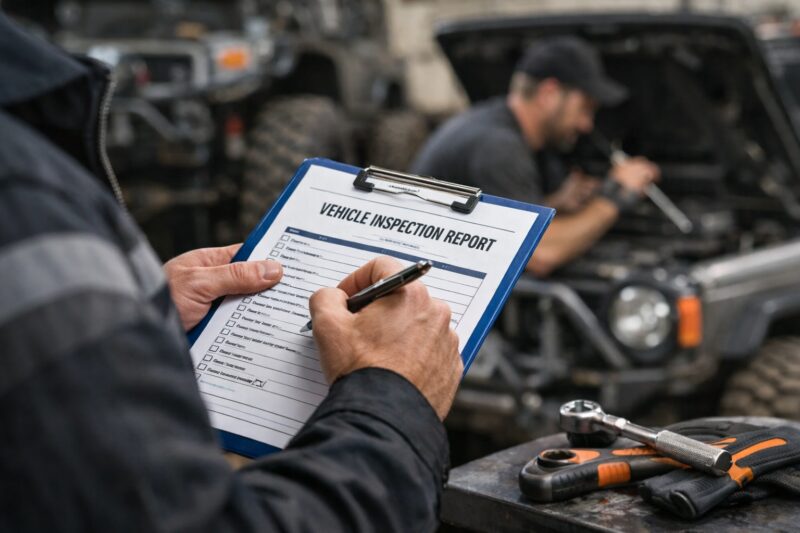
Go deeper than visual inspection. Off-road repairs can look clean while the underlying geometry or torque is wrong. Verify how they check alignment method and torque specs, how they verify driveline balance/angles, and how they isolate leak sources beyond what underbody grime hides. For example, a gearbox leak might appear as a damp spot, but an off-road shop should know when to pressure-test, when to perform an endplay check, or when to confirm seal integrity after heat cycles. A common mistake many guides get wrong is focusing only on “can they fix it,” rather than “how do they prove it’s fixed.”
Finally, use a fit test by asking the shop what types of jobs they will decline. A competent shop will occasionally refuse repairs that exceed their tools, fabrication capability, or tuning knowledge, particularly when a vehicle is too mismatched for safe repair, such as with incompatible aftermarket components, uncertain electrical modifications, or non-standard recovery points. If they agree to everything without asking questions, it often indicates they may treat complex off-road diagnostics like generic automotive service. If you're unsure where to start, consider finding a trusted mechanic for your 4×4 needs to ensure your vehicle receives the specialized attention it requires.
For vehicle downtime planning, also look at their expectations for parts lead time and verification testing—this directly influences lifted truck repair turnaround and whether you end up paying twice if a first fix doesn’t pass verification on real-world driving loads. More detail on the turnaround factors is here: https://nrtoffroadperformance.com/lifted-truck-repair/.
How to choose the right off-road technician by capabilities (not just reviews)
Choose the technician based on measurable capabilities—diagnostics, suspension/brakes/driveline expertise, and off-road electrical and cooling competence—not just on star ratings.
Reviews can tell you about friendliness, cleanliness, and communication, but they rarely reveal whether the person doing the work can correctly interpret off-road symptoms. A technician who is great at replacing parts may still be weak at diagnosing intermittent faults, vibration root causes, or compatibility issues introduced by aftermarket components. The goal is to confirm what they can actually do on your specific type of problem: not every shop can handle recovery hardware, axle seals under pressure testing, or the nuances of lifted geometry.
Break competence into technician-level capabilities. Ask about diagnostic accuracy: how they narrow down a fault, which scan tools they use, and how they verify whether a suspected component is truly the cause. Confirm experience with suspension, brakes, and steering—especially when lift kits change camber/caster, when steering geometry needs revalidation, or when brake behavior changes with different wheel/tire packages. Also verify electrical/charging and cooling competence because off-road heat soak and vibration can trigger charging faults, sensor dropouts, overheating issues, and wiring harness damage hidden by protective coatings.
Require evidence of specialization rather than just “we work on off-road vehicles.” Evidence can look like documented experience with common off-road failure modes (for example, wheel bearing wear patterns after deep mud), training records, or photos of past work that match your modification type. Tradeoffs are real: generalist shops can handle basic brake service or fluid changes, but off-road specialists tend to manage modified systems more safely—things like lift kit installation verification, lockers’ driveline implications, steering linkage inspection after impacts, and aftermarket wiring integration. A deep capability question to ask is who will diagnose your vehicle: the estimator who writes the quote, a working technician with diagnostic responsibility, or a rotating team where diagnostic ownership is unclear.
Evaluating a technician's capabilities goes beyond surface-level communication; it's crucial to assess how they articulate their findings. A competent technician will provide detailed explanations, including photos, measurements, and test results, while justifying their preferred hypothesis over others. Additionally, they should clarify their approach to sourcing parts, outlining their methods for confirming compatibility and any checks they intend to perform before you give final approval. It's a common misconception that quick responses indicate expertise; instead, prioritize a repair plan that incorporates thorough validation steps. Embracing this mindset of what to inquire before repairs can significantly influence your decision-making process, ensuring you choose wisely for your off-road vehicle's needs.
If you want a practical way to apply this during your call, it helps to have a short list of capability questions that map to likely off-road system interactions. For example, ask how they evaluate drivetrain vibration after articulation, how they test braking performance under load, and how they confirm torque and seal integrity. Those questions often correlate with real first-time fix rate because the shop is less likely to skip the verification steps that prevent repeat failures.
The shop’s repair workflow: from diagnosis to road-ready off-road testing
A proper off-road repair workflow should be intake → diagnostic testing → itemized estimate → authorization → repair → verification tests → documented handoff.
Expect the shop to follow an end-to-end process because off-road vehicles fail in ways that often require more than “replace the part that looks bad.” The workflow matters because the off-road environment adds variables: impacts can loosen fasteners, water and dust can contaminate seals and sensors, and vibration can change driveline wear rates. If a shop compresses the workflow, you often see a cycle of reassembly, test drive, and repeat labor when the underlying root cause was never validated. That directly affects your downtime, your wallet, and—more importantly—your safety on trail.
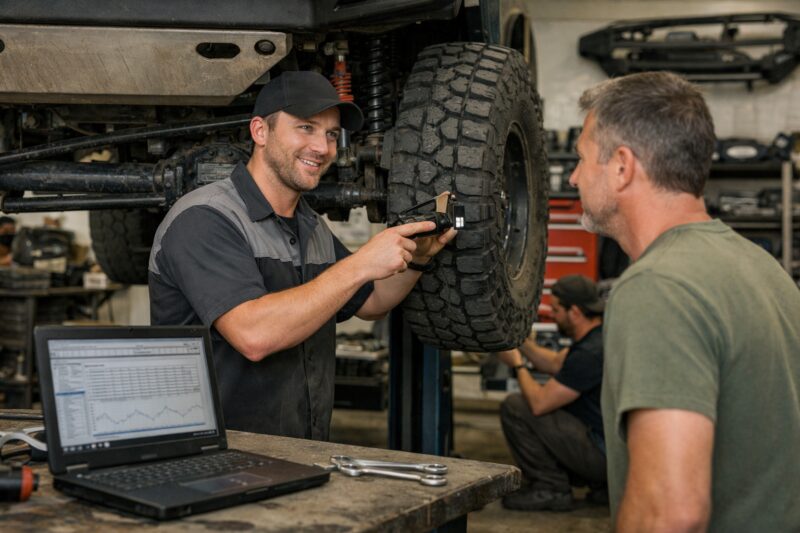
Here’s what “how it works” should look like in practice. First, intake includes your symptom description, your vehicle’s build details (lift height, tire size, lockers, aftermarket control arms, protection plates), and the trail incident context. Next comes inspection, followed by diagnostic testing. The shop should be able to explain what tests they will run before estimating, not just what parts they plan to replace. Examples of diagnostic tooling and methods that competent off-road shops commonly use include scan tools for ABS/engine/transmission codes, pressure testing for leaks, and measurement methods like endplay checks or alignment checks using appropriate references for lifted vehicles. For brake and steering verification, they should describe how they test brake function and how they confirm steering returns smoothly without abnormal play.
Then comes the estimate and authorization with clarity. A real estimate should be tied to the diagnostic plan: it lists labor and parts, and it explains what will be checked after the repair. After repair, the verification stage is where “looks fixed” becomes “proven fixed.” Practical application: ask what before/after documentation you’ll receive and what parameters they validate (for instance, no remaining leaks after pressure wash/heat cycle, no abnormal vibration at typical speeds, stable brake feel after bedding and a repeat inspection). Deeper-than-obvious validation includes rechecking torque after initial test conditions, confirming alignment/geometry after any lift-related service, and ensuring axle seals remain intact under off-road conditions where heat and articulation stress the system.
Also ask about off-road-specific re-test logic. A shop should retest for driveline vibration after reassembly because articulation changes how components load each other. They should check for interference or rubbing that can happen after suspension changes. And if they pressure-wash a drivetrain to find a leak, they must plan follow-up inspection once the vehicle cools and cycles back to operating temperature. If workflow is weak, failure modes often show up as vague estimates, skipped diagnostic steps, or “trial repairs” that charge you for labor without proving root cause.
When you evaluate a shop’s workflow, consider how it aligns with the practical needs of lifted vehicles. The more documentation and structured verification they perform, the more likely you get predictable outcomes and a smoother lifted truck repair turnaround. If you want a deeper dive on turnaround drivers, see: https://nrtoffroadperformance.com/lifted-truck-repair/.
Common mistakes when hiring an off-road repair shop (and misconceptions to avoid)
Common mistakes come from choosing based on price/speed or assuming generic mechanics can handle modified, safety-critical off-road systems without extra verification.
The first mistake is selecting a shop because they’re fast or cheap. Off-road repairs often require careful diagnostics and measurements because small errors—like incorrect torque, misalignment, or mismatched driveline angles—can cause vibration, uneven tire wear, or delayed component failure. Cheap “replace and hope” strategies may quiet a symptom temporarily while the underlying issue continues to damage bearings, joints, seals, and braking components. The result is repeat failures, additional downtime, and more expensive corrective work later.
A misconception you should avoid is “any mechanic can work on lifted/modified vehicles.” Aftermarket parts add compatibility constraints: different geometry alters alignment specs, larger tires change effective load, and lockers/wider articulation can stress driveline joints in ways that differ from stock. If the shop doesn’t ask about your tire size, lift height, and what’s been changed, they’re likely missing key context that influences both diagnosis and verification. Another practical mistake is not providing relevant history: what trail you were on, what changed recently (installations, prior repairs, new wiring), and how the symptoms behave (intermittent vs constant, under acceleration vs braking vs turning). Missing history leads to wrong parts orders and misdiagnosis.
Deeper-than-obvious mistake: overlook warranty/return verification. Ask exactly what is covered—labor vs parts—and how the shop handles defects that reappear after real off-road load. Some shops offer vague “we’ll look at it” promises but fail to specify diagnostic steps or re-verification expectations. Also consider edge cases such as intermittent electrical/sensor issues, faults hidden by underbody protection or undercoating, and problems that only appear after water crossings. The most common guide error is treating these as “diagnostic mysteries” rather than forcing a methodical approach: capturing fault history, documenting changes made, and confirming whether the original hypothesis held up under test conditions.
If you want a structured way to avoid these hiring mistakes, use a “what to ask before service” approach and treat the first call as a capability audit. That checklist framework is here: https://nrtoffroadperformance.com/offroad-repair/.
Off-road repair options: what alternatives to an off-road repair shop look like
Depending on the job complexity, the best option may be a general shop, a specialty off-road provider, a mobile mechanic, or a hybrid plan—so long as diagnostics and verification stay documented.
Not every problem requires the same level of off-road specialization. For baseline maintenance or straightforward repairs—like routine brake service, fluid changes, or replacing obvious worn parts—some general automotive shops may be sufficient. However, once your vehicle has modifications or the symptoms relate to drivetrain vibration, alignment, steering geometry, axle seals, or electronics that interact with off-road loads, a generalist approach can become a liability. The decision is not “off-road vs not,” it’s about whether the provider can run the correct diagnostic workflow and perform validation tests appropriate to your build.
Category 1: General automotive repair shops. They can be a good fit when you need standard maintenance or you have a clearly identified, stock-compatible component replacement. They are often less suitable for fabrication, driveline angle troubleshooting, or warranty-ready modified build service where measurement and verification are crucial. Category 2: Specialty off-road/off-highway service providers. These shops tend to understand off-road failure modes and modified component interactions, and they may have the tools or experience to verify alignment and torque properly for lifted setups. The tradeoff is availability and sometimes longer scheduling or parts sourcing timelines.
Category 3: Mobile mechanics for off-road breakdowns. Mobile triage can be valuable for getting you off the trail or safe enough to transport, especially for quick checks like battery/charging testing, obvious leaks, or preliminary inspection. The limitation is equipment: complex repairs often require lifts, press tools, alignment verification devices, or controlled test procedures that mobile setups cannot reliably complete. Category 4: DIY + parts sourcing + “consult only” technician. This can work when you already have the right parts and specs, but it increases your risk if you skip validation testing (alignment rechecks, torque verification, leak pressure tests, and post-reassembly inspections).
Hybrid path: diagnose at one location, fabricate at another, and verify at a third. This can reduce downtime and costs, but only if documentation is preserved—photos, measurements, part numbers, torque records, and diagnostic test results. A common mistake in hybrid planning is losing traceability: if the verification shop receives a “mystery repair,” they cannot reliably confirm what was changed and why. If you pursue a hybrid model, confirm up front that each provider will support the workflow and provide documentation for the next step.
If you’re deciding between options and want a structured way to evaluate a provider’s scope, “choose an off-road shop” using a capability-first checklist rather than a price-first comparison. This destination page supports that selection process: https://nrtoffroadperformance.com/offroad-service-center/.
Advanced considerations many guides skip: modified vehicles, safety-critical systems, and documentation
For lifted and modified vehicles, the “right” shop is the one that can handle geometry changes, safety-critical inspection standards, and documentation that proves work was verified—not guessed.
Modified builds require different thinking. Lift kits change suspension geometry and how you must validate alignment, steering return, and tire wear risk. Steering upgrades, re-gearing, lockers, and aftermarket control arms all introduce additional failure points or new load paths. Even tire sizing changes the forces that bearings, wheel studs, and braking systems experience. A competent Off-Road Repair Shop should ask for your build details and understand how those changes affect diagnostics. If the shop treats every symptom like a stock-vehicle fault, you may get a “fixed” component that still leaves the vehicle unsafe or prone to repeat issues.
Safety-critical systems deserve special scrutiny. Brakes, steering components, wheel bearings, axle seals, and recovery points are not optional quality checks. Ask what inspection-level competence looks like for them: do they measure bearing fit and inspect seating surfaces, do they validate steering free play and torque, and do they pressure-test seals to confirm the repair held under conditions similar to off-road cycling? Practical application: for axle seal work, verification should include post-service leak checks that consider heat cycling and real load stress, not just a cursory “dry” visual check.
Documentation standards are a major differentiator. A trustworthy shop provides an itemized estimate, a clear parts list with part numbers, before/after measurements, torque records, and post-repair test results. This is especially important in 2026 because many off-road owners keep vehicles for years and rely on records for future repairs, warranty claims, and troubleshooting intermittent issues. Use authoritative guidance to benchmark shop behavior: for example, you can reference vehicle safety and repair guidance from the National Highway Traffic Safety Administration (NHTSA) when discussing safety-critical systems and recalls, and for diagnostic and maintenance principles you can reference the U.S. Department of Energy’s guidance on vehicle maintenance basics as a conceptual baseline for disciplined maintenance and verification. For brakes, the Federal Motor Vehicle Safety Standards overview by NHTSA can also help you understand why safety-critical inspection discipline matters.
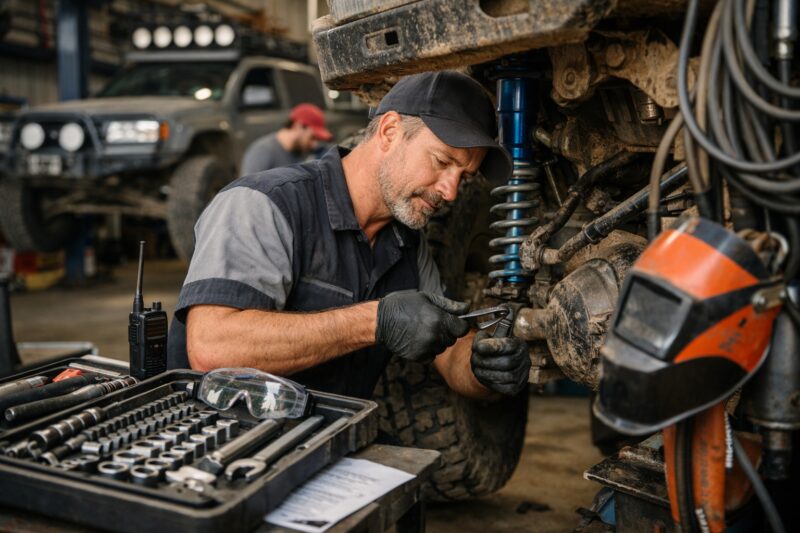
Deeper-than-obvious compliance and risk: a shop may need to recommend a re-inspection before you run a trail if the repair affects safety. If they can’t guarantee outcomes for intermittent issues (like sensor glitches), they should communicate uncertainty and still document what they tested, what they changed, and what you should monitor next. If a shop refuses diagnostic steps because “we’ll just replace parts,” that’s an edge case where you should walk away. Intermittent problems need methodical capture of conditions, not guesswork.
Where to find the right shop near you: geographic guidance without overpromising
Find the right technician by searching locally for off-road capability, then verify their workflow and documentation standards the same way regardless of distance.
When you search for “off-road repair” in your area, you’re likely balancing proximity with capability. The most reliable strategy is to anchor on a real location—like your state, province, or metro area—and then evaluate the results consistently. For 2026 planning, search terms like “off-road repair” plus your vehicle type (UTV, Jeep, overland, rock crawler) and include “diagnostics” or “fabrication” when relevant. This helps surface shops that handle the work beyond basic replacement service.
Proximity vs capability matters because a farther specialist can reduce total downtime by improving first-time fix rates. A local shop might be closer, but if they skip diagnostic steps or can’t verify alignment/torque properly for lifted builds, you can end up with repeat visits and longer total time out of service. The best approach is to apply the same verification questions by phone: ask for their diagnostic plan, their post-repair verification steps, and their documentation outputs. Then compare estimates item-by-item rather than comparing only the total number.
Rural/off-road access constraints also change logistics. If your vehicle can’t be safely driven onto a lift, ask about storage policies, pickup options, and how they handle vehicles that require winching, towing-in, or staged inspection. Night pickup, sheltered storage, and clear transport procedures can prevent delays—especially when you’re dealing with driveline issues or safety-critical leaks. For reviews, watch by category: complaints about diagnostics accuracy often correlate with repeat failure, while politeness complaints are less risky than process complaints. Parts availability and scheduling issues can be solvable, but “we didn’t find the cause” usually signals weak verification.
To operationalize this, pick 2–4 candidate shops and call with the same questions. If you need help narrowing your search and selecting a provider, start with the selection framework behind choose an off-road shop and compare them using consistent criteria: https://nrtoffroadperformance.com/offroad-service-center/.
What should I ask an Off-Road Repair Shop before I approve repairs?
Ask for a diagnostic plan first: what tests they will run and what specific results will determine the next step. Request an itemized estimate that separates diagnostics labor from repair labor and includes part numbers where possible. Then confirm how they will verify the repair (measurements, leak checks, road or off-road validation) before they call the job complete.
How can I tell if an off-road technician actually specializes in my vehicle type?
Ask whether they have recent experience with your build category (for example, UTV vs 4×4 overland vs rock crawling) and whether they’ve worked on similar modifications like lift kits, lockers, or upgraded steering components. Competent shops can describe the off-road failure modes they see most often and explain how their verification differs from stock setups.
Do I need an off-road repair shop for basic brake service?
You may not always need an off-road specialist for standard brake pad or fluid service on a mostly stock vehicle. However, if your build includes lift-related changes to wheel/tire packages, steering geometry, or has a history of off-road contamination exposure, an off-road-focused shop is more likely to verify brake performance and related components thoroughly.
What’s the best way to verify a repair is done correctly after a trail incident?
Verify with documentation: ask for before/after measurements, torque records where applicable, and leak or pressure-test results. Request a post-repair inspection that checks for remaining sources of the original problem and confirm what test conditions they used before handing the vehicle back.
Can a shop guarantee the problem is fixed on the first visit?
Shops can sometimes guarantee workmanship for a defined repair, but problem “certainty” is different for intermittent issues. A reputable shop should explain uncertainty when appropriate, describe how they will test until the root cause is proven, and outline redo or warranty terms clearly.
How do I choose between a general mechanic and an off-road specialist?
Choose a general mechanic for simple, clearly defined repairs with stock-compatible parts and minimal safety-critical complexity. Choose an off-road specialist when the job involves lifted geometry verification, driveline vibration root causes, aftermarket wiring integration, or safety-critical components that require measurement-based verification.
What should an itemized estimate from an Off-Road Repair Shop include?
An itemized estimate should list diagnostic line items, parts with part numbers, and labor tied to specific repair steps. It should also include assumptions and conditions (for example, “includes inspection of X; additional work if Y is found”) so you understand what triggers changes in the total cost.
Are mobile off-road mechanics worth it for diagnostics and breakdowns?
Mobile mechanics can be worth it for on-site triage, especially when you need safe stabilization, preliminary electrical/charging testing, or quick identification of obvious mechanical failures. For complex repairs requiring lifts, alignment tools, or press/pressure equipment, you’ll usually need a full-service shop for the complete fix.
How do I handle intermittent electrical or sensor issues with an off-road shop?
Bring a clear fault history: when it occurs, what terrain conditions precede it, and any modifications made recently. Ask the shop to document findings, explain which tests reproduce the issue, and confirm what they changed and how they validated the circuit behavior after repairs.
Long-tail: What questions should I ask about drivetrain vibration after lifting my vehicle?
Ask how they will evaluate driveline angles, balancing, and potential interference after lift and tire changes. Request a test plan that includes verification steps beyond a short road test, such as checking for vibration under typical off-road speeds and articulation conditions where feasible.
Long-tail: How do I confirm torque specs and post-repair alignment at an off-road shop?
Ask whether they provide torque records for critical fasteners and whether they recheck alignment using the correct method for lifted setups. Confirm what measurements they take, what specifications they compare against, and how they verify the results after test conditions.
Conclusion
Choosing an Off-Road Repair Shop in 2026 comes down to three themes: competence (the technician’s capabilities), workflow (diagnosis to verification), and documentation/warranty clarity.
Competence means you’re not relying on generic repair skills for modified, safety-critical off-road systems. Workflow means the shop doesn’t stop at “fixed” and instead proves correctness with validation tests like leak checks, torque verification, and alignment/driveline rechecks where relevant. Documentation means you receive itemized estimates, part numbers, before/after measurements, and post-repair results that make future troubleshooting possible.
Next step: shortlist 2–4 options, call using the capability and workflow questions from the checklist, and request a diagnostic plan before authorization. Compare estimates item-by-item, confirm what post-repair testing is expected, then book with the shop that meets both your safety requirements and your documentation expectations. That approach is how you maximize the probability of a first-time fix and minimize downtime and repeat failures.
Updated May 2026