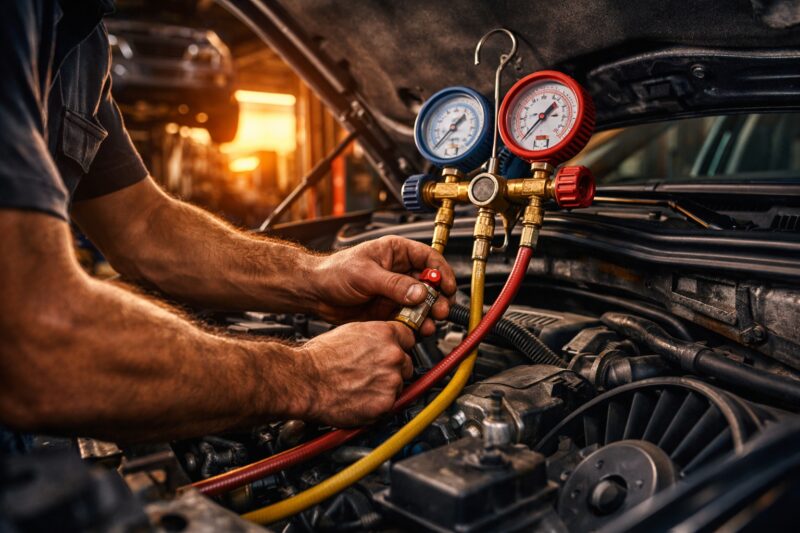
If your car’s AC stopped cooling, the fastest path to real relief is to find an expert shop that diagnoses first, proves the root cause, then verifies cooling after repair. Look for Car AC Repair Services near you that document measurements, perform proper leak testing and evacuation, and stand behind the outcome with clear warranty terms. Because commercial drivers and families can’t afford repeat failures, expert diagnosis protects the compressor and evaporator from damage. It also prevents paying twice after a misread symptom leads to the wrong fix. When you call, ask what they will measure, what tests identify the cause, and how they verify the repair before you drive away. This guide explains what “expert” should deliver, how to choose the right local provider, and what you should expect from the full repair process in 2026.
What “expert” car AC repair should deliver for your specific issue
Expert car AC repair should deliver a proven diagnosis and a confirmed fix, not a guess. The goal is cabin cooling that holds steady across vent modes, fan speeds, and driving conditions.
“Expert” also means the shop connects symptoms to system behavior with evidence. A competent technician checks the major components that control refrigerant flow and cabin comfort, including the compressor, condenser, evaporator, expansion device, and airflow path. They also compare pressure and temperature readings against what the system should do, then verify controls and sensors that can mimic refrigerant problems.
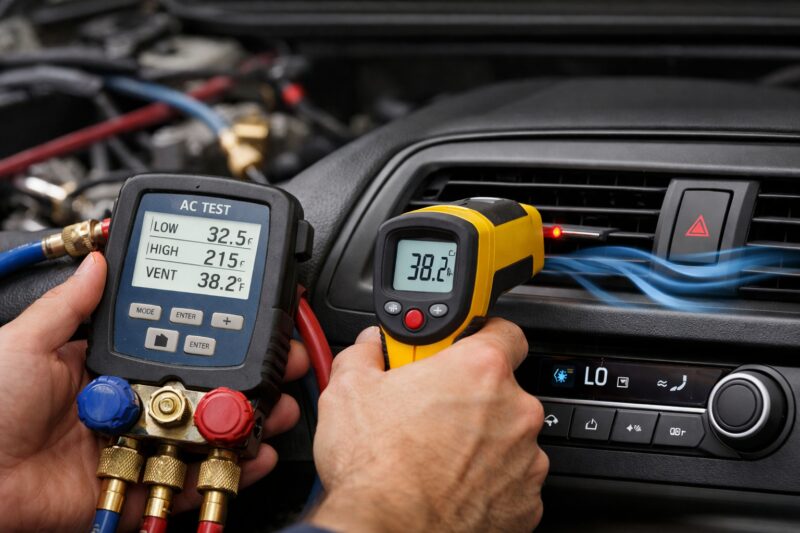
In practice, the shop documents baseline findings. That can include observed refrigerant staining, dye results if used, scan-tool data where applicable, and the temperatures at vents. Then they re-check after the repair with the same kind of measured approach so you can see what changed and why it should stay fixed.
One important nuance is that “it blows cold for a minute” can still point to the wrong root cause. It may be an intermittent leak, an airflow restriction, or a thermal control or blend-door issue that only fails under load. A true expert should explain that possibility and then test for it instead of treating recharge as the answer. That diagnosis-to-repair linkage is the difference between “it works today” and repairs that last.
You can expect a decision path that stays consistent: diagnose first, receive an estimate with a root-cause explanation, approve only what matches the findings, repair the confirmed cause, then verify performance and behavior. Good car AC work is measurable, and it should be documented from start to finish.
The decision checklist to choose the right service near you in 2026
Choosing the right shop starts with your phone call and ends with a repair verification you can understand. Use a car repair checklist before booking so the shop’s process matches your risk level and your AC symptoms.
Begin by confirming the shop is set up for real AC diagnostics. Ask whether they diagnose first, whether they pressure-test and vacuum correctly, and whether they do functional verification after repairs. Then ask how they handle estimates, since a professional estimate should separate diagnostic labor from repair labor and list the parts they plan to install.
Next, verify shop and technician competence signals. In many cases, ASE certifications can matter, especially for technicians who work across cooling and engine systems. Also ask how often they service your vehicle’s make and model and whether they follow documented procedures for refrigerant handling and leak testing. This is where an auto repair shop near you earns trust: they can explain the steps clearly and consistently.
Commercially, it is a tradeoff between lower-cost offers and diagnostic rigor. A price-only option may charge less upfront but still miss the actual failure mechanism, which leads to repeat visits. For example, recharging without finding a leak can quickly result in warm air again and may add wear to components that should have been protected from the start.
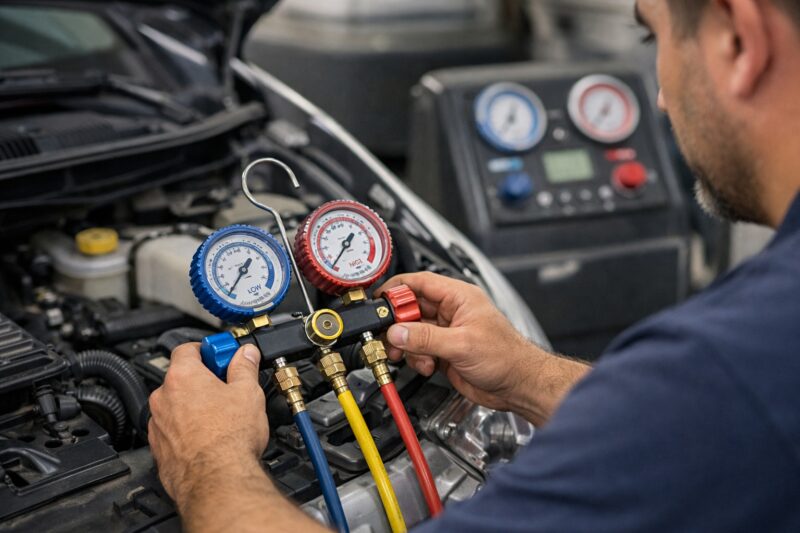
There are also situations where an expert shop may pause to consult. If they suspect electrical faults that affect compressor control, or if contamination evidence suggests special handling, they need to confirm the right repair approach before taking shortcuts. That pause is not a delay tactic; it is a safeguard against causing a more expensive second failure.
Finally, check warranty clarity. Ask about shop services and warranty terms in writing, including what labor and parts are covered and whether the warranty references verified diagnosis. An expert shop should be comfortable explaining what “covered” means and what documentation you will receive.
How expert diagnosis works: from symptoms to root-cause repair
Expert diagnosis turns vague symptoms into a root-cause repair plan. Instead of assuming refrigerant is low, the technician traces how the system should behave and then tests where it diverges.
The process typically begins with a careful symptom intake and inspection. The technician looks for signs such as refrigerant leaks, oil residue, damaged condenser fins, or abnormal noises that can point to compressor issues or debris. They then evaluate refrigerant-related readings such as pressure and temperature, plus vent temperatures and cabin airflow behavior.
Leak testing and evacuation matter because they set the baseline for every later step. A good shop checks for leaks using appropriate tools and methods, then pulls a vacuum and verifies vacuum holding. This reduces the chance of charging into an unknown condition, and it prevents moisture from damaging internal surfaces.
Airflow and cabin controls can mimic refrigerant problems, so experts test that too. A restricted cabin filter, weak blower motor, or blend-door or actuator fault can make cooling seem absent. Sensors and controls can also create intermittent issues, where the compressor cycles or the system limits cooling based on perceived values.
After repair, verification is non-negotiable. The technician should confirm vent temperatures and operational behavior across settings like different fan speeds, recirculation modes, and defrost or vent functions. This is how you prove the repair worked and how you spot a remaining airflow or control problem that did not show up during the initial inspection.
On modern vehicles, scan-tool data can support diagnosis when correlated with real AC performance. If the system reports plausible values but the vent temperatures do not match expected behavior, that mismatch guides the next test. This is also where experts avoid guesswork and align the final plan with Car AC Repair Services intent: correct diagnosis, correct repair, and documented verification.
Common mistake: shops that only recharge refrigerant without verifying airflow, leaks, and system charge can leave the true cause untreated. In contrast, an expert diagnosis reduces repeat failures by making the repair defensible and testable.
Common mistakes and misconceptions that lead to repeated AC failures
The most common misconception is that AC repair means “recharge refrigerant.” If the refrigerant charge is low due to a leak or system failure, recharge alone often fails again.
When a shop skips leak testing, you can end up replacing refrigerant without fixing the reason it escaped. That can also mask the real problem behind short-lived cooling. For instance, the system may cool briefly, then warm up when the leak reintroduces loss, or when pressure control triggers protective compressor behavior.
Another pitfall is replacing parts without confirming the diagnosis. A compressor might be blamed for poor cooling when the issue is actually a restriction, airflow problem, or a failed expansion device. Installing a new compressor without resolving the underlying flow problem can cause rapid failure and add unnecessary cost and downtime.
Customers also misread noises and odors, and experts should clarify what those signs mean. A rattling sound might relate to debris near fans or the compressor clutch system depending on the vehicle. A chemical odor can indicate refrigerant leak behavior or contamination, and it should trigger appropriate checks rather than a quick recharge.
Overcharging or undercharging can also harm performance and longevity. Incorrect charge can raise pressures, stress components, and lead to poor cooling consistency. Experts prevent that by following correct charge procedures based on vehicle specifications and by verifying temperature performance, not just pressure numbers.
Edge cases include aging seals and hoses, condenser damage from road debris, and contamination that affects heat exchange. Contamination may require special cleaning steps and careful reassembly to avoid repeating the failure. An expert shop treats these cases differently because the repair depends on evidence, not habits.
The practical takeaway is simple: if the shop cannot explain the measurement that identifies the cause, treat that as a warning sign. Quality AC work proves the “why,” then proves the “works.”
Repair options and realistic pathways: what to expect before you pay
Your estimate should reflect a repair pathway that starts with confirmed findings. Expert car AC repair usually offers a targeted approach first, then moves to broader component repair only when evidence supports it.
A common professional path is diagnose plus targeted repair. For example, if leak testing points to a specific area, the shop should explain the leak repair method, then perform evacuation, recharge to spec, and verification of vent temperatures. If a component is confirmed to be failing, then the estimate can include parts replacement with clear rationale.
Sometimes the conversation becomes a replacement versus repair decision. That depends on confirmed failure evidence, damage extent, and access constraints. An evaporator access challenge can raise labor costs, so a professional shop should explain the cost drivers while still tying the labor steps to verified system behavior.
A strong estimate also lists what procedures they will perform. You should expect line items related to refrigerant handling, leak testing, evacuation and vacuum holding, and performance verification. This matters because “we charged it” tells you nothing about whether the system is airtight, correctly evacuated, or producing the right vent temperatures.
For different scenarios, the pathway changes. If you suspect a minor leak, the shop should still test and verify after repair rather than assume it is minor. If the air warms quickly after start, the shop should investigate intermittent faults, airflow restrictions, or thermal control behavior. If you have complete no-cold conditions, the shop should evaluate system pressures and controls before recommending major parts.
Nuance: some shops recommend system flush or cleaning only when contamination evidence exists. That is important because assuming contamination can add cost without improving the outcome. Experts should explain what evidence they saw, what cleaning would address, and whether it is actually indicated.
| Repair pathway | Confirmed first | Typical tradeoffs | Verification step |
|---|---|---|---|
| Targeted repair after diagnosis | Leak location, pressure behavior, airflow | Lower parts cost, relies on correct testing | Vent temperatures across settings |
| Component repair or replacement | Failed expansion device, compressor, or condenser issues | Higher labor and parts, requires good evidence | Performance checks after charge to spec |
| Contamination or special handling approach | Evidence-based need for cleaning | More steps, only used when indicated | Heat exchange performance confirmation |
Before you approve work, ask the shop what might change after disassembly and how they will request pre-approval. That keeps the process transparent and reduces surprises.
Advanced scenarios experts handle when cooling still won’t hold
Some AC faults do not show up during a quick check because they depend on load, time, or sensor logic. When cooling still won’t hold, experts expand testing beyond basic refrigerant service.
One advanced category involves cooling cycles that fail under certain driving conditions. The compressor may engage, then cycle off due to sensor readings, thermal management logic, or control limitations. That can happen when airflow is weak, when fan control does not respond correctly, or when sensors show implausible values.
Electrical and control complexities can also cause inconsistent cooling. A blend-door calibration issue can change airflow temperature and mode routing. A relay, fuse, or power/ground fault can affect compressor engagement or fan behavior. Experts correlate scan-tool data with real vent temperatures so they do not blame the refrigerant for an electrical command problem.
Special cases include vehicles with more complex thermal routing, where cabin cooling depends on broader thermal control. The key is that the shop should still verify AC performance using measurements, not assume system behavior based on symptoms alone. Also, refrigerant type compatibility checks matter, because using the wrong specification can lead to incorrect charging and unsafe system operation.
If a customer questions the cost, experts should explain the labor drivers with reference to what they measured. They can show why parts replacement is or is not justified and why additional diagnosis may be needed to prevent a repeat failure. That conversation matters commercially because it protects both budget and vehicle uptime.
An edge case many people miss is sensor drift or intermittent faults. A system might report normal values most of the time, then deviate under certain vibration or heat soak. Experts account for that by using test data correlation over time and by confirming that real cooling behavior matches what the vehicle reports.
If the problem persists, the repair should lead to a new test plan, not a loop of recharging. The best outcome comes from a shop that can adapt the diagnostic strategy while keeping the verification step clear.
Before you approve any work, you should understand what the shop measured and what test identified the cause. A trustworthy estimate ties each repair step to evidence and includes a clear plan for verification.
Ask direct questions that force process clarity. What did you measure at the vents? What test identified the cause—leak test, vacuum holding, pressure and temperature evaluation, or scan-tool correlation? Will you vacuum and leak-test before charging, and how will you confirm the system is back to expected performance afterward?
Next, clarify process transparency. A professional shop should explain how they plan to confirm success after service, including what results you should expect on vent temperatures and fan or mode behavior. They should also describe whether any additional findings during disassembly could change the parts list, and how they will request approval if that happens.
Also verify estimate structure. Look for separation between labor for diagnosis and labor for repair work, plus a parts list. If they mention optional services, ask what evidence supports the need and whether skipping it changes outcomes.
Nuance: some labor requires access to hidden components, and the shop may not know all replacement needs until parts are removed. In that case, an expert should communicate contingency rules up front. They should also document any findings that change the repair plan so the estimate remains anchored to reality.
When you approve, use an approval checklist. Confirm the root cause is stated clearly, the repair plan matches the evidence, and verification is included. Finally, ensure shop services and warranty terms cover the parts and labor tied to the diagnosis-backed repair.
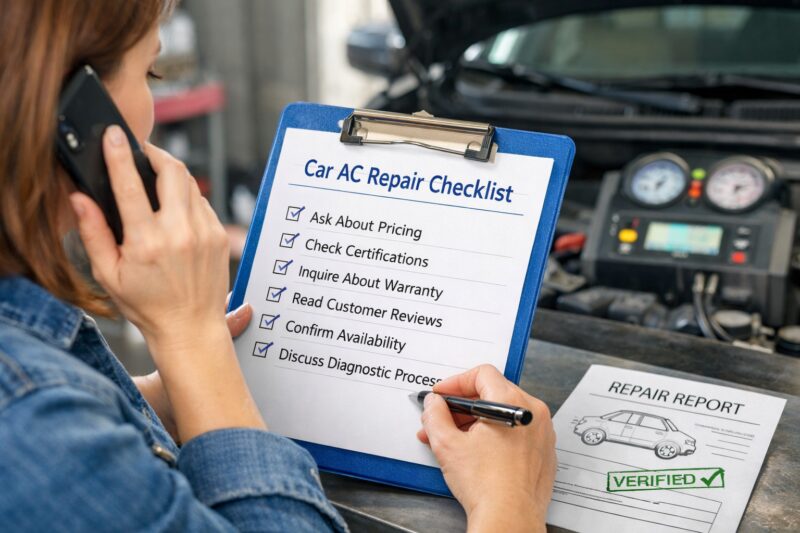
This is where “fast accurate auto diagnostics” shows up in real behavior. If the shop can explain the why, outline the proof, and verify performance after service, you are far more likely to get a lasting fix.
How to compare Car AC Repair Services near you by process quality and warranty
Not all Car AC Repair Services near you run the same process, even if the invoice looks similar. The best comparison is process-based: diagnosis rigor, refrigerant handling steps, and post-repair verification.
Start by comparing what each shop says it will do before charging. Ask whether they vacuum the system and perform leak testing, and whether they will confirm vacuum holding. Then ask what “verification” means in their workflow, such as checking vent temperatures across settings and confirming stable operation in recirculation and defrost or vent modes.
Next, compare what each shop records. Experts document baseline measurements, observations, and relevant scan data when used. That documentation is what turns repairs into something you can reference later if issues return. It also helps protect you if a warranty claim needs evidence.
Warranty is part of process quality. A good warranty should cover labor and parts tied to the repair, and it should not require you to guess whether the shop did proper refrigerant handling. Ask what the warranty covers for diagnosis-backed repairs and how they handle repeat issues, especially when a root-cause component repair is involved.
Tradeoff-wise, the lowest price can sometimes mean fewer tests. If a shop skips leak testing or rushes the verification step, you might pay less today but spend more later with repeat problems. On the other hand, a detailed diagnostic and measurement-based approach can cost more upfront but often prevents compressor damage from ongoing low-charge or airflow issues.
Real-world scenario: two shops offer similar refrigerant pricing. One performs a full leak test and verification with vent temperature confirmation. The other charges refrigerant and sends you on your way. A month later, one repair holds and the other fails again because the root cause was never addressed.
When you compare shops, look for consistent explanations and documentation rather than promises alone. That is how an auto repair shop near you becomes a partner for reliable AC cooling.
Frequently asked questions about car AC repair near you
How much does car AC repair cost near me in 2026?
Pricing varies based on the cause, parts required, and how much diagnostic testing is needed. Costs often differ when the repair includes leak localization, compressor work, or evaporator access due to labor complexity. Many shops provide a range only after measuring pressure, vent temperatures, and leak behavior, then confirming the repair plan. Ask for an itemized estimate that separates diagnosis, labor, and parts, and confirm whether leak testing and vacuum procedures are included.
How long does car AC repair take near you in 2026?
Most qualified repairs take longer than a simple recharge because the shop must diagnose, test for leaks, evacuate, then verify cooling performance. Timing depends on how quickly they find the root cause, whether they need parts, and whether refrigerant components require specialty handling. If parts are available, some jobs can be completed in about a day, while others may require additional time for orders and rechecks. Request an estimate timeline after diagnosis and ask how the shop handles backorders.
How do I know if my AC problem is a leak or something else?
An expert shop differentiates leaks from airflow or control issues using pressure and temperature evaluation plus leak testing. If leak testing and dye or electronic detection indicate a loss point, the technician can focus on repair there. If pressures and behavior do not match a leak pattern, the shop checks blower function, cabin filter restriction, blend-door operation, and sensor plausibility. They should also document vent temperature behavior to confirm the true cause.
Should I recharge my car’s AC before getting it diagnosed?
You should usually avoid recharging before diagnosis because it can mask the root cause. If there is an active leak, you may pay for refrigerant and still lose cooling shortly after. Recharging also does not fix airflow restrictions, control problems, or incorrectly functioning components. An expert will recommend diagnosis first so the repair matches the verified cause.
What information should I provide when I call a shop about weak AC cooling?
Share when the cooling is weak, such as at idle only, during highway driving, or after warm-up. Include the fan and vent settings you use, cabin temperature behavior, and any noises or odors you notice. Mention whether the problem is intermittent or constant and whether you saw any warning messages on the climate control screen. These details help the technician choose the correct tests instead of guessing.
Can bad cabin airflow make it seem like the AC is broken?
Yes, weak airflow can make cooling feel absent even if refrigerant flow is adequate. A clogged cabin filter, failing blower motor, or blend-door fault can reduce how much cool air reaches the cabin. In these cases, pressure readings may not show a typical low-charge pattern. A good diagnostic process verifies vent temperatures and airflow behavior across modes.
What’s the difference between repairing AC components and replacing them entirely?
Repair is usually preferred when the shop can confirm a specific component failure and repair it with evidence-based steps. Replacement is considered when a component is confirmed failed, damaged, or too worn to restore performance safely. Access difficulty can also affect decisions, especially for components like the evaporator. A reputable shop explains the criteria, tradeoffs, and how the repair will be verified after completion.
Why does my AC blow cold at first and then warm up after driving?
This pattern can point to an intermittent leak, cycling thermal control, or a sensor or airflow issue that changes under load. It can also happen if airflow restrictions grow as components heat soak. Experts verify by correlating vent temperatures over time with pressure or scan data and by checking for conditions that only occur during driving. The goal is to test the intermittent cause rather than repeating recharges.
Do reputable shops vacuum the system and leak-test before charging?
Reputable shops should vacuum the system and perform leak testing as part of proper refrigerant service. Vacuum and vacuum holding checks help confirm there is no moisture and that the system is airtight. Leak testing helps identify where refrigerant is escaping so the underlying failure is corrected. After repairs, they should also verify performance with measured vent temperatures and operational behavior.
What should I ask about warranty coverage for car AC repair work?
Ask whether the warranty covers labor and parts for the specific diagnosis-backed repair. Confirm whether the warranty includes refrigerant handling related to the repair and what documentation you receive. Also ask what happens if the same symptom returns and how they verify the next step. A clear warranty should reference the work performed and how success will be evaluated.
Is dye or UV leak detection always the right method for locating AC leaks?
Dye or UV tools can work in specific situations, but they are not the only method. The best method depends on what evidence the technician sees and the system condition. Some cases may benefit from electronic leak detection or pressure-based tests, while others may use dye to confirm suspected leak areas. A careful shop chooses the method that supports reliable confirmation, then verifies results with additional testing as needed.
What can cause AC failure on modern vehicles with climate control sensors and controls?
On modern vehicles, climate control sensors and logic can limit cooling based on perceived conditions. Failures can come from sensors, actuators, electrical faults, or airflow problems that affect how the system responds. A weak AC report may still involve normal refrigerant pressure behavior with a control mismatch. Experts correlate scan data with real vent temperature performance and then test the electrical and control components that influence AC operation.
Conclusion: pick an expert shop that proves the cause and the fix
Expert car AC repair services near you should follow a measurable process: accurate diagnosis, transparent estimates, and post-repair verification that confirms cabin cooling holds. The commercial value is clear: it reduces repeat breakdowns and helps protect major components from damage tied to ongoing low charge or airflow problems.
Before you book, compare providers by process quality, not just price. Call 2–3 shops and ask your car repair checklist before booking questions about leak testing, vacuum procedures, and how they will verify success. Request documentation of the tests performed and confirm shop services and warranty terms in writing so you know what is covered if symptoms return.
Your next step is simple: gather symptom details, ask the checklist questions, and request a diagnostic appointment with an expert shop that can explain the root cause and prove the fix. If you do that, you will be much more likely to get lasting comfort, not a cycle of temporary cold air.
Updated September 2026