
Suspension repair warranties are promises that cover certain parts and specific work after a repair, but only if the return issue matches the warranty terms. Coverage can depend on duration, mileage, what counts as a “related failure,” and how the shop documents the original diagnosis. Understanding suspension repair warranties helps you know what’s covered when issues return, and it also helps you avoid claim denials caused by missing paperwork or mismatched causes.
This matters now because suspension repairs are expensive, and repeat symptoms can turn a one-time cost into a pattern. In addition, shops often deny claims when the customer cannot prove that the new failure is connected to the earlier repair. You also want to protect your time, because you may need a re-inspection or diagnostic appointment to confirm the cause.
In this guide, you’ll learn how these warranties are structured, what to check before authorizing suspension work, and how to evaluate warranty terms based on repair type and symptom timing. You’ll also get a practical claim workflow, plus common misconceptions that lead to problems. Finally, you’ll see edge cases that decide coverage in real life.
How suspension repair warranty coverage is structured in plain language
Suspension repair warranties usually combine a time or mileage limit with a clear list of covered items. They also define what the shop means by a “defect” versus other types of failure. Therefore, two warranties that sound similar can pay very differently.
Most warranties split coverage into labor and parts. Parts coverage often relates to components that were installed during the original repair. Labor coverage usually applies to the work required to fix the same condition again. However, some warranties include labor only if you return to the same shop or if you use a specific installation process.
Next, warranties rely on “triggers,” such as the date the repair was performed, the invoice date, or the mileage at that time. Many shops measure limits by either elapsed time or miles, and whichever comes first applies. As a result, a return failure after the limit may be denied even if the symptom matches.
In addition, the warranty scope often uses causation language like “result of the repair.” This means the shop must show that the failure is connected to what they did. If the warranty calls out misuse, impact, or pre-existing wear, then a return issue may not qualify even if it looks similar.
Documentation is a major part of how warranties work. You typically need the estimate, invoice, part numbers, and work order details that match the repair. Some warranties also require alignment checks or follow-up inspections to keep coverage valid. For example, if the terms require a re-check after a set mileage, failing to do it can break eligibility.
One deeper nuance is that some failures look like the original problem but come from a different cause. A loosened fastener can mimic a worn bushing. A tire balance issue can mimic a steering noise. In those cases, the shop may agree to inspect, but the warranty may not cover the actual cause.
For official guidance on records for consumer purchases, the Federal Trade Commission explains how disclosures and terms matter for consumer transactions. See Federal Trade Commission guidance for general principles on clear disclosures. For alignment and installation best practices, many shops reference manufacturer procedures. Those procedures often matter because warranties can be tied to “installed per specs.”
What to check before approving suspension work to preserve warranty rights
Before you approve suspension work, you should confirm the warranty terms in writing. This protects you when the same symptom returns later. It also helps you avoid surprises about exclusions, documentation, or required follow-up steps.
Start by reading the exact coverage summary the shop plans to provide. Look for the warranty duration, what parts are covered, and whether labor is included. Also check how the shop defines exclusions like impact damage, off-road use, or normal wear items.

Next, confirm how the shop will identify the parts installed. The estimate should show part brands and part numbers, and the invoice should match. If you later need a claim, part identification reduces disputes. Also ask whether the shop will list any inspection results that support the original diagnosis.
Then verify the shop’s documentation process. You should receive a work order or invoice that lists labor line items and the parts used. If alignment was performed, the shop should document it with an alignment report. Meanwhile, retaining the old records helps if your vehicle needs a future re-inspection.
There is also a practical “claim-friendliness” factor. A shop that clearly explains coverage, hands you written terms, and keeps clean records often makes claims easier. On the other hand, vague policies can create friction when you request a warranty inspection.
Because suspension failures often involve installation quality, pay attention to alignment and installation as warranty-adjacent steps. For instance, a control arm installation that misses torque specs can cause a repeat clunk. If your warranty requires proper installation verification, missing steps can weaken your claim.
A common mistake is assuming a warranty will cover any future symptom. Even when the warranty is technically valid, it may be practically denied if you cannot prove the symptom is tied to the earlier repair. To support a smooth process, ask for warranty-friendly questions before service, such as what you must keep from the paperwork and whether follow-up checks are required.
If you are comparing shops, use a shop finder checklist for repairs before you schedule suspension work. That checklist should include how they provide estimates, whether they document parts with part numbers, and how they handle warranty disputes. Many drivers find this matters as much as the warranty duration.
How to evaluate suspension warranty terms by repair type and symptom timing
Warranty terms make more sense when you match them to the type of suspension repair you received. Also, symptom timing often determines whether the shop sees the return as related or separate. Therefore, your plan should reflect both the repair category and when the issue shows up again.
For struts and shocks, you may see warranty language tied to the corrected condition and proper installation. If the ride harshness returns immediately, the shop may suspect a related installation issue. However, if the issue returns after extended use, wear or another component can become more likely. In that case, the shop may argue the original problem is no longer the cause.
For control arms, bushings, and ball joints, the warranty can hinge on component integrity and fastener seating. If the same wheel location develops noise after the repair, that supports a “related failure” theory. Yet if the noise shifts to a different location, a technician may diagnose a separate worn part or an unrelated system.
Bushings and links also create symptom overlap. A clunk can come from a sway bar link or from a brake-related movement. Tire noise can look like suspension noise, especially when uneven tread or balance issues are present. As a result, the shop’s diagnosis process matters, and you should expect an inspection before coverage is confirmed.
Alignment correction is another common decision point. Many suspension warranties cover parts and the installation that relates to correcting the original condition. Alignment is often either excluded or treated as separate labor unless the terms say otherwise. Therefore, you should check whether alignment rework is included when symptoms return.
Deeper insight comes from understanding tradeoffs. A longer warranty may require stricter compliance, such as follow-up inspections or specific service intervals. A shorter warranty may be easier to use but offers less financial protection. If you choose a cheaper job, you should also budget for possible repeat inspections.
One edge case is “symptom mismatch.” For example, you might return with a new clunk after an alignment re-do. The shop may still consider it related to the overall job, or it may treat it as a different issue. In practice, they usually decide based on where the noise occurs and what the inspection shows.
If you want a simple way to compare options, use selecting suspension work like choosing a protection plan. Ask what changes if the symptom returns, and what documents will prove the link to the first repair.
How to file a suspension warranty claim without losing coverage
A solid claim process starts with organized documentation and a clear request for inspection. If you do it right, you reduce back-and-forth and protect your warranty options. If you do it loosely, coverage can shrink even when the symptom seems related.
First, gather your records. Use your estimate and invoice, along with the work order and part information. If you have an alignment report or inspection notes, include them too. Next, write down the dates and mileage when the symptom returned. Add a short description, like when you hear the noise and on what type of road.
Then confirm the warranty scope before you schedule. Ask the shop what they need to see to open the warranty inspection. You should also ask whether the shop expects you to return to the original installer. If the warranty is tied to a specific shop or installation method, third-party work can affect eligibility.
During the inspection, focus on evidence that ties the symptom to the earlier repair. For example, if the noise is the same location, say so. If parts were replaced at a specific corner, reference that corner. Meanwhile, if you replaced tires or brakes after the original repair, explain that change. The more complete your timeline is, the easier diagnosis becomes.
Customer responsibilities also matter. Do not alter the vehicle setup if the warranty prohibits modifications. Avoid ignoring the symptoms for long periods, because delays can weaken the “related failure” connection. If the warranty requires service intervals, follow them.
A deeper nuance is how to handle “friendly denials.” Sometimes a shop blames impact, wear, or a different component. If coverage is denied, request a written explanation that includes the inspection findings. Then ask what tests they used to decide the cause. This often turns a vague denial into a specific issue you can address.
It also helps to keep a record of every communication. You can track when you reported the symptom, when you requested an inspection, and what the shop said. This is where an automotive repair checklist for claims can save you time and stress.
If you are searching for claim-ready best practices, the National Highway Traffic Safety Administration provides consumer safety resources, including guidance on vehicle issues. See NHTSA consumer information for general support. Warranty claims are not the same as recalls, but the records mindset translates well.

Misconceptions that commonly cause suspension repair warranty problems
Many suspension warranty disputes start with expectations that do not match warranty language. The warranty usually covers a specific condition, not every future symptom. Therefore, you should align your understanding with how the terms define scope and cause.
One misconception is that “if it breaks again, the warranty automatically pays.” In most cases, it pays only if the failure is covered and the cause matches what the shop repaired. A repeat symptom after the warranty period ends may still be a related problem, but coverage usually stops at the limit.
Another misconception is that any mechanic can work on it and warranty still holds. Some warranties restrict installation to the original shop or require records of any related follow-up work. If you change parts, alter ride height, or perform non-authorized repairs, the shop may argue that the symptom cannot be linked to their earlier work.
A third misconception is that “warranty covers normal wear.” Many terms treat certain suspension components as wear items. Others may call them “not covered” under specific conditions. For example, if the warranty says the issue is due to wear or corrosion beyond repair scope, you may get no replacement even if the part was installed recently.
In addition, people often assume alignment is always included. Yet alignment is frequently separate labor unless it is explicitly listed. If the terms exclude alignment, then a return steering pull might not be covered, even if the original repair was covered.
A deeper insight is the “customer behavior gap.” Impact exclusions often appear in terms, even if you never did anything extreme. Hitting potholes, riding with a heavy load, or off-road use can become cited as damage. This does not mean you did something wrong. It means the warranty defines what types of damage it will not cover.
Finally, a common mistake is ignoring documentation. If you lose your invoice or cannot identify installed part numbers, the shop cannot verify the covered items. As a result, you may face administrative denials that have nothing to do with the mechanical truth.
To avoid these pitfalls, build your plan around choosing a trusted repair shop that explains the rules. A clear shop reduces misunderstandings and makes coverage decisions easier.
Comparing suspension repair warranty options and choosing the right coverage
Suspension warranty options can differ more by conditions than by headline length. When you compare them, focus on the parts and labor split, claim steps, and what proof you must keep. Then decide based on your risk tolerance and your vehicle use.
First, compare parts-only versus labor-inclusive coverage. Parts-only coverage can feel cheaper upfront, but it may cost you labor if the fix must be repeated. Labor-inclusive coverage is more valuable when the return issue might involve re-inspection or re-installation work. However, it may still require you to return to the same shop.
Next, compare “standard” warranties versus longer “extended” warranties. Extended coverage can reduce repeat failure cost, but it often comes with tighter rules. For example, it may require specific follow-up inspections or strict part identification. Therefore, longer coverage can be great if you can follow the process.
You should also compare manufacturer-linked warranties versus in-house shop warranties. In-house warranties may be simpler because the shop knows its own process. Manufacturer-linked warranties may depend on the installed component’s brand and installation compliance. Both can work, but the claim route can differ.
As you evaluate value, consider deductibles or condition language. Some warranties cover the defect but exclude the labor if the symptom turns out to be wear or unrelated impact. If the terms include a deductible, factor that into your true protection cost. This helps you choose between a quick fix with shorter coverage and a higher-cost repair with stronger terms.
Also compare differences by component brand or installation method. Even within the same shop, warranties can vary based on which parts were used. Therefore, you cannot assume one warranty applies to every suspension job they do. You must compare repair-specific terms.
To make comparisons easier, ask the shop for a written warranty summary and a “what happens if” statement. This is where warranty-friendly questions before service can help. Ask how claims work, what documents they provide, and what timeline they expect for inspections.
If you are still choosing where to get your suspension repair done, use choosing a trusted repair shop as a decision framework. You want consistency, clear documentation, and a process that supports claims.
For general consumer protection on warranties and terms, the FTC consumer pages provide useful background. See Federal Trade Commission warranty and repair guidance for how disclosures and consumer rights can work in practice.
Edge cases that decide whether suspension warranty coverage applies
Warranty coverage can hinge on details that seem minor at first. Edge cases often determine whether the shop treats the returned symptom as the same issue. Therefore, you should expect some situations where coverage is limited.
Repeat repairs are a major edge case. If the symptom returns twice, the shop may look for a persistent underlying cause versus separate defects. For example, if the shop replaced bushings but the noise continues, the cause might be a bent component, a different wear part, or installation deviation. Then the shop may cover the correct repair only if the diagnosis ties the cause back to the covered work.
Mixed work histories also matter. If the vehicle has older suspension components, the shop may argue the new symptom comes from the older parts. If you had repairs elsewhere before the covered job, the shop may need those records to confirm what was changed. In cases of incomplete history, warranty claims often slow down.
Modifications are another frequent decider. Lift kits, aftermarket wheels, and changes to ride height can affect geometry. That can change how components load and wear. As a result, warranty terms may exclude failures caused by altered geometry or incompatible parts.
Electrical and steering-system interactions can further complicate suspension symptoms. Braking issues, wheel bearing noise, and tire balance problems can mimic suspension clunks and vibration. Therefore, the shop often needs to confirm the source during inspection. If the source is not the covered component or repair, the warranty may not apply.
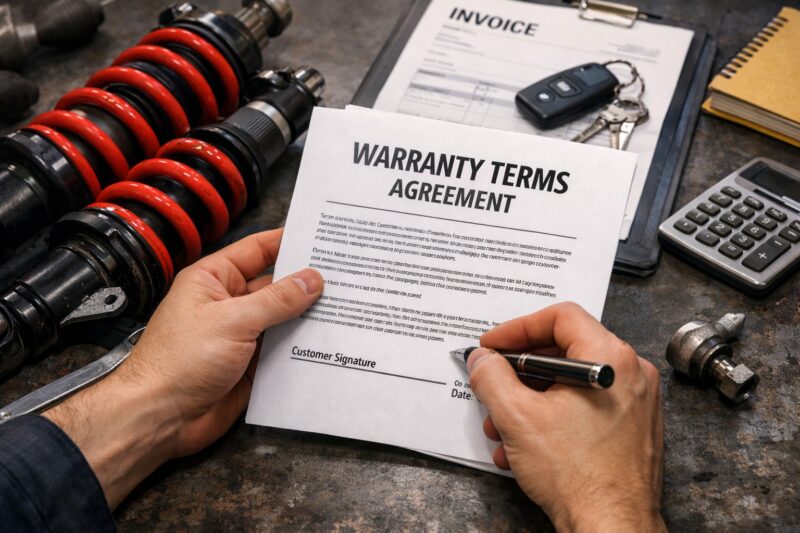
A deeper nuance is the “pre-existing condition” argument. Shops may claim the failure existed before the repair. This is why the original inspection documentation is so important. If you have photos of worn parts, notes, or test results from the first , you can strengthen the connection.
One common mistake is assuming “it happened right after” proves causation. It can be a strong clue, but warranties often require a cause link supported by inspection findings. Therefore, the strongest claims combine timing with physical evidence.
When you plan your process, consider using a shop finder checklist for repairs to pick a shop that documents inspections. That documentation can matter most during edge cases.
How to prepare records so suspension warranty claims go smoothly
You can improve your odds by preparing your records before the symptom returns. Good records show what was repaired and what parts were used. They also help the shop confirm eligibility quickly.
Keep your estimate and final invoice together. Also store the work order, including labor line items and the technician’s notes if provided. If the shop installed parts, keep the part numbers and brand information from the paperwork. If alignment was done, save the alignment report with measured values.
Next, collect photos if you took them during the diagnosis. For example, you may have photos of worn components, leaked fluid, or damaged boots. Photographs can support a “pre-existing condition” discussion later. Meanwhile, a clear timeline in your notes helps link the return symptom to the earlier repair.
Also keep evidence that your identity matches the repair. Use the same vehicle, track the mileage, and keep your VIN reference in your records if available. If you return to a different shop, they may need that information for admin checks. This is where automotive repair checklist for claims becomes useful, because it keeps you from forgetting one document.
Scheduling matters too. When symptoms reappear, report them promptly. Delaying a claim for weeks can allow new wear to develop. That can make it harder to connect the failure to the earlier work.
If you have missing paperwork, you may still have options. Some shops can retrieve invoices from their system if you provide dates and vehicle details. Payment records from your bank or card can also help. However, missing part numbers can still cause problems, so it’s best to request them at the time of service.
For consumer guidance on keeping purchase records, the IRS provides general advice on recordkeeping for financial transactions. See IRS recordkeeping overview for general principles. Even though warranties are not taxes, the idea of retaining transaction records applies.
Finally, communicate clearly. Document the symptom type, like clunk, squeak, bounce, or vibration. Then note when it happens, such as turning, braking, or highway cruising. This helps technicians diagnose the true cause and supports coverage decisions.
Frequently asked questions about suspension repair warranties
What is typically covered under suspension repair warranties?
Most suspension repair warranties cover specific parts that the shop replaced during the original job. Many also cover related labor to correct the same condition again. However, coverage often depends on whether the return issue is a defect in the installed work versus wear, impact damage, or an unrelated failure.
How long do suspension repair warranties last?
Warranty duration often appears as a time limit, a mileage limit, or both. For example, it may state coverage for a set number of months and miles from the repair date. If the terms use “whichever comes first,” then the earlier limit ends coverage.
Do suspension repair warranties cover alignment issues after repairs?
Alignment coverage is not always automatic, even when related suspension work is covered. Many shops include alignment only if it is explicitly listed on the estimate or if the warranty says alignment rework is included. If alignment re-inspection is required, the warranty may also require proof you returned for that check.
Can I get a warranty claim honored if the work was done at a different shop?
Sometimes you can, but it depends on the warranty’s transfer and approval rules. Some warranties require you to return to the original installer for labor coverage. If another shop works on the vehicle later, that shop’s documentation may also become important for proving cause.
What should I do if my suspension problem comes back right after the repair?
Schedule a warranty inspection quickly and bring your paperwork. Tell the shop the dates and mileage when the symptom returned, and point out the same corner or component location. Then ask the technician to diagnose whether the issue is caused by the earlier repair work.
Are aftermarket parts covered by suspension repair warranties?
Aftermarket parts can be covered, but only if the warranty terms include them and the shop installed them correctly. The paperwork should list the part brand and part number so the shop can confirm what was used. Some warranties offer different coverage levels depending on the component source.
What voids suspension repair warranties most often?
Warranties often exclude failures tied to impact damage, misuse, or off-road use beyond the terms. Coverage can also be voided if you make unauthorized modifications or if you skip required follow-up inspections. Missing documentation and unclear part identification can also lead to denials.
Shops typically inspect the same component area and compare wear or failure patterns. They may check fasteners, mounts, and boot condition, plus any documented alignment results. If the diagnosis points to a different cause, the shop usually treats it as a separate failure.
Is my warranty still valid if I drive in rough conditions or hit potholes?
It depends on the warranty’s impact and misuse exclusions. Many terms exclude damage caused by road hazards or overload conditions. The key is whether the failure was caused by impact or by a defect in the covered repair.
Can I use suspension repair warranties if I no longer have the original invoice?
You may still be able to pursue a claim if the shop can retrieve your records from their system. You can also use payment proof from a bank or card receipt to confirm the transaction. However, missing part numbers can still slow or limit coverage decisions.
Conclusion: protect warranty value by matching symptoms, paperwork, and repair scope
The main takeaway is simple: suspension repair warranties depend on specific terms, including what parts and labor are covered, how long coverage lasts, and what counts as a related failure. If you want the best outcome, treat the “fine print” as part of the service, not as an afterthought. Therefore, verify coverage in writing before work starts and keep every document the shop provides.
Next, strengthen your claim position by using a practical approach. Ask warranty-friendly questions before service, confirm what documentation you will receive, and understand whether follow-up inspections are required. Also, if the issue returns, report it quickly and request an inspection tied to the prior repair findings.
When you compare options, do not focus only on warranty length. Compare repair-specific scope, labor inclusion, claim requirements, and documentation rules. This is the difference between choosing the longer coverage on paper and choosing the protection that actually works when you need it.
Finally, after your suspension work is completed, ask for a clear written warranty summary and align on what records the shop can provide later. If you want a next step, you can build a claim-ready automotive repair checklist for claims and keep it with your invoice folder. Choosing a trusted repair shop can also reduce disputes because consistent documentation makes “related failure” decisions easier.
Updated September 2026