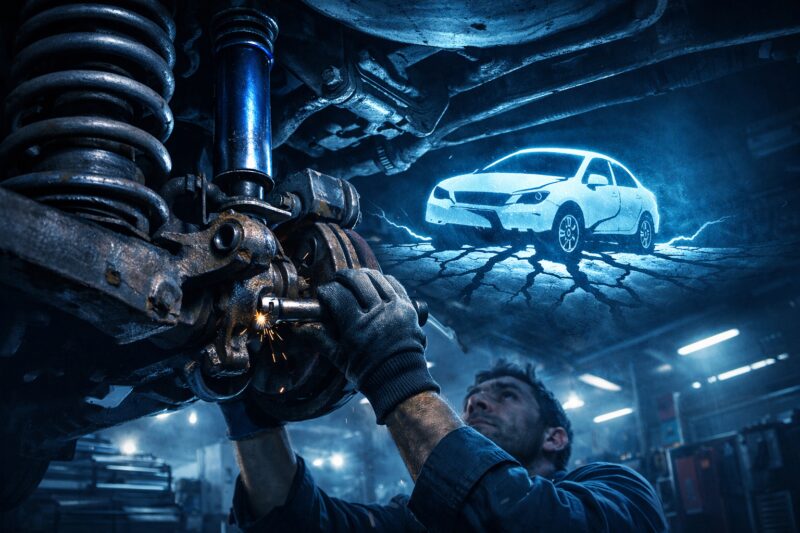
If your truck, Jeep, or off-road vehicle clunks over bumps, wanders on the road, vibrates, wears tires unevenly, or nose-dives under braking, something in the suspension or steering is usually loose, worn, or out of control. That can quickly turn into a safety risk and a costly alignment failure. In many cases, suspension repair starts with a qualified off-road shop inspection that diagnoses the true wear points instead of guessing. Once the shop identifies which joints, links, bushings, bearings, shocks, or steering components are failing, the repair plan becomes clear. You can then decide whether it’s safe to keep driving and schedule the right work with confidence.
For owners who tow, wheel, run larger tires, or drive rough roads, the suspension and steering systems work as one package. For example, worn tie rods can shift alignment under load. Worn shocks can change ride height and steering feel during braking. Meanwhile, vibration can come from wheel bearings or tire force issues that mimic suspension problems. A good inspection sorts these causes out early and helps prevent repeat visits and wasted parts.
Symptoms in suspension and steering usually point to specific failing components
Clunks, knocks, steering play, wander, vibration, and uneven tire wear are not random. They usually map to predictable weak points in the front end, steering linkage, and ride control. In practice, those symptoms often involve ball joints, tie rod ends, bushings, sway bar links, wheel bearings, and either steering gear or steering rack components.
Why this matters is simple. If you replace the wrong part, the new part can wear out fast or the vehicle can still feel unsafe. Meanwhile, if you keep driving with severe steering play, you can lose stability and worsen tire wear. Therefore, an off-road shop should connect your symptom pattern to measured movement and alignments, not just the complaint.
How the diagnosis works is different from “parts roulette.” Technicians start with a road test to confirm when the symptoms show up. Then they inspect component movement at rest and while loading the suspension. They also check for free play in the steering system. Finally, they measure alignment readings and verify that the steering wheel centers when the vehicle tracks.
For practical application, think about how your vehicle behaves. Does the clunk happen mostly over one type of bump? Does steering wander show up when braking or when you accelerate? Does vibration change when you turn the wheel? Those details help narrow what’s failing before the shop pulls components.
One tradeoff is that thorough diagnosis takes longer than “just replace worn items.” However, the upfront time often prevents paying for alignment twice or replacing parts that were never the root cause. For example, a worn wheel bearing can create a vibration that feels like front suspension trouble. If the shop skips checks and goes straight to ball joints, you may still have the same shaking after installation.
As an edge case, tire-related issues can mimic suspension symptoms. A road force imbalance or belt variation can create shaking at speed. Likewise, brake-related problems can cause a vibration that appears only during braking. That’s why a good off-road shop inspection verifies tires, brakes, wheel hubs, and steering play as a set. This is also why customers benefit from using an off-road truck repair checklist when they call a shop, so the technician hears the right symptom sequence.
If you need help finding a shop that will perform this kind of inspection rigorously, use a practical auto shop finder checklist. It can help you compare who documents findings and who simply recommends parts.
Clunks, knocks, and steering play often come from joints, links, and mounts
Loose or worn steering and suspension joints usually cause clunks and knocks. They also create steering play that you can feel as looseness at the wheel. Common sources include ball joints, tie rod ends, drag link or idler arm wear, and control arm bushings.
These parts matter because they control how loads travel from tires to the frame. When a joint has worn clearance, the suspension can shift before the wheel actually corrects. That shift creates the “knock” you hear over bumps. It also reduces steering precision, so the vehicle feels vague or wanders.
How shops check this is by measuring movement where the wear occurs. For instance, technicians inspect the components under lifting conditions and watch for excess play. They also compare left to right movement, since wear often starts on one side. Next, they do a steering linkage check to confirm whether the free play is internal to the joint or at the steering gear connection points.
In real-world scenarios, you might notice that the clunk gets worse when you brake hard then accelerate. That pattern can point to bushing compression and shifting geometry. It can also involve shock mounting and control arm compliance. A common mistake is blaming shocks for every knock. Shocks can contribute to ride instability, but clunks usually come from joints, bushings, mounts, or loose hardware.
Tradeoffs show up with aftermarket parts. Some replacement bushings and joints have different clearances than the original equipment. Therefore, the shop should confirm fitment and hardware torque after installation. Otherwise, you can end up with play that feels new but is actually mis-torqued or mismatched.
Deeper insight comes from how wear affects alignment under load. Steering play doesn’t always feel constant. It can feel “random” because suspension movement changes steering geometry as the vehicle rolls or brakes. Even if the steering wheel seems mostly centered, the vehicle may still drift because toe angle shifts with movement. That’s why measuring play at the component, not only at the steering wheel, is critical.
As a safety rule of thumb, steering play that increases with speed or steering input is a “fix soon” signal. If you feel vibration plus looseness, treat it as a limit-use warning. Continue only to reach the shop carefully, because a severe bearing or joint failure can escalate quickly.
Uneven tire wear signals alignment drift, worn geometry, or bearing and balance issues
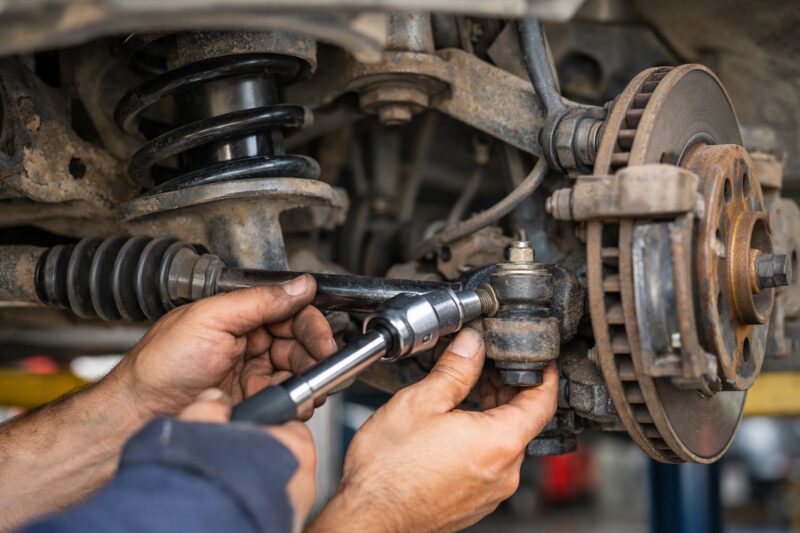
Uneven tire wear often means your suspension geometry is not staying stable. It can show up as inside-edge wear, outside-edge wear, feathering, or a one-sided pattern. While many owners jump straight to “I need an alignment,” worn suspension and steering parts can prevent an alignment from holding.
How it works is that toe, camber, and caster angles depend on stable components. Tie rod ends, control arm bushings, and ball joints all affect those angles as the suspension moves. If a component has play, the tires can track slightly differently from left to right. That difference wears rubber even if a shop performs an alignment adjustment.
Why it matters is money and control. Uneven wear shortens tire life and can also reduce grip. If you run a worn alignment for too long, the steering can develop a pull that feels stubborn. Then you may end up paying for tires, alignment checks, and additional parts.
For practical application, inspect the tire patterns and note the timing. Do you get more wear after off-road trips or lift-related changes? Does the pattern worsen after braking or turning? Those clues help a technician decide whether the root cause is toe instability, camber change, or wheel bearing issues.
Tradeoffs exist in the order of operations. Shops often need to correct suspension play first, then align the vehicle afterward. If you align before replacing worn tie rod ends or ball joints, the alignment can drift again quickly. Another limitation is that a “good alignment printout” does not always mean the vehicle is corrected. If there is ongoing component play, measurements can look acceptable at rest but still fail under real driving loads.
Deeper insight includes recognizing bearing and tire-force effects. A wheel bearing with subtle play can cause a one-spot or uneven wear pattern that resembles alignment problems. Meanwhile, road force imbalance can mimic steering instability at speed. That’s why a proper shop documents alignment readings after correcting play and also verifies tire condition before concluding the diagnosis.
Off-road nuance matters, too. Larger tires and lift angles can make toe and camber changes more sensitive. As a result, small bushing wear becomes more noticeable as steering wander and rapid wear. In that situation, repairing the underlying suspension and steering wear points is what lets alignment adjustments last.
Vibration that feels like suspension usually involves bearings, balance, brakes, or geometry
Vibration can feel like suspension trouble, but it often starts elsewhere. Wheel bearings, tire imbalance, brake rotor thickness variation, and road force issues can create shaking that resembles worn shocks or control arms. Therefore, the shop should isolate the source before replacing parts.
Why this matters is that vibration has multiple causes and they overlap. For example, a worn bearing can create noise plus vibration, and it can also change wheel load during cornering. That can make steering feel different, so owners assume the steering linkage is the culprit. Meanwhile, suspension geometry issues can cause vibration only at certain speeds or during steering input.
How isolation works in a good inspection is controlled testing. Technicians test vibration at specific speeds and observe whether it changes with steering angle. They also check brake pulsation separately from tire shake. Next, they inspect wheel bearings for play and verify tire condition and runout where appropriate.
In practical application, start with what you can safely note. Does vibration happen at one speed only? Does it show up during braking only, or does it continue when you coast? Does turning the wheel change the vibration pattern? Those observations help the tech avoid swapping parts blindly.
Tradeoffs come with “symptom guessing.” If a shop replaces shocks because the ride feels harsh, you might still have a vibration from imbalance or a bearing. Conversely, if the shop focuses only on tires, a worn control arm bushing might still be allowing movement that worsens comfort and steering control.
Deeper insight is recognizing how steering input can mask the origin. When you turn, weight transfers change loads on bearings and suspension components. That can temporarily reduce or amplify vibration. A weak check might miss that pattern and misdiagnose the root cause.
Finally, if you hear bearing noise or notice heat or worsening vibration, treat it as a limit-use situation. Get it to the shop safely as soon as possible. Continuing to drive can damage hubs, rotors, or wheel studs.
Shocks, struts, and bushings shape ride stability and steering behavior during braking
Shocks and bushings control how quickly the suspension settles after a bump or braking event. When they wear out, the vehicle can nose-dive under braking and feel unstable on rough pavement. Although that instability can feel like steering trouble, the root cause can be damping imbalance or worn control arm bushings.
How it works is that damping affects contact patch stability. If a shock loses its ability to control rebound or compression, the suspension can bounce and shift. That changes how the tires load and how the steering feels through turns. Bushings also matter because they allow or restrict movement between control arms and the frame.
Why it matters is safety and control. Nose-diving under braking reduces stability and can increase steering effort. It can also make the vehicle feel like it is slipping or pulling because the geometry changes under deceleration loads. Meanwhile, soft or cracked bushings can create delayed steering response and a “wandering” feel on highways.
Practical application includes looking for evidence beyond feel. A shop should inspect for leaking shocks, cracked bushings, and damaged mounts. They should also compare left and right corners. Mixed wear is common, especially on off-road trucks that hit uneven terrain repeatedly.
Tradeoffs come with replacing only one shock or one side. Sometimes owners choose the lowest-cost path. However, the vehicle may still feel off if the damping imbalance remains. A good shop explains the condition of each corner and recommends what restores predictable ride control.
Deeper insight includes drivetrain-load effects. Towing or carrying weight can expose damping weakness faster. You might notice symptoms change seasonally or after accessory installs. For example, adding a bumper or winch increases front loads, which can make worn bushings and shocks act worse.
When steering seems loose at the same time, don’t assume the damping problem is the cause. Loose steering often traces back to tie rods, ball joints, or steering linkage wear. A qualified inspection checks both systems so you don’t repair one while missing the other.
A practical decision path helps you know when to fix now or schedule soon
You can’t always predict the exact part failure, but you can judge urgency by symptom severity and progression. The safest approach is to treat steering looseness, wheel bearing play, and potential loss of control as “fix now” issues. Clunks that happen frequently and vibration that worsens with speed also deserve quick attention.
How to think through it is to group symptoms by risk. First, if you feel wheel wobble, significant steering looseness, or a grinding or roaring noise, limit driving and schedule immediate inspection. Second, if the vehicle tracks poorly or pulls strongly, it may be safe for short trips only. Third, if symptoms are mild but increasing, schedule soon because wear compounds.
Why this matters is cost control. A worn tie rod or ball joint can destroy tires quickly. It can also cause alignment to drift even after an adjustment. Meanwhile, ignoring wheel bearing play can lead to hub damage that costs more than suspension and steering repair alone.
For practical criteria you can use today, check steering free play at rest. If the steering wheel rotates more than a small amount before road wheels respond, treat it as a near-term repair need. Also note clunk frequency. If it happens every time you hit bumps, the clearance likely exceeds what’s acceptable.
In real-world scenarios, owners often wait until the next tire replacement. Sometimes that works if symptoms are stable. However, if wear patterns already show rapid uneven tire loss, you may pay more in the long run. Therefore, schedule inspection before you spend on tires, especially after a lift or tire size change.
Tradeoffs exist in diagnostic time. A complete suspension and steering inspection takes longer than quick guesses. Yet the detailed process reduces return visits. That matters when multiple components are linked, like tie rods affecting alignment and shocks affecting braking stability.
When booking, tell the shop your symptom list and key history. Share when it started, what changed, and how it behaves under braking and steering input. Also mention lift height, tire size, towing frequency, and any recent component replacements. That information helps the technician choose a more targeted path right away.
If you want a repeatable way to capture symptoms for the call, use an off-road truck repair checklist style note. It makes it easier for the shop to prioritize safety checks first.
What a strong inspection should include and what you should verify
A high-quality suspension and steering inspection produces more than “we checked it.” It should include a road test, a front-end component inspection for movement and play, and a measured alignment check. It should also document what’s within acceptable range and what is worn.
Why this matters is accountability. When a shop writes down findings, you can compare estimates and avoid surprise recommendations. It also helps the shop plan the right parts order. For example, if a ball joint and tie rod both have play, they should be addressed together so alignment can be corrected afterward.
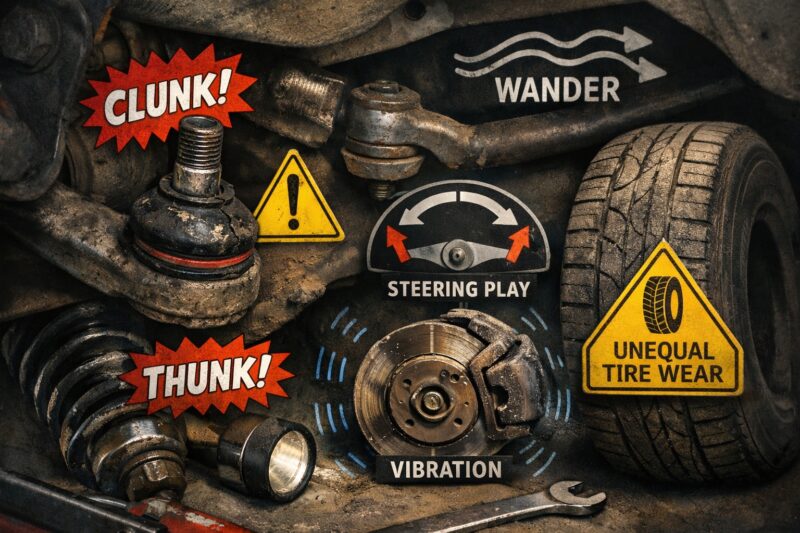
How a good inspection works is stepwise. Technicians start with symptom confirmation during a road test. Next, they inspect and verify play at steering joints and suspension bushings. Then they perform alignment measurements with the steering wheel centered and note any instability.
Practical application means you should ask what the inspection deliverables look like. Request measurements or at least documented readings. Ask for photos of wear when possible. Also verify whether the shop checked wheel bearings and tire condition, since those can mimic suspension issues.
Tradeoffs show up in communication. Some shops focus only on replacing parts. Others focus on measuring and explaining. The best ones tie parts plans to measured wear points and then map out aftercare. After linked repairs, alignment timing becomes part of the plan.
Deeper insight is that linked components often need a specific sequence. For example, replacing a worn tie rod can restore steering accuracy. Then alignment adjustment can hold longer. If alignment happens before the steering joints are corrected, the vehicle may drift again and you can pay again.
It also helps to share prior invoices or photos of new or recently replaced parts. That can speed up identification of wear patterns. It can also prevent mistakes where an already replaced component is blamed again.
If you’re searching for shops in your area, use a local near you suspension repair approach. Ask the shop what documentation they provide and whether they include a post-repair alignment plan when needed.
Repair choices for suspension and steering include replace, refresh, overhaul, or rebuild
Suspension and steering repair solutions fall into clear categories. Most owners choose replacement of worn OEM-style components for predictable drivability. Others choose a refresh approach, replacing bushings, joints, and links while keeping certain assemblies if they still perform within spec. For severe wear, a full overhaul may be required. In some steering systems, rebuild options may exist depending on gear type.
Why the choice matters is fitment and alignment stability. A worn steering linkage can keep undoing alignment corrections. If you replace only some parts, the remaining play can still cause drift. However, full overhauls can be overkill when only one corner has significant wear.
How tradeoffs show up in the repair plan is through compatibility and aftercare needs. If you install lift kits or off-road steering geometry parts, the vehicle may require more careful setup. Also, the alignment strategy may need to account for the vehicle’s new stance. Therefore, shops should explain what changes they expect and when alignment will be performed.
Practical application is choosing based on the measured wear location. If ball joints and tie rods have play, replacing those parts first often restores steering stability. If bushings are torn, replacing them can reduce delayed steering response and clunks. If wheel bearings are worn, bearings must be addressed since they can generate vibration and uneven wear.
One important limitation is mixed material and part hardness. Upgrading bushings with different stiffness can change noise, vibration, and harshness. The ride can become firmer. Steering feel may improve or become more “direct.” Either way, you should set expectations before approving work.
Real-world scenario: an off-road Jeep with a recent lift may develop wandering after tire changes. Sometimes the root cause is not the lift itself. Instead, a worn tie rod end or control arm bushing lets alignment shift under suspension travel. A proper repair choice includes correcting wear and then tuning alignment to the updated setup.
If you’re comparing options, ask about the parts categories and what each approach does for steering stability. That’s also where clear steering repair services communication helps, because the shop should specify whether steering gear, linkage, or both need attention.
Common misconceptions lead to repeat visits during suspension repair work
Many costly problems start with common misconceptions. One of the biggest is “it just needs an alignment.” Alignment can correct geometry at the moment of measurement. Yet if tie rods, ball joints, bushings, or steering linkages have play, the geometry can drift again under load.
Another mistake is “a clunk means shocks.” Shocks wear and affect ride stability, but clunks and knocks usually trace to joints, bushings, mounts, or loose hardware. Similarly, owners often assume “vibration always equals new tires.” Tire force or imbalance issues do cause vibration. Still, wheel bearings, brake rotors, and even steering linkage wear can create overlapping symptoms.
Why these misconceptions waste money is that they skip the measurement phase. If a shop jumps straight to parts, you may replace components that were never responsible. Then you pay again for alignment, diagnosis, or additional parts. A good shop documents wear and explains why it needs the parts it recommends.
Deeper insight also includes lift-related misunderstandings. Some people assume aftermarket lift parts automatically “fix steering issues.” In reality, lift changes the geometry and can increase stress on worn components. If steering links or bushings are already near failure, lift-related stress can exaggerate symptoms. The right approach is to address measured wear points and then set alignment properly for the new setup.
Practical application is to ask how the shop arrived at its recommendation. Request play checks, alignment measurements, and any documentation. If a shop cannot explain the wear mechanism, that’s a red flag.
Also, avoid authorizing work based only on a visual glance. Many failures show up only when loaded or moved through range. For example, a bushing may look “fine” until the vehicle is lifted and the control arm is loaded. Then the play becomes obvious.
Suspension and steering repair depends on parts, alignment scheduling, and inspection completeness
Repair timelines still depend most on parts availability and how much diagnosis confirms before parts are ordered. Some jobs complete quickly when common components are needed. However, steering and suspension repairs can expand once technicians disassemble and discover additional wear.
Why turnaround varies is that linked systems require coordinated work. For example, the shop may need to replace tie rods and control arm bushings. Then it must perform an alignment after those replacements. If alignment slots are limited, your repair may be staged to match scheduling.
How cost frameworks work is best understood by component categories. Repairs that address joints and links tend to differ from damping repairs or bearing replacements. Steering gear or rack-related repairs often require more labor and may involve additional parts. Wheel alignment also adds cost and timing. Therefore, you should compare estimates by what’s included, not just the total.
Practical application: ask for a written plan that separates diagnostic findings, parts replacement, labor, and alignment. Then compare quotes across shops with the same scope. If one shop includes alignment after repairs and another does not, totals can mislead you.
Tradeoffs show up with diagnostic fees and parts sources. Some shops offer thorough inspections with a diagnostic charge. That can reduce the chance of unnecessary parts replacement. Others may offer lower diagnostic fees but skip steps that prevent repeat visits. In the long run, skipping diagnosis often costs more.
Deeper insight is that estimate accuracy improves after inspection. Once components are removed, technicians can confirm whether parts beyond the first diagnosis are truly worn. That’s why shops may provide an initial estimate and then refine it after disassembly. If you want clarity, ask how the shop handles unexpected wear and whether it documents changes before additional work is authorized.
When comparing local options, ask about warranty terms and what’s covered. Also ask whether the shop plans a follow-up alignment after any steering or suspension component replacement. If you want to locate shops that handle this process well, consider using a auto shop finder checklist and a careful phone script.
Finally, if you’re searching specifically for a shop strategy like near you suspension repair, compare how they schedule alignment. A shop that delays alignment until after repairs typically helps ensure the corrected setup holds.
How much does suspension and steering repair cost, and what affects the price?
Suspension and steering repair pricing varies widely because the work scope depends on which components are worn and how many are linked to the symptom. Most shops set cost based on parts, labor time, alignment needs, and any additional repairs found during inspection.
Why it matters is that “rough estimates” can hide big differences. Two vehicles can both “clunk,” but one needs a single tie rod end while another needs multiple joints, bushings, and a steering linkage refresh. Likewise, vibration complaints can involve wheel bearings, tires, brakes, or suspension parts that mimic each other.
How to think about cost drivers is by category. Joints and links typically cost less than steering gear service or rack-related repairs. Shocks and bushings differ in price and labor because of access and side-to-side condition. Wheel bearings add their own parts and labor. Alignment cost can also vary, especially if the shop performs alignment after staged repairs.

Practical application is to request a detailed estimate that separates diagnostic findings from parts and labor. Ask which components are included and which are “watch items.” Also ask whether alignment is included or scheduled after parts replacement. That prevents surprises and helps you compare shops fairly.
Tradeoffs or limitations exist because some shops can only finalize the scope after removing parts. If the shop discovers additional wear during disassembly, the estimate can change. However, a reputable shop should discuss options before doing extra work.
Real-world scenario: an owner orders new tires because the old ones wore unevenly. If tie rods and ball joints had play, the new tires may start wearing fast again. Spending on tires first can increase total cost. That’s why an inspection and plan often save money even if diagnostic time adds a little upfront expense.
Deeper insight is that parts sourcing affects pricing too. OEM parts, aftermarket parts, and remanufactured steering components can cost differently. You may also see variations depending on whether the shop stocks parts locally or orders them.
How much does suspension and steering repair cost?
Cost varies based on the components found, the vehicle’s front or rear suspension layout, and whether steering linkages, wheel bearings, or shocks need replacement. Most quotes also depend on labor time and how alignment is handled after repairs. Ask for a written estimate by component category and confirm whether alignment is included.
Typical pricing ranges can’t be stated accurately without knowing the exact wear points and parts source. A qualified off-road shop can usually narrow the estimate after a road test, inspection, and initial measurements.
How long does suspension and steering repair take, and when can I drive again?
Repair timelines depend on diagnosis depth, parts availability, and alignment scheduling. Some jobs can complete quickly if the worn parts are common and immediately available. Other jobs take longer because linked components require sequential replacement before alignment can be performed.
Why this matters is planning and safety. If a steering component has major play, driving “until later” can create additional damage. Meanwhile, if the shop needs an alignment slot after repairs, your vehicle may stay in the shop for a short waiting period.
How turnaround typically works is straightforward. First, the inspection identifies the wear points and confirms symptoms. Next, the shop orders parts if needed and schedules labor for disassembly and replacement. Finally, the shop performs alignment after all relevant suspension and steering repairs are completed.
Practical application is to ask what your shop’s schedule looks like for alignment. Also ask whether they can install parts and complete alignment in one visit or if it must be staggered. This is especially common when shops coordinate alignment with other repair bays.
Tradeoffs or limitations exist when multiple systems are worn. For example, a job that involves ball joints, tie rods, and wheel bearings may take longer than one that only involves replacing worn shocks. Additionally, off-road parts setups can sometimes require extra time to ensure fitment and correct geometry.
repairs can reveal additional wear after disassembly. That can extend timelines even if the initial plan was clear. A good shop communicates changes and asks for approval before continuing.
For owners comparing local shops, ask for an expected timeline range based on your inspection results. If you’re searching with the phrase near you suspension repair, call two shops and compare how they handle alignment scheduling and parts lead times.
How long is the turnaround time for suspension and steering repair?
Turnaround time typically depends on whether parts are in stock and when alignment can be scheduled after repairs. Simple component replacements may be completed in a few days. More complex repairs that involve multiple linked parts and steering gear or bearings can take longer.
Ask the shop for a realistic range after the inspection. Also confirm whether alignment is included and whether it requires a separate appointment.
Frequently asked questions about suspension and steering repair
How urgent is it if my truck clunks or knocks over bumps but the steering feels mostly normal?
Clunks usually mean a joint, bushing, or mount has developed clearance. Even if steering feels “mostly normal,” that clearance can worsen and change alignment under load. If the clunk is frequent, schedule an inspection soon so the shop can identify the worn component.
Can I drive a Jeep with steering wander after installing new tires and a lift?
Sometimes steering wander after tires and a lift is caused by geometry changes and alignment that does not match the new setup. However, wander can also reflect worn tie rod ends, loose steering linkage, or bushings that were stressed by the lift. Limit driving and get an inspection if wander is strong or getting worse.
What causes uneven tire wear when the alignment shop says the measurements look fine?
If suspension or steering components have play, alignment can look acceptable during a stationary measurement. Under driving loads, toe and camber can shift, creating uneven wear. A shop should verify ball joints, tie rods, control arm bushings, and wheel bearings before trusting alignment alone.
Why does my vehicle vibrate only when I brake, and could it be suspension?
Vibration during braking is often linked to brake rotor issues like thickness variation or uneven surface condition. Still, worn suspension bushings and control arm components can worsen steering feel during braking loads. A good shop isolates brake vibration separately before ordering suspension parts.
Is a wheel bearing problem sometimes mistaken for suspension repair?
Yes. Wheel bearings can cause vibration, wander, and uneven tire wear patterns that resemble suspension problems. The shop should check bearing play and hub condition and compare both sides before replacing suspension components.
When should I replace tie rods or ball joints instead of just adjusting alignment?
Replace them when tests show play at the component or when boot damage suggests imminent failure. If measurements change after correcting steering linkage play, alignment adjustment alone will not hold. Condition-based replacement helps keep steering stable and prevents repeat alignment drift.
How does off-road use change suspension and steering repair intervals?
Off-road impacts raise the load cycles on joints, bushings, and shocks. Towing and heavier front-end accessories can expose damping and geometry weaknesses sooner. As a result, symptoms can appear sooner than on highway-only vehicles.
Will replacing shocks fix nose-diving under braking if my steering feels loose?
Shocks can reduce nose-dive, but loose steering usually comes from joints, tie rods, or steering linkage wear. Fixing only damping may not restore steering precision if the steering system still has clearance. The shop should address both systems because they interact under braking loads.
Ask what the inspection includes, what findings they documented, and whether alignment is planned after component replacement. Request a written estimate by component category and confirm parts source and warranty coverage. Also ask how they handle unexpected additional wear once parts are removed.
How do shops decide between a steering rack repair and replacing the steering system?
Shops decide based on measured wear, the steering system’s design, and whether rebuildable components still meet performance needs. They also consider leaks, internal damage, and how play changes with testing. A proper diagnosis prevents paying for a rebuild when replacement is the safer long-term solution.
Conclusion: choose repair based on measured wear points, then align correctly for lasting control
Suspension and steering problems usually trace back to specific worn areas like ball joints, tie rods, bushings, wheel bearings, shocks, and steering gear or rack components. When you experience clunks, wander, vibration, uneven tire wear, or nose-dive under braking, a qualified off-road shop inspection should connect your symptom pattern to measured movement. That is how suspension repair becomes a focused fix rather than guesswork.
Use the decision path to prioritize safety threats first, then schedule repairs based on how quickly symptoms worsen and how much tire wear and control are affected. Ask for an inspection that includes road test notes, component play checks, and alignment readings tied to repair sequence. That helps prevent repeat visits and protects the money you spend on tires and parts.
When comparing local shops, focus on how they document findings, how they plan alignment after linked repairs, and how they handle parts sourcing and warranties. If you’re searching with near you suspension repair, call and ask how they structure diagnosis and what aftercare they provide. Bring your symptom history, including when it started and any lift or tire changes, so the technician can narrow the wear points faster.
If you want a structured way to gather details for the call, start with an off-road truck repair checklist and ask for a findings-based parts plan. That’s the most reliable way to move from symptoms to a safe, predictable repair outcome.
Updated September 2026