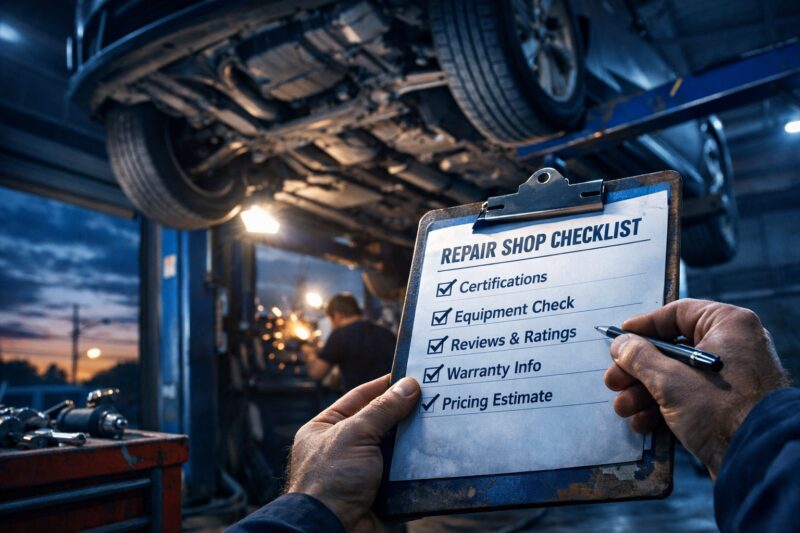
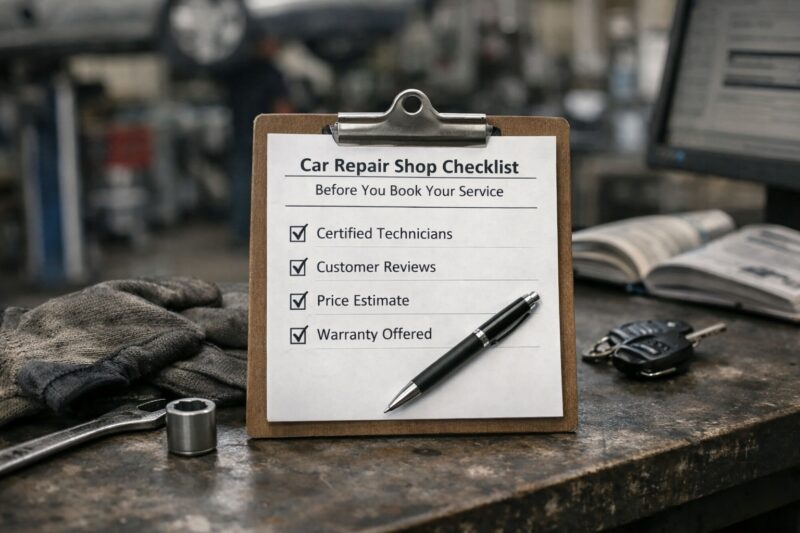
Before you book, use this practical checklist with any Car Repair Shop to reduce risk, avoid surprises, and confirm you’re paying for the right work at the right time. In 2026, repairs are more complex (advanced sensors, software, and integrated electrical systems), labor and parts costs are higher, and it’s easier for two shops to produce “different” estimates—sometimes for preventable reasons.
Below is a booking-ready Car Repair Shop checklist you can use on the phone, by text, or in a written message. It’s designed to verify capability (can they do the job), clarity (what exactly they will do and for how much), and protection (a paper trail you can reference if anything doesn’t go as expected). If you follow it, you’ll know what to ask, what “done right” looks like, and what should be documented before you approve repairs.
Top 10 questions to ask before booking a Car Repair Shop
Before you schedule, ask targeted questions that confirm fit, scope, and protection. The goal is to avoid paying for guesswork and to ensure the shop’s plan matches your vehicle’s symptoms—not just a generic “we’ll diagnose it” promise.
Why it matters in 2026: more vehicles require software-aware diagnostics, many repairs involve calibrations or sensor relearns, and parts pricing can swing based on OEM versus comparable aftermarket sourcing. When questions are vague, shops may broaden scope on the fly, and you may see estimate variance later. The top questions below help keep the work plan and costs aligned from the first call.
How these questions work: you’re not interrogating the shop—you’re forcing clarity. You’ll request the minimum viable information the shop needs (VIN, mileage, symptom pattern) and confirmation of their diagnostic approach (what they test first, and what triggers deeper diagnostics). You’ll also ask how they structure estimates and how changes will be communicated. If a Car Repair Shop can’t answer clearly, you learn something important immediately: how they operate when uncertainty appears.
Practical application: use this sequence when you contact two or three Car Repair Shops. First confirm they can handle your vehicle system (capability), then confirm the diagnostic-to-repair pathway (clarity), then confirm warranty and documentation expectations (protection). Common limitation: some issues are truly unpredictable at the start; however, a reliable shop can still provide a test plan and a time limit for initial diagnostics before escalating spending.
Real-world scenario: you get a check-engine light plus intermittent misfire. A trustworthy shop explains how they’ll verify whether the fault is cylinder-specific, whether wiring/connectors are suspect, and what evidence they’ll collect before recommending internal engine work. That reduces the odds of paying for tear-down that ends up unnecessary. For the deeper “how to compare” piece, see the guidance in the “Choose the Right Service Checklist” resource: https://nrtoffroadperformance.com/auto-repair-shop/.
What should the Car Repair Shop ask you for before they quote?
A booking-ready Car Repair Shop should request specific vehicle and symptom details before quoting or scheduling diagnostic work. If they only ask “what’s wrong” and skip the basics, your estimate is more likely to become a moving target.
Why it matters: labor time and parts selection depend on your exact vehicle configuration (engine/transmission variants, emissions equipment, and wiring harness design). In 2026, two vehicles with the “same” symptom can require completely different diagnostic sequences due to sensor revisions, software versions, and integrated modules.
How it works: the shop builds an initial context using the minimum viable information. Practical examples include VIN, current mileage, when symptoms began, how often they occur, and any warning lights or messages. They should also ask whether any prior work was performed and whether aftermarket parts were installed (especially sensors, batteries, engine mounts, or tuning modules). That information affects both diagnostic strategy and parts sourcing.
Practical application: provide a concise symptom timeline and include any pattern you’ve noticed. If the issue is intermittent, note the conditions (cold start only, during acceleration, after rain, only in certain gears, or only at highway speed). Mention prior scan results if you have them, and whether the codes have returned after clearing. A reliable shop will respond with a diagnostic plan, not just a guess.
Deeper insight (edge case): if your vehicle was recently repaired elsewhere, the shop should ask for RO numbers or at least the work performed and parts used. Common mistake: failing to disclose recent work can lead to redundant diagnostics or even mismatched connector repairs. What most guides get wrong is treating “more information” as always better—your goal is actionable detail, not a long story. For additional pre-booking checks, use “Find a Reliable Mechanic Checklist”: https://nrtoffroadperformance.com/mechanic-shop/.
How do you confirm the diagnostic approach before approving repairs?
You confirm the diagnostic approach by asking what they test first, what they look for next, and how results trigger deeper work. A proper diagnostic plan is usually measurable, documentable, and time-bounded.
Why it matters: in complex drivability and electrical problems, it’s easy to spend hours replacing parts without verifying root cause. In 2026, that problem is intensified by software diagnostics and module networking, where a “symptom fix” can temporarily mask the true fault. Without an approach, the shop may jump to expensive components or broad tear-down.
How it works: a strong shop starts with verification and elimination. For example, they should confirm whether codes are current, inspect wiring/connectors related to the failing circuit, and check for underlying causes like vacuum leaks, sensor supply voltage issues, fuel pressure anomalies, or mechanical constraints—before recommending internal repairs. They should explain what evidence they’ll provide (live data, freeze frame, resistance/voltage readings, scope traces, or visual findings with photos).
Practical application: ask them to describe their diagnostic flow in plain language. Request that they define the “if/then” points: what result would lead them to test further, and what result would stop the process. Also ask how they report findings—do they call you with live data summaries, provide an inspection sheet, or show the specific code-to-system relationship? For intermittent faults, ask how they’ll attempt to reproduce the issue safely.
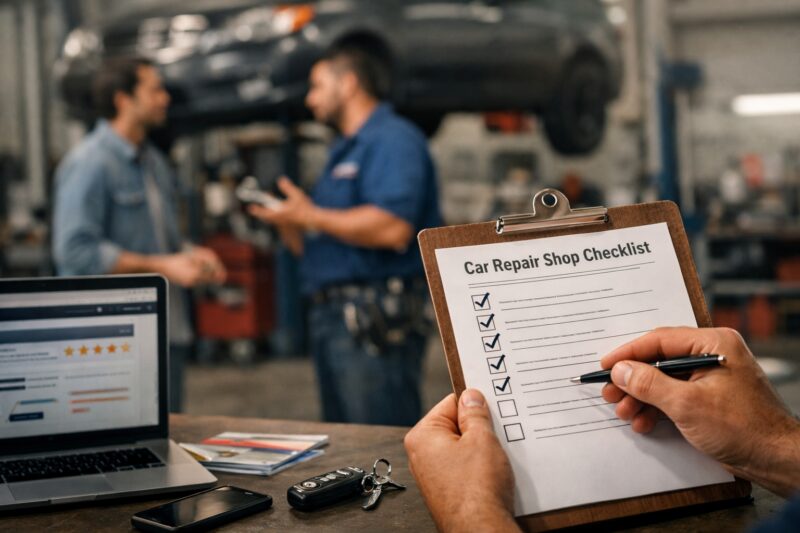
Tradeoffs and limitations: diagnostics-first can cost more up front, but it often prevents redo labor and unnecessary part replacement. The limitation is that no diagnostic plan guarantees certainty before it runs enough tests—your protection is a written time limit and a staged authorization policy. Common mistake: assuming diagnostics are free. Many shops charge a diagnostic fee but apply it toward approved repairs; confirm the policy in writing.
For process selection that matches your symptoms, connect this with the “Choose a Trusted Mechanic” guidance: https://nrtoffroadperformance.com/vehicle-repair-shop/.
What does “booking-ready” mean for timing, parts ordering, and turnaround?
Booking-ready means the shop can confirm availability, an appointment duration, how quickly they can order parts, and realistic turnaround windows. If they cannot provide any timeframe at all, you’re likely to face scheduling gaps and unclear expectations.
Why it matters: parts availability and labor scheduling affect your real cost of downtime. In 2026, OEM parts may require ordering based on VIN and may include extended lead times for sensors, modules, or calibration-capable components. Meanwhile, backlog fluctuations can change how quickly they can start diagnostics and how long you wait for approval decisions.
How it works operationally: booking-ready shops align three timelines—when they’ll receive the vehicle, when diagnostics can be completed, and when parts can be installed. They should explain their process for parts procurement (in-stock, next-day order, or VIN-specific lead times) and whether they’ll reserve parts once you approve. They also should specify the expected diagnostic time range and when you’ll receive an update.
Practical application: ask for the expected appointment length (for example, diagnostic appointment vs. repair appointment). Then ask for a turnaround range with scenarios: “If parts are in stock, we can complete within X; if not, it becomes Y.” Request whether they communicate via phone, text, or email and how frequently you’ll get updates during the diagnostic and repair phases.
Deeper insight (intermittent issues): if the symptom is intermittent, ask them to set expectations about diagnostic time limits up front. A common failure mode is “we’ll keep it as long as needed” without clear authorization boundaries. If they can’t reproduce the problem quickly, they should still provide a test summary and a plan for next steps—often requiring incremental approvals.
Practical tradeoff: requesting strict timelines can sometimes reduce flexibility if a job unexpectedly expands, but a good shop will communicate change orders instead of silently extending labor. For a broader checklist approach, use “Choose the Right Service Checklist”: https://nrtoffroadperformance.com/auto-repair-shop/.
How do you prevent surprise charges at the Car Repair Shop from the estimate?
Prevent surprise charges by requiring a written estimate that breaks down labor, parts, taxes/fees, and inclusions/exclusions—and by defining how changes become authorized. A vague estimate is one of the most common ways costs inflate.
Why it matters: two estimates can both be “reasonable” while still differ sharply due to parts type (OEM vs. aftermarket), shop supplies, disposal fees, or whether diagnostics are included. In 2026, labor hours may also include time for software procedures like module relearns, security steps, or calibration routines that aren’t obvious from the symptom alone.
How it works: a high-transparency estimate includes components you can compare. You should ask for an itemized breakdown of labor hours, parts pricing (including whether it’s OEM, OEM-equivalent, or aftermarket), taxes, and any standard fees (shop supplies, disposal, hazardous waste handling). Then require a written scope definition that states what is included and excluded.
Practical application: confirm whether diagnostics are billed separately, whether tear-down is included, and whether test drives or reassembly checks are included. Also ask about environmental disposal fees for fluids or catalysts where relevant. You should receive enough detail to evaluate what work is being proposed rather than just a total number.
Deep clarification: estimate vs. estimate binding. Many shops provide estimates that are not legally binding as final totals if conditions change (for example, hidden damage found after tear-down). What you want is a change-order workflow: when a new component is discovered, they should contact you before proceeding and explain the reason, labor impact, and cost impact.
Common mistake: comparing two shops by total price only. Compare like-for-like diagnostic strategy, same parts type, same warranty duration, and the same priority order of repairs. For aligned selection across providers, see the category comparison in “Options & alternatives: how to compare categories of service providers” later in the article.
How do you compare multiple estimates fairly?
Compare estimates fairly by matching scope, diagnostic strategy, parts specification, warranty terms, and authorization thresholds—not by price alone. When the “apples” differ, the “totals” are meaningless.
Why it matters: estimate variance often comes from what each shop chooses to include. One shop may price a conservative path, another may propose multiple “could be” items, and a third may include diagnostics under the repair line. In 2026, even small differences in parts sourcing can change both performance and warranty coverage.
How it works: you request a structured comparison. Ask each shop to explain whether they’re proposing OEM parts or comparable aftermarket parts, how they’ll diagnose before replacing, what warranty covers (parts and labor), and what conditions might trigger additional authorization. If possible, request the same tiered plan: a baseline fix and optional deeper repairs if test results confirm additional faults.
Practical application: insist on a consistent diagnostic strategy. For example, if you’re getting a quote for a sensor and a module, ask whether they confirmed wiring integrity, supply voltage, and module communication first. Then ask how they’ll handle results that contradict the initial assumption.
Deeper insight (edge case): “could be” listings can be a trap if a quote lumps uncertain components into a single price. What many guides get wrong is advising shoppers to “just choose the cheaper one.” Instead, ask for a tiered A/B/C plan tied to test results, and ask which items are conditional versus confirmed. This reduces the risk of paying for parts that aren’t actually needed.
Real-world scenario: you have an electrical complaint with multiple codes. A transparent shop quotes a first tier that includes inspection and targeted replacement only if test results confirm a specific circuit failure, then quotes tier two only if diagnostics show module-level faults. That prevents rework cycles and repeated labor.
What quality and trust signals should you look for in a reliable Car Repair Shop?
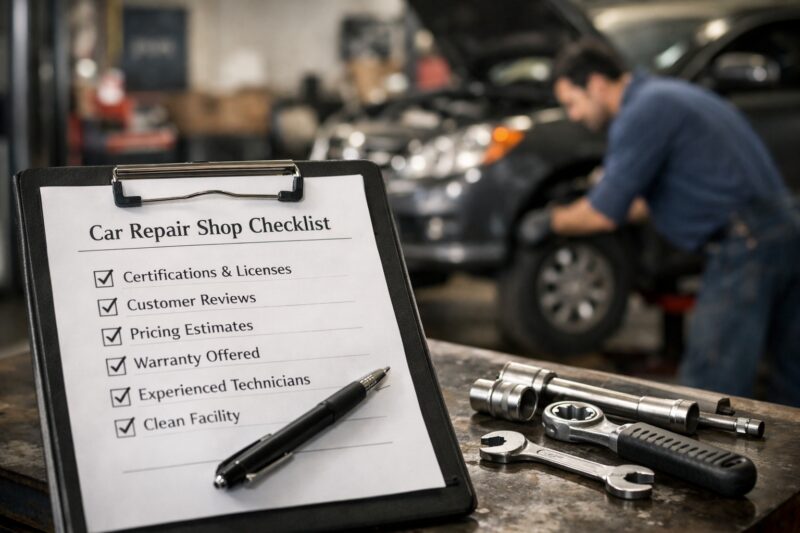
Look for trust signals that show process, transparency, and warranty clarity—not just friendliness or a low initial quote. A reliable Car Repair Shop can explain what they found, what they measured, and why they chose a particular repair.
Why it matters: customers cannot easily verify technical correctness before the work is done. In 2026, trust depends on the shop’s documentation habits and how they handle uncertainty, because advanced vehicles can require steps that are invisible to the driver (software updates, calibration routines, and sensor learning procedures).
How it works: credibility signals include appropriate certifications where relevant, years in business, clear ownership/contact information, and published service categories. More importantly, process evidence matters: technician notes, standardized inspection sheets, before-and-after documentation, and a clear post-work explanation tied to test results.
Practical application: ask whether they provide photos/video of findings, whether they document parts installed with part numbers or receipts, and whether they keep a record of test readings. Confirm how warranty works: duration, coverage specifics (parts and labor separately), and the claim process. Also ask if warranty transfers if you sell the vehicle.
Deeper insight (red flags that undermine trust): vague diagnosis without measured evidence, pressured upsells without showing why, refusal to provide written scope, and inconsistent warranty explanations. Another red flag is unclear communication frequency—no updates after diagnostic work or no explanation if parts arrival is delayed. Common mistake: assuming “dealer-level” trust automatically because a shop is nearby; location does not replace documentation. For additional selection criteria, you can build on “Find a Reliable Mechanic Checklist”: https://nrtoffroadperformance.com/mechanic-shop/.
What questions should you ask on the phone or after hours before booking?
Use a short call script that forces diagnostic clarity, parts selection transparency, and written estimate terms before you approve anything. In a fast pre-book conversation, you’re trying to confirm the shop’s operating style, not just schedule a visit.
Why it matters: many problems show up during diagnostic work—additional codes, conflicting fault history, or hidden damage after tear-down. In 2026, if the shop’s communication style is unclear from the start, you’re more likely to face rushed approvals or surprise changes.
How it works: start with a 30–60 second explanation of your symptoms and ask how they diagnose before quoting repairs. Then ask about diagnostic fee policy, deposit requirements, and whether any diagnostic results are credited toward the approved repair. Request clarity on parts selection: whether they use OEM, OEM-equivalent aftermarket, or remanufactured options, and when each is recommended.
Practical application: ask about logistics and updates. Do they offer loaner/rental or shuttle/towing coordination? When will you receive your first status update? If they need to keep the car overnight, ask what triggers overnight storage and what authorization you’ll receive before further work.
Deeper insight (edge cases): if your vehicle has aftermarket modifications, ask how they handle conflicting codes from prior scans and whether those modifications affect diagnostic reliability. Also ask how they proceed when multiple modules report symptoms that may share a single root cause. Common mistake: not asking about the refund/credit rules if you decline repairs after diagnostics. Get it in writing so you understand what you pay for and why.
For additional decision-making support, use the same tone and structure described in “Choose a Trusted Mechanic”: https://nrtoffroadperformance.com/vehicle-repair-shop/.
How do you choose the right service path: maintenance, inspection, diagnostics-first, or repair-first?
Choose the service path based on symptoms severity, certainty, and urgency: maintenance/inspection for predictable wear, diagnostics-first for drivability and intermittent faults, and repair-first only when the cause is highly likely. A good Car Repair Shop can recommend a path that fits your risk tolerance and time constraints.
Why it matters: the wrong path can waste money. In 2026, intermittent faults often require data logging and careful verification before parts replacement. Repair-first approaches can be faster but increase redo risk if the initial assumption is wrong.
How it works: diagnostics-first is best when you have warning lights, poor drivability, stalling, or repeating intermittent codes that don’t behave consistently. Inspection with limited scope can be sufficient for straightforward symptoms like worn brake pads if the wear is visible and measurable. Maintenance or pre-purchase inspections focus on inspection outcomes rather than symptom resolution.
Practical application: ask for a clear definition of success criteria before approval. For complex problems, “success” might mean stable voltage readings within tolerance, no reoccurrence of a specific code over a defined drive cycle, or verified mechanical health after reassembly. Also ask the shop to state what would make them stop and what would make them continue.
Tradeoffs and limitations: diagnostics-first can cost more upfront but reduces repeated tear-down. Repair-first can reduce time to partial improvement, but it should come with strict authorization discipline and clear boundaries. Common mistake: requesting only speed without diagnostic clarity, then expecting certainty afterward.
Special cases that change process: salvage-titled vehicles, recurring repairs, known component wear patterns, and emissions-related systems often require specific test procedures. Define the “finish line” so you aren’t paying for labor that doesn’t resolve the underlying failure mode.
What advanced questions protect you for complex repairs, warranties, and liability?
Protect yourself by clarifying warranty boundaries, comeback handling, documentation requirements, and approval rules for staged work. Complex repairs often involve more variables than a standard “parts replaced, done” scenario.
Why it matters: in 2026, many expensive faults are electrical, software, or calibration-dependent. When symptoms persist or return, the question becomes whether the shop’s warranty covers the original cause or only the replaced part. If documentation is missing, warranty claims can stall.
How it works: ask whether the shop treats comebacks as a warranty claim tied to the original repair authorization, or if they require new diagnostics fees each time. Require that they specify whether warranty coverage includes parts, labor, or both—and whether warranty coverage differs for certain components like sensors, batteries, or remanufactured parts.
Practical application: request the claim process: who to contact, required receipts or inspection notes, and expected timelines for follow-up diagnosis. For expensive failures (electrical gremlins, internal engine/transmission faults, or sensor calibration/learning needs), ask what tests or calibration steps are required to consider the repair complete. Also ask how they handle authorization if they discover a second failure mode.
Deeper insight (edge cases): conflicting advice from prior shops or multiple code interpretations is common. Ask how they reconcile prior scan history—do they verify with current codes, freeze frame data, and measured test results? Another important concept is authorization discipline: approve work in stages (Tier 1 inspection/repair, then Tier 2 only if a defined test confirms next steps). What most guides get wrong is focusing only on warranty length, not on how warranty coverage is triggered and proven.
For broader protections and selection planning, consider how process clarity ties back to choosing a reliable shop category later in the article.
What common mistakes do people make before booking a Car Repair Shop?
Common mistakes include accepting vague verbal quotes, skipping the diagnostic conversation, and failing to document findings and approvals. These errors increase the chance of unnecessary labor, repeated visits, and “estimate drift.”
Why it matters: customers often believe the biggest risk is the price. In reality, the bigger risk is uncertainty—unclear scope, unclear diagnostic boundaries, and unclear warranty terms. In 2026, uncertainty grows because software and integrated systems can produce multiple related symptoms and codes.
How these mistakes happen: a low verbal quote may be based on assumptions that aren’t written down. If you don’t confirm the diagnostic plan, a shop may discover additional issues and start additional labor without a clear step-by-step authorization path. If the shop doesn’t provide measurable outcomes, you cannot tell whether the repair “worked” beyond symptom disappearance.
Practical application: insist on written scope that states included/excluded steps and parts sourcing type. Request before-and-after photos or videos, inspection notes, and a receipt that shows part numbers and labor performed. If an issue is intermittent, ask for a diagnostic test plan and evidence of reproduction attempts.
Deeper insight (misconception): “the cheapest shop wins” is rarely true. The cheapest total can be expensive when it leads to redo labor or partial fixes that don’t resolve the root cause. Evaluate total value: reliability, warranty quality, redo risk, diagnostic time limits, and turnaround realities. If a shop refuses to clarify warranty exclusions or communicates inconsistently, it’s not a bargain—it’s a risk.
Options & alternatives: how to compare categories of service providers
Compare service categories by matching your vehicle’s needs to the provider’s strengths in diagnostics, parts sourcing, and documentation—not by brand reputation alone. Different types of Car Repair Shop providers can be equally good, but they excel in different scenarios.
Why it matters: in 2026, vehicle complexity varies widely by make/model, and some repairs require specific calibration workflows or OEM-level procedures. The “best” category depends on whether you need specialized systems support, strict OEM compliance, or flexible aftermarket sourcing paired with strong documentation and warranty terms.
How comparison works: look at diagnostic approach, parts procurement policy, warranty structure, documentation habits, and communication reliability. Also check whether they subcontract any specialized work (especially for calibrations, emissions diagnostics, or module-level repairs). A provider that advertises “all makes/models” may still outsource the critical portion.
Practical application: when you’re dealing with specialized systems (advanced driver-assist systems, complex emissions components, or module calibration), dealer service departments can be stronger due to OEM tooling and procedure access. Independent shops may offer better flexibility, often with faster scheduling or more customized diagnostic plans for older vehicles or non-OEM parts preferences. Fleet-oriented repair facilities can be strong for repeatable failures and high-volume logistics. Mobile/mechanic Services can be excellent for convenience or initial inspections, but they may have limited workspace or equipment for software calibration and advanced diagnostics.
Tradeoffs and limits: dealer coverage for OEM-specific systems can be a clear advantage, but dealer estimates may be higher and time windows may be longer. Independents can be more cost-flexible, but you must verify that they follow the correct diagnostic steps and provide calibration evidence if needed. Mobile convenience can reduce downtime, but some repairs still require shop-based testing and specialized tools.
Deeper insight (performance vs OEM-equivalent parts): if you want “OEM-equivalent,” ask for the exact parts strategy and warranty implications. Protect yourself by requiring part numbers (or VIN-specific fit confirmation), receipts, and written warranty terms. This aligns with the same transparency criteria used to evaluate any “Car Repair Shop” before booking, and it reduces conflict about what was installed and why.
After you compare categories, it helps to build your final contact plan around a structured “Choose the Right Service Checklist” workflow: https://nrtoffroadperformance.com/auto-repair-shop/.
How do you find a Car Repair Shop near you safely?
Find a Car Repair Shop near you by using local search filters, verifying service capabilities, and confirming parts lead times and subcontract policies before you book. Avoid relying solely on star ratings; look for patterns in what customers describe.
Why it matters: “near you” intent usually comes with urgency—tickets, inspections, commute disruption, or time-sensitive repairs. In 2026, local parts lead times and shop backlogs can differ dramatically by region and season, and those differences directly affect your cost and turnaround.
How it works: use local listings to shortlist providers, then verify the shop’s service radius, towing partnerships (if applicable), and their ability to handle your drivetrain type (AWD/4WD) and vehicle class. Confirm access details like parking and bay entry for low-clearance vehicles or larger trucks. Ask whether they can handle your exact vehicle system (for example, emissions, hybrid components, transmission service, or ADAS calibration).
Practical application: when you contact shortlisted shops, ask what lead time they expect for the specific parts category your repair requires. Also ask about their backlog: when could they start diagnostics, and how quickly do they update you? Use written confirmations to reduce mismatch risk.
Deeper insight (location mismatch risk): a shop might advertise “all makes/models” but subcontract key repairs. If the critical work is outsourced, request where it happens, who performs it, and how warranty coverage is managed across the primary shop and the subcontractor. Common mistake: assuming the closest provider is best. Proximity matters, but documentation and capability matter more.
To evaluate local providers methodically, tie your search to the “Find a Reliable Mechanic Checklist” process: https://nrtoffroadperformance.com/mechanic-shop/.
Top questions about Car Repair Shop checklist before you book your service
What should I ask a Car Repair Shop before I approve any work?
Ask for a written scope that lists what’s included and excluded, the diagnostic approach, and the parts type (OEM, OEM-equivalent, or aftermarket). Also ask how changes are handled if they discover additional issues, including whether they contact you for authorization before proceeding. Finally, confirm warranty coverage details for both parts and labor and how comebacks are processed.
How do I compare two repair estimates that don’t match exactly?
Compare them by scope first: labor hours, diagnostic inclusions, parts specifications, and exclusions. Confirm whether each quote uses the same diagnostic strategy and the same type of parts, then compare warranty terms and the repair priority order. If one quote includes “could be” items, ask for a tiered A/B/C plan tied to test results.
Is a diagnostic fee applied toward the repair cost?
Many Car Repair Shops apply the diagnostic fee to approved repairs, but policies vary by shop and by vehicle issue type. Ask whether it is credited, whether the diagnostic results are documented, and what happens if you decline repairs after diagnostics are performed. Get the refund or credit rules in writing.
How can I confirm whether OEM parts are really being used?
Ask the shop to list part numbers and to confirm VIN fitment, then request receipts showing what was ordered and installed. If they use OEM, they should be able to state the sourcing method and the exact part references. Also confirm what the warranty says about parts sourced as OEM versus OEM-equivalent or remanufactured.
What does “warranty on labor” mean at a Car Repair Shop?
Warranty on labor typically means the shop will re-perform covered labor if the original repair fails within the stated time or mileage limit. Ask whether coverage applies to related parts of the original repair and how they determine whether a comeback is related. Request the claim process steps and what documentation you must provide.
Can I bring my own parts to a Car Repair Shop?
Some shops will install customer-supplied parts, but they may limit warranty coverage or require specific fitment documentation. Ask whether you’re responsible for fitment and whether the shop’s labor warranty still applies. Confirm whether they will handle diagnostics normally or treat customer-supplied parts as a condition for service limitations.
Should I choose a dealer or an independent shop for the same repair?
Choose a dealer when OEM-specific procedures, OEM tooling, or strict compliance is important for your vehicle system. Choose an independent shop when you want flexibility, transparent diagnostic plans, and potentially faster scheduling. In either case, confirm diagnostic strategy, parts sourcing, and warranty documentation before authorizing work.
What should I do if the problem comes back after the repair?
Contact the shop promptly and reference the original work order and documented test results. Ask them to open a comeback/warranty claim and explain what diagnostics they will repeat to determine root cause. Keep receipts, approval messages, and any before/after notes, since documentation often determines warranty outcomes.
Long-tail: How do I handle an intermittent issue that keeps coming back?
Ask for a diagnostics strategy designed for intermittents, including reproduction attempts, data logging, and a clear evidence plan. Take photos or notes of warning lights, driving conditions, and when the issue occurs after the repair. Approve work in stages with success criteria—so you only pay for the next step when defined test results support it.
Long-tail: What questions ensure I don’t get overcharged for diagnostics?
Ask for a diagnostic test plan with a time limit and what outcomes trigger deeper diagnostics. Confirm the authorization threshold for escalation and whether you can pause work after an agreed amount of testing. Also ask whether the diagnostic fee is credited toward the repair if you authorize the next stage.
How do I verify the shop is qualified for my specific vehicle system?
Ask about experience with your vehicle’s specific system (for example, emissions components, transmission service, hybrid drive components, or ADAS calibration). Request examples of similar repairs and confirm whether they use the correct scan tools and calibration procedures. If software steps are required, ask how they document completion.
What red flags indicate I should walk away from a Car Repair Shop?
Walk away if the shop can’t provide written scope, refuses to explain diagnostic steps, or pressures you into upsells without measurable evidence. Also be cautious if warranty terms are unclear, if they won’t state parts sourcing type, or if communication is inconsistent after diagnostics. A reliable shop should be able to describe what success looks like and how changes will be authorized.
Conclusion: use the checklist to book with confidence
To book confidently at the right Car Repair Shop, focus on capability fit, written scope/estimate clarity, and documented trust signals before you authorize repairs. If you confirm the diagnostic approach, parts sourcing, timing expectations, and warranty boundaries up front, you reduce the risk of estimate drift and repeated visits.
Use the decision framework throughout the article: ask what the shop will do first, how results trigger deeper diagnostics, and what success criteria will be met before final work proceeds. When uncertainty is high, choose diagnostics-first and authorize in stages so you only pay for labor that remains necessary based on test evidence.
Final action: contact 2–3 Car Repair Shops, send your VIN and symptom details, request a written scope and tiered estimate where applicable, and confirm warranty terms in plain language. If you want a structured way to run your outreach, revisit the “Choose the Right Service Checklist” workflow here: https://nrtoffroadperformance.com/auto-repair-shop/.
External sources (for further reading): Federal Trade Commission — general consumer guidance on auto repair practices and disclosures. NHTSA — recall and safety information that can affect what repairs and parts you may need. EPA — emissions-related guidance that can influence inspection and repair requirements.
Updated May 2026