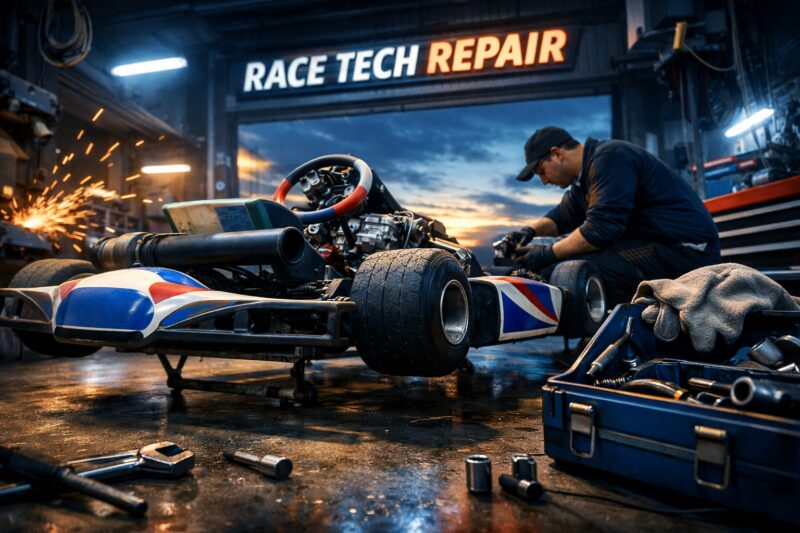
Choosing the right shop for Racing Go Kart Repair is mostly about minimizing downtime while preventing repeat failures—by confirming the shop can diagnose racing-specific root causes, not just swap parts. In practice, that means you should be able to evaluate quotes, turnaround times, technician competence, and parts sourcing before you book, ideally the same day you call. Racing repairs typically involve measurement-based checks, race-load testing, and documentation so the kart performs consistently at speed. Also, racing work differs from casual kart fixes because the performance targets, tolerances, and failure modes are different.
What “Racing Go Kart Repair” typically involves (and how to choose fast)
“Racing Go Kart Repair” usually includes more than fixing what’s broken; it’s a structured process to find the root cause under racing conditions and verify the kart is safe and repeatable for competition. If you want to choose quickly, focus on whether the shop offers a diagnosis-to-verification workflow instead of vague “we’ll see what happens” repairs. This is where Racing Go Kart Repair differs from general go-kart servicing: racing setups depend on precise alignment, driveline behavior, consistent brake feel, and reliable cooling when loads spike.
A racing repair shop should start with a tight intake: kart class, engine model/category, track format (heat/stint length), and what you observed (symptoms, when it happens, and what changed recently). That information drives an initial hypothesis and the measurements needed to validate or reject it. For example, a “no power” symptom could be fuel/jetting, clutch/torque converter behavior, drivetrain alignment, a mis-seated mount, air leaks, or even inconsistent sensor/ignition behavior depending on your engine type and kart age.
After diagnosis, the core of the work is often performance-safe assembly and setup verification: torque/fastener verification, alignment checks, clutch engagement verification, brake system condition and feel, and confirmation that cooling routes aren’t obstructed under race loads. A credible shop should be willing to explain what they will test and what “good” looks like for your class. You should also expect documentation—at least a pre/post summary—so you can replicate the result at your next event.
The tradeoff is that true racing-focused work takes discipline and time. If a shop promises the kart will be “back on track fast” but can’t describe what measurements they’ll perform, you risk paying for parts swapping without validating the cause. A common real-world scenario is race-week misfires: a shop replaces an obvious component, but the underlying misalignment or contamination continues, causing the same failure to return and costing you points and practice time.
To plan your booking, use a fast reliable repair checklist so your call captures the right details in the first conversation. If you already know you need help choosing the right local service, reviewing a go-kart repair shop intake guide can help you ask the right questions without wasting trips or time.
What “Racing Go Kart Repair” really includes (so you choose the right shop)
A racing repair that actually holds up to competition includes diagnosis, performance-safe repairs, setup verification, and test runs with reporting. You want a shop that treats “the symptom” as a starting clue, not the end of the investigation, because racing stresses components differently than street or casual driving. The shop should be able to translate your symptoms into a cause-and-effect plan and then verify the fix with race-relevant checks.
Beyond basic fixes, Racing Go Kart Repair should cover setup verification: drivetrain alignment and mounting checks, clutch engagement and torque-transfer behavior, steering precision, and cooling performance under load. For many karts, brake feel matters too; racing braking consistency depends on rotor condition, pad compounds, caliper function, and correct setup clearances. If your kart has a torque converter or racing clutch system, the engagement and slide/drive behavior can be affected by installation technique, belt or chain condition, and alignment—so the repair must validate those relationships, not just replace a worn part.
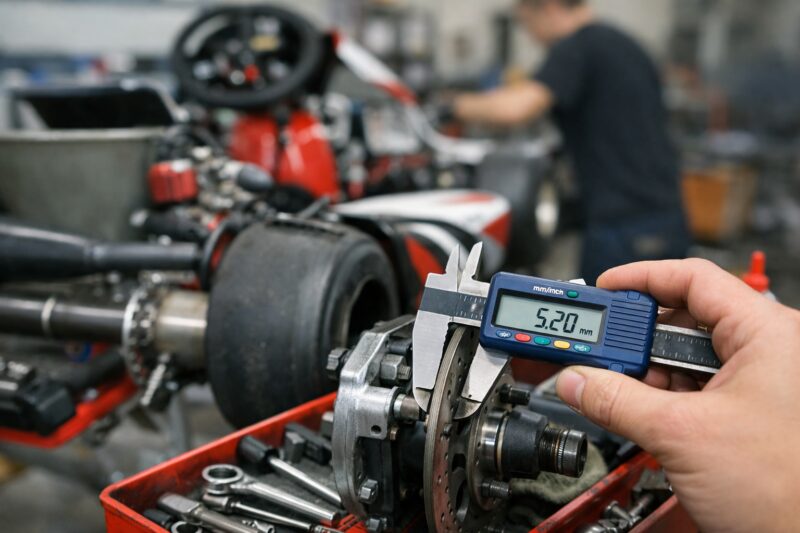
Repair quality indicators should include measurement methods. That can mean torque checks against known specs, fastener inspection for stretch or improper seating, alignment checks using straight edges or appropriate measurement tools, and compression or heat-related checks where relevant to your engine type. A good intake should capture the kart class, engine model/category, race format, and recent failures plus current symptoms. Practical intake details include when the issue begins (idle, launch, under sustained load), what it sounds or feels like (noise frequency, loss of power, overheating pattern), and what changed since the last event (fuel, throttle linkage, assembly changes, parts installed, or transport impacts).
A deeper point: some shops “fix the symptom” but don’t validate the cause under racing conditions. That leads to repeat failures—especially when racing loads reveal problems like misalignment, bearing contamination, mounting distortion, or improper assembly clearances that don’t show up in casual tests. For instance, replacing a bearing that was failing due to poor alignment may remove the noise briefly, but if the mounting or alignment cause remains, the new bearing may fail quickly. Another common racing scenario is cooling-related: a kart may run fine in practice but overheat during race stints because airflow routing, ducting, or engine cooling flow wasn’t verified after the repair.
To streamline your decision, ask whether they provide a diagnostic deliverable you can use for the race weekend—what they checked, what they measured, and what they changed. If you want to fast-track communication and avoid sending incomplete details, a structured racing repair intake approach can help you gather the exact information the shop needs before they quote.
The fastest decision path to hire a racing kart repair shop (evaluation checklist)
The fastest way to hire a shop for Racing Go Kart Repair is to shortlist, confirm racing capability, request a diagnosis plan, compare transparent pricing, and lock a realistic timeline. If you do this in one call (or one email thread), you reduce downtime and avoid paying for repairs that don’t match your actual failure mode. The goal is to leave the conversation with a clear sequence: diagnosis first (with measurements), confirmation second (with the quote and scope), then parts and bench work, followed by verification.
Start by building a short list of shops that explicitly work with racing setups. Then confirm capabilities efficiently: ask about their troubleshooting workflow, how they verify compatibility for your kart class and engine category, and what reporting they provide. Competence signals include methodical diagnosis (not just “guess and replace”), familiarity with racing-specific failure modes, and a habit of documenting pre/post checks. If a shop cannot describe how they diagnose rather than how they guess, you’ll likely lose time and race points.
Turnaround time should be separated into parts of the timeline: diagnostics time, bench repair time, and parts lead time. “Fast” can mean different things: a shop might diagnose quickly but need additional time for sourcing the correct spec parts. What you should demand is a triage estimate: what they can do immediately while waiting for parts, and how they’ll communicate delays. The best shops disclose constraints up front, like shipping windows or whether a component must be re-ordered because the original fitment spec doesn’t match your kart generation.
When comparing quotes, watch for vague labor wording. Quotes that itemize diagnostics, labor hours by task, parts, consumables, and any test/verification fees are easier to compare apples-to-apples. If the quote reads like “labor included” with no scope, that’s where risk hides. A transparent shop will explain the conditions that trigger change orders (for example, if during disassembly they find additional wear beyond initial inspection). For race-week urgency, ask for a two-stage plan: diagnosis and verification steps first, then confirm whether replacement is required before a full teardown.
This is where many teams use a fast reliable repair checklist to guide the same-day phone call. If you want to evaluate local service options under tight scheduling, preparing a consistent set of questions increases your odds of getting a usable timeline rather than a hopeful estimate.
Finally, ensure the reader-facing outcome: the shop should tell you exactly what happens next and when your kart will be ready for verification. You should not have to guess whether the shop will test under realistic loads or only run a superficial bench check.
Shop qualifications that matter most for racing performance (not just general mechanics)
The most important qualifications for Racing Go Kart Repair are those that directly protect racing performance: racing experience, measurement discipline, correct setup procedures, and parts compatibility verification. General go-kart mechanics can often replace worn components, but racing karts demand consistent tolerances, reliable assembly torque, and verification that driveline and steering behavior meet performance targets. When a shop’s process is performance-oriented, you avoid repeat failures and protect race-week results.
Look for technician signals and process signals. Racing experience matters because technicians have likely seen the common failure modes under load: clutch/drive behavior issues, bearing contamination from mis-seating, drivetrain alignment problems, steering wear that affects precision at speed, and overheating patterns that don’t show in easy tests. Methodical diagnostic habits also matter: they should ask about symptoms and reproduce them logically, then measure before replacing. In other words, they should provide measurement vs guesswork rather than relying on “we’ve seen this before” alone.
Equipment and workflow signals include the ability to measure and verify critical tolerances and to follow torque/assembly procedures correctly. That might involve correct torque application for fasteners, alignment checking tools or methods, and a careful approach to installing driveline components without introducing misalignment or uneven wear. Parts standards matter too: reputable shops use OEM parts when racing rules or fitment specs require it, and they should clearly state what aftermarket options are used and why. Warranty coverage on parts and labor is another major qualification—without it, you have no protection if the repair fails under race conditions or if compatibility issues emerge.
Deeper than most guides: compatibility risk. Racing karts can vary by generation, engine variant, controller/program differences (where applicable), and class-specific rules. A good shop verifies before swapping. That means confirming part numbers or specs and confirming fitment with your kart’s configuration, not assuming a “looks similar” part will work. The shop should explain what they will check to prevent mismatched parts from creating new problems.
Documentation expectations are a final performance qualification. You should receive pre/post checks and setup notes, including what was measured and what was changed. That documentation helps you when you return for future repairs and also helps you and your crew set up consistently. If you want to pair this with broader kart maintenance planning, consider how periodic checks can prevent the next failure from arriving during practice.
Pricing, turnaround time, and guarantees: how to compare racing repair quotes confidently
To compare Racing Go Kart Repair quotes confidently, break them into diagnostic cost, labor, parts, consumables, and—most importantly—verification and warranty terms. Many race-week overcharges happen when quotes are not apples-to-apples, or when “free estimates” become change orders because scope wasn’t defined. A strong approach is to insist on a two-stage plan: diagnosis and confirmation first, then the final repair scope only after the shop explains what they found and why replacement is needed.
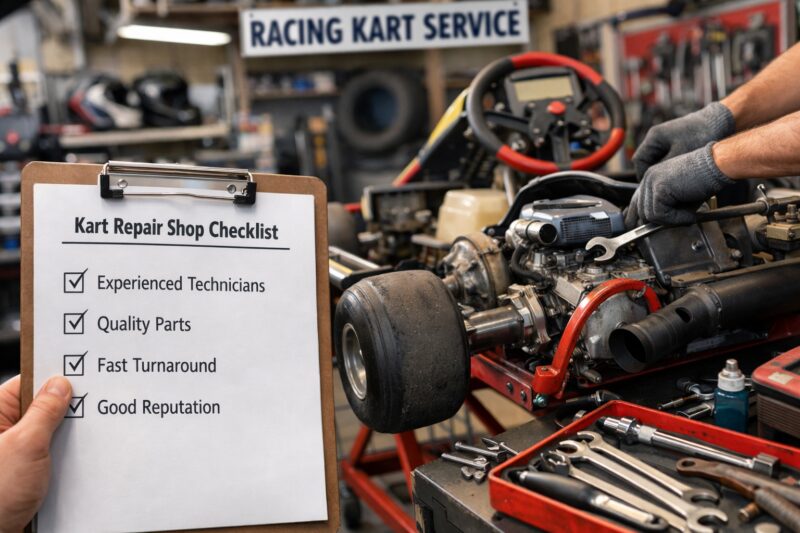
Pricing categories shoppers should expect include a diagnostic fee (for symptom evaluation and measurement), labor hours for inspection and repair tasks, parts markup (or at least a clear parts price), and consumables like fluids, gaskets, seals, or wear items required for proper assembly. Some shops also include testing or verification—such as bench checks, road/track simulation, or functional checks—while others treat it as an extra. If testing is not included, ask how they will verify the fix before handing the kart back.
Turnaround-time reality is shaped by diagnostics time, parts lead time, and bench time. What “fast” means should be broken into those components. A shop might diagnose the same day but take several days for a backordered part; a credible shop will say that clearly. If you need race-week triage, ask whether they can start work while waiting for parts (for example, disassembly inspection, measurement of mating surfaces, and assembling only when correct parts arrive). Hidden costs can include rush fees, minimum labor charges, or change orders triggered by “unforeseen” findings without clear rules.
Comparing apples-to-apples means asking how quotes handle in-spec versus out-of-spec parts. If a shop tells you a part “should work” but can’t confirm the required spec, your risk increases. Negotiate negotiation levers: request a two-stage plan and ask what triggers the next authorization step. That way, you control scope decisions rather than absorbing surprise costs.
Here is a simple comparison structure you can use to line up quotes (especially helpful when you call two shops and want consistent answers):
| Quote Component | What to Ask | What “Good” Looks Like |
|---|---|---|
| Diagnostics | Is measurement/testing included? What will you check first? | Specific checks tied to your symptoms |
| Parts | OEM vs aftermarket? Fitment verification steps? | Part specs match your class/engine; compatibility confirmed |
| Labor & Scope | What tasks are included? Any assumptions? | Itemized labor with clear scope boundaries |
| Testing/Verification | Will the kart be functionally checked before pickup? | Documented pre/post verification |
| Warranty/Return Policy | What’s covered if the symptom returns? | Clear exclusions and rework rules |
| Timeline | What’s “fast” broken into diagnostics, bench, shipping? | Realistic dates and disclosed delay conditions |
Finally, if you want to avoid costly engine fixes from an incorrect first intervention, ask whether the shop will validate the cause before recommending major engine-related replacements. That’s often the difference between a controlled repair and a chain of unnecessary part swaps.
Common mistakes and misconceptions that waste time on Racing Go Kart Repair
The most common mistakes in Racing Go Kart Repair are replacing parts without verified diagnosis, skipping setup checks like torque and alignment, and assuming a fix that “runs” will be reliable at racing load. Those errors waste time because they turn repair into trial-and-error, which is exactly what you cannot afford during a race weekend. A shop that follows measurement and verification prevents repeat failures and preserves your practice and heat performance.
Misconception #1: “Any kart mechanic can do it.” General mechanics may understand basic mechanical systems, but racing performance depends on fine-tolerance setup and validation. For example, drivetrain alignment affects clutch/belt or chain wear and power delivery behavior; steering precision affects driver control at speed; cooling routing affects reliability over race stints. If the shop doesn’t understand the performance context, they may miss issues that only show up under load or during sustained operation.
Misconception #2: “New parts always fix it.” In reality, root causes can be contamination, misalignment, improper mixture equivalence or carb tuning equivalents, cooling flow problems, or mounting issues. A common scenario: the shop replaces a component that failed, but the underlying cause remains—like bearing misalignment or a poor installation technique—so the new part wears quickly and the symptom returns. Another subtle issue is that the correct part may be installed but not assembled to the correct torque or setup spec, leading to recurring vibration and failure patterns.
A deeper insight: sometimes the repair is correct but the setup or driver inputs change—or track conditions differ—so the kart behaves differently. In that case, a good shop should still provide a decision framework: what checks to repeat, what adjustments are safe, and what measurements indicate whether the shop’s fix is behaving correctly. If a shop refuses to discuss diagnostics or can’t explain how the fix will be verified, that should be a warning sign.
Other warning signs include poor communication, “we’ll see” plans without a decision framework, and unclear warranty terms. If you encounter those issues, you lose time and credibility with your race plan. To reduce the chance of chasing the wrong failure, use a fast race-week triage mindset and request a diagnosis plan before authorization—especially if the part replacement would be expensive or irreversible.
Options and alternatives to consider when you need racing kart repairs fast
When you need Racing Go Kart Repair fast, you generally have four approaches: a local racing-focused shop service, mobile or onsite repair for race-week triage, DIY-assisted repair with a remote specialist, or parts swap/testing at a distributor-style facility (when appropriate). The best option depends on the symptom type, how urgent the race date is, and whether you need deep root-cause diagnosis or a narrow fix that you can validate quickly.
A local racing-focused shop is ideal for complex symptoms, root-cause diagnosis, and performance verification, because they can measure, disassemble, and test with racing-aware procedures. Mobile/onsite repair can help when the kart is on-site and you need immediate assistance, but it can’t always replace a full diagnostic when special tools or controlled bench testing are required. DIY-assisted repair with a remote specialist can be effective for experienced teams who can safely disassemble, but it still requires clear measurement guidance and correct assembly technique to avoid repeat failures.
Parts swap/testing at a distributor-style facility may be useful for narrow symptoms where compatibility is clear, but it risks masking deeper failures. The “wrong option for the symptom” problem is real: a fast swap can make the kart run today, while the underlying misalignment or cooling issue continues and returns next session. For urgent timing, the compromise is to use a staged approach: confirm the likely cause quickly, validate the correction, and then schedule deeper verification once the race weekend passes. In all cases, confirm class compatibility and warranty terms before committing—especially if aftermarket parts are involved.
If you are looking specifically for a race-week pathway, a dedicated resource for fast fixes before racing can help you align your symptom to the repair plan and reduce the chance of authorizing unnecessary teardown before you have confirmation.
Advanced considerations: performance validation, edge cases, and repeat-failure prevention (2026)
Performance validation in Racing Go Kart Repair means you don’t just confirm the kart runs; you verify that it behaves correctly under racing-relevant conditions and that the repair won’t reintroduce failure within the next race cycle. In 2026, teams increasingly expect measurement-based validation and documented pre/post checks because repeat failures cost more than the repair itself—especially when race points, tires, and practice time are on the line. The best shops treat repeat-failure prevention as part of the job scope, not an afterthought.
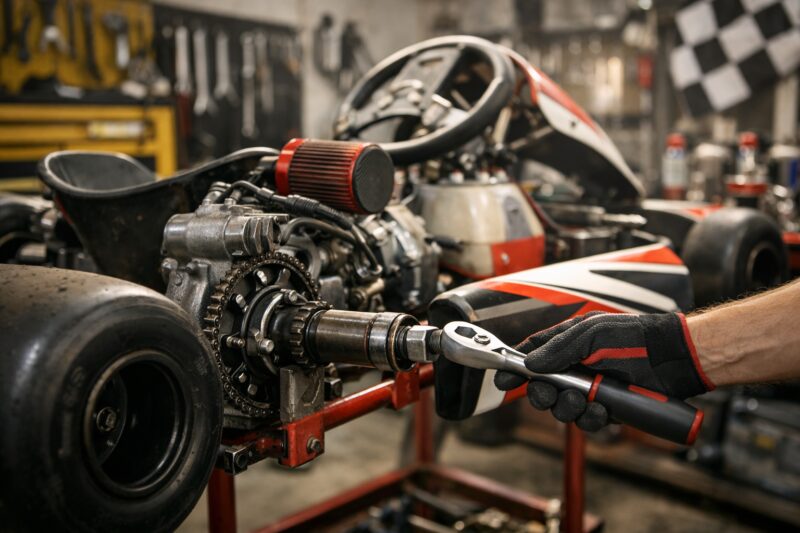
Validation should include functional checks and checks that relate to heat/strain and load paths. That can mean confirming drivetrain operation is smooth across load transitions, verifying clutch engagement behavior, ensuring cooling flow is clear under realistic operation, and checking noise sources against wear thresholds. Edge cases matter: intermittent faults caused by vibration, loosening, or sensor behavior can look “fixed” until temperature or RPM crosses a threshold. Drivetrain noise should be evaluated for what it likely indicates—bearing wear, misalignment, or assembly interference—rather than being attributed to “normal” without evidence.
Repeat-failure prevention should focus on root cause documentation and inspection of mating surfaces. A thorough shop checks the surfaces that interact: bearing seats, mounting faces, hardware condition, and mating geometry that can cause misalignment. It also replaces supporting parts that commonly contribute to recurrence—such as seals, fasteners that may have been improperly seated before, bearings that are contaminated, or mounts that distort under load. The deeper insight is measurement vs guesswork: when the failure mode is non-obvious, the shop should provide data or explain which checks rule out alternative causes.
Evaluate escalation pathways if the symptom returns. If you get the same symptom again quickly, request a reinspection of the original cause and ask for clarification on what was measured. If needed, ask for a disassembly review focused on mating surfaces and assembly steps rather than replacing new parts again. This prevents you from becoming the “funding source” for repeat trial-and-error.
If your kart has a history of expensive failures, it also helps to connect repair decisions to how they prevent costly outcomes. Some teams use a framework to avoid costly engine fixes by ensuring early diagnostics validate the cause before major replacements are authorized.
How to choose in your area: what to expect from Racing Go Kart Repair (national + local realities)
In every region, a good Racing Go Kart Repair shop should be able to provide a clear intake plan, realistic logistics, and a credible timeline that accounts for parts sourcing and race-season bottlenecks. National service providers can work through shipping and standardized processes, but local shops often win on speed because they can shorten shipping time and triage sooner. The best choice depends on your race date, the complexity of the issue, and how quickly the shop can verify fitment and source parts.
Plan a local-intake strategy even if you ultimately ship the kart. Include your location/track region, race date, and kart class so the shop can estimate logistics realistically. Reinforce the symptoms you observed and when they appear, and be explicit about whether you need bench testing, alignment verification, or a full teardown inspection. Shops that service multiple tracks and regions are often better prepared because they can compare common failure patterns and source the correct spec parts more efficiently.
Verify credibility quickly through reviews that mention racing or performance repair, plus references from local racing teams where possible. Race-season bottlenecks are real: “next available” might mean a two-week bench queue unless the shop can triage urgent diagnostics immediately. Ask how the shop prioritizes race-week issues and whether they can reserve diagnostic capacity while awaiting parts. For a concrete first call, use a first-call script checklist that matches your constraints—time remaining, expected parts lead times, and the diagnostic steps required for your symptom. If you want a structured approach to that conversation, fast fixes before racing can help you build a race-week-ready message without missing key details.
When your racing go kart starts missing shifts or losing speed, Racing Go Kart Repair can’t be put off. The fastest path to getting back on track is finding a shop that can evaluate the issue quickly and communicate clearly about what needs to be fixed.
Look for a same-day repair shop when timing matters, especially if you have a heat or practice session soon. A good shop will also ask about symptoms you’ve noticed, like unusual vibrations, brake drag, or starting problems, so they can avoid unnecessary parts swaps.
Before you commit, confirm the shop’s process for diagnosing electrical and mechanical faults as part of Racing Go Kart Repair. You’ll want a tech team that can explain their findings, offer a realistic timeline, and confirm whether the kart needs setup changes or only targeted repairs.
Finally, choose a shop that supports performance-focused work beyond basic maintenance. If you’re trying to minimize downtime, a same-day repair shop can help you plan ahead while still ensuring safety and reliability for competitive driving.
Frequently Asked Questions About Racing Go Kart Repair
How do I choose a shop for racing go kart repair quickly?
Shortlist two or three shops and ask for their diagnosis workflow before booking any parts. In the first contact, request a specific diagnosis plan tied to your symptoms (what measurements or checks they’ll perform) and ask how they break turnaround into diagnostics, bench time, and parts lead time. Finally, confirm warranty terms and change-order conditions so you can decide without delay.
What questions should I ask before booking racing kart repair work?
Ask what compatibility checks they perform for your kart class and engine model/category, and whether they verify fitment before installing parts. Also ask what testing or verification they will complete before you pick up the kart, and whether they provide pre/post documentation. Finally, confirm what their warranty covers on both parts and labor and what exclusions apply if the symptom returns.
How can I compare racing go kart repair quotes without getting overcharged?
Compare quotes by total out-the-door cost that includes diagnostics, parts, labor scope, consumables, and any testing or verification. Look for itemized labor and clear wording about what triggers change orders. If a quote includes vague “labor included” phrasing without a verification step, ask for clarification so you’re comparing apples-to-apples.
What does a racing go kart repair diagnostic typically include?
A racing diagnostic typically starts with symptom-to-cause evaluation using your intake details, then proceeds to measurements and checks relevant to racing behavior. For many issues, that includes alignment checks, fastener/torque verification steps, drivetrain functional checks, and any heat or performance indicators relevant to the engine and setup. The deliverable should be a clear explanation of what was checked and what the shop recommends next.
Should I replace parts immediately or wait for a diagnosis first?
When the symptom could have multiple causes, waiting for diagnosis first is usually the safer choice because it reduces repeat failures and unnecessary parts swaps. If the failed part is obvious and safety-critical, a staged approach works best: authorize immediate replacement only for the confirmed failure, while the shop continues diagnosis for underlying causes. Ask the shop to define what “confirmed” means and what measurements support the replacement decision.
How long does racing go kart repair usually take before a race?
Timelines vary by symptom complexity and parts availability, but racing repairs often include diagnostic time first, then bench repair, then verification. What changes the fastest is often bench work; what changes the most is parts lead time due to shipping or spec sourcing. “Rush” usually improves bench scheduling and triage capacity, but it can’t eliminate long lead times for the exact spec parts your kart needs.
Do racing kart repair shops offer warranties on parts and labor?
Many reputable shops offer warranties that cover workmanship and parts failures for a defined period, but the terms and exclusions matter. Ask whether the warranty applies to repeat symptoms and what conditions void coverage (for example, improper re-torque by the customer or continued operation with an unresolved symptom). A clear warranty is part of the quote, not something you learn after the repair is completed.
Can a shop guarantee performance after racing go kart repair?
A shop can usually guarantee workmanship and verification steps (for example, that alignment and assembly were performed to spec). Performance outcomes can depend on setup, driver input, track conditions, and rule constraints, so shops generally won’t promise lap time or points directly. Ask for what performance validation they will do and what measurements indicate the kart is within acceptable racing parameters.
What are the warning signs of poor racing go kart repair?
Warning signs include refusal to explain the diagnostic process, vague estimates with no measurement-based verification, and unclear warranty terms. Another red flag is replacing parts without confirming compatibility for your kart class and engine model/category. If communication is poor and the shop doesn’t document pre/post checks, you’re more likely to see repeat failures.
Is mobile repair a good option for racing go kart issues?
Mobile repair can be useful for urgent onsite triage when you need immediate functional checks or simple repairs and adjustments. However, it may not replace a full diagnostic when precision measurement tools or controlled bench testing are needed. If you use mobile service, confirm how warranty coverage works and whether the shop will document what they checked and corrected.
How do I prevent repeat failures after racing go kart repair?
Prevent repeat failures by requiring root-cause validation and pre/post documentation so the repair addresses the actual cause. Follow the shop’s assembly and re-torque/setup guidance, especially on fasteners and any alignment-sensitive components. If the symptom returns, request a reinspection focused on the original cause and mating surfaces rather than authorizing immediate part replacements again.
Conclusion (planning notes for the writer)
Choosing the right shop for Racing Go Kart Repair comes down to a disciplined decision framework: confirm scope and competence first, then demand quote transparency and realistic timelines. The biggest differentiators are performance validation and repeat-failure prevention—shops that verify the fix under racing-relevant conditions and document what they measured. When those elements are missing, downtime increases and you risk paying for repairs that don’t hold up under race load.
Use a rapid checkout plan: shortlist quickly, request a diagnosis workflow, and insist on a staged plan so you can approve repairs based on evidence, not assumptions. If your schedule is tight, compare at least two repair pathways—local shop vs alternatives like mobile triage or remote-assisted DIY—based on how urgent the symptom is and how likely multiple causes are. That approach helps you avoid costly engine fixes caused by premature or incorrect part replacements.
As a final step, prepare your first call using a fast reliable repair checklist and ask for verification expectations before you book. If the shop can’t clearly describe measurements, compatibility checks, testing deliverables, and warranty terms, keep searching—because racing repair success is measurable, not hopeful.
Updated May 2026