If your go kart won’t start, loses power, misfires, surges, or dies under load, you’re not just “missing a part”—you’re dealing with a system that’s out of spec. The most cost-effective next step is Go Kart Engine Repair that starts with diagnostics and verification, so you avoid replacing carburetors, ignitions, or internal parts that tests prove are fine. The key is a method: map symptoms to likely systems, perform ordered checks, and only then decide what to clean, test, rebuild, or replace. That approach also prevents the common “guessing loop” where one wrong assumption forces you into more tear-downs and higher labor costs than the original problem.
Expect that not every “engine repair” is truly internal engine work. Many Kart no-start and run-rough problems are fuel delivery, spark integrity under load, air restriction, ignition interruption wiring, or cooling/oil-lubrication mistakes. With a decision checklist and stop points for DIY, you can decide whether the fastest path is to do targeted work yourself, request a shop diagnostic, or bring the kart to a technician with clear evidence. If you’re trying to avoid upsells, a good repair plan should make you feel confident about which parts are actually required and how the mechanic will verify the fix before charging for major labor.
In the sections below, you’ll follow a symptom-to-system decision path, run a 30–60 minute go/no-go pre-check, choose the right service channel, and learn how carburetion, ignition, and internal damage indicators change escalation. You’ll also see what parts compatibility must be verified before ordering and what 2026 pricing structures commonly include, so you can protect your budget during Go Kart Engine Repair.
How do you diagnose Go Kart Engine Repair issues instead of replacing parts blindly?
The fastest way to control cost in Go Kart Engine Repair is to diagnose first and verify with basic measurements before you buy parts. When you replace without proof, you can end up paying for the same labor twice because the real failure is upstream (fuel/air/spark) or downstream (load, cooling, lubrication, or exhaust restriction).
Diagnosis matters because kart engine symptoms overlap across multiple systems. A hard start can be fuel supply, spark strength, choke/airflow setup, compression issues, or even a kill-switch wiring fault. An engine that idles but dies when you add throttle often points to fuel delivery or air restriction under vacuum/flow demand, while a surge that changes with RPM commonly suggests ignition instability, air leaks, or carb float/jetting problems.
How it works is simple but disciplined: you map symptoms to likely systems, then follow an ordered “no-guessing” sequence that reduces variables. For example, begin with quick external checks (fuel freshness, shutoff position, filter and obvious leaks), then verify fuel delivery behavior (not just whether fuel exists), verify ignition presence (and ideally quality), then confirm the air path (filter, exhaust restriction, carb throat/jet passage), and only after that consider compression and mechanical health. This sequence prevents premature conclusions like “the carb is bad” when the real issue is a blocked fuel line or weak spark that only appears under load.
Practically, set acceptance criteria for diagnosis: you should confirm a specific condition before concluding a part is faulty. If you suspect a carburetor, you should verify float level behavior, check for consistent fuel draw at idle and off-idle, and confirm that the engine responds correctly to controlled air/fuel changes. If you suspect ignition, you should inspect and test for consistent spark and rule out wiring and grounding interruptions. Tradeoffs are that thorough diagnosis takes time and a few tools, but it nearly always saves money versus multiple repair cycles.
Real-world scenario: a driver brings a kart that “runs for two minutes then dies.” Many guides jump to carb replacement, but a structured diagnosis often reveals an ignition interruption from heat or a fuel delivery blockage that forms under run time. Another common trap: fresh fuel makes it seem like the carb is “clean,” yet varnish residue can still partially clog jets, so it runs briefly and then fails under load. When you follow a decision path, you can distinguish DIY-able fixes likely from issues that require service tools or specialist bench testing.
Deeper insight: misdiagnosis traps happen because weak spark can look like fuel problems (especially when throttle opens and RPM rises). Likewise, bad fuel can mimic carb symptoms: flooding, surging, and hard starts may improve after cleaning the carb even though the underlying fuel system still supplies contaminated fuel. Common mistake is “chasing the symptom loop,” where each attempt is based on appearance rather than test evidence. If you want an on-page approach to avoiding repeated problems, use a checklist before your repair so every conclusion is tied to a test result, not a guess.
For related maintenance planning that reduces repeat failures, you can also align your diagnostic findings with a reliable performance engine checklist approach used during routine service intervals.
What go/no-go checks can you do in 30–60 minutes before paying for engine work?
You can often identify whether Go Kart Engine Repair should be DIY or shop-focused within 30–60 minutes by running structured pre-checks and stopping when tests show clear boundaries. These go/no-go checks reduce the odds you pay for unnecessary teardown when the root cause is external or basic.
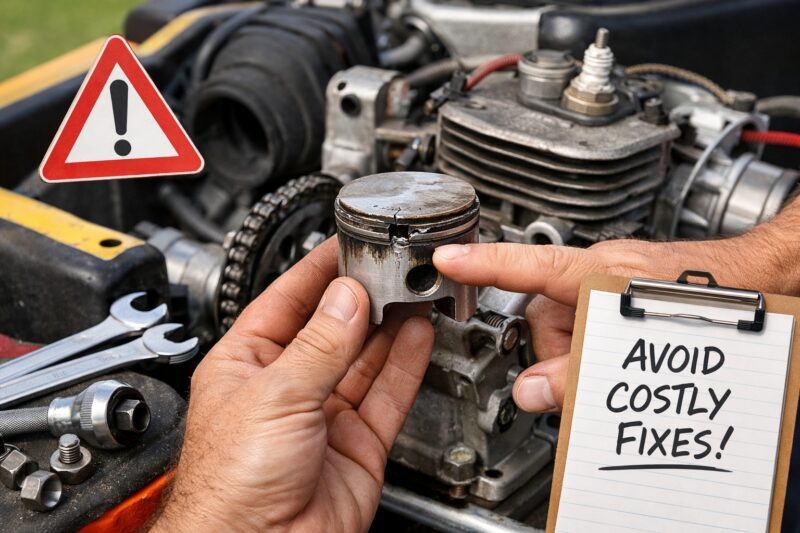
Start with fuel and basic supply validation: verify fuel freshness, tank shutoff position (if equipped), and inspect fuel lines for cracks, soft spots, loose clamps, or collapsed sections. If your kart has a primer bulb or vacuum-dependent fuel delivery, verify it behaves consistently and that fuel reaches the carb consistently during attempted starts. Then check for leaks at the tank outlet, fuel hose connections, and under the carb/manifold area because suction leaks can create symptoms that look like “carb failure.” Also inspect the air filter condition; a severely clogged filter can cause lean running and misfire under load. Finally, check for exhaust blockage (nest debris, crushed pipe sections, or muffler restriction) that can cause overheating and stalling.
For spark verification options, you can begin with safe visual inspection: check plug condition, look for carbon tracking on the boot/cap area, confirm plug wire/boot seating, and confirm proper plug heat range for your engine spec. If a proper spark test tool is available, use it to confirm spark presence and consistency. The practical goal is to avoid destroying parts: don’t repeatedly crank without control, and avoid “spark jumping” tests that can damage coils or boots. If you only have basic tools, a conservative go/no-go approach is to inspect for correct connections and plug condition, then escalate to a shop if spark is inconsistent or load-dependent symptoms persist.
Compression and mechanical noise signals matter because they tell you whether you should stop and escalate. If the engine cranks normally but won’t start, low compression could still be the root cause, but you must confirm rather than assume. Mechanical noises like persistent knocking or grinding are go/no-go stop points: further operation can worsen internal damage. Tradeoff limitations: without a compression gauge, you can’t confirm compression numerically, so your decision should be based on whether you observe metal debris, severe overheating history, or mechanical binding during cranking.
Deeper insight: stop points for DIY prevent damage. Do not continue repeated dry starts if you’ve had confirmed low oil or lubrication issues, and do not keep running with overheating indicators. Another common mistake is clearing the sparkplug and declaring ignition fixed while the real issue is fuel delivery under load. If your kart starts and then stalls under throttle, your pre-check should include whether the fuel system can support flow demand at RPM. Use the symptom-to-system mapping framework to decide whether the next step is carb cleaning, ignition electrical testing, or a mechanical inspection.
If you’re planning seasonal work, tie these findings to prevent costly go kart breakdowns by doing the quick checks before you commit to any teardown or part replacement.
How do you choose the right repair approach: DIY, mobile mechanic, or shop service?
The right path for Go Kart Engine Repair depends on what you can verify safely, what tools you have, and whether the problem is stable enough to diagnose without bench testing. DIY can be cost-effective when symptoms are clearly linked to cleaning, basic adjustments, or straightforward electrical connections; shop service is typically best when tests indicate load-dependent failure or internal damage risk.
DIY is most practical when you can isolate the problem to serviceable items like the air filter, spark plug, fuel lines, carb cleaning, jetting verification, and basic wiring/ground checks. It’s also strong for “maintenance masquerading as engine failure,” where neglected fuel storage, clogged filters, or wrong plug type create poor performance. However, DIY becomes costly when you start replacing major components without measurements or when repeated cranking damages parts or worsens contamination. If you’re trying to avoid fast fixes before race that later fail, DIY should follow the diagnostic order and documentation steps described earlier.
Mobile mechanics can be a middle ground when you need help quickly without transporting a kart. They’re effective for external checks, basic ignition/electrical continuity tests, and on-site verification of fuel flow and airflow. The limitation is that some issues require bench tools (carb disassembly/measurement, flow checks, or deeper ignition diagnosis). In that case, they may identify the likely area but still recommend shop service for final verification. For internal issues, mobile service may recommend transport because the technician needs inspection access to internal components and proper measurement tools.
Shop service is usually best for intermittent misfire, “starts then dies after warm-up,” weak spark under RPM/load, and anything involving compression uncertainty or overheat history. A reputable shop should provide a diagnosis plan and verification steps, not just a parts recommendation. Cost drivers include diagnostic fee policies, labor minimums, parts markup, specialty tools, and warranty/guarantee terms on both labor and parts. Turnaround time tradeoffs matter in 2026: if you’re between events, shops may prioritize triage, and parts availability can extend lead times.
Vetting criteria should be explicit before you commit. Ask for a symptom-based estimate that includes tests performed and what must be true for parts to be replaced. Require line-item logic: “We will replace X only after Y measurement shows Z.” Confirm re-test after installation, and review the return policy for diagnostic parts used during evaluation. If a shop claims “replace the whole carb” without showing measurements or evidence-based checks, that’s a red flag—use an upsell counter checklist to challenge the logic.
For maintenance alignment after the repair decision, keep notes that feed into your longer-term reliable performance engine checklist so the next season starts with fewer surprises.
How do carburetion, fuel system, and air issues masquerade as “engine failure”?
Fuel and air problems are among the most common causes behind symptoms that sound like Go Kart Engine Repair of the engine itself. When the carburetion or airflow path is wrong, the engine may crank fine but misfire, surge, hesitate, or die under load.
How it works: the carburetor meters fuel and air based on throttle position and engine demand. When jets are clogged (varnish from stale fuel), float height is off (leading to flooding or starvation), the needle/seat is worn (inconsistent fuel level), or vacuum-operated components leak, the mixture becomes unstable. A restricted air filter can produce a lean condition that feels like an ignition problem because misfires often worsen at higher RPM. Exhaust restriction similarly can create backpressure that changes how the engine breathes, contributing to overheating and stalling.
Practical decision criteria determine whether cleaning is sufficient versus replacement. If the carb looks dirty but tests show consistent response after cleaning and reassembly to spec, cleaning is usually the reliable choice. If parts are visibly worn (needle tip, float assembly wear patterns) or the carb revision is hard to rebuild correctly, replacement or rebuild kit installation may be more economical and reliable. For DIY, the key is to validate the fix after service: throttle response should improve, idle should stabilize, flooding should stop, and performance under load should be consistent rather than “briefly fixed.”
Fuel spec considerations matter in real usage. Ethanol blends can increase residue formation when fuel sits; even if the carb appears clean, the jets and passages can still be partially blocked. When fuel quality is uncertain, cleaning alone can be insufficient because contaminated fuel continues to reintroduce the problem. If the engine started failing soon after using old fuel, treat the fuel system as a root-cause candidate, not just a carb tuning problem.
Deeper insight: “new part didn’t fix it” scenarios often mean the root cause is upstream. A replaced carb may still fail if the fuel line is restricted, the tank outlet is blocked, the primer bulb isn’t priming correctly, the air filter is clogged, or the exhaust is blocked. Common mistake is assuming every symptom is caused by the part you most recently replaced. Instead, run a verification sequence: confirm stable idle, confirm no flooding during throttle blips, and confirm performance under load. This is also where a checklist before your repair helps prevent repeating the same diagnostic error.
To maintain the success of your carb and fuel system work, connect this repair to broader go-kart maintenance habits so stale fuel and clogged filters don’t undo your improvements.
How do you troubleshoot ignition and electrical problems that cause repeat failures?
Ignition and electrical issues often cause hard starting, intermittent misfire, stalling after warm-up, and RPM drop that looks like a fuel problem. When Go Kart Engine Repair focuses only on carburetion or compression without verifying spark integrity, you risk repeat failures.
Method: start by identifying ignition-related symptoms. Hard starting and misfire can be caused by plug condition, incorrect plug heat range, weak spark energy, or poor electrical connections at the kill switch, grounds, coil/ignition module, or wiring harness. Dies after warm-up can point to components that fail under heat or moisture intrusion. If you observe spark scatter or a spark that disappears after a few minutes, treat it as an electrical signal problem rather than a mechanical one.
Electrically safe troubleshooting should be ordered and evidence-based. Inspect the plug and boot seating, check for carbon tracking or corrosion, and confirm correct wiring routing and tight grounding. If a multimeter is available, check continuity where appropriate (for example, kill switch and ground path), and verify there is no intermittent connection. Avoid parts swapping “to see if it changes,” because intermittent faults can be caused by connectors, moisture, or broken insulation where visible wear is minimal.
Common root causes are often boring but expensive when missed: loose grounds, frayed wiring near vibration points, moisture in connectors, and incorrect plug type or gap. What most guides get wrong is the assumption that “spark present = ignition good.” Edge case: spark may be present but weak under load, which can produce misfire only when throttle is applied. That means you should consider load-dependent verification rather than a single visual spark test.
When to replace versus test components: test what can be tested first (connections, plug, wiring, grounds, and known-good plug condition), and only then move to coils or ignition modules if consistent evidence points there. If the kart consistently misfires at RPM/load despite correct fuel behavior, ignition energy and stability become more likely. If you’re coordinating with a shop, request that they confirm ignition behavior and wiring integrity rather than defaulting to component replacement.
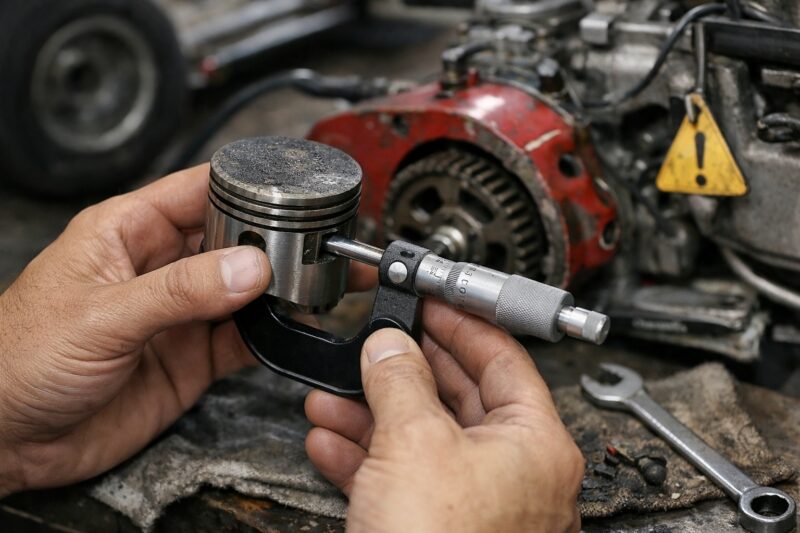
After ignition fixes, keep documentation and alignment with your reliable performance engine checklist so plug changes, wiring inspections, and correct torque/reassembly procedures help prevent repeat labor.
What internal damage indicators should change how you escalate Go Kart Engine Repair costs?
Internal engine damage red flags should immediately change your Go Kart Engine Repair escalation plan, because continuing to run an injured engine can turn a solvable issue into a full rebuild or replacement. If you see symptoms that indicate internal binding, overheating, or mechanical failure, treat it as a stop-and-inspect situation.
Internal red flags include persistent knocking sounds, metal debris in oil (where applicable), low compression patterns, coolant-related symptoms (on liquid-cooled systems), and evidence of severe overheating. A kart that repeatedly stalls in a way that suggests binding rather than fuel starvation may also indicate mechanical internal issues. Another clue is heat pattern: if components fail quickly after short run time, you may be dealing with inadequate lubrication or internal friction rather than carb tuning alone.
How escalation should work is cost-controlled: start with “can this be external?” checks, then move to internal inspection only when external causes are ruled out with verification. For example, if spark and fuel delivery are verified and compression is confirmed low, you may need cylinder/head inspection or a rebuild conversation. If coolant/overheat or lubrication problems are suspected, you may need to inspect for bearing damage, scoring, or improper prior assembly.
Tradeoffs between rebuild vs. replacement depend on kart value, season timing, and availability of OEM/service parts. Rebuild can be cost-effective when parts are available, specs are known, and you can document measured readings. Replacement assemblies can be faster during racing weekends but may be more expensive and can hide issues if the root cause (like lubrication mismatch or contamination) wasn’t corrected. Document findings for warranty or repair claims: take photos, record part numbers, write down measured readings, and note run-test observations. That evidence matters when you need to justify why a given internal component failed.
Deeper insight: sometimes the “engine repair” is actually a driveline or lubrication mismatch. Incorrect lubrication type, wrong oil procedure, or failure to pre-lube can cause premature wear that resembles internal engine failure. Common mistake is to replace ignition or carb again after internal symptoms begin, because it delays the internal inspection. If you want to prevent expensive escalation, align your diagnosis notes with a prevent costly go kart breakdowns maintenance plan so you correct lubrication and operational factors as part of the repair.
What common Go Kart Engine Repair misconceptions waste money?
Most cost overruns in Go Kart Engine Repair come from misconceptions that lead to random parts swapping. If you treat a symptom like a diagnosis, you often pay multiple times for the same labor because the root cause was never proven.
Misconception one: replacing parts based on appearance. A plug that looks dirty does not automatically mean the carb is bad; it can indicate jetting mismatch, fuel quality issues, or overheating conditions. Jetting and fuel residue can create misleading visual cues. Misconception two: confusing maintenance neglect with a failed engine. Old fuel, clogged air filters, restricted exhaust, and wrong spark plug heat range can all create “engine failure” symptoms without internal damage.
Misconception three: skipping verification tests after a repair. If you adjust or replace parts and don’t re-test under the conditions that caused the failure (idle stability, throttle response, and load behavior), you can miss an upstream issue that still exists. Misconception four: improper reassembly order or incorrect torque/spec procedures. Reassembly mistakes can create air leaks, fuel leaks, misalignment, or intermittent wiring behavior that mimics engine failure.
Deeper insight: “chasing the symptom” happens when your plan doesn’t prevent multiple rounds of guesswork. The antidote is a consistent repair plan: pre-checks → ordered verification → targeted service → documented re-test. That is why using a checklist before your repair is valuable even for experienced DIYers; it forces measurement logic rather than emotional certainty.
Real-world scenario: an owner replaces a carb after seeing surging, but the engine still surges because the fuel line is partially blocked and only supplies enough fuel at idle. Another scenario: the plug is swapped, spark looks better visually, but the kart still dies under load due to weak spark energy or a grounding issue. Preventing those loops is how you keep Go Kart Engine Repair affordable.
How do you verify parts compatibility before ordering for Go Kart Engine Repair?
Before ordering parts for Go Kart Engine Repair, verify compatibility using the exact engine and ignition specifications. Ordering “close enough” parts can cause repeat failures, wasted shipping fees, and time-consuming return cycles.
Start with the non-negotiables: engine model/serial, displacement, fuel system type, carb model, ignition version, and mounting orientation. Compatibility is not only brand name; it’s the revision level that determines jetting ranges, vacuum behavior (where applicable), mounting flange sizes, and throttle/idle linkage alignment. For ignition, plug gap requirements and coil/module wiring style matter, too.
To avoid costly returns, match part numbers and confirm thread sizes and plug gap requirements. Verify whether rebuild kits apply to the exact carb revision, because a kit that fits physically may not match internal tolerances or metering characteristics. Consumables versus major components should be intentional: gaskets, filters, spark plugs, fuel lines, and fluids are common consumables, while internal engine parts or major ignition components should be replaced only when tests confirm the need.
Use evidence-based ordering: decide that a carb rebuild kit is appropriate when measurements or inspection show worn components or inconsistent float/needle behavior. Decide on a spark plug replacement when inspection indicates correct condition failure (damage, incorrect heat range, or fouling patterns consistent with the diagnosed cause). Tradeoff: ordering too early can hide the real issue if you still haven’t verified fuel delivery or ignition stability. That’s why you should complete your go/no-go checks before you spend heavily.
Deeper insight: mixed-version problems are common—like an aftermarket carb on an OEM manifold that creates tuning instability. Another common mistake is rebuilding the carb but using the wrong fuel spec during testing, which makes it seem like the repair “didn’t work.” If you want consistent results, document your findings and your part numbers, and incorporate those notes into your go-kart maintenance routines so the next season doesn’t introduce the same mismatch.
What are the cost expectations in 2026, and how is pricing typically structured?
In 2026, Go Kart Engine Repair pricing is typically structured around diagnostics, labor time, parts availability, and warranty/guarantee terms. The most reliable way to avoid surprise costs is to request an estimate format that ties proposed parts to test results.
Cost drivers readers care about most include the diagnostic fee policy (fixed vs. credited toward parts), labor minimums, and specialty tool requirements. Parts availability can change pricing if OEM components are backordered or if the engine model is discontinued. Specialty ignition components, carb rebuild kits, and compression-related parts can also change the budget quickly. Another hidden cost trigger is repeated tear-down caused by poor diagnosis or missing verification steps, which can multiply labor hours.
Ask shops for an estimate that includes: a symptom list, tests performed, what the results showed, and which parts/labor are proposed based on those findings. A strong estimate also includes expected verification steps after installation, such as stable idle and performance under load. Where possible, ask for “what must be true” before a specific major part is replaced. That line-item logic prevents upsells and protects you from paying for a part that tests indicate won’t solve the problem.
Below is a practical comparison table showing how costs are commonly structured and what to ask for upfront. Use it to guide your conversations with a technician.
| Pricing Component (2026) | What It Usually Covers | Questions to Ask | How It Can Increase |
|---|---|---|---|
| Diagnostic fee | Symptom interview, ordered checks, test time | Is it fixed? Is it credited to parts? | Extra teardown if diagnosis is unclear |
| Labor hours | Repair work and reassembly | What is the labor minimum? | Repeat access due to rework |
| Parts | Consumables and replacement components | Line-item parts list with part numbers? | Backorder or “replace everything” claims |
| Specialty tools | Testing and measurement equipment use | Will you test before replacing? | Bench tests requiring additional time |
| Warranty/guarantee | Coverage on labor and parts (varies) | Return/guarantee terms for diagnostic parts? | Limited coverage or condition exclusions |
Deeper insight: value negotiation is possible when you compare repair vs. refurb vs. replacement unit based on documented findings. If a shop wants to replace the entire carb, ask for evidence like float/needle wear checks or confirmed jet obstruction pattern. If they claim internal damage, ask for measured compression or documented overheat findings before consenting to major work. When you apply a reliable performance engine checklist after the repair, you also improve the odds the fix holds and you avoid repeat labor.
Where can you get Go Kart engine repair services without guessing your location?
You can find reputable Go Kart Engine Repair options without guessing your location by starting with networks that already know small-engine and kart-specific issues. The goal is to pick a service provider that can perform diagnostics and communicate test results, not just replace parts.
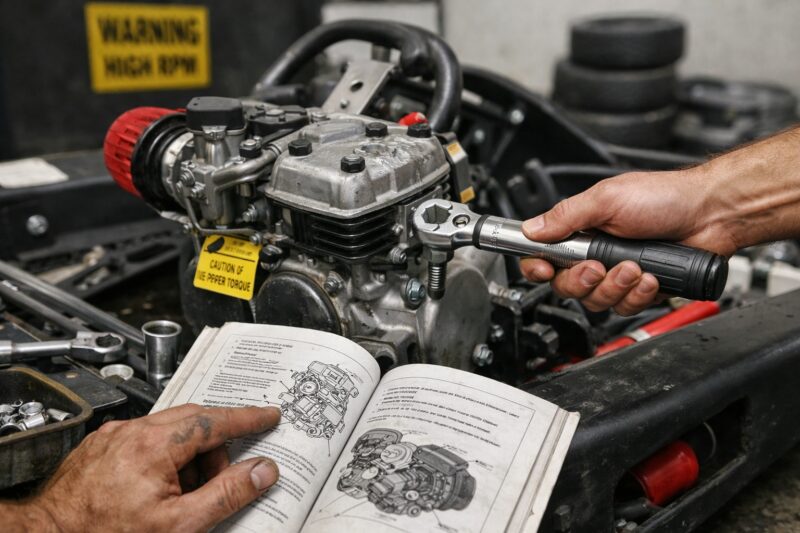
A national-first approach works well: begin with kart clubs, motorsport communities, and local powersports networks. These communities often have members who recommend technicians who understand kart engines, carburetion, and ignition quirks. Look for shops that handle small engines and can explain their diagnostic process clearly. In many regions, mobile techs specialize in small-engine diagnostics and can provide rapid triage, but you should still confirm what can be bench tested versus what requires transport.
When you choose a service area or technician, prioritize experience with small engines and evidence-based reporting. Ask whether they can provide test results (for example, confirmed fuel delivery behavior, spark verification under load, or measured compression). For communication, bring documentation: engine model and serial, photos or video of the symptoms (cold start vs. warm failure), recent maintenance history, the fuel used, and any parts you already replaced. If your kart is racing-season critical, include a timeline so they can prioritize the most cost-controlled diagnostic path.
Expectations differ for mobile vs. shop service. A mobile mechanic can often verify external causes like wiring connections, fuel line integrity, filter condition, and basic ignition checks. A shop may be needed for bench testing carbs, verifying internal condition, and confirming mechanical measurements. Deeper insight: vague symptom descriptions lead to vague quotes, which can drive parts swapping. Instead of saying “it’s the engine,” provide the ordered symptom story: starts then dies, surges at throttle, misfires at RPM, or overheats quickly. That clarity supports accurate pricing.
To connect your service with longer-term reliability, share your findings with your go-kart maintenance routine so the same fuel, lubrication, and filter habits don’t recreate the issue.
What should you ask in the shop or on the phone before paying for Go Kart Engine Repair?
Before paying for Go Kart Engine Repair, ask questions that force the technician to explain diagnostics, evidence, and verification steps. This protects you from upsells and reduces the chance of paying for parts that aren’t actually required.
Start with diagnostic approach questions: “What tests will you run before you replace parts?” and “What must be true for carb/ignition replacement to be required?” Ask how they map symptoms to systems and whether they verify fuel supply behavior and spark stability. Request an estimate format that includes symptom list, tests performed, results, proposed parts/labor, and planned re-testing after installation.
Next, ask about parts warranty and return/guarantee terms, especially for diagnostic parts. If they plan to install a carb or ignition component to “try it,” ask whether that part is covered if the diagnosis later proves wrong. Confirm labor minimums and whether tear-down/reassembly time changes if the initial fix doesn’t resolve the problem. A good shop will answer these questions directly and use line-item logic tied to measurement outcomes.
Then ask for re-test procedures. For example, confirm whether they will verify stable idle, correct throttle response, and consistent performance under load, not just “starts and runs on the bench.” Tradeoff: deeper verification can add time, but it typically saves money by preventing repeat labor. Real-world scenario: a shop may quote a low initial price but requires multiple visits; a more transparent plan with re-test expectations can cost less overall.
Deeper insight: this is the “upsell counter” moment. If they claim broad replacement (“replace the whole carb,” “replace the coil”) without showing evidence, ask for the measurements or inspection results that justify the decision. If they cannot provide them, request that they perform the verification first. To reduce friction, use a checklist before your repair when you call so you ask the same logic every time.
Finally, after repairs, follow through with documentation and your reliable performance engine checklist so the next diagnosis isn’t needed due to a reintroduced fueling or wiring mistake.
Top 10 questions about Go Kart Engine Repair: Avoid Costly Fixes—Get It Right
The quickest way to decide on Go Kart Engine Repair is to follow answers that start with ordered diagnosis, verify key measurements, and then choose a repair route that matches the evidence. The sections below map those decisions to practical outcomes so you can avoid replacing parts unnecessarily.
Why these questions matter: every kart failure mode tends to funnel into a few system categories—fuel, spark/electrical, air/exhaust, compression/mechanical health, and heat/lubrication. If you address the right category first, you reduce the odds of a “repeat repair” cycle where labor and parts costs stack up. How these questions help is by turning uncertainty into actionable checkpoints: pre-checks, verification steps, and escalation boundaries.
Tradeoffs exist: some problems require specialized tools (compression gauges, ignition energy testing, carb bench flow checks), and you may need to stop DIY at the correct point. Still, even in those cases, asking the right questions prevents you from paying for guesswork. Real-world scenarios show that the “engine repair” label often hides simpler root causes, such as fuel line restriction, spark energy weakness under load, clogged air filters, or exhaust blockage.
For planning, keep the timing in mind—so you can avoid spending weekends on trial-and-error when the fastest path is a fast fixes before race diagnostic approach. And once repairs are done, protect your outcome by continuing with prevent costly go kart breakdowns practices aligned to maintenance schedules.
Frequently Asked Questions About Go Kart Engine Repair
What are the first steps in Go Kart Engine Repair?
Start with safe pre-checks: confirm fuel freshness, tank shutoff position, line condition, and obvious leaks, then check the air filter and exhaust blockage. Next, verify basic ignition health by inspecting the plug and connections, and confirm the kart’s symptom pattern (cold start vs. warm failure). Only after those steps should you move into carb service or deeper mechanical checks, using evidence to decide what parts are truly suspect.
Why does my go kart engine start then die after a few minutes?
This often points to fuel delivery issues forming after a short run time, an ignition interruption that appears when components heat up, or airflow restriction that worsens as the engine warms. A common detail is surging or stalling when throttle is added, which suggests mixture instability rather than a simple “no spark” condition. The correct approach is to verify fuel reach to the carb and check electrical stability during warm operation.
How do I tell if it’s a carburetor or ignition problem?
If spark is present but the kart misfires or dies under load, ignition may be weak even if the engine cranks. If the kart responds strongly to controlled fuel/air changes (like improved behavior after fuel line cleaning or verified jet passages), carburetion is more likely. You distinguish them by confirming spark consistency and fuel delivery behavior with an ordered diagnostic sequence rather than replacing based on plug appearance alone.
What’s the cheapest way to fix a go kart engine that won’t start?
The cheapest path usually begins with external checks and verification of fuel flow and spark basics before buying parts. Confirm fuel freshness, eliminate shutoff/line issues, and inspect the spark plug and electrical grounding. If those checks do not explain the failure, the most cost-effective next step is a paid diagnostic that produces test evidence instead of random component replacement.
Can old fuel cause go kart engine problems even if the carb looks clean?
Yes. Ethanol residue can varnish and partially block jets or passages, and cleaning the carb visually may not clear all internal flow restrictions. Old fuel can also continue to feed residue back into the system, so the kart may start briefly then fail again. Proper verification requires confirming fuel delivery behavior at idle and under throttle.
Should I replace the spark plug first in engine repair?
Replacing the spark plug can be appropriate as a quick, low-cost check when the plug is fouled, damaged, or of the wrong heat range. However, a new plug does not fix upstream fuel delivery or weak ignition energy under load. If the symptoms persist after a correct plug change, you should move into ordered diagnostic testing instead of assuming the carb is the only suspect.
How much does go kart engine repair cost for common issues?
Costs vary based on whether you pay for a diagnostic, how many labor hours are required, and parts availability in 2026. Carb cleaning/rebuilds and ignition-related checks usually cost less than internal compression or head inspection work, but repeated tear-downs can raise totals quickly. For the best estimate, request an itemized plan tied to test results and ask what must be true for major parts replacement.
How do I prevent repeat repairs after I replace the carb or ignition parts?
Prevent repeats by re-testing after installation: verify stable idle, confirm throttle response, and test performance under the same load conditions that caused the original failure. Use correct specs during reassembly, ensure proper grounds and wiring routing, and continue proper fuel and storage habits so residue does not return. Document what you changed and what tests passed so future troubleshooting starts with facts instead of guesses.
What long-tail fixes help when my go kart engine misfires under load?
Misfires under load often require confirming spark strength stability and fuel delivery at RPM, not just at idle. Long-tail fixes can include correcting jetting based on the actual fuel system behavior, ensuring the air filter and exhaust are not restricting flow, and verifying that ignition connections are stable during warm operation. In some cases, exhaust restriction or lubrication mistakes can contribute to heat-related misfire patterns.
What to ask a shop before paying for Go Kart Engine Repair?
Ask what diagnostic tests they will run before replacing parts, and what evidence must be true for each proposed component. Request an estimate that includes line-item parts vs. labor and clarify diagnostic fee policies and return/guarantee terms. Also ask how they will verify the repair after installation with test results that match your failure conditions.
What’s the difference between cleaning and rebuilding a carburetor?
Cleaning removes deposits and clears passages, which can restore performance when wear is minimal and internal flow restriction is primarily residue-based. A rebuild replaces or restores worn components such as the needle/seat and relevant gaskets, which matters when inconsistent float behavior or metering wear causes recurring flooding or starvation. The decision should be based on inspection and evidence from symptoms and verification steps, not on appearance alone.
Conclusion
The most reliable way to avoid costly fixes in Go Kart Engine Repair is to diagnose with verification, not guesswork. When you follow a decision path that maps symptoms to systems, run go/no-go checks before paying for major work, and escalate only when tests confirm the need, you protect both your budget and your season schedule.
Use the practical sequence: quick checks → targeted verification → choose DIY vs. mobile vs. shop based on tools and evidence → confirm compatibility before ordering parts. Then, when you do engage a technician, ask for line-item logic tied to tests and demand re-testing after installation so the fix holds under real load.
For structured planning, keep your notes aligned with a reliable performance engine checklist and use a checklist before your repair mindset so your next step is always supported by measurements, observations, and clear acceptance criteria. If you want to avoid repeated labor cycles, document what you see and what you tested, then contact a technician with your symptom pattern and any measurements you already took for the fastest, most cost-effective Go Kart Engine Repair.
Updated May 2026