
If you need a reliable Vehicle Repair Shop, this checklist helps you choose one that proves trust in practical ways—inspection transparency, clear communication, written documentation, and warranty-backed, fair diagnosis. “Trusted” in this context means you authorize specific work after reviewing a written estimate, you understand the diagnosis logic (not just parts swaps), and the shop stands behind workmanship with documentation you can use if something goes wrong.
Because you’re planning a commercial (service-buying) decision, the goal is to prevent wasted trips, unnecessary repairs, surprise bills, and repeat failures caused by poor workmanship. Use this guide before authorizing any work, and then follow the same trust steps during and after the service so you can verify completion and protect your budget.
This checklist helps you verify a shop’s trustworthiness before you hand over keys—by confirming credentials, aligning on diagnosis, reviewing estimates, authorizing a defined scope, and verifying completion. In practice, “trusted” means the shop treats your approval as a control point, documents what it finds, and communicates changes early so you avoid scope creep and unclear billing.
First, understand the trust sequence as an operating system. A dependable Vehicle Repair Shop starts with credentials (so you know they’re legitimate), then explains what they’re doing to diagnose (so you know the reasoning), then presents a written estimate (so you know the budget). Only after that should you approve repairs, and even then you should expect checkpoints during disassembly and reassembly so the shop cannot quietly “discover” additional work without asking.
To use this checklist effectively, it's important to prepare before you arrive at the shop. Make a note of when the issue began, any warning lights that appeared, recent changes such as new tires or battery installations, and whether the problem is consistent or intermittent. When you start discussing the repair with the service advisor, ensure you get their name, ask for a written estimate, and request detailed inspection information—particularly the diagnostic steps that link the symptoms to the likely causes. Additionally, it's wise to adhere to the principle of needing to approve additional costs before payment, which helps keep you informed and ensures you are not surprised by unexpected charges. This approach not only clarifies the repair process but also empowers you to make confident decisions about the Services being provided.
Tradeoffs are real: some complex drivability or electrical issues require iterative diagnosis, meaning certainty may evolve. A strong shop handles uncertainty by recommending next steps (diagnostic time or additional tests) rather than claiming absolute certainty and replacing parts “just in case.” If a shop jumps straight to parts based on a vague complaint, it increases the odds of misdiagnosis—one of the most common ways people end up paying twice.
Common real-world scenario: you hear a rattle on cold start and a shop offers a one-size-fits-all quote for multiple components. A trusted process would confirm the noise source (visual inspection, under-hood checks, and if needed a targeted test drive), then explain which components are candidates and why. If they cannot connect symptoms to a root cause, ask them what evidence would change their conclusion and what portion of the estimate depends on that evidence.
If you’re comparing how to standardize decisions across providers, review your preparation and question set using a consistent approach like a services checklist before choosing from a dedicated resource such as Auto shop services.
Credentials & compliance: what to confirm in a reputable Vehicle Repair Shop
A reputable Vehicle Repair Shop should be able to show you it’s qualified, insured, and accountable. The fastest way to reduce risk is to confirm licensing/registration where applicable, technician qualifications, and the shop’s expectations for liability and workmanship coverage.
Credentials matter because “competent” is not only about fixing one car; it’s about operating safely, tracking documentation, and following compliance requirements tied to the work. While exact requirements vary by state and repair type, you should expect that the shop can explain how it’s organized—who performs the diagnostics, who approves scope changes, and how it documents parts and labor.
How to verify technical competence without guessing: ask which certifications or training the technicians hold for the systems you’re targeting. For example, EV charging and advanced driver assistance systems often require software tools, calibration procedures, and documentation discipline that a shop should not treat casually. A credible shop can explain the diagnostic approach in plain language and link tool outputs (codes, live data, scan results) to test steps.
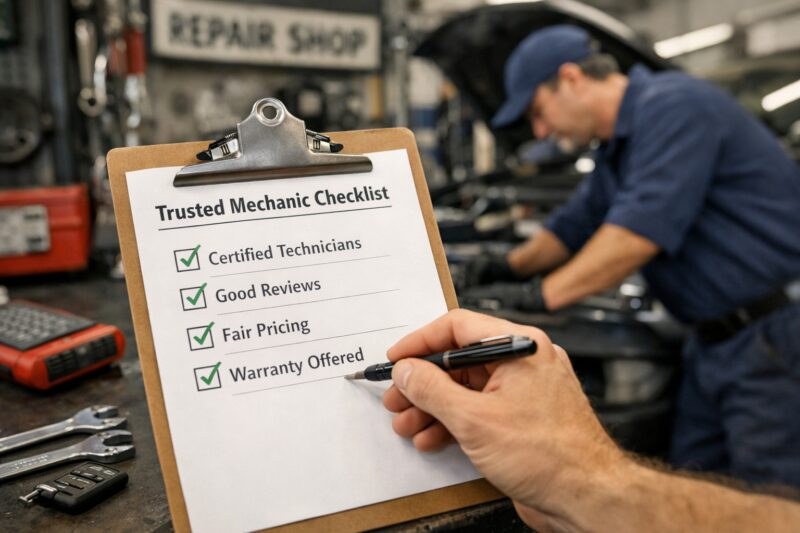
Transparency practices are a compliance substitute even when formal credentials alone do not guarantee quality. Look for documented parts sourcing, retained parts policies (when feasible), and warranty terms in writing. Also ask what insurance or liability expectations apply to the work—this matters for scenarios like accidental damage during repair, handling of removed components, and work that affects safe operation.
Tradeoffs: larger and “popular” shops are not automatically better, and smaller shops can be equally reliable if their process is repeatable. The differentiator is whether they use a consistent inspection-to-authorization workflow rather than relying on personal judgment only. If you’re dealing with fleet or commercial vehicles, expect edge-case standards: recordkeeping, uptime commitments, and turnaround documentation may be prioritized differently, and the shop should be able to explain how it manages those obligations.
Practical application: during intake, ask directly whether they can provide the written estimate and warranty terms before work begins. Then ask whether their technicians will perform the diagnostic plan you approve. If their answer is vague or defensive, that’s a signal to pause and consider a different shop category—especially if you’re facing high complexity, like ADAS calibration or emissions-related work.
Inspection & diagnosis standards: how a strong shop earns approval
A strong Vehicle Repair Shop earns your approval by performing an inspection that connects symptoms to evidence—not by guessing. A proper diagnosis includes symptom confirmation, relevant testing (often a scan plus targeted checks), and a clear explanation of why the findings matter.
Why it matters: misdiagnosis leads to unnecessary repairs, additional labor, and repeated failures that strain budgets and schedules. Many people assume the first repair attempt is “the diagnosis,” but the best shops treat diagnosis as a process that produces decision points. Instead of replacing parts immediately, they gather enough evidence to justify a specific repair scope and explain what else they considered.
How it works in practice: a robust inspection typically includes verifying the customer complaint, checking for obvious mechanical causes, reading diagnostic trouble codes, reviewing live data, inspecting wiring/hoses/connectors, and performing targeted tests. For drivability issues, a test drive may be relevant to reproduce the concern; for brake concerns, a measured inspection and wheel-end checks matter more than a generic quote.
Practical application: ask the shop to explain the diagnosis logic in three parts—what they found, why it matters to the symptom, and what other causes remain plausible. Then ask what the next step will be if the first repair does not resolve the issue. This is especially important when diagnosis is probabilistic rather than definitive (common in intermittent sensors or conditions that depend on temperature/load).
How to compare estimates fairly is part of diagnosis. Don’t compare only totals—compare labor hours allocated to diagnostic time, the specificity of the parts list, and whether the estimate includes inspections or “verify before replace” steps. Apples-to-oranges comparisons happen when one shop includes diagnostic verification and another goes straight to replacement without establishing root cause.
Deeper insight: the “parts cannon” failure mode. If a shop proposes replacing multiple components without confirming the root cause, your odds increase for repeated repair cycles. The checklist prevents this by requiring decision points tied to evidence: you should hear about test results and how they informed each proposed part. If they cannot explain that chain of logic, ask what evidence would confirm or rule out the chosen components.
If you need guidance for choosing a shop category aligned to diagnostics complexity, explore decision criteria that match system type and risk level—one approach is captured in choose right mechanic quickly style frameworks that emphasize specialization and process fit.
Written estimates & communication: protect your budget with clear scope control
A trustworthy Vehicle Repair Shop protects your budget with written estimates and a communication cadence that matches the repair’s real uncertainty. The short version: you should receive a written total that lists labor and parts, understand what is included versus excluded, and know how approvals work if findings change.
Why it matters: vague estimates invite “scope creep,” where additional work is discovered after disassembly and billed with unclear justification. Written documentation reduces misunderstandings because it forces the shop to define the work. It also protects you if you need to challenge a charge or seek warranty service later.
How it works: before keys change hands, request up front the service advisor name, the written estimate, and the repair scope—plus the diagnostic steps they’re charging for. A good estimate should include labor hours and line items, parts prices (or clearly stated ranges), applicable taxes and fees, and a statement of what is not included (for example, “alignment not included unless requested” or “diagnostic excludes teardown beyond X unless you approve”).
Communication should happen at predictable thresholds: during disassembly if additional findings require authorization, after diagnosis confirms the failure, and before any work that crosses your pre-approved threshold. If the shop encounters something unexpected, it should call you with a summary of the finding, the impact on safety or functionality, and the specific additional estimate.
Practical application: set authorization rules before the shop begins. If they use “may need” language, insist on decision points. Acceptable wording clearly states what additional work depends on and how much you’re approving for each phase; unacceptable wording often says “may need extra parts and labor” without numbers, evidence requirements, or a clear approval step.
Tradeoffs exist in complex diagnostics: some uncertainty is unavoidable. The difference is whether the shop uses that uncertainty responsibly with staged authorization. A shop that pressures you to agree to broad “catch-all” scopes increases your risk of paying for work that doesn’t match your approved diagnosis.
To implement this effectively in practice, consider using a structured framework that includes a checklist with specific inquiries to make before service, essentially guiding your discussions towards critical decision points. This approach helps ensure that you cover essential topics such as estimates and documentation, as outlined in the off-road repair checklist, which can ultimately safeguard your interests during the repair process. Additionally, having these questions at hand can help clarify expectations and prevent misunderstandings as the work progresses.
Parts, labor, and warranty: what to ask a Vehicle Repair Shop before paying
You should only pay after you understand parts choices, labor coverage, and warranty terms in writing. A trusted Vehicle Repair Shop can explain new versus remanufactured versus aftermarket options, and it provides a workmanship warranty (and often parts warranty) that shows what happens if something fails.
Why it matters: parts and labor warranties protect you against defective components and installation mistakes, but only if you know the terms and conditions. Without itemized receipts and clear coverage language, warranty claims can become slower, more expensive, or contested—especially when diagnosis is complex or symptoms overlap.
How it works: before payment, request itemized documentation showing what parts were installed, part numbers when available, labor line items, and the exact warranty duration. Ask whether the warranty is limited to parts, workmanship, or both. Then clarify what voids coverage: for example, using incompatible fluids, failing to follow recommended service intervals, removing components yourself, or continuing to drive while a safety-critical issue persists.
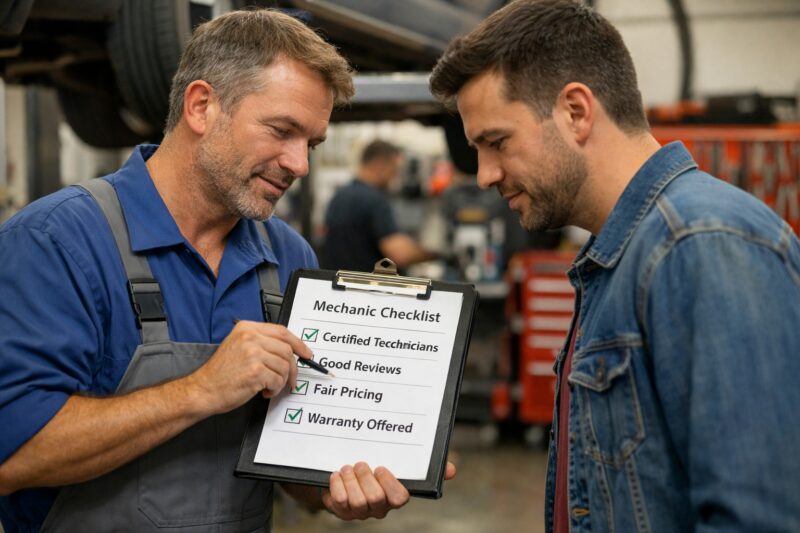
Vehicle coverage nuances are another tradeoff to understand. Manufacturer warranties may have special conditions, recall-related procedures have different documentation requirements, and some extended service campaigns require specific diagnostic evidence. A shop should be able to explain how its workmanship warranty interacts with manufacturer coverage so you don’t accidentally break a claim pathway.
Deeper insight: warranty bottlenecks. Suppose a component replacement didn’t resolve the concern because the underlying cause was different. A strong shop documents diagnostic evidence and discusses next steps instead of simply re-replacing parts blindly. Ask whether they will re-diagnose if symptoms persist, and whether the warranty covers subsequent work that’s directly tied to the originally approved repair.
Practical application: keep all receipts and your estimate copy. Ask about retained parts policy—if your vehicle needs recurring diagnostics, having the removed parts can help prove whether the installed component was defective or whether the failure mode changed. If you’re concerned about managing multiple providers or service categories, consistent documentation also supports efficient future diagnostics.
Finally, use a “payment as a record-building moment” mindset: ask the shop to confirm that your invoice matches the approved estimate and that warranty details are clearly printed. This is a key safeguard for situations where an issue returns after service.
Decision path: choose between alternatives (repair types, service models, and shop categories)
Choose the right Vehicle Repair Shop category by matching the repair complexity to the shop’s specialization and diagnostic capability. The best option depends on whether you need basic maintenance, deep diagnostic work, software calibration, or time-sensitive fleet support.
To compare realistically, consider four common approaches. Full-service independent repair shops often handle broad mechanical and electrical needs with solid diagnostics when process is strong. Dealer service departments can be advantageous for manufacturer-specific systems, warranty-related documentation, and certain specialized tooling or access to technical service bulletins. Specialty shops focus on one system family—brakes, transmission, exhaust, or electrical—so they may deliver faster, more repeatable outcomes for those categories. Mobile or at-home diagnosis services can help with pre-trip checks, intermittent symptoms, or affordability when towing is expensive.
Compact comparison table:
| Shop category | Strengths | Typical tradeoffs | Best-use cases |
|---|---|---|---|
| Full-service independent | General expertise, flexible scheduling, staged estimates | May need escalation for complex systems | Most maintenance and common drivability issues |
| Dealer service | OEM knowledge, strong warranty documentation, TSB workflows | Often higher labor rates, less flexible scope | Warranty claims, recall-related work, advanced OEM systems |
| Specialty shop | Repeatable procedures, faster diagnosis within scope | Limited to specific systems; may add referral steps | Brakes, transmission, suspension, or system-specific failures |
| Mobile/at-home diagnosis | Convenience, early triage, reduced towing | May limit test capabilities; may still require shop work | Intermittent concerns, pre-trip checks, budget-sensitive triage |
Practical decision criteria: start with symptom complexity and warranty constraints. If the vehicle is under warranty or tied to a recall or safety campaign, documentation requirements may push you toward a dealer or an independent shop that can follow manufacturer procedures. For out-of-warranty repairs, a capable independent or specialty shop may offer better value—if they can explain diagnostic logic and provide a written estimate.
Deeper insight: avoid “category mismatch.” If you bring a complex emissions or ADAS-calibration problem to a general shop that doesn’t routinely handle those systems, you risk scan-tool limitations, incomplete calibration verification, or improper release testing. Conversely, if you send a simple brake pad job to a deep specialty EV electrical shop, you may pay for expertise you don’t need.
Edge case: safety-critical repairs. For work affecting steering, braking, suspension geometry, or traction/ABS behavior, require appropriate verification steps before release: road test where relevant, torque checks, and any calibration or alignment steps if applicable. If the shop can’t describe verification steps beyond “we installed it,” ask questions before you authorize final payment.
Common pitfalls when shopping for a Vehicle Repair Shop—and misconceptions to avoid
Many people choose the cheapest-looking option or interpret silence as progress, and that’s how they end up with surprise bills or repeated repairs. The biggest pitfalls involve underestimating diagnosis quality, failing to control scope, and ignoring how recurring symptoms signal root-cause problems.
Misconception #1: “Cheapest estimate = best value.” A low number may exclude diagnostic time, omit key tests, or assume a repair outcome without verification. Hidden costs can appear as additional labor after disassembly, emergency parts sourcing fees, or return trips that happen when the shop didn’t confirm the failure mechanism. Commercially, this becomes costly quickly because downtime matters.
Misconception #2: “No news is good news.” A trusted Vehicle Repair Shop provides updates at meaningful checkpoints. If the shop communicates only when work is complete and never describes findings in the middle, you lose the chance to approve or correct the plan based on evidence.
Misconception #3: “Aftermarket parts always reduce reliability.” Quality varies, but the bigger issue is warranty compatibility and fitment verification. A shop that offers options should explain tradeoffs: cost, warranty duration, expected compatibility, and how it verifies proper installation. If they can’t give comparable warranty terms for aftermarket parts, you should ask why.
Deeper insight: ignoring recurring symptoms. If you repeatedly return for the same complaint, a good shop should document patterns and expand checks for root-cause recurrence, not just swap parts again. Ask whether it’s re-diagnosing or repeating the same assumptions. The checklist prevents failure modes like upsells without explanation and vague invoices by requiring written scope and clear evidence.
Failure modes to explicitly watch for: upsells that don’t link to safety or diagnosis, pressure tactics (“you must approve now”), refusal to provide written scope or warranty terms, and invoices that aren’t itemized by labor and parts. In a real-world scenario, an advisor who can’t explain why additional work is necessary—or who uses generic phrases without referencing inspection findings—should trigger a pause and additional questions.
If you’re also deciding how to compare multiple repair models while staying within budget, align your conversations to “services checklist before choosing” standards so your decisions are process-based rather than sales-based, like the approach emphasized in services checklist before choosing.
What most guides get wrong: advanced selection criteria and edge cases (2026-relevant)
Most guides focus on marketing signals and overlook process indicators—repeatable inspection steps, escalation rules, and documentation discipline. In 2026, modern vehicle complexity makes these process controls even more important for selecting the right Vehicle Repair Shop.
Good marketing is not the same as good repair process. Google reviews and social proof can help you shortlist candidates, but you should interpret feedback for evidence of process: mentions of clear communication, returned calls with diagnostic explanations, itemized estimates, and straightforward warranty handling. A shop can advertise aggressively yet fail operationally if it doesn’t have a consistent inspection-to-authorization workflow.
Modern complexity categories change what “qualified” looks like. Advanced driver assistance systems (ADAS) may require calibration and verification routines; EV charging and power systems rely on high-voltage safety procedures and specialized diagnostic capability. You don’t need to become a technician, but you should require that the shop can explain what tools and procedures it uses and how it verifies that the system works correctly after repair.
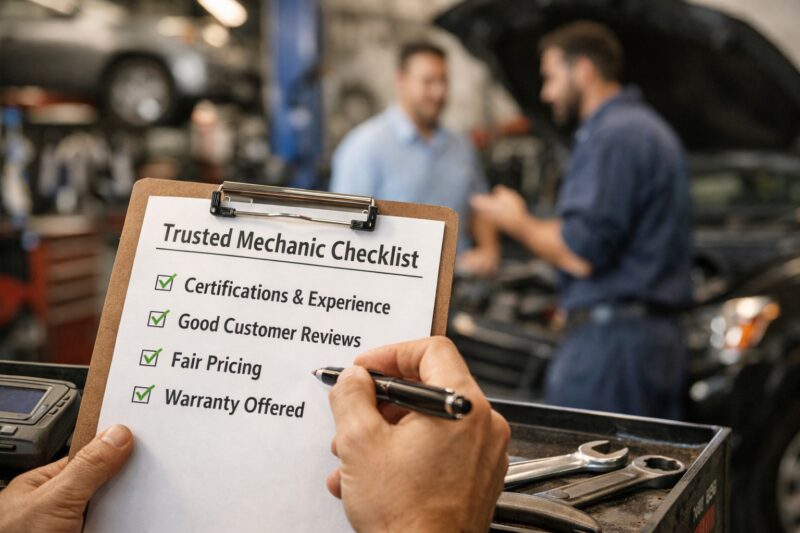
Edge case: safety-critical repairs. For releasing work that affects brake performance, steering response, or sensor integrity that influences stability control, insist on appropriate verification steps. Ask about torque specifications, road test protocols, and any recalibration or post-repair checks where applicable. If the shop cannot describe verification beyond “it seems fine,” that’s a common mistake guides fail to address.
Handling affordability objections is another area where guides are often too vague. You can ask for phased repairs when diagnosis indicates multiple contributing faults. Or you can request diagnostic-only work if the symptoms are unclear. The key is staged authorization: you should know the decision points and what you’re paying for at each phase without compromising safety.
Deeper insight: the documentation audit approach. Review prior repair history across invoices and compare parts compatibility, repeated labor patterns, and recurring complaint descriptions. If you see repeated replacement of different components without documented diagnostic reasoning, that can signal a “swap-and-hope” cycle. Ask the new shop how it will avoid repeating the same failure path and what evidence it will collect before recommending additional replacements.
If you’re evaluating how shop specialization impacts outcomes, it can help to use a category-aware framework such as choose right mechanic quickly to avoid mismatch and select based on diagnostic fit.
Location anchor: how to choose a trusted Vehicle Repair Shop in the United States
To choose a trusted Vehicle Repair Shop in the U.S., focus on responsiveness, diagnostic capability, and documentation—not just proximity. Local market factors like labor rates, parts availability, and regional driving conditions influence turnaround and cost, but your trust criteria should remain consistent.
How location impacts decision-making: a shop’s ability to source parts quickly can determine whether you experience days of downtime or a faster fix. Weather-driven wear patterns (road salt effects on corrosion, seasonal tire changes, or temperature-related sensor behavior) can also influence which inspections matter. A strong local shop should explain which regional factors are relevant to your symptoms and how it changes its inspection or repair plan.
Use online proof wisely. Reviews help most when you interpret them for process signals: recency, volume, and whether feedback mentions communication clarity, written estimates, and “they explained what was wrong” rather than only “they were fast.” Watch for review patterns that suggest pressure tactics or inconsistent outcomes. Mapping can be helpful for shortlisting, but the closest option may not be the most specialized for your complaint.
Deeper insight: when local reliance can backfire. If your issue is complex—ADAS calibration, EV systems diagnostics, or emissions drive-cycle verification—your best fit might be slightly farther if they routinely handle similar work. A common mistake is assuming that “closest shop” equals “best for me” when diagnostics requires specialized capability or software tooling.
Practical contacting checklist (scripted questions): ask for the service advisor name, request a written estimate before approval, and confirm how additional findings will be authorized. Ask what inspection steps they’ll perform for your specific symptom, whether they do verification after completion (road test or system re-check), and how warranty terms work for parts and workmanship. If you have an older repair history, ask them what documentation they want to see and how they use it to avoid repeating failures.
If you want to standardize this process before calling, keep a short question list like “what to ask before service” so you can evaluate candidates consistently, as outlined in what to ask before service.
Frequently Asked Questions About Vehicle Repair Shop
How do I choose a Vehicle Repair Shop with no prior experience?
Start by requesting a written estimate and asking what inspection steps they’ll use for your specific symptom. Compare how candidates explain diagnosis logic: a good shop connects findings to repair scope and describes what would change their conclusion if the first tests don’t match expectations. Finally, confirm warranty terms in writing and whether they require your approval for additional findings.
Ask for the service advisor name, the diagnostic plan, and a written estimate with labor and parts itemization. You should also ask what else could cause the symptom and what verification step proves the repair worked. If disassembly changes the findings, require that they call you for approval before proceeding—ask before you pay for any extra scope.
Is it okay to get a diagnostic only from a Vehicle Repair Shop?
Yes—diagnostic-only visits can be a smart choice when symptoms are intermittent or you’re unsure what category of repair applies. A good diagnostic visit produces documented findings like scan results, inspection observations, and recommended next steps with a decision point. Make sure the shop states how diagnostic fees relate to later repairs so you can plan your budget.
What does a good written estimate from a Vehicle Repair Shop include?
A solid written estimate lists labor hours, parts prices (or clearly stated ranges), taxes and fees, and what is included or excluded. It should also specify the scope boundaries and describe the authorization process if new findings appear. If an estimate uses vague language like “may need additional work,” you should ask for specific options with approval thresholds.
How can I tell if a Vehicle Repair Shop is overcharging or upselling?
Red flags include vague scope, poorly itemized invoices, unclear parts pricing, and pressure tactics to approve extra work quickly. Another sign is when recommended parts don’t align with the inspection evidence or when they replace multiple components without explaining diagnosis logic. A reputable shop welcomes questions and can justify each line item clearly.
What should I do if the problem returns after a repair?
First, collect documentation: your estimate, invoice, warranty terms, and any symptom notes (when it happens, what changed, any warning lights). Contact the shop and request re-diagnosis rather than automatically repeating the same replacement. A trustworthy shop should honor warranty workmanship where applicable and document its updated diagnostic steps.
Are aftermarket parts acceptable when choosing a Vehicle Repair Shop?
Aftermarket parts can be acceptable if the shop verifies fitment and provides clear warranty terms. Ask how aftermarket options compare to OEM in terms of compatibility, expected longevity, and warranty duration. If the shop cannot explain these tradeoffs or won’t document the details, that uncertainty increases your risk.
What’s the difference between dealer service and an independent Vehicle Repair Shop?
Dealer service often provides OEM-specific procedures, stronger alignment with manufacturer warranty processes, and access to brand-specific technical information. Independent shops can be cost-competitive and may offer flexible scheduling and staged estimates. The best choice depends on whether your issue ties to warranty/recall procedures and whether the independent shop has the right tooling and calibration verification.
Can I use my own parts at a Vehicle Repair Shop?
Many shops allow customer-supplied parts, but policies vary. You should confirm whether the shop will install them without warranty, or whether warranty coverage is limited if the part is not sourced through the shop. Also ask how they verify compatibility and whether they can provide documentation for fitment before installation.
Long-tail: Should I bring my vehicle to multiple Vehicle Repair Shops for estimates?
It can help for complex or expensive diagnostics when the diagnosis is uncertain. If you do multiple visits, keep the process controlled: authorize diagnostic steps only, request like-for-like written estimates, and avoid authorizing overlapping repairs that change the evidence. Comparing estimates is most reliable when each shop explains diagnostics and includes comparable verification steps.
Long-tail: How do I verify warranty coverage from a Vehicle Repair Shop?
Ask for warranty terms in writing before paying, including duration, what workmanship covers, and what conditions void coverage. If the warranty depends on specific parts or procedures, confirm those requirements upfront. Also request how the shop handles warranty claims when symptoms persist and whether it will perform re-diagnosis under warranty.
Conclusion
To choose a trusted Vehicle Repair Shop in 2026, prioritize inspection transparency, require written scope and estimates, verify parts and labor warranty terms, and match the shop category to your issue complexity. The most practical safeguards are decision points: approve specific work only after you understand the diagnosis logic, and insist on “ask before you pay” for any additional findings.
Your next step is action-oriented. Contact 2–3 Vehicle Repair Shop candidates with your symptom summary and a short question set, then request comparable written estimates and warranty terms. Document what you observe (noise, light behavior, dates) and keep copies of invoices so repeat problems can be diagnosed efficiently rather than re-litigated.
For supporting guidance on repair documentation and consumer rights, you can also reference resources like FTC Auto Repair and NHTSA Recalls to understand recall context and how documentation can matter. For service and safety expectations tied to quality processes, AAA Vehicle Inspection is another helpful consumer reference to benchmark what “good” looks like when communicating with shops.
Quick action: Use the checklist before authorizing repairs, and save all receipts and invoices so warranty support is straightforward if anything doesn’t perform as expected.
Updated May 2026