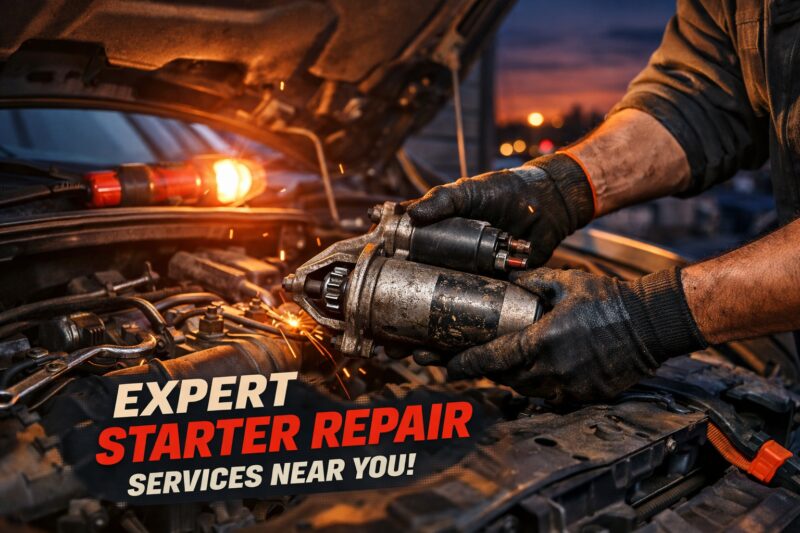
If your car won’t start, the right starter repair services near you restore the starting system by diagnosing the real cause, not guessing which part to replace. When you search for starter repair services, you typically want a shop that checks the battery, charging, wiring, grounds, and the starter circuit before it swaps components. Modern vehicles also need electrical testing and scan-based checks when symptoms overlap with control systems. The goal is to get you back on the road with a verified repair and a clear plan you can compare.
In 2026, the best local shops treat starting problems as an electrical diagnosis problem first. That means load testing a weak battery, checking voltage drop on cables, and confirming the starter circuit behavior. It also means separating true starter faults from issues like corrosion, damaged wiring, a faulty relay, or an ignition switch that mimics starter failure.
This guide shows what expert starter repair should include, how to choose a reliable provider nearby, and what questions to ask before you approve work. You will also learn common mistakes that lead to repeat no-start issues and how pricing and warranties should work for this kind of repair.
Choose the right repair path for starting-system problems before parts get replaced
A professional starting-system repair starts by identifying the failing circuit, not by jumping straight to a starter replacement. A shop should confirm whether you have click/no-crank, crank/no-start, or intermittent behavior, then trace the cause through the electrical path. This is where many “near you” searches succeed or fail, because the quality of diagnosis decides whether you fix the root problem.
Symptoms can look identical even when the cause is different. For example, a car may click once due to a voltage drop at the battery cable, even if the starter motor can still crank strongly. Another case is crank/no-start caused by a control-circuit fault, where the engine tries to turn but another system blocks start. Diagnosis matters because the wrong replacement can leave the true fault untouched and create a repeat .
In a typical shop workflow, technicians begin with battery health checks and then move to circuit verification. They should perform a battery load test, inspect and test ground connections, and run starter circuit checks that confirm power and control signals. Many shops also inspect relays, fuses, and fusible links where they are part of the starter feed path. If ignition switch overlap is suspected, they should verify the switch signal and starting interlock inputs rather than assuming the starter is defective.
Here is a practical scenario: your vehicle cranks slowly only after sitting overnight. A quick guess might blame the starter, but load testing can reveal a battery that fails under real demand. If the technician only checks idle voltage, the battery can look “fine” and the starter can be blamed incorrectly. A strong shop documents what it tested and what readings changed under load.
Some cases also require checking upstream causes that a starter repair alone cannot solve. Corroded grounds, damaged wiring harness sections, and poor connections can make a repaired starter fail again. Even security and immobilizer-related logic can create crank/no-start symptoms when the system blocks start. In those cases, a technician should still trace the starter circuit first, then expand diagnosis only when starter fault testing shows the starter is not the root cause.
What a high-quality starter repair service includes in an appointment
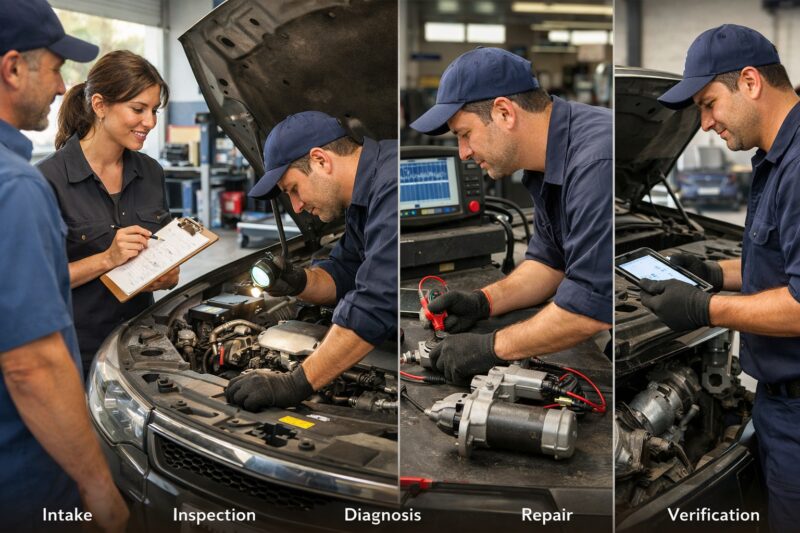
A quality starter repair appointment follows a clear sequence: intake, inspection, tested diagnosis, repair, and verification. You should expect the shop to confirm symptoms, explain findings, and show what it tested before it replaces any parts. This is the difference between maintenance-grade work and a guess-and-swap approach.
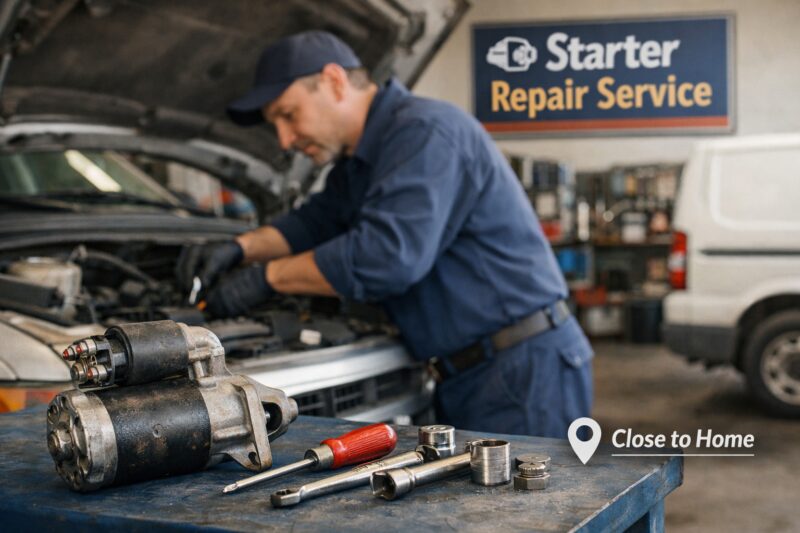
During intake, the technician should ask what happens when you turn the key or push-button start. They may record whether you hear a single click, hear rapid cranking, or see dashboard errors. This matters because it narrows the likely circuit faults, such as solenoid behavior versus power feed issues versus control logic overlap.
During inspection, the shop should perform electrical checks and then inspect physical connections. A strong approach includes wiring and ground checks, such as verifying battery terminal condition and inspecting cable ends for looseness or heat damage. Technicians should also confirm the starter mounting and cable routing so the connection stays secure after reassembly. If they open the starter or bench-test it, they should assess wear points relevant to your design, such as solenoid action, internal contacts, and gear engagement components.
Quality shops also handle fit-for-vehicle realities. Starters differ by design, and some use additional circuitry that can fail without obvious external signs. That is why “it always bolts in” logic can miss issues like corroded connectors or damaged harness sections near the starter location. The technician should confirm the starter circuit behavior after repair, and they should verify the fix with electrical testing and verification rather than a single “it starts now” check.
Communication is part of quality. You should receive an itemized estimate that separates diagnosis, labor, and parts or rebuild options. If a technician finds unexpected harness damage after partial disassembly, the shop should pause and update the estimate with the new evidence. That way, you do not approve repairs based on incomplete information.
When uncertainty exists, it should be managed by testing, not by vague promises. If the technician suspects wiring damage but cannot confirm it yet, the right next step is targeted electrical testing and inspection. This reduces repeat failures caused by a “fix the starter” recommendation when the real issue was a current path problem.
How to find expert starter repair services near you with confidence
You can spot an expert starter repair shop by how it explains diagnosis, tests results, and warranty coverage. The best provider nearby is clear about what it will check, what it found, and what it will do next. When you compare quotes, focus on how the shop reaches conclusions, not just the final parts list.
Start by checking local responsiveness and transparency. Look for location clarity, appointment availability, and a diagnostic-first policy that includes starting-system diagnostics appointments for electrical issues. Ask whether the shop tests the circuit and grounds rather than only swapping parts. A reputable shop should explain the starter fault testing process at a high level so you understand what “good” evidence looks like.
When you call or , ask targeted questions. Find out how they handle battery verification, whether they do voltage drop checks on cables, and how they confirm ground integrity. Then ask what parts policy they use: repair when tests support it, replace when internal faults or severe wear are confirmed. If you are told “it’s the starter” without seeing measurements, that is a red flag.
Trust signals include a willingness to show readings and provide a before-and-after summary. Quality shops explain why they recommend a rebuild or replacement and what will be covered under warranty. They should also discuss likely overlaps, such as ignition switch or relay logic, and how their testing distinguishes those from starter faults. This avoids the common mistake where a shop blames a “bad battery” without confirming battery load performance and cable condition.
Be cautious with bait estimates and pressure tactics. If the quote excludes diagnostic steps, or if the shop refuses to discuss test results, you may end up paying twice when the issue is upstream. Another warning sign is insisting on immediate replacement without circuit checks, especially for intermittent symptoms that often come from connection issues.
If you want to reduce uncertainty, choose a shop that emphasizes electrical testing and verification. You should also expect documentation and a clear path from tests to repairs, because it is the only way to justify a rebuild versus a replacement decision.
Common mistakes that lead to repeat starting-system failures
Repeat failures usually come from skipping the circuit checks that prove what failed. The starter can be blamed even when the real cause is weak current delivery through cables or poor ground paths. This is why many repeat visits happen after an initial “starter replacement” did not address the upstream problem.
A common misconception is that starter problems always mean the starter is bad. In practice, symptoms like clicking or slow crank can come from voltage drop across corroded terminals, loose cable ends, or damaged wiring near the starter. Another mistake is assuming a new battery fixes everything, even if the battery still fails under load or if a ground connection still creates resistance.
Diagnostics can also fail when shops skip voltage drop across cables and grounds. Without those checks, a technician may miss a current-path fault that prevents the starter motor from receiving enough current. Another frequent oversight is ignoring related components in the starter circuit path, such as relays, fuses, or fusible links that feed the starter. When these are not inspected, the starter repair can look successful for one start, then fail again when conditions change.
Symptom overlap is another major cause of misdiagnosis. An ignition switch fault or starting interlock logic can mimic starter failure, especially when the system blocks start even though the starter circuit command is present. Relay logic issues can also create click/no-crank behavior that looks like a weak starter. The shop should confirm whether the control signals and power feeds match the expected starter behavior through wiring and ground checks.
Here is an edge case that often surprises owners: a connection works when everything is cool, then fails after heat soak. Intermittent faults can be caused by a failing connector pin, loose ground strap, or internal solenoid contact wear. If the shop does only a quick test under one condition, the issue can return. Quality testing accounts for intermittent conditions by verifying connections and testing under realistic load patterns.
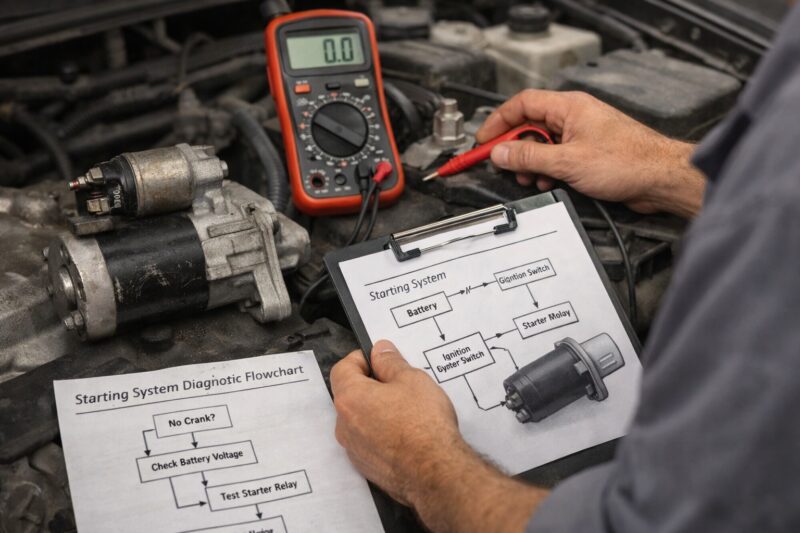
Even after a starter repair succeeds, a poor reassembly can create immediate repeat symptoms. If cable ends are not torqued correctly or if a ground is not restored cleanly, the starting circuit can be unstable. That is why the next section focuses on what a proper after-repair checklist and verification should include.
Starter repair vs replacement: what your technician should recommend and why
The best choice between starter repair and replacement depends on test results and the condition of internal components. A technician should recommend repair when the starter tests show fixable wear and when cleaning and internal replacement restore reliable operation. Replacement is often best when internal damage is severe, or when repairs would not deliver a dependable life under warranty terms.
Start with evidence. A good starter fault testing process should evaluate internal electrical behavior, physical wear, and contamination sources. If corrosion or contamination has affected internal contacts, repair may be limited because cleaning alone might not restore consistent current flow. If tests show a specific internal failure mode, a rebuild can be justified. If the starter fails multiple checks or shows deep wear, replacement may be safer.
Related work also changes the recommendation. Sometimes wiring and ground checks reveal a current path fault, and the starter tests good. In that scenario, the “starter repair” is really a circuit correction, and replacing the starter is unnecessary. If the shop finds damaged connectors, poor terminal condition, or a failing relay feeding the starter, it should repair the circuit first or at least include that corrective work in the plan.
Tradeoffs show up in warranty and documentation. Rebuild work should include what was replaced internally and what tests were performed before and after. Replacement should include proof the installed starter matches the vehicle requirements and that electrical testing and verification confirms starting circuit function. If a shop can only say “it’s fixed” without measurements, you may not know whether you paid for the right repair route.
Customer objections often include “Why not just swap it?” A clear technical answer is that the starter can be the victim. If a short or charging-related issue damages starter contacts, replacing the starter without correcting the root cause can cause repeat failures. A quality shop explains the chain of cause-and-effect based on tests, not parts guessing.
To decide confidently, ask how the shop will document the results. You want to see what failed, what test confirmed it, and what changed after repair. That level of detail reduces the risk of paying for the wrong solution.
Advanced starting-system scenarios that require more than basic starter work
Some starting problems are not solved by basic starter service because the symptoms reflect an intermittent circuit fault or overlapping control logic. If your car sometimes won’t crank or only fails under specific conditions, the shop needs a deeper wiring and ground checks approach plus controlled circuit verification. This is especially true for cars where multiple systems interact during start authorization.
Intermittent no-crank can point to a connection that breaks under heat, vibration, or moisture exposure. Corrosion inside connectors can also create a high-resistance path that passes one test and fails another. A careful shop should inspect harness rub points near the starter location and verify the connector condition before assuming internal starter failure. In 2026, many vehicles also involve more complex control pathways during start, so the “starter only” assumption can mislead.
Multiple-symptom returns are another advanced scenario. For example, you may see slow crank followed by stalling, or you may notice a pattern of dash messages plus a no-start event. These combinations suggest you need a broader check that still starts with starting-system diagnostics appointments, then expands only when the starter circuit checks prove the fault lies elsewhere. Technicians should verify battery health under load and confirm that the charging system does not contribute to voltage collapse during cranking.
Battery and charging interactions are common. A battery that seems “okay” at rest can fail when the starter demands current. Load testing should be part of the plan, not just idle voltage checks. Electrical testing and verification helps separate a weak battery from a current path fault. It also helps avoid the mistake of blaming the starter when the voltage drop is actually at a cable or ground path.
Environmental and wear factors can create edge cases. Moisture can corrode grounds and terminals, and damaged insulation can create intermittent resistance. Heat soak after shutdown can also cause a connector to expand and lose contact. If a shop accounts for these factors with inspection and circuit tests, you reduce the chance of repeat symptoms.
After repair, an advanced shop follows a checklist that prevents immediate re-failure. That includes confirming torque and fitment on cable ends, ensuring grounds are cleaned and reattached correctly, and verifying the circuit after reassembly. These steps are practical and prevent a “fixed it but it failed again” scenario that owners often report after incomplete re-checks.
What to expect on price, estimates, and warranty terms in 2026
Starter-related pricing varies because real diagnosis and access costs vary by vehicle design and by what the tests reveal. In 2026, most reputable providers separate diagnostic work from repair labor so you can understand what you paid for. When you ask about starter repair services, the estimate should clearly list test steps, labor time, and parts or rebuild costs.
A fair estimate typically includes a diagnostic fee policy and a plan for starter circuit checks. Labor may cover inspection, removal, installation, and any electrical repair work such as connector replacement or ground correction. Parts charges can include the starter itself, internal rebuild components, and any related circuit parts that tests confirm. The cost can rise when access is difficult, when corrosion is severe, or when additional wiring repairs are necessary.
To compare quotes apples-to-apples, ask what tests were performed and what failed. You should also ask whether the shop includes wiring and ground checks and electrical testing and verification as part of the process. If one quote includes circuit tests and the other only includes starter replacement labor, the cheaper option can end up costing more after a repeat failure and warranty dispute.
Warranty terms should be specific about coverage. A good warranty covers parts and labor for the repaired or installed components, and it should explain what is excluded, such as damage caused by unrelated electrical faults. You should receive documentation that supports what was repaired and what tests verified. Without that, warranty claims become harder and you may pay again.
| Estimate comparison item | What to ask for | Why it matters |
|---|---|---|
| Tests included | Battery load test, voltage drop checks, ground inspection, starter circuit test | Prevents misdiagnosis and repeat no-starts |
| Parts warranty | Coverage length for repaired or replaced starter components | Protects you if internal faults return |
| Labor warranty | Coverage length for diagnostic and repair labor | Protects against rework from install issues |
| Estimate components | Diagnostic fee, inspection labor, remove/install labor, electrical repair items | Lets you compare quotes fairly |
A “low quote” trap often happens when the shop skips starting-system diagnostic work. If the recommendation is based on symptoms only, you may pay for a new starter while the real fault remains in wiring, grounds, or control logic. Then warranty may not cover the underlying cause, and you face repeat visits. The best approach is to request a quote that reflects the starter fault testing process, including evidence-based electrical testing and verification.
If you need a realistic timeline, ask how the shop schedules diagnostic-first appointments and when they can provide an estimate. Complexity, corrosion severity, and access difficulty can all change the calendar. Still, a professional shop will set expectations based on evidence, not hope.
How long starter repair services take for most vehicles in real-world scheduling
Most starter repairs finish in a single work period when diagnosis confirms a straightforward starter fault. However, the timeline can extend when the shop needs deeper circuit checks for intermittent symptoms or when corrosion requires more connector repair. The key is that quality starter fault testing process work can shift the schedule while reducing repeat visits.
In general, you can expect starters that are accessible and confirmed by testing to take less time than hard-to-reach designs or wiring-damage cases. If the shop must remove related components for access, labor time increases. If harness inspection is needed, the shop may also need time to source or replace connectors and terminals confirmed by electrical testing and verification.
Intermittent problems can also add time because technicians may need to reproduce the fault conditions. Heat-soak behavior, vibration-related disconnects, and moisture-caused resistance can require additional verification steps. In those cases, a quality provider still aims to keep you informed with updated findings, rather than replacing parts without proof.
If you are planning around work or errands, ask whether the shop can provide a diagnostic estimate first. Many shops can separate “diagnosis appointment” time from “repair approval” time so you know what will happen before parts are replaced. That approach helps owners avoid surprise delays while still supporting evidence-based decisions.
A practical limitation is that some timelines depend on parts availability if a replacement is needed. If you choose to rebuild, the shop may need time for internal component sourcing or bench verification. The best strategy is to schedule a starting-system diagnostics appointment and ask how the shop handles updates if the findings change after initial disassembly.
Finally, a reliable shop should explain why the time changes. If it cannot provide a reasoned explanation, it may not be doing the testing that prevents repeat failures. In this kind of electrical work, clarity about the timeline often reflects how disciplined the diagnostic process is.
Frequently Asked Questions About Expert Starter Repair Services Near You
How much do starter repair services typically cost in 2026?
Pricing varies based on how much diagnosis is required and what tests show is failing. A shop may charge a diagnostic fee, then add labor for starter removal and installation plus any parts or connector repairs. In harder cases with corrosion or harness damage, the cost can rise because more electrical testing and verification is needed.
The best way to know your cost is to request a quote after the shop confirms the starter fault testing process findings. Ask the estimator to itemize the diagnostic work, labor line items, and any parts or rebuild components included.
How long should starter repair take for most vehicles, and what affects turnaround?
Many confirmed starter repairs are completed within a typical same-day to next-day window when access is straightforward and the fault is clear. Turnaround often increases when the shop must address wiring and ground issues, repair connectors, or verify intermittent faults under different conditions. Parts availability for replacement starters can also affect scheduling.
For an accurate estimate, ask whether the shop can provide an update after initial starting-system diagnostics appointments. That way you know whether you are dealing with a confirmed starter issue or an upstream electrical problem.
How do I know if I need starter repair or a battery replacement?
Start by matching symptoms to likely failures, such as click/no-crank versus crank/no-start. The correct test is a battery load test, not just a resting voltage check, because a weak battery may still look acceptable at idle. Shops should also perform wiring and ground checks to see whether current delivery is blocked.
If the battery fails under load and cables and grounds test healthy, battery replacement may solve the issue. If the battery load test is strong and starter circuit checks still fail, starter repair or replacement can be the right fix.
What should a mechanic test before calling it a starter problem?
A mechanic should test the battery under load, check voltage drop across cables, and inspect and verify grounds. Next, they should check the starter circuit behavior, including power feed and control signal paths that trigger the starter solenoid. This is where electrical testing and verification prevents misdiagnosis.
They should also inspect relays, fuses, and fusible links where they belong in the starter feed path. If symptoms suggest overlap, they should verify ignition switch and starting interlock logic with appropriate circuit checks.
Can a bad ignition switch or relay cause symptoms that look like a failing starter?
Yes, they can cause symptoms that mimic starter failure, especially click/no-crank events. An ignition switch fault or relay issue can prevent the starter command signal from reaching the starter circuit correctly. That is why the shop should separate starter fault testing from control-circuit verification.
Good technicians confirm with circuit tests and explain which signal or power path failed. They do not rely on symptoms alone because overlap is common.
What is the difference between repairing a starter and replacing it outright?
Starter repair usually means rebuilding internal components or restoring worn parts that tests identify as faulty. Starter replacement replaces the entire starter unit with a new or remanufactured unit, then verifies starting behavior afterward. Either approach should follow measurements from electrical testing and verification.
Warranty terms can differ based on whether you choose repair or replacement. Ask what exactly is covered and what tests were done before and after service.
Why does my car click once and then do nothing after starter repair?
This pattern often points to a persistent current delivery issue, such as a loose or corroded cable end or a ground path that did not restore correctly. Another possibility is a battery or charging problem that causes voltage collapse after an initial attempt. It can also come from a relay or control-circuit fault that was missed in earlier checks.
The next step is usually to repeat wiring and ground checks and confirm voltage drop under the exact start conditions that fail. A quality shop can pinpoint whether the issue is upstream rather than assuming the starter repair failed.
Is it safe to drive a vehicle that sometimes won’t start?
It is not ideal because you may be stranded when the fault becomes worse or repeats under different conditions. Intermittent electrical faults can also worsen and cause broader starting-system damage. If you notice repeated no-start events, the safe move is to arrange diagnosis and avoid repeated start attempts.
If the car starts, drive only to a repair appointment if it is reliably starting. If it fails during a drive or throws unusual electrical warnings, towing is usually the safer option.
How do I know the shop is doing the right diagnostic work for my starting problem?
Ask what tests the shop will run before parts are replaced, including battery load testing and voltage drop checks. You should also ask whether they will perform wiring and ground checks and confirm starter circuit function. If they can explain the starter fault testing process and share test results, that is a strong sign of quality.
Request an estimate that reflects diagnosis time and document updates if findings change after disassembly. Avoid shops that refuse to explain why they recommend replacing parts.
Do I need to replace the starter if the solenoid seems to be the issue?
Not always. Solenoid-related symptoms can sometimes come from internal starter wear, poor connections, or current delivery faults. A technician should confirm solenoid and internal electrical behavior through starter circuit checks and physical assessment.
If tests identify solenoid action as the fault and the rest of the starter can be restored, repair can be appropriate. If internal damage is extensive, replacement may be the better recommendation.
Can corrosion on battery terminals mimic starter failure symptoms?
Yes, corrosion can increase resistance at the terminals and reduce current delivery during cranking. That can produce slow crank or clicking behaviors that seem like starter failure. Visual inspection alone is not enough, because the shop should confirm with voltage drop checks.
Cleaning can help, but it is not the whole solution when the cable ends or internal connections are heat-damaged. Quality diagnosis includes electrical testing and verification after any terminal or connection service.
Conclusion: choose verified repair work, not guesswork
Expert starter repair services near you should begin with diagnosis you can understand and verify. The best shops follow measured evidence through starting-system diagnostics appointments and a starter fault testing process that separates starter faults from battery, charging, wiring, and ground issues. That approach prevents repeat no-start failures caused by swapping parts without confirming the real cause.
When you compare local providers, focus on what they tested, how they explain results, and whether they provide a documented estimate with clear warranty terms. Look for wiring and ground checks plus electrical testing and verification, because starting problems are often electrical current-path failures as much as they are starter wear. If a shop cannot show you what it measured, ask more questions before approving work.
Then choose a plan that matches the findings: starter repair when tests show fixable internal issues, replacement when internal damage is severe, or circuit correction when the starter tests good. Your next step is to compare two or three providers, ask what tests are included, and schedule an appointment that includes documented starting-system testing. Share your symptom details, like when it clicks, when it cranks, and when it fails, to speed diagnosis and reduce unnecessary repair costs.
Updated September 2026