If you need to schedule service soon, the smartest way to avoid scams, surprise fees, and repeat problems is to verify the shop’s diagnosis process and authorization rules before work starts. For drivers searching “Auto Repair Hillsboro Oregon,” the key is choosing a shop that documents findings, provides evidence for recommendations, and offers clear estimates with warranty terms in 2026.
In 2026, the best shops use modern scan tools, structured diagnostic workflows, and better recordkeeping so you can compare quotes like-for-like and protect warranty claims. This guide gives you a practical decision path, a Hillsboro-specific checklist of what to ask, cost and repair-code context so estimates make sense, and common pitfalls that lead to unnecessary parts replacement.
You will also learn how to handle intermittent issues, what “diagnostic fee” should mean, and how to confirm workmanship after the repair. If you want to protect your time and your budget, use this article as a script: ask questions, require documentation, and verify the result before you authorize additional work.
How to Choose the Right Auto Repair Shop in Hillsboro, Oregon (Decision Path)
Choosing the right auto repair shop in Hillsboro, Oregon comes down to one question: will the shop diagnose first and then authorize repairs based on evidence? If the answer is yes, you reduce the odds of misdiagnosis, added charges, and repeat visits—problems that often start when a shop jumps straight to parts guessing.
Start with your symptoms and build a diagnosis plan before anyone touches the vehicle. A good shop begins by documenting what you observed (noise, vibration, warning lights, when it happens, and what changed recently), then matches it to a test sequence that can prove the root cause. For example, “check engine light” alone is not enough; a competent shop will look at stored and pending codes, monitor readiness status, and confirm whether the fault correlates with your driving conditions.
Next, move to estimates with a clear scope. A reliable shop explains the diagnostic steps, the expected labor hours, and the parts assumptions (including whether they expect OEM or aftermarket components). Then, before approving additional work, they should pause for authorization if new findings change the repair plan. This is where many drivers get burned: the shop discovers a separate issue but only verbalizes it, or they revise an estimate without tying the change back to a documented test result.
For “good fit” in Hillsboro, look for availability and communication, but also for documentation quality. A modern, trustworthy shop should be able to show photos of inspection points, printouts of scan results, before/after measurements (such as brake rotor thickness, alignment specs, or fuel trim deltas), and a written summary of what was tested. That level of evidence helps prevent “misdiagnosis drift,” where each visit treats the latest symptom instead of confirming the root cause.
Tradeoffs exist. Faster turnaround sometimes means less diagnostic depth, which can be fine for straightforward wear items but risky for intermittent electrical faults, overheating patterns, or drivability issues. If your symptoms are inconsistent, ask how the shop handles uncertainty: do they test while replicating conditions, propose a short “test-before-you-spend” plan, or require a second visit if the fault cannot be reproduced?
If you want to explore related local options, compare how communication and documentation work in nearby markets like Beaverton Oregon auto repair and decide what style best matches your expectations for speed and transparency.
Finally, protect yourself with a simple authorization boundary: never approve “additional labor” or “parts as needed” without understanding what evidence could trigger the change. To keep yourself organized, use a consistent automotive repair checklist so each call includes the same key questions and you can compare proposals fairly.
auto repair services You Should Expect (and How to Verify Each)
When you visit a reputable shop, you should expect diagnostics and verification tailored to the system—not a one-size-fits-all inspection. Competent auto repair in Hillsboro should produce evidence: scan data, measurements, test results, and a clear “what we found and what we changed” story.
For engine and performance concerns, the usual first step is an inspection plus a scan, followed by targeted testing. That might include checking fuel trims, evap readiness, misfire counters, and live sensor data under controlled conditions. If the concern is vibration at speed, the shop should also check engine mounts, suspension components, and tire condition, not just the drivetrain codes. Verify workmanship by requesting the scan before and after, and asking the technician to explain why the new readings indicate the fault is resolved.
For brakes, you should expect measurement and inspection before replacement. A good shop checks pad thickness and rotor condition, verifies brake fluid condition, and may measure rotor runout or discuss if the rotors require turning/replacement. Then it should test pedal feel and perform road verification to confirm the noise or pull is gone. One real-world scenario: a driver hears squeal after rain. The best shop looks for contamination or moisture effects, confirms rotor surface condition, and does not immediately replace everything without ruling out root causes like brake pad type or installation issues.
Electrical and starting/charging issues should involve testing under load, not guesswork. Expect battery load tests, alternator output checks, and voltage drop tests on critical circuits. Intermittent “no-start” cases are where many guides oversimplify. What most guides get wrong is assuming that replacing a part is the same as proving the failure mechanism. A competent approach includes capturing conditions when the fault occurs and checking for wiring faults, ground integrity issues, or sensor resets that may only appear at certain temperatures or after key cycles.
For suspension/steering and alignment concerns, verification matters as much as repair. Shops should perform a road test, inspect wear components (ball joints, tie rods, bushings), then align using recorded specs. Afterward, request alignment printouts and ask how the final numbers compare to manufacturer tolerances. For cooling and heating, a reliable shop should check for leaks, verify fan operation, confirm thermostat behavior, pressure test when appropriate, and confirm proper operating temperature after the repair.
Ask for evidence for diagnostics: scan codes indicate where the system “complained,” not always what caused the problem. For example, a sensor code might trigger from wiring damage, a connector issue, or a failing component that produced a correlated symptom. When additional testing is justified, the shop should explain why—such as ruling out a vacuum leak before recommending an expensive sensor.
If you’re comparing your experience across categories of work or trying to choose a shop that matches your risk tolerance, review Local auto shop checklist questions before you authorize any diagnostics.
What It Costs in 2026: Estimates, Labor Rates, and Avoiding Surprise Bills
In 2026, the best “cost expectation” for auto repair starts with how the estimate is built, not the final number. A transparent Auto Repair Hillsboro Oregon quote breaks down diagnostic labor, repair labor hours, parts line-items, and assumptions so you can tell what you are authorizing and why.
Estimates should show the logic: what the shop expects to find, how long each step takes, and what might change if the diagnosis uncovers additional causes. Diagnostic complexity is a major cost driver in modern vehicles because technicians often analyze multiple systems, cross-check sensor data, and confirm the fault under specific conditions. In Hillsboro, pricing can also be influenced by parts sourcing speed—new, remanufactured, or used components—and whether OEM parts are required for the exact model year and trim.
To compare quotes correctly, match the scope. If Shop A proposes “replace part X,” while Shop B proposes “diagnose and test before replacement,” the estimates may look different but are not apples-to-apples. Ask each shop to explain whether their diagnosis basis is identical: same scan interpretation, same measurements, same test sequence, and the same parts grade/brand/spec. This approach reduces the chance you are paying twice—once for a wrong assumption, then again for the corrected root cause.
Understand how flat-rate and diagnostic fee credits can work. Some shops charge a diagnostic fee that may be credited toward repair labor if you authorize the work, but it depends on the shop’s policy. If new findings change the estimated labor hours, a good shop documents what changed and why, rather than presenting a larger total without a new evidence trail.
Guardrails for authorization are essential, especially for safety-critical systems. Any additional parts or labor should require you to approve based on a documented discovery step—such as an inspection result, a measurement, or a test outcome confirming the new need. If a shop asks you to approve without explanation (“we’ll just do this next”), that is a red flag for budget risk.
As an example, consider a check engine light with drivability symptoms. If the estimate only lists a sensor replacement with no mention of verified codes, freeze-frame data review, and follow-up tests, you may pay for a part that does not resolve the underlying cause. A better estimate references what will be tested and what success looks like after repair.
If you want to see how different shops handle estimates in a neighboring area, compare practices in Aumsville Oregon auto repair and look for documentation style consistency and warranty clarity.

For a self-protecting approach during the quote stage, use the framing from a automotive repair checklist so you can ask, “What is included, what is excluded, and what would trigger a change?” before you authorize any work.
Avoid These Common Mistakes When Booking Auto Repair Hillsboro Oregon
The most expensive mistakes in auto repair usually happen before the repair begins: authorizing work without a diagnosis plan, ignoring documentation gaps, or choosing based only on the lowest price. For drivers seeking Auto Repair Hillsboro Oregon, the goal is to avoid scams and repeat issues by controlling approvals and insisting on evidence.
Mistake #1 is authorizing repairs before you understand the diagnosis plan and evidence. A shop should explain what tests they will run, what information they expect to gather, and how that information leads to a specific repair. If they cannot articulate that pathway, you are outsourcing your decision to guesswork. Mistake #2 is focusing only on lowest price rather than warranty, workmanship verification, and diagnostic rigor. In real scenarios, the cheapest quote often omits diagnostic time, lists generic parts, or excludes key verification steps like post-repair testing and inspection measurements.
Mistake #3 is ignoring warning signs until they worsen. Brake noises, overheating, and dashboard alerts can become cascading damage. For instance, a mild overheating event might indicate a cooling fan or coolant flow problem, but prolonged overheating can warp components or damage hoses and sensors. A responsible shop should treat safety and drivability alerts as time-sensitive and explain what could be at risk if repairs wait.
What most guides get wrong is the misconception that “if the check engine light is off, the problem is solved.” Monitors reset after repairs, and some faults only trigger under certain conditions or temperatures. A good shop confirms readiness and verifies the repair by running follow-up tests or inspection steps that demonstrate the fault mechanism is resolved, not just that the light temporarily cleared.
Edge cases also matter. If towing delays occur, insist on documenting the vehicle’s pre-repair condition with photos and an agreed description of any visible issues. Seasonal and holiday backlogs in 2026 can extend timelines, so ask how the shop handles communication and updates. A common dispute pattern is when customers feel “the repair took forever,” while shops feel they were waiting on parts. Clarify expectations up front: diagnostic start date, estimated repair start date, and how you receive updates if delays happen.
Another failure mode: a shop recommends parts without explaining the evidence or why cheaper alternatives might not work. If they cannot connect your symptoms to test results, ask for the specific scan data and measurement results that led to their recommendation.
To reduce booking risk, ask for documentation using the same Local auto shop checklist framework each time so every shop is judged consistently—not emotionally and not based only on the first quote.
Options and Alternatives: Your Repair Choices in Hillsboro (What to Look For)
You have several realistic options for auto repair in Hillsboro—dealer service, independent shops, mobile mechanics, and limited DIY—each with different strengths. The best choice depends on your car’s system complexity, your timeline, and how much documentation you require to protect yourself.
Dealer service is often strongest for OEM-specific systems, complex module integration, and certain warranty-linked repairs where manufacturer procedures matter. However, dealers can be more expensive and may have longer scheduling times. Independent shops can be cost-effective and still highly diagnostic if they use modern scan tools and follow a structured test plan. Mobile mechanics can be convenient for basic issues or when towing is inconvenient, but they may be limited in equipment and may refer the car for deeper diagnostics.
Limited DIY can be appropriate for straightforward tasks—like replacing wiper blades, topping fluids (when safe), or checking tire pressure—especially if you already know the issue. But for advanced electronics, intermittent faults, and cooling or electrical problems, DIY often increases uncertainty and can create disputes when multiple parts are replaced without verified root cause.
Choose based on evidence quality and communication. Dealer and independent shops should both be able to document scan results, measurements, and post-repair verification. Mobile options should clearly state what tests they can perform and what they would escalate to a shop for. And if you’re comparing shops, ask how they handle warranty returns when a part fails early. The best shops don’t blame you; they retest, document the new evidence, and adjust the diagnosis.
Tradeoffs often show up in “repair vs. replace” decisions. Wear items like brakes, suspension components, and cooling parts can have overlapping symptoms. A skilled shop distinguishes symptom overlap by testing specific indicators—for example, measuring brake rotor condition rather than relying on noise alone. If two shops propose different routes, demand to understand what measurements and verifications led to their conclusion.
If you want a quick comparison framework you can use on calls, keep automotive repair checklist questions in front of you and confirm: what equipment they use, how they document findings, and how they provide warranty details in writing.
| Option | Typical Strength | What to Verify | Best Use Case |
|---|---|---|---|
| Dealer Service | OEM procedures and module familiarity | Documented OEM specs, scan history, warranty handling | Complex OEM diagnostics and integration |
| Independent Shop | Diagnostic flexibility and transparent estimates | Scan prints, before/after measurements, clear authorization steps | Most general repairs needing evidence-first work |
| Mobile Mechanic | Convenience and early triage | What tests are possible, escalation plan, documentation | Simple issues or when towing is difficult |
| Limited DIY | Lower labor cost (for simple tasks) | Tool capability, safety boundaries, recordkeeping | Non-safety wear items and known causes |
To compare communication and process, also consider how neighboring coverage works in Beaverton Oregon auto repair and then ask Hillsboro shops to match that same level of documentation you expect.
Using a consistent Local auto shop checklist will help you avoid choosing solely based on speed or price, because speed without evidence can cause repeat repairs.
Advanced Considerations Most Guides Miss: Warranty, Parts Quality, and Repeat Fixes
Advanced auto repair success in 2026 depends on warranty structure, parts quality, and how the shop manages repeat failures. If you are comparing shops for Auto Repair Hillsboro Oregon, don’t treat warranty as a footnote—make it part of the decision and insist on documentation that supports your claim.
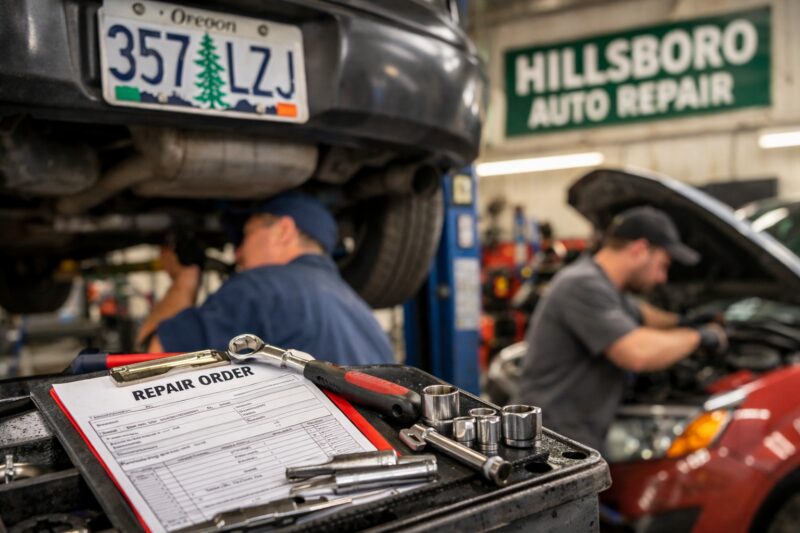
Start with warranty fundamentals. Ask for parts warranty and labor warranty separately because they often differ in coverage window and exclusions. A parts warranty may cover defects for a set mileage/time period, while labor warranty may cover workmanship for a shorter window. Also ask what documentation they require if a part fails: usually invoices, diagnosis notes, and sometimes return of replaced components. If the shop cannot clearly explain these details, you might face delays when you need coverage.
Parts quality directly affects outcomes. OEM parts usually match factory fit and specifications, which can matter for sensor calibration, drivability systems, and certain cooling components. Aftermarket parts can work well, but you need the shop to verify fitment and spec, and to explain brand and warranty terms. Remanufactured parts can be cost-effective for specific components, but reliability depends on the reman process and correct installation. Practical application: ask the shop to identify the exact part brand and whether it is OEM-equivalent, OEM, or reman, then ask how they confirm compatibility for your vehicle’s year, make, model, and trim.
Repeat repairs are where many guides become vague. What most guides get wrong is telling you to “go back to the shop” without a process. Instead, request evidence for the repeat problem: the original diagnosis notes, scan history, test results, and what changed in the repair. A professional shop should re-diagnose, explain whether the new symptom matches the original root cause, and then escalate appropriately if needed—without blame games. If you have replaced parts but the fault persists, your insistence on documented findings protects you from paying for the same misdiagnosis twice.
For compliance and recordkeeping, keep every invoice, inspection report, and any scan prints. This matters for warranty claims and can improve resale value because a buyer can verify that repairs were performed with documented evidence. When repairs involve sensors or modules where calibration may be required, ask whether any reset or calibration steps are performed and documented.
If you want a baseline on questions that keep warranties and documentation organized, use the framework from Local auto shop checklist and adapt it to the system you are repairing.
And if you’re also comparing shop behavior across markets, review how warranty transparency is handled in Aumsville Oregon auto repair so you can set the same documentation expectations regardless of location.
Hillsboro-Specific Practical Checklist: Questions to Ask Before You Leave the Shop
The simplest way to protect yourself in Auto Repair Hillsboro Oregon is to use a Hillsboro-specific pre-authorization checklist and confirm key details before you approve work. Before you leave the shop, you should be able to answer: what is wrong, what will be done, what it will cost, and what evidence proves the repair worked.
Start with system-specific questions. For brakes, ask what measurements they took (pad thickness, rotor condition, any rotor runout) and what test they performed to confirm the noise or pull is resolved. For cooling and overheating concerns, ask whether they pressure tested, what operating temperature behavior looks like after repair, and how they verified fan or thermostat operation. For check engine light issues, ask which codes were present, whether the code relates to your symptom timing, and whether readiness monitors were addressed through post-repair verification.
Next, focus on timeline clarity. Ask how long diagnosis should take, when you will get updates, and what happens if parts arrive late. A good shop provides a scheduled plan rather than vague timing. Also ask how estimate revisions are handled: if they find something new, do they call for approval before proceeding, and do they explain the discovery with evidence?
Parts sourcing and warranty clarity should be explicit. Ask which brands and specifications the shop will use, whether OEM is required for your vehicle, and what the warranty terms are for parts and labor. If a part fails early, ask about the return process: will they retest, refund/replace the part under warranty, and re-check the related system so you are not stuck paying again.
For intermittent issues, request a “test-before-you-spend” approach. Ask what they will do if the symptom cannot be reproduced immediately—what interim tests are reasonable, and what compromises are acceptable. A realistic scenario: an electrical fault that only triggers at certain temperatures might require extended road testing or data logging. The best shops explain the plan and cap what you authorize until evidence is gathered.
Finally, require a handoff package. Before you drive away, the shop should provide a summary sheet that includes what was diagnosed, the codes/results, what parts were replaced (with brands/specs), and what post-repair verification was completed. This handoff is not just for peace of mind; it is what you will need if the problem returns or if you want to verify work for future repairs.
If you want to align your questions across categories, keep the same structure from automotive repair checklist in every conversation so you do not forget critical authorization, evidence, and warranty details.
To help you compare local shops efficiently, you can also apply a similar question flow you might see in Beaverton Oregon auto repair, then tailor it to Hillsboro availability and your vehicle’s needs.
If you’re searching for Auto Repair Hillsboro Oregon, it helps to start with a consistent process so your visit feels organized from check-in to final handoff. Many Hillsboro drivers find that an automotive repair checklist keeps expectations clear and makes it easier to compare what was recommended versus what was actually performed.
Before approving repairs, ask questions that confirm the parts, labor, and timeline are fully understood. A Local auto shop checklist can also help you verify that common details—like diagnostic notes, mileage, and the condition of replaced components—are documented before work begins.
When you’re ready to choose a shop, it’s useful to consider what information they provide and how they communicate updates during the repair. With the right Auto Repair Hillsboro Oregon partner, you can usually move faster from first diagnosis to a confident next step, without second-guessing what’s included.
Frequently Asked Questions About Auto Repair Hillsboro Oregon
How do I choose an auto repair shop in Hillsboro Oregon fast?
Choose based on availability for diagnosis plus a diagnostic-first approach. When you call, ask how they handle evidence (scan prints, measurements, test results) and whether they will contact you for authorization before adding any safety-critical repairs.
Ask for the diagnosis plan, what tests they will perform, and how the estimate is structured (diagnostic labor, repair labor hours, parts line-items). Also ask what evidence they will provide and whether parts and labor are both covered by warranty in writing.
Is it normal to pay a diagnostic fee for Auto Repair Hillsboro Oregon?
Yes, many shops charge a diagnostic fee because testing takes technician time and equipment. Some shops credit the diagnostic fee toward the repair if you authorize work, but the policy varies, so confirm it before you approve diagnostics.
Can a shop replace parts without fixing the root cause?
It can happen if the shop guesses based on symptoms or clears codes without verification. Signs include vague explanations, no scan or measurement evidence, and refusal to document post-repair checks—if the problem returns, ask for re-diagnosis based on the original and new findings.
How do I compare two repair estimates from different shops?
Compare like-for-like scope: same diagnostic basis, same parts grade/spec (OEM vs aftermarket vs reman), and the same planned verification steps. If the line-item labor hours differ, ask why—such as additional tests, documentation, or intermittent-fault verification.
What does “warranty on parts and labor” actually mean?
It means the shop offers coverage for parts defects and workmanship, but the coverage windows and exclusions must be clear. Ask whether the warranty is parts-only or includes labor, the duration, and what documentation you must keep for a successful claim.
Should I choose OEM parts or aftermarket parts for my car?
OEM parts can reduce risk for fitment and spec-sensitive systems, while aftermarket can be fine if compatibility is verified and warranty terms are strong. Ask what exact brands and specifications they will install and whether they confirm the part matches your vehicle’s requirements.
What if my check engine light comes back after the repair?
Return for re-diagnosis rather than assuming it is “normal.” Request the codes/monitor status again, the shop’s explanation of why the fault returned, and the post-repair tests that were performed the first time under warranty.
How long should repairs take for brake, engine, or electrical issues?
It depends on the diagnostic uncertainty and parts availability, especially for electrical and intermittent problems. A good shop gives a diagnostic timeline, an update schedule, and explains how they adjust timing if the initial tests uncover additional work.
What are the signs of a potential scam in auto repair?
Red flags include pressure tactics, vague diagnoses, no documentation for findings, and bait-and-switch estimate changes without evidence. Another warning sign is refusing to discuss warranty terms clearly or asking you to approve “additional work” without specifying triggers and authorization steps.
Conclusion: Your Next Step to Confident Auto Repair in Hillsboro
To make Auto Repair Hillsboro Oregon decisions in 2026, focus on the process: evidence-first diagnosis, transparent estimates, and strict authorization controls. If a shop documents findings, explains the “why,” and verifies the repair afterward, you reduce the risk of scams and repeat problems.
Use the decision path from symptom → diagnosis plan → estimate → authorization → verification, and compare like-for-like scope rather than the lowest price. When you evaluate quotes, insist on warranty terms and documentation quality so you can protect yourself if a part fails or a diagnosis needs refinement.
Take action today by shortlisting 2–3 shops, calling with your questions, and scheduling a diagnostic-focused visit. Before approving work, ask for written documentation including codes/results, replaced parts list, warranty details, and post-repair verification—then only authorize additional steps after you receive evidence.
If you want an easy starting point for the call script, use the automotive repair checklist and the Local auto shop checklist framework so every shop is judged consistently on documentation and accountability.
Updated May 2026