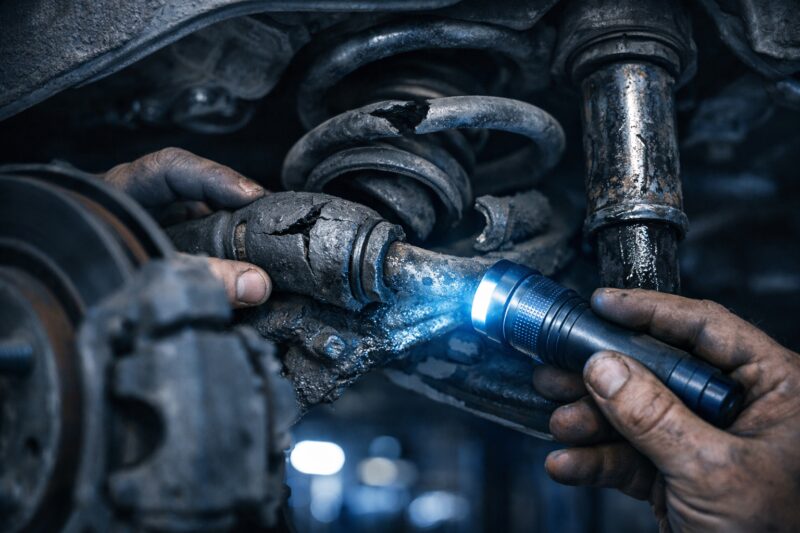
Your suspension can turn unsafe long before it feels “broken.” If you notice the right suspension repair signs, you can choose to inspect now and prevent a small issue from becoming a control problem, faster tire wear, or worse damage. In 2026, cars and light trucks still use suspension systems that rely on damping and alignment to keep tires planted. When that changes, braking stability and steering response can change fast.
This guide explains how to tell when suspension repair needs to happen immediately. You will learn which sounds, feels, and tire patterns mean you should stop driving or schedule urgently. You will also get a short at-home triage you can do safely, plus what to ask for in a professional inspection.
Suspension issues are not only a “ride comfort” issue. They affect wheel contact, weight transfer, and how your tires grip the road. They can also damage other parts, which raises the final bill. Therefore, the goal is simple: spot the evidence early, then act based on severity.
Suspension repair signs you should not ignore during daily driving
The clearest “immediate” warning is a change that affects control, not just comfort. For example, if the car feels less stable under braking, wheel contact can be compromised. That can reduce grip when you need it most.
Start with how the car behaves when you steer and slow down. If steering feels delayed, vague, or suddenly heavier, the suspension and steering geometry may no longer be working together. In addition, wandering or “tramlining” on straight roads can appear when alignment is drifting due to worn components. However, alignment alone is not the only cause. Bushings, worn links, and failed damping can all create similar symptoms.
Next, pay attention to feel-based indicators. Harsh rebounds, repeated bouncing after small bumps, or excessive nose-dive can signal loss of damping control. Some people mistake a smooth glide for a healthy system. Yet a system can feel smooth while still bottoming out too easily or controlling wheel movement poorly.
Then use sound-and-motion clues. A clunk over bumps often points to loose joints, worn bushings, or failing mounts. Creaks at full steering lock can point to dry or cracked bushings. Also note vibration through the seat or wheel. That can overlap with wheel bearing issues, but it still deserves suspension-focused inspection when it comes with steering or braking changes.
Finally, check wear and alignment-linked behavior. Uneven tire wear patterns, such as inside-edge or outside-edge wear, often tie back to geometry changes. Feathering can also show up when suspension movement no longer stays controlled. Even when tires are the visible item, suspension repairs may be the root fix.
Here is a nuance that helps avoid false alarms. Many cars move slightly on rough pavement. That does not always mean failure. Instead, look for persistent changes that match braking, cornering, steering angle, or one specific corner. If the symptom repeats the same way every drive, treat it as evidence.
If you are building a checklist for your next drive, use a “trustworthy suspension inspection checklist” approach. Write down what you feel, where it happens, and whether it changes when braking or steering. That simple log helps a technician diagnose faster and reduces guesswork later.
Visual and at-home checks that indicate urgency (and what not to do)
You can often spot “must-fix-now” clues without removing parts. Still, the goal is triage. You are checking for visible failures and functional play, not diagnosing every internal fault.
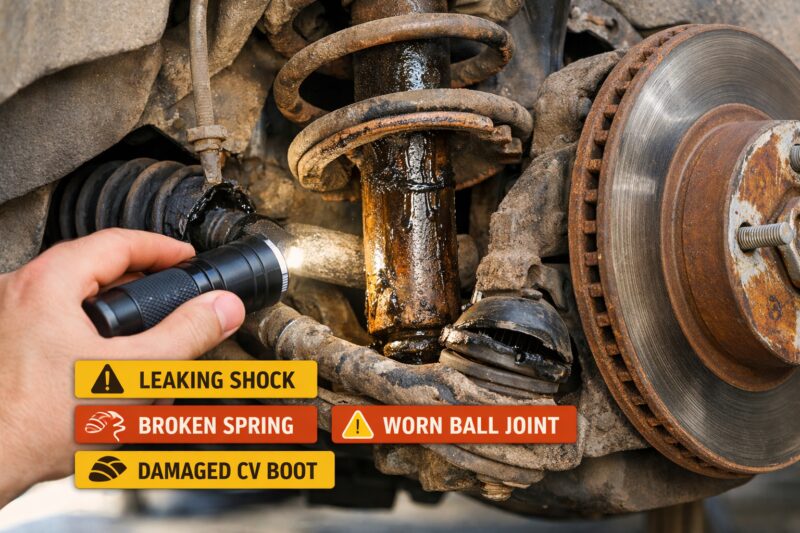
First, look for fluid and boot damage. Wetness around a shock or strut body often means leaking hydraulic fluid. A torn dust boot can expose the piston rod to dirt, which speeds up wear. Damaged rubber mounts, cracked bushings, or obvious separation in worn links also count as urgent evidence. If you see rust-through at critical mounting points, do not drive until inspected.
Second, inspect the spring and the area around it. A spring that looks chipped, shifted, or broken can fail suddenly. Similarly, if a component looks loose or “shifted,” that usually means fast loss of control. Therefore, treat a visible problem as a higher-risk signal than a noise that is only heard sometimes.
Third, do safe movement checks. With the vehicle parked on level ground, you can gently push down on a corner and release it. If the car keeps bouncing, damping control may be weak. You can also check for play by rocking the wheel while holding the tire at roughly 3 and 9 o’clock. If you feel clunking movement that seems to come from a joint, that points to a worn bushing or connection.
Tradeoffs matter . Some worn internal parts will not leak. Some bushings can look decent yet still allow movement under load. Also, surface grime can hide early tears. So you still need evidence from movement and symptom behavior.
Common mistake: confusing “looks old” with “structure failed.” Old dust and surface rust can look dramatic but may not change strength. The more telling signs are active fluid leaks, torn boots, and measurable play at mounts. Another mistake is grabbing moving suspension arms while the car is jacked. That can slip or shift without warning. Use stable support and keep hands clear of pinch points.
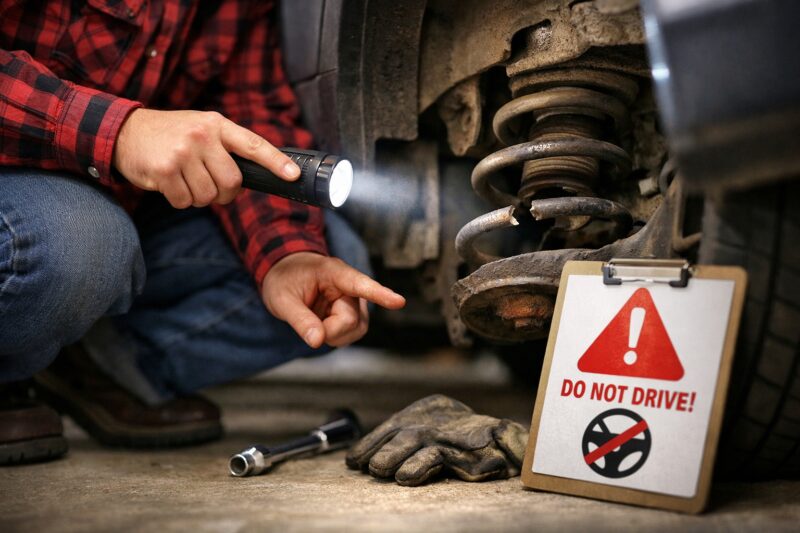
If you suspect a broken spring or a component is clearly loose, do not “test drive” it. Instead, arrange a suspension-focused. Many drivers start by searching for “suspension repair at local shop” and then bring their notes. That makes the appointment more efficient.
A decision path for repair now versus schedule soon based on severity
Not every suspension symptom means you must stop driving immediately. However, the risk level rises when damping, alignment, and structural integrity fail together. Use a three-tier approach based on the combination and timing of signs.
Tier 1 means immediate stop and repair. Choose this if you see severe leaks from a shock or strut, a broken or shifted spring, or obvious looseness at a mount. Also choose it if the car pulls hard, feels unstable under braking, or you hear loud clunks that repeat every bump. In these cases, wheel contact and steering control can be compromised.
Tier 2 means schedule urgently, even if you can drive carefully. This includes persistent bouncing after small bumps, frequent clunks that correlate with steering input, or uneven tire wear that is worsening. It also includes torn boots with no visible leaks, because internal wear may already be happening. If you have to drive, keep speed low and avoid harsh braking over uneven roads.
Tier 3 means schedule at the next service appointment. This fits mild symptoms that do not affect braking stability or steering control. Examples include slight body motion over very rough pavement with no new noises, no tire wear changes, and no visual damage. Still, document the symptom. Then confirm whether it is normal behavior or early wear.
How it works in real life is often about stacking evidence. One sign can have multiple causes. But two or three signs together narrow it. For example, clunking plus leaking plus a new uneven wear pattern is a strong “repair now” combination. Also note when it started. After an impact, such as hitting a pothole hard, prioritize checks even if the ride “seems okay.”
Conditions raise urgency because they reduce stability margins. Wet roads can make traction loss happen sooner. Heavy loads can stress springs and mounts. High speeds magnify vibration and steering instability. Tight turns increase lateral forces, so small suspension problems can feel worse.
There is also a “no visible leaks but still risky” scenario. Internal damper failure can happen without a dramatic wet mess. Worn bushings can allow play only under load. Corrosion can bend a component slightly and still pass a casual glance. Therefore, if the driving feel changed meaningfully, treat it as real evidence, not a visual absence.
| Symptom evidence | Urgency level | Immediate action |
|---|---|---|
| Broken/shifted spring, severe leaks, component visibly loose | Immediate stop/repair | Do not drive; schedule inspection ASAP |
| Persistent bouncing, repeated clunks with braking/steering, new uneven tire wear | Schedule urgently | Drive carefully or tow; request diagnosis |
| Mild ride change on rough pavement only, no new wear, no visual damage | Schedule at next service | Monitor and document symptoms |
If you must drive to a shop, take control steps. Reduce speed. Avoid harsh braking. Keep steering inputs smooth. Also avoid letting the car sit for long periods if a corner is sagging, because load cycles can worsen damage. These actions help until a technician can perform proper handling and brake stability checks.
Common mistakes and misconceptions that prolong suspension problems
Many suspension issues last longer because people base decisions on one weak clue. Comfort feel is not the same thing as safe damping. The most common misconception is “If it rides softly, the suspension is fine.” That can be wrong.
Soft can mean uncontrolled travel. For example, if a strut or shock loses damping, the car may feel less “jarring” while it also allows more bouncing. Meanwhile, the tires may lift or lose grip over sharp bumps. That can increase stopping distance and reduce steering confidence. Therefore, a smooth ride does not guarantee correct wheel contact.
Another mistake is blaming tires only. Uneven tire wear can look like a tire problem. However, suspension geometry can shift toe and camber as bushings wear and links move. That movement changes how the tread contacts the road. If alignment was recently set but the suspension is worn, the tire pattern can return quickly.
Component replacement mismatch is another trap. Replacing only one shock or strut on an axle can create damping imbalance. That imbalance can cause the vehicle to behave differently left to right. It can also accelerate wear by forcing tires to absorb uneven movement. In addition, worn bushings and mounts can still create noise after the “new” part is installed.
People also continue driving after a collision or after noticing a corner sag. That’s risky because damage can progress. A minor shift in a mount can change alignment. A worn bushing can tear further with each drive. As a result, what started as a corner “feel” issue can become a control issue.
Finally, diagnosis traps happen when noises are misattributed. A clunk may feel like it comes from the strut area but originate from a sway bar link or a control arm bushing. Similarly, vibration may overlap with wheel bearings. That is why a professional’s inspection matters. It should replicate the symptoms and check multiple related parts, not only the first noisy component.
If you want a structure for spotting likely suspects, plan around a “trustworthy suspension inspection checklist” and ask the technician to connect findings to your exact complaint. Then request an explanation of what failed and what is just worn but not urgent.

What to ask for when you get a professional suspension inspection and repair plan
A good inspection does more than point at one worn part. It tests how the system behaves and then explains why. When you ask the right questions, you reduce the chance of “guess and replace.”
First, ask for a road test that replicates your symptom. The technician should observe how the car responds to braking, turning, and bumps. That road test also helps separate steering feel issues from pure ride damping issues. Next, request a detailed visual inspection of the suspension and mounting points.
Then ask about under-load checks. Many suspension problems show up only when the wheel is loaded. That includes play in bushings, looseness in mounts, and movement in links. Also ask for checks that relate to your symptoms, such as measurements for alignment drift or evidence of uneven tire wear.
Depending on your complaint, the technician may inspect struts or shocks, springs, control arm bushings, and sway bar links or bushings. If vibration is present, the inspection should also consider wheel bearings. This avoids a common limitation where one worn component masks another issue.
It helps to understand the difference between diagnosing the symptom and pinpointing the failed part. A symptom is “clunk over bumps.” A failed part could be a sway link, bushing, mount, or even a loose bracket. Ask for pinpointing based on observed evidence. For example, request “before you replace anything, show me the play or the leak source.” That keeps the plan grounded in what the car is doing.
In addition, ask what else is worn. Suspension systems wear as a group. Even if one component fails first, related bushings and mounts often age together. Therefore, you should ask what can be safely delayed and what cannot. Finally, request whether installation verification and alignment are needed after the repair.
Tradeoffs and limitations exist. If the symptom is intermittent, road texture and temperature can change it. Also, if corrosion causes parts to seize during teardown, the plan may adjust. Good shops document findings and then update estimates with evidence.
When you discuss the plan, ask for clear paperwork. You want documented findings and any measurable changes. That documentation should support why the repair will restore handling and braking stability rather than just quiet a noise.
Repair options and realistic alternatives that match the symptoms you’re seeing
Suspension repairs range from targeted Services to full corner replacements. The right option depends on what failed and how far the damage spread. Your goal is restoring safe control and correct tire contact.
If a shock or strut is leaking and the rest appears healthy, shock or strut-only repair can work. This may also include replacing related mounts if they are degraded. However, if boots are torn or bushings show movement, replacing only the damper can leave the noise or instability unresolved. Therefore, match the repair to the evidence, not the most obvious component.
When a spring is broken or corrosion has weakened the spring seat area, a spring assembly replacement may be required. In many cases, full corner work makes sense because struts, mounts, and springs are designed to work as a set. Rebuilding rarely restores the original performance if internal damping is lost or if corrosion affects structural integrity.
Bushing-only service is sometimes possible. If the issue is a worn control arm bushing or sway bar bushing, replacement can stop clunks and restore proper geometry. Yet bushing replacement can be limited by rusted parts or pressed-in hardware. Also, if dampers are already worn out, a bushing fix may not fully restore wheel control.
After any repair, alignment and verification matter. Alignment corrects tire contact angles. But it also confirms the installation is correct. If you skip verification, the problem can return quickly due to installation errors or lingering looseness.
There are also alternatives such as a suspension refresh kit. A kit can replace multiple wear items. It may be a good value when several components show age. However, targeted repairs can be better when only one corner or one subsystem is clearly failed. The tradeoff is cost versus certainty. A kit can reduce repeat labor, while targeted work can reduce unnecessary parts.
Used parts can be risky. Condition varies and hidden internal wear can exist. Even with “good-looking” parts, damping differences can create imbalance. When replacements are made across an axle, consistent damping behavior is key. That often means matching pairs for shocks or struts on the same axle when applicable.
If you want a plan that reduces repeat failures, ask for a “repair + alignment + verification” approach. Then ensure your technician explains how the repair connects to your exact symptom. That mindset helps prevent “we replaced something, but the issue remains.”
How suspension problems show up on different vehicle types and corner conditions
Suspension design affects how symptoms appear. A sedan often shows subtle changes first. An SUV or truck may show different body motion because of different spring rates and mounting geometry.
In a sedan, worn dampers may show as quicker oscillation after bumps. It can also feel like the steering “returns” differently after turning. With SUVs and light trucks, you may notice more body roll or a more noticeable sag on one corner. Additionally, tire wear may become more pronounced if load changes stress the worn parts.
Corner-specific clues narrow diagnosis. A left-side pull plus a one-sided clunk can point to a specific corner assembly or a side-to-side bushing failure. Uneven wear on one side often matches that same corner. However, if both sides show wear patterns, the problem may be wider than a single component.
Driving use changes urgency. Frequent potholes can accelerate failures. Off-road or rough-road use increases impact cycles. Towing or roof loads also add sustained stress. As a result, components may wear faster and symptoms can appear sooner than expected.
Alignment sensitivity plays a big role. Toe and camber effects can amplify symptoms, especially after impacts or after tire replacement. If a technician adjusts alignment but the suspension bushings still have play, toe can drift again. That can bring back the tire wear pattern and steering instability.
A common “looks okay but isn’t” case involves an intermittent play bushing. The bushing may hold shape on level ground. It may allow movement only during braking, steering input, or temperature changes. That is why a road test under real conditions is so helpful.
Therefore, treat one-off noises carefully but not automatically. If the symptom repeats in a pattern, it deserves inspection. And if it is tied to one corner, prioritize that corner’s mounts, links, and bushings.
Regional expectations for a 2026 U.S. repair workflow and customer protection
In the United States, most shop workflows follow the same core sequence: inspect, estimate, repair, then verify. The exact steps vary by labor and equipment, but the structure is similar. Therefore, know what “good” looks like at each stage.
Typically, a shop starts with inspection and symptom replication. Then you receive an estimate that lists parts and labor. Next comes replacement or service. Finally, alignment and installation verification confirm that steering and tire contact are restored.
In winter and salt conditions, corrosion becomes a bigger factor. It can cause components to stick, increase teardown time, and hide damage until parts separate. Because of this, a more thorough inspection may take longer. Still, you should expect transparency about what was found once corrosion was cleaned and components were checked.
For consumer protection, ask for clear written explanations. You want a parts list tied to the technician’s findings. You also want to understand what can be delayed and what cannot. If your suspension repair signs include a severe risk, the shop should communicate that clearly rather than downplaying it.
Keep in mind that road-test findings can vary. Bump severity, pavement texture, and traffic can mask or reveal symptoms. So describe when and where you notice the issue. Mention whether it happens on small bumps, pothole edges, or during hard braking. That context helps a technician reproduce your complaint.
If you are trying to compare options in your area, look for shops that document findings and provide before-and-after information when possible. That supports trust and makes the repair plan easier to evaluate later.
When you want related service ideas, ask about “off-road shock and bushing service” if your vehicle sees rough roads. Not all shops offer it, so it helps to mention your use case early. It can also shape what components wear first on your specific setup.
Frequently asked questions about signs your suspension needs immediate repair
What are the most dangerous suspension repair signs that mean I shouldn’t drive?
You should avoid driving if you have a severe shock or strut leak, a visibly broken or shifted spring, or a loose suspension component at the wheel. Also treat sudden loss of stability under braking or repeated loud clunks as a high-risk sign. If a corner visibly sags after an impact, prioritize immediate inspection or towing.
These symptoms matter because they can reduce tire contact and steering accuracy. They can also lead to progressive damage to mounts and links. Therefore, don’t “nurse it” if control feels wrong.
Why do I hear clunking over bumps even when my ride feels smooth?
Clunking often points to movement at joints, such as worn bushings, sway bar links, or mounts. Meanwhile, the ride can still feel smooth if damping is not fully failed. Noise and feel can diverge because different parts control different effects.
A common mistake is only replacing a damper when the clunk source is elsewhere. A proper inspection should identify the looseness by checking play at the likely joints. Then the repair can address the real cause.
Can worn suspension parts cause uneven tire wear even if my alignment seems okay?
Yes. Suspension wear can change how camber and toe act under load, even if a static alignment reading looks acceptable. Dampers and bushings also affect how the tire stays planted during braking and cornering.
Look for tire wear that grows over time, especially inside-edge wear or feathering. If the pattern matches a corner-specific clunk or bounce, suspect suspension geometry and damping. In that case, alignment alone may not solve it.
How can I tell if the problem is shocks/struts versus control arms or sway bar links?
Shocks or struts often show up as excessive bouncing, harsh rebound, or a too-quick nose-dive. Control arms and sway bar links more often show clunks, knocking at low speed, or steering-related play. Still, these symptoms overlap, so feel is not always enough.
That is why a professional inspection is valuable. Ask the technician to identify the play source and connect it to your symptom. Request both a visual check and an under-load or road-test check.
If one corner is sagging, is it always the spring?
Not always. A sagging corner can come from a broken or weak spring, but it can also result from failed mounts, worn bushings, collapsed suspension components, or severe leakage in a shock/strut system. In addition, after an impact, a bent component can contribute to sag even if the spring looks intact.
Because a sagging corner affects wheel contact and handling, you should prioritize inspection. Don’t assume it is “just a tire” or “just spring” without checking leaks and mounts.
What should I ask my mechanic to check when I report suspension repair signs?
Ask for road test replication, a full visual inspection, and under-load checks for play at mounts and bushings. Also request inspection of struts or shocks, springs, control arms, sway bar links, and top mounts. If you feel vibration, ask them to consider wheel bearings as well.
Then ask for measurements and documented findings when possible. You should also ask what can be safely delayed and whether alignment and installation verification are required after repair.
Is it safe to replace only one shock or strut on my vehicle?
It depends on axle and design, but in many cases it is not ideal. Different damping on left and right can change vehicle balance and braking feel. That can also increase tire wear if wheel movement is no longer consistent.
Ask your technician whether matched pairs are recommended for your specific vehicle setup. If they replace only one side, request an explanation tied to the condition of the other side.
After a pothole impact, when should I assume suspension damage rather than just tire damage?
Assume suspension damage if the car pulls, clunks over bumps, bounces more than before, or shows uneven tire wear soon after the impact. Also treat corner sag or steering changes as damage evidence, even if the tires look fine. Wet or rough roads can mask symptoms, so pay attention once conditions stabilize.
A professional post-impact inspection is warranted if any control feel changed. Do not wait for a month if the symptoms repeat.
What does a torn dust boot or leaked shock fluid really indicate about urgency?
A torn dust boot typically means the rod is exposed to dirt, which accelerates wear inside the damper or strut. Leaked shock fluid usually means the damper has lost its working fluid and will not control movement properly. Both issues can escalate quickly.
Therefore, treat boot tears and leaks as more urgent than occasional noises. Schedule inspection promptly, especially if the symptom affects braking stability or steering control.
Can bad suspension affect braking performance or steering stability?
Yes. Suspension problems can change weight transfer behavior, which affects how firmly tires stay planted during braking. If the wheel loses contact or moves excessively, stopping distances and steering stability can worsen.
Drivers often notice this during hard braking or when the car shudders over uneven pavement. If braking feel changed after a bump or if the car wanders under braking, prioritize inspection.
Conclusion
When you spot suspension repair signs, act on the combination of evidence, not one clue. The most useful clues are changes in handling and braking stability, plus sound or feel changes, plus visible damage, plus uneven tire wear that grows. Together, these signs often point to real damping loss, worn bushings, or a compromised mounting area.
Use the severity path to decide whether to stop driving, schedule urgently, or wait until the next service. If the car feels unstable or a corner visibly sags, treat it as immediate. If symptoms are persistent but you can drive carefully, schedule urgent diagnosis so repairs are targeted and documented.
Start with safe at-home triage, then choose an evidence-based professional inspection. Ask for clear findings, a repair plan tied to those findings, and alignment or installation verification when needed. Keep notes on when and where the symptom happens, especially in 2026 U.S. driving conditions with potholes, salt, and variable pavement texture.
If you notice any red-flag symptoms, arrange inspection promptly and avoid postponing. You can also prepare by using a “trustworthy suspension inspection checklist” and searching for a local shop that can handle “handling and brake stability checks.” That approach supports a faster diagnosis and a calmer repair process.
Finally, if you drive rough roads often, discuss “off-road shock and bushing service” so parts match your use. Then confirm the plan with documentation and clear before-and-after results. For many drivers, that is the best way to reduce repeat suspension problems and keep tires gripping where they should.
For more guidance on related service planning, you can also consider how a shop handles “suspension repair at local shop” estimates and documentation. The goal is simple: accurate diagnosis, appropriate parts, and verification that restores safe control.
In that same spirit, track your symptoms in a short log. Share it with the shop when you book. In many cases, that one step improves outcomes for both cost and safety.
References: NHTSA Vehicle Safety and Consumer Reports: Vehicle Maintenance and Motor Oil and Lubrication Guide.
Updated September 2026