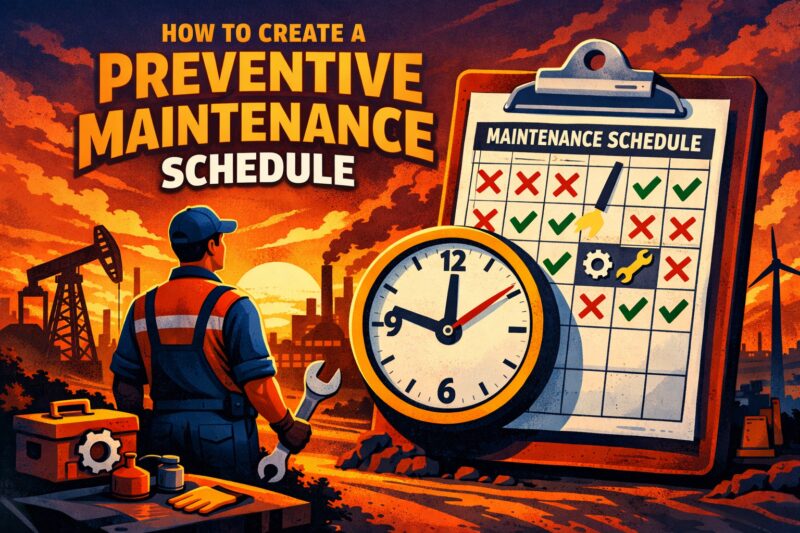
A preventive maintenance schedule is a practical plan that tells you what to inspect or service, how often, and who performs the work to prevent failures before they happen. It reduces downtime, stabilizes costs, improves safety, and creates consistency across teams. In this guide, you will learn how to build a preventive maintenance schedule that fits your assets and your operating reality.
If you manage facilities, equipment, or other operational assets, this matters because “maintenance” is often reactive by default. A clear schedule turns maintenance into a controlled system. You will draft a workable template, choose frequencies based on risk and conditions, and convert tasks into work orders and checklists. That way, your team can execute reliably, and your organization can improve based on real outcomes over time.
Even if you are a small team, you can scale this approach. If you run multiple sites, you can standardize the core tasks while allowing site-specific intervals and constraints. By the end, you will have a step-by-step method you can apply in 2026 and keep improving.
Define the asset scope and maintenance goals so your schedule matches reality
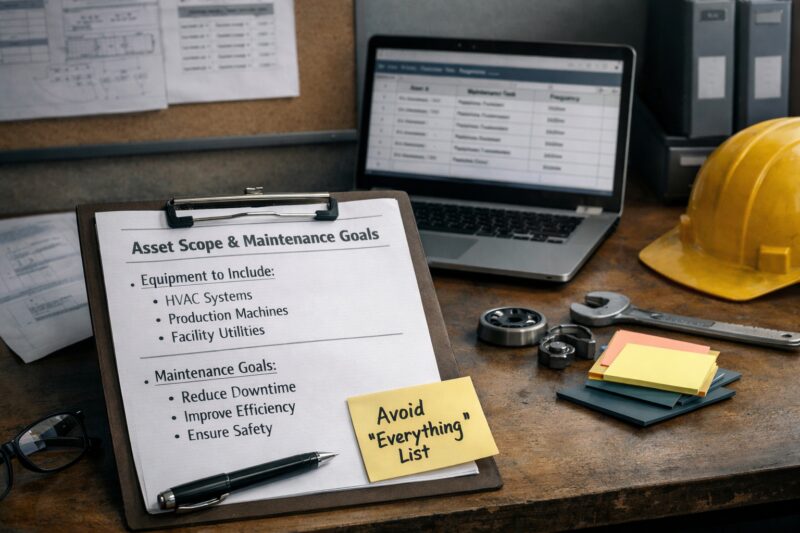
Your first step is to define what you will schedule and why. If you start with a vague “everything that exists” list, your program will fail fast. A preventive maintenance schedule works when it reflects the assets you actually operate and the failures you want to reduce.
Begin by building clear asset boundaries. Include equipment, building systems, operational tools, vehicles, and critical spares that affect production or safety. Exclude items that do not drive risk or do not receive measurable wear. Also decide what counts as “maintenance” versus other activities like cleaning, inspection-only walkdowns, or project work.
Next, clarify maintenance intent. Some organizations want breakdown prevention. Others need degradation control for quality. Some must also satisfy compliance-driven servicing. It is okay to mix these goals, but you must label the tradeoffs. For example, a heavy focus on breakdown prevention may ignore quality drift if tasks are not defined to catch it.
Then, segment assets by criticality. Use a simple tier model such as safety-critical, high-stop-impact, medium impact, and low impact. This prevents a one-size-fits-all schedule. Critical assets need more verification. Low-impact assets can often use broader coverage and simpler checks.
Finally, gather minimum inputs that actually support interval decisions. Pull OEM manuals, record plate data, and identify operating conditions. Look at your maintenance history for recurring failures and near-misses. Also note duty cycle factors like run hours, cycles, throughput, dust exposure, and temperature swings. As a practical nuance, scope creep happens when teams add assets without data. To avoid that, start with a pilot set of the top 20 to 50 assets by impact, then expand.
Select the right maintenance approach per asset category
A strong preventive plan uses the right type of maintenance for each asset. Not every item benefits from the same approach. Therefore, your schedule should blend time-based, usage-based, condition-based, and selected failure-based actions.
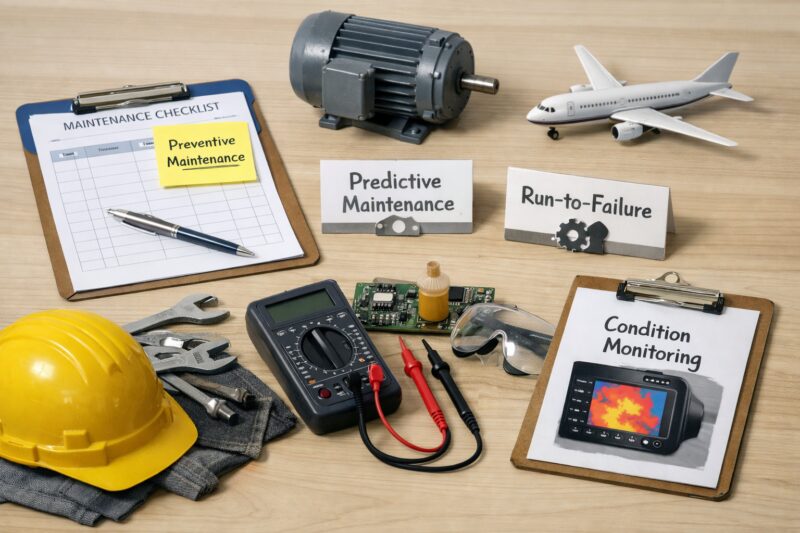
Time-based tasks run on a fixed interval. For example, you might inspect belts monthly or test alarms quarterly. Usage-based tasks tie intervals to how the asset is used. Common drivers are hours run, cycles completed, and loads handled. Condition-based tasks rely on measurements. That can include vibration readings, thermal scans, oil analysis, or leak testing. Failure-based escalation means you keep corrective work for items where preventive actions add limited value until evidence suggests otherwise.
Choose between time and usage by looking at your duty cycle. If an asset runs mostly the same amount each week, time can work well. If it varies widely, usage-based intervals catch wear better. The wrong choice shows up as either wasted work or missed degradation. For instance, a seasonal tool may get frequent time-based checks even during downtime. Meanwhile, a high-throughput line may wear out parts faster than the calendar suggests.
Then map what to do inside each approach. Decide what should be inspected, lubricated, cleaned, aligned, calibrated, or replaced. Also decide what can be monitored without disassembly. A common misconception is that “more maintenance” always means “more reliability.” In reality, unnecessary disassembly can introduce new defects. That is why you should validate tasks with feedback loops.
Be careful about trap tasks copied from manuals. Manuals list many actions, and some are meant for ideal conditions or different duty cycles. If a manual task does not measurably reduce your failure risk, it may become busywork. One way to test this is to compare as-found data before and after changes. Use that evidence to tighten, simplify, or remove tasks that do not perform.
In one program, you can mix maintenance types without chaos. Keep a “core preventive set” for routine reductions in failures. Add condition-based triggers for components where measurements matter most. Keep a controlled corrective path for rare failure modes and safety exceptions. This structure protects the schedule while still allowing responsive control.
Convert maintenance requirements into clear, assignable task definitions
Good schedules are made of good task definitions. If you cannot assign a clear task, your preventive maintenance schedule becomes paperwork. Instead, define each maintenance item so the team knows exactly what to do and how to confirm quality.
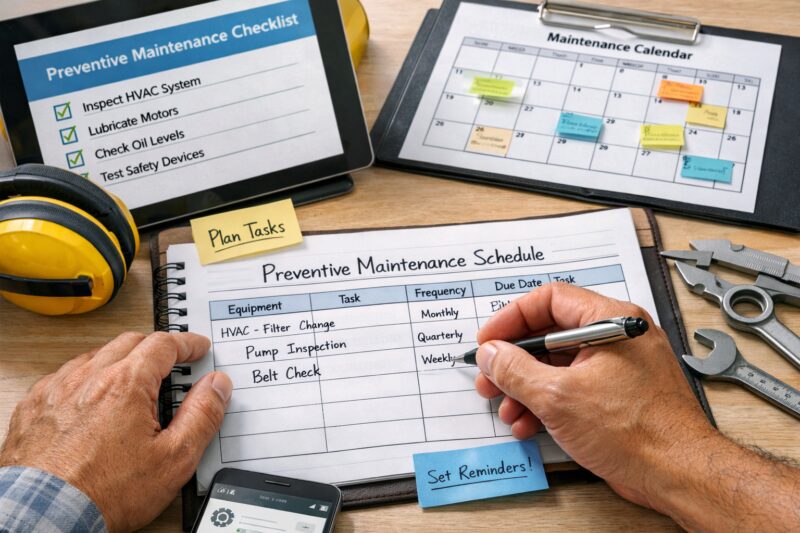
For every scheduled maintenance activity, write a standardized work element. Include a task description and scope. Add required tools, parts, and materials. Provide a step-by-step checklist that reflects your actual configuration. Also define acceptance criteria so “done” means something measurable, not just “completed.”
Make acceptance criteria explicit. For example, a lubrication task should specify correct lubricant type, quantity, and visual checks for purge. A leak check should define acceptable limits. A filter replacement task should include inspection of housing condition. When you can measure it, measure it. When you cannot, define a clear pass-fail observation.
Then define what happens if the task finds issues. Specify escalation actions by severity. For minor findings, you may clean, adjust, or schedule a follow-up within a set window. For high severity findings, you may need to isolate the asset or bring in specialized support. This avoids the common failure mode where technicians find problems but the program does not consistently act on them.
Frequency logic belongs in the task definition too. Use fixed intervals when they match wear behavior. Use tiered escalation when the task has deeper checks at higher risk levels. For condition-based tasks, define monitoring cadence and decision thresholds. Also add a clear recording requirement for as-found conditions, not only as-left completion notes.
Assign roles and approvals clearly. Your task should state who performs it, who verifies results, and who approves closure. That is where “maintenance roles and approvals” become real, not theoretical. For example, an operator may do the initial check, while an engineer verifies abnormal readings. A vendor may execute calibration steps under documented authorization.
Finally, plan the safety requirements. Define lockout/tagout expectations, required permits, and PPE. Include safe access steps for inspections near moving parts or energized components. Tasks that omit safety detail tend to drift in the field. That creates inconsistent results and higher risk.
Set frequencies using risk, operating conditions, and evidence
Frequency selection decides whether your preventive plan reduces failures or increases cost. You should not pick intervals by guesswork. Instead, set frequencies with a mix of OEM guidance, risk tiering, failure history, and duty cycle reality.
Start with OEM recommendations, but treat them as a baseline. Then adjust based on what you know about your operation. Use failure history to identify patterns. Include environmental factors like dust, humidity, temperature, vibration, chemical exposure, and wash-down cycles. Also account for workload variability. A stable interval might work for one asset and fail for another in the same facility.
Next, build tiered intervals by criticality. Safety-critical and high-stop-impact assets should get tighter verification and faster escalation. Non-critical assets can use broader coverage. This approach keeps your labor focused where it matters most. It also helps your schedule stay sustainable as you add more assets.
Now define how to adjust over time. Use review mechanics rather than treating the schedule as static. After each cycle, review findings, near-misses, and measurement trends. If repeat failures occur, tighten the interval or change the task method. If tasks repeatedly find clean conditions, you can relax intervals carefully. However, relaxments should follow evidence, not comfort.
Also consider scheduling constraints. Labor capacity and downtime windows shape what is feasible. Parts lead times affect when you can replace components. Seasonal variations can change operating stress. In those cases, you may tighten intervals ahead of peak demand or harsh conditions, then loosen later based on documented results.
A useful nuance is whether you should synchronize tasks or keep them isolated. Multiple subsystems sometimes require service together to prevent repeat shutdowns. For example, if two units share access, bundling can reduce downtime. However, do not bundle unrelated work so much that you hide root causes. You need enough detail in job records to explain what changed and why.
Implement the schedule with work orders, documentation, and tracking that proves effectiveness
Implementation turns your plan into results. Without execution discipline, even the best preventive maintenance schedule becomes ineffective. Therefore, translate your schedule into clear work orders, job plans, and completion records that capture the right data.
Start with the execution chain. Build a master schedule from your frequency rules. Then create work order templates that link tasks to assets and locations. Attach checklists, parts lists, and standard procedures. Make sure technicians can follow the steps without improvising. As you roll out, pilot first and refine definitions based on field feedback.
Document architecture matters for control and learning. Use a consistent asset ID and location structure. Apply task codes so tasks can be reported and audited. Map parts using a bill of materials where possible. Also link service history so the team sees trends and prior findings. If you run multi-site operations, standardize coding so reports remain comparable.
Tracking proves whether the schedule works. Measure compliance rate so you know if tasks actually happen. Track task quality outcomes, such as whether findings matched acceptance criteria. Monitor unplanned downtime trends for key assets. Also record repeat failures and backlog aging so you see what is falling behind and why.
Then close the loop with a feedback mechanism. When tasks produce as-found measurements, discrepancies, or abnormal conditions, use them to update frequency or task scope. This is where your schedule evolves from static instructions into a reliability system. You should also review trends on a set cadence, such as monthly or quarterly, depending on risk and volume.
A key nuance is preventing “paper compliance.” Teams can check boxes without recording measurements or defects. That hides deterioration until a failure forces the truth. Set minimum data capture requirements for each task, and audit them. If a job fails to record the required data, treat it as incomplete for improvement purposes. This helps protect your schedule from turning into a report instead of a reliability tool.
Avoid common pitfalls that silently break preventive maintenance programs
Most preventive programs fail for predictable reasons. The causes usually do not show up in the schedule itself. They show up in execution habits, review behavior, and task quality control.
One major pitfall is copying OEM intervals without adjusting for your duty cycle and environment. The symptom is either unexpected failures or constant preventive interventions that do not change outcomes. If you see repeated near misses, your intervals may be too loose. If you see many jobs with no findings, your intervals or task methods may be too aggressive.
Another pitfall is treating the plan as static. Assets age, processes change, and operating conditions drift. If you do not revisit frequencies, the schedule becomes less accurate. Over time, this leads to either under-servicing critical components or over-servicing low-impact ones. In both cases, your labor and parts budget suffer.
Task acceptance criteria problems also derail results. If you do not define actions-if-fail, technicians may report findings but not resolve them consistently. That can create repeat failures because the program does not enforce the correct response. Likewise, lack of escalation rules delays intervention until damage spreads.
Planning dependencies are another common failure mode. Parts lead times, permits, and downtime windows can turn preventive jobs into postponed corrective work. This undermines the preventive intent. To fix this, ensure your planning process includes procurement timing and outage coordination. Then sequence work based on access and risk.
Organizational misalignment can also sabotage the schedule. Operations teams may view preventive work as an interruption rather than a risk control. As a result, they may delay jobs or shorten scopes. Define maintenance windows and communicate value using downtime impact. Clarify ownership so operators, engineers, and planners share responsibility rather than blaming each other.
One practical edge case is when tasks find problems but the asset cannot be taken offline. You need risk triage to avoid either paralysis or unsafe operation. Record condition severity, define interim controls, and schedule follow-up. This protects safety while still driving improvement.
Choose the best tool and workflow to build and maintain your schedule
You can build a preventive program in many systems. The best option is the one that supports accurate data, repeatable work orders, and reliable reporting. Therefore, your choice should match your planning maturity and asset complexity.
A spreadsheet can work for pilots. It is quick to start and easy to share. However, it risks version control issues and lost history. It also makes it harder to manage task routing, approvals, and consistent as-found recording. If you use spreadsheets, treat them as a temporary staging area, not your long-term system of record.
CMMS or asset management software is often better for scale. It provides audit trails, scheduling logic, and service history. It can also standardize task codes, routing, and parts mapping. Still, software does not fix bad planning. If you enter inconsistent asset data or weak task definitions, the output reports will be unreliable.
A hybrid program can fit many real teams. Use CMMS for core critical tasks that need strict history and reporting. Use spreadsheets or standalone checklists for low-complexity jobs that do not require heavy routing. The key limitation is data consistency. You must keep minimum fields aligned so reports remain meaningful across tools.
Outsourcing adds another dimension. Some tasks, like complex diagnostics or specialized calibration, may be better handled by vendors. Others should stay in-house when speed and repeat learning matter. Create categories for who executes what. That supports procurement and quality verification.
When you evaluate options, focus on selection criteria that drive scheduling outcomes. Look for data fields that capture as-found measurements. Check whether the tool supports task acceptance recording. Verify it integrates with procurement planning so parts lead times are visible. Finally, confirm reporting supports compliance, repeat failure analysis, and backlog aging.
This is where “asset-focused service categories” help. You can group tasks by execution type, data capture needs, and vendor requirements. That makes scheduling more reliable and easier to audit.
Handle edge cases without breaking your plan for seasonal and aging conditions
Preventive schedules must survive real-world change. That includes seasonal wear, asset aging, and operational process shifts. If you ignore these edge cases, intervals become wrong and tasks lose value.
Seasonal variability is a clear example. Some assets see harsher conditions during certain months. Dust increases, humidity rises, or workload ramps up. Before peak periods, review the tasks most sensitive to those changes. Tighten inspection or monitoring cadence where evidence supports it. Then document what you changed and why, so future cycles remain consistent.
Aging assets also require a shift in prevention strategy. Early life may suit simpler inspections. Mid life often needs deeper service or more frequent condition checks. Later life can require planned component replacement strategies, based on deterioration patterns. The mistake many teams make is waiting for failures. Instead, use findings trends to drive changes in preventive scope.
Operations changes can also alter duty cycle and wear modes. New product lines can add contamination or change throughput. New materials can change corrosion behavior. Even schedule shifts in production can change run hours or cycles. When these changes happen, update your schedule logic. You can do this through targeted reviews for impacted assets, rather than rewriting everything.
Vendor and OEM constraints matter too. Warranty terms can require documented service and authorized repairs. When you outsource, make sure job records include the information needed to protect warranty claims. Also ensure your schedule tasks align with service authorization rules so the program does not create compliance gaps.
One deeper nuance is incident-driven revisions. After a breakdown, teams sometimes over-correct by adding excessive tasks. That can create workload spikes that crowd out other preventive work. Instead, review the root cause. Then adjust only the tasks that plausibly affect the failure mechanism. This keeps your preventive maintenance schedule effective and sustainable.
Frequently asked questions about creating a preventive maintenance schedule
What’s the first step when creating a preventive maintenance schedule from scratch?
Start by scoping the assets you will schedule, and choose a manageable pilot group. Then collect OEM manuals plus your own failure and near-miss history for those assets. Finally, confirm operating conditions like hours run, cycles, and environmental exposure. Without this baseline, frequency setting becomes guesswork.
How do I decide whether maintenance should be time-based or usage-based?
Use time-based intervals when the duty cycle stays relatively consistent, such as assets that run steady weekly. Use usage-based intervals when wear depends on run hours, cycles, or throughput. A good test is to compare failure patterns to calendar time versus usage. Pick the driver that best matches how the asset actually deteriorates.
How often should I review and update the preventive maintenance schedule?
Review the schedule at a set cadence, often monthly for high-risk assets and quarterly for the broader program. Also make off-cycle updates after failures, repeat defects, or abnormal as-found measurements. If operating conditions change, review impacted tasks sooner. The key is to adjust based on evidence, not only on activity counts.
What information do I need to translate a maintenance checklist into a real schedule?
You need the task definition, the acceptance criteria, and the correct actions if issues appear. Add the parts and tools needed, plus safety and access requirements. Then specify the assignment and routing so each job has clear ownership. Lastly, define the frequency logic so the schedule can generate work orders consistently.
How can I prevent “paper preventive maintenance” that doesn’t actually reduce failures?
Require as-found recording, not only completion notes. For example, capture measurements, defect observations, leak checks, or readings tied to your acceptance criteria. Then audit compliance by outcome, not just by job closure. If tasks find issues, track whether follow-up actions happen within the defined escalation window.
What metrics show whether the schedule is working?
Track compliance rate, repeat failures, and unplanned downtime trends for critical assets. Also measure task quality outcomes, like whether acceptance criteria were met and what defects were found. Monitor backlog aging so missed work does not silently grow. Over time, you want fewer repeat failures and more early detection through as-found data.
How do I handle assets with no OEM manuals or limited maintenance history?
Start conservatively using best-available guidance, and choose shorter intervals for early data collection. Then build a targeted inspection program that captures as-found condition so you learn quickly. Use failure feedback to adjust frequencies after you see real wear patterns. Over several cycles, replace assumptions with evidence-based intervals.
Can I combine preventive and condition-based maintenance in one plan?
Yes. Keep routine preventive tasks for baseline protection, then add condition-based triggers for components where measurements reflect degradation. Define monitoring cadence and decision thresholds so action is consistent. This lets your schedule remain predictable while still adapting to real asset condition.
How do I schedule preventive maintenance around production or facility downtime constraints?
Build maintenance windows into your operating plan and align tasks to planned outages. Use task sequencing so access-dependent work happens together when it truly reduces shutdowns. Consider parts lead times and permits during planning so jobs do not slip into emergency repairs. Then prioritize by risk tier to ensure critical assets get timely coverage.
What should I do when preventive tasks find problems but the asset can’t be taken offline?
Use risk triage to classify severity and define interim controls. Document the as-found condition, including measurements and defect details. Then escalate according to your severity rules and schedule follow-up work at the next safe offline window. If safety limits are close, involve engineering or the responsible authority immediately.
Putting it together: a practical workflow you can execute in 2026
A preventive maintenance schedule succeeds when it is risk-based, measurable, and actively updated. You can build it in a practical order that avoids rework. Start with scope and goals, then choose the right approach per asset category.
Next, define tasks with acceptance criteria and clear actions-if-fail. After that, set frequencies using OEM guidance, duty cycle, and evidence from failures and as-found data. Then implement through work orders, checklists, and documented completion records that your team can audit and improve.
Finally, track outcomes and use feedback loops to adjust. Look for repeat failures, drift in measurements, and compliance that actually captures data. As you expand beyond the initial pilot set, keep the logic consistent so the program does not become chaotic across sites. If you want to standardize execution, involve “maintenance roles and approvals” so accountability stays clear.
As a next step, run a pilot preventive program for your highest-impact assets and capture baseline metrics in 2026. Then measure changes over the next maintenance cycles. You should also create job plans that technicians can use immediately, including clear checklists like a “same-day tune-up checklist” for relevant recurring tasks. If your operation includes specialized vehicles, you can adapt a task structure that fits an “ATV repair checklist” style job plan, even when you are focusing on prevention.
And keep your schedule maintainable by organizing tasks into “asset-focused service categories.” That helps you control complexity as the program grows. For teams building stronger reliability systems, this mindset pairs well with broader planning practices such as work order discipline and template standards, which are foundational reliability topics.
To keep your improvement efforts on track, involve internal reliability and maintenance planners when you validate task frequencies and thresholds. If you need to move from pilot to full rollout, those reviews help align what technicians do with what engineers expect. With a measurable, evidence-based schedule, you can prevent more failures and keep downtime from becoming routine.
In 2026, the best preventive programs share one trait. They keep learning from what happens. If you build the schedule with scope clarity, task quality, and feedback, your maintenance becomes a system, not a calendar.
If you are ready to expand, focus first on the top assets, then improve task definitions and frequency logic. That is the fastest path to a schedule that teams trust and that leadership can measure.
Optional implementation example (quick reference): For recurring small jobs in a pilot, create templates for quick check-and-service work and tie them to task codes. Then ensure every work order captures required as-found measurements.
For more structured planning, some teams also maintain job aids for common vehicle and outdoor equipment workflows. If your environment includes all-terrain vehicles, a prevention-focused workflow can reference an “ATV repair checklist” style structure while still using your preventive acceptance criteria.
When you bundle tasks, do it only when access and failure modes truly connect. Otherwise, keep jobs separate enough to preserve root-cause clarity in your records. That balance helps your program stay both efficient and diagnosable.
With these steps, you can publish a preventive maintenance schedule that holds up in daily execution and continues improving as you learn.
Sources: Preventive maintenance concepts and asset management best practices are commonly aligned with guidance from government and standards bodies, including reliability principles described by U.S. Department of Labor and condition and inspection thinking outlined through NIST reliability-related resources. For maintenance management context, many organizations also reference asset performance and maintenance terminology guidance from ISO.
Finally, remember: start small, define tasks well, and update based on evidence. That approach gives you the strongest chance of lasting results.
Updated September 2026