
Need reliable auto repair in Saint Helens, Oregon—what should you look for and how do you choose fast? If you’re searching for Auto Repair Saint Helens Oregon, the quickest path to confidence is a shop that proves diagnostic work up front, gives a written estimate you can compare, and explains approvals clearly before any parts are installed. This guide is a buyer’s guide for selecting Services and evaluating estimates—not a DIY troubleshooting manual—so you can avoid unnecessary charges and repeat repairs.
Below, you’ll learn a decision path for choosing a shop in the Saint Helens area, what “good” diagnostics look like on modern vehicles, and how to compare pricing fairly even when different shops use different quoting methods. We’ll also cover the common repair categories customers request, how related system issues can affect recommendations, and what to do when a repair comes back. If you’re trying to move quickly, the checklists and decision criteria will help you call, ask the right questions, and determine next steps fast.
Along the way, you’ll see practical examples of edge cases that commonly lead to disputes—intermittent faults, warning lights that clear temporarily, and estimates that change mid-job. And because local conditions matter, we’ll keep the advice grounded in the realities of the Saint Helens Oregon service area, including typical wear patterns caused by wet roads, road grit, and frequent temperature swings. For additional local decision support, you can use resources like <a href="https://nrtoffroadperformance.com/vehicle-repair-shop/">trusted mechanic selection steps</a> and <a href="https://nrtoffroadperformance.com/automotive-repair-2/">reliable shop selection checklist</a>. You can also explore how service workflow supports communication and speed at fast accurate auto service and browse location context at Saint Helens Oregon service area.
How to Choose a Reliable Auto Repair Shop in Saint Helens, Oregon (Decision Path)
Choose a reliable shop by demanding evidence-based diagnostics, a written estimate with a clear approval workflow, and warranty terms you can understand. In Saint Helens, Oregon, the fastest way to reduce risk is to treat “diagnose first, quote second” as your default standard—especially when the vehicle has a check-engine light, intermittent drivability issues, or a safety concern.
Start with initial contact: a good shop gathers the basics before promising a fix. You should expect questions about symptoms (when it happens, under what conditions), warning lights, recent repairs, and whether the problem is consistent. This is where many shops differentiate between “guess and replace” and a structured approach. If the shop rushes you to authorize parts without explaining what tests they will run, that’s a warning sign.
Next, review their diagnostic approach and approval steps. A strong workflow typically looks like symptom verification → scan/read codes as needed → targeted tests → documented findings → written estimate. That process matters because modern vehicles can trigger multiple codes from one root cause (and sometimes from an unrelated prior problem). When a shop can explain why a test result points toward a specific system—rather than just listing parts—you’re more likely to avoid repeat repairs. This is also where you should request a realistic diagnostic time window and learn how they handle “findings after disassembly” without quietly expanding scope.
For proof points, ask for the kind of documentation that shows work was performed, not merely discussed. Look for clear warranty language (parts and labor), an itemized parts/labor breakdown, and diagnostic notes that match the symptoms you described. If the shop uses certifications as credibility signals, you can confirm technical competence through recognized credentials, such as ASE-style training expectations described by industry resources like ASE and general consumer guidance from FTC guidance on auto repair (which emphasizes written estimates and consumer protections). Tradeoff: some legitimate shops may be busy and have limited same-day availability, but their communication quality and documentation habits should remain consistent even when timelines are tight.
Edge cases often reveal whether a shop is truly systematic. For example, an intermittent misfire may disappear after restart, and the check-engine light may clear temporarily even when the underlying fault remains. A reliable shop accounts for this by explaining staged diagnostics or requesting authorization for follow-up tests rather than insisting the issue “must be gone.” Another common mistake is code-chasing: replacing parts based only on the code text without verifying the system behavior on the vehicle. Your decision should be guided by the shop’s test plan—not by how confident they sound on the phone.
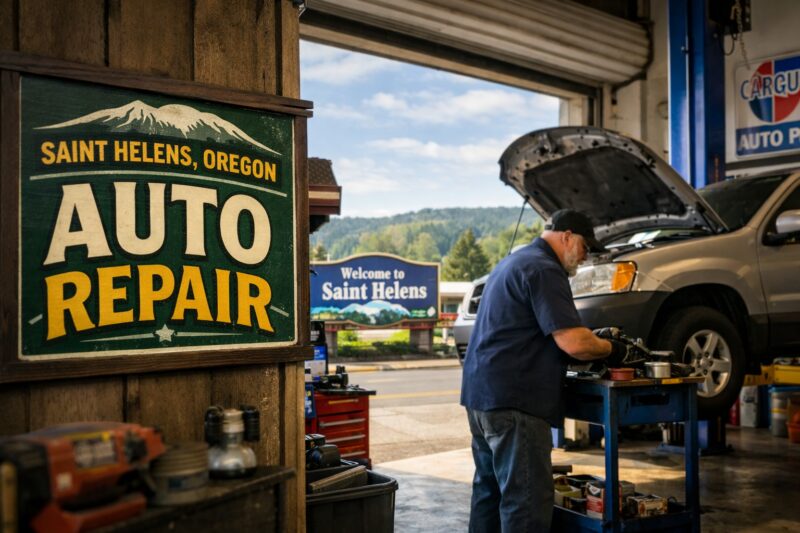
To reinforce commercial fit, ask about practical realities like turnaround time, communication cadence, and whether they can offer rental or loaner options when delays are likely. If you need an ultra-fast turnaround, your best bet is to prioritize shops that commit to a diagnostic appointment with an estimate within a defined window. If you’re not sure where to start, you can reference reliable shop selection checklist to structure your calls.
What Services Are Commonly Requested for Auto Repair in Saint Helens, Oregon?
The most common auto repair requests in Saint Helens, Oregon typically cluster around brakes, tires and alignment, engine and suspension concerns, electrical diagnostics, transmission service, and routine maintenance. Commercially, the key is understanding what symptoms trigger visits so you can compare shops on how they scope work—scan first, inspect second, and only then quote.
Engine and suspension/brake issues often bring customers in when drivability changes become noticeable: overheating, pulling, vibration during braking, clunking over bumps, or reduced acceleration. For example, worn suspension mounts can create vibration or drivetrain “feel” changes that resemble an engine problem. Reputable shops address this by checking related systems—motor mounts, transmission mounts, wheel bearings, and braking hardware—because symptoms rarely stay confined to one component. The practical application is simple: when you describe the symptom pattern (speed range, temperature, turning direction), the shop should narrow tests to likely mechanical causes and confirm them through inspection and targeted checks.
Electrical and “check-engine light” concerns are another major category. Modern modules can store codes even when the immediate fault is intermittent, and unrelated issues can “stack” codes. For instance, a faulty ABS sensor or wheel speed signal can lead to warning lights and traction-control behavior that customers interpret as “brakes” broadly. A strong shop explains the likely chain of causation and tests the relevant sensor signal and related components before recommending expensive replacements. They should also clarify whether the fix resolves the root cause or merely clears symptoms temporarily.
Tires, alignment, and wheel balancing are often requested when the driver reports steering drift, uneven tire wear, or vibration at highway speeds. Shops that handle these well typically follow a workflow: verify tire condition and wear pattern → inspect suspension and steering components → perform alignment only after relevant mechanical issues are corrected. Tradeoff: some shops may quote alignment quickly, but if the suspension wear is significant, the alignment will not last. That’s why a reputable shop should recommend repairs based on safety risk and urgency, not simply on the most convenient service to sell.
Transmission-related concerns usually involve a noticeable behavior shift: delayed engagement, shuddering, slipping under load, or harsh shifting. Because drivetrain symptoms can be caused by sensors, fluid conditions, valve body issues, or mechanical wear, diagnostic quality matters more than brand reputation. A common mistake is committing to “a transmission flush” as a one-size solution. The better approach is inspecting fluid condition, scanning for transmission-related codes, confirming driving behavior, and recommending service that matches the diagnosis. Maintenance also remains a frequent request—oil service, filters, belts, wipers, and brake fluid—where the decision criteria should include your mileage, driving conditions, and safety considerations.
When you ask about services, pay attention to how the shop structures “inspection → scan/read codes (as needed) → tests → quote.” If they can’t explain that sequence, or if they repeatedly recommend unrelated repairs without explaining the relationship to your symptoms, you’re likely seeing guesswork. If you want more insight into how repairs relate to service processes, you can also review supporting guidance like fast accurate auto service, which focuses on consistent service execution.
Auto Repair Pricing & Estimates in Saint Helens: How to Compare Quotes Fairly
Compare auto repair estimates fairly by insisting on itemized labor hours, parts sourcing choices, diagnostic fee handling, and clear inclusions/exclusions—then verify warranty terms. In Saint Helens, Oregon, price differences often come from different diagnostic depth, different parts tiers (OEM vs aftermarket), and different expectations about what is included in the scope.
When you receive an estimate, read it like a contract. A solid quote typically lists labor line items (not just “repair”), an associated flat-rate or time allowance, parts by name and quantity, and applicable taxes/fees. It should also show whether a diagnostic fee is separate from the repair, and whether the diagnostic fee is credited toward the approved work. Parts sourcing matters commercially: OEM parts may cost more but can align with manufacturer specifications and sometimes simplify warranty coverage; quality aftermarket parts may be appropriate, but the shop should tell you what brand or equivalent is being used and how the warranty compares.
Understand the difference between flat-rate quoting and time-and-materials. Flat-rate works well when the repair labor time is standardized and the repair procedure is predictable. Time-and-materials can be appropriate for complex diagnostics or when the repair scope can’t be fully confirmed until components are inspected. Practical application: if a shop quotes an engine electrical issue as a simple parts swap without explaining how they arrived at the labor scope, you may be seeing a mismatch between the complexity and the quote type. For modern vehicles with sensors, modules, and wiring harnesses, “diagnose first” should influence whether the shop uses flat-rate or staged approvals.
To avoid sticker shock, build a scope comparison framework. Ask each shop the same questions: What tests are included? What’s excluded (for example, additional diagnostics for related systems)? Is “while you’re in there” part of the scope or a change-control item? What happens if the issue is confirmed as something else mid-job? You can also request estimate drift transparency: if the shop expects additional findings once they access components, they should explain how they will get your approval before expanding the job.
A simple comparison table can make quote drift easier to catch, especially when shops propose different parts tiers and different diagnostic depth. For example, a dealership might quote OEM components and follow factory procedures with a higher labor rate, while an independent shop might quote high-quality aftermarket parts with a different warranty schedule. Specialty shops might be faster for certain systems but less certain on cross-system failures. Your goal is not to pick the lowest number; it’s to ensure the apples-to-apples scope is truly comparable.
| Shop Type | Typical Scope Expectations | Parts & Warranty | Best When |
|---|---|---|---|
| Dealership service | Factory procedure alignment; detailed documentation | Often OEM parts; factory warranty terms | You want strict OEM spec coverage |
| Independent general shop | Diagnostic plan varies; may bundle related inspections | OEM or quality aftermarket; flexible warranty terms | Most day-to-day repairs and maintenance |
| Specialty shop | Deep focus for brakes, alignment, transmissions, or electrical | Specialty parts and targeted labor; part warranties vary | You have a complex recurring issue |
| Generalist with mobile/pre-arranged service | Best for basic maintenance or some diagnostics | Parts availability and warranty can vary | Convenience or time constraints |
To prevent disputes, request itemized receipts and photo/video evidence for wear when relevant—brake pads, leaking components, damaged hoses, or undercarriage corrosion. A common mistake is accepting a vague estimate that says “replace worn parts” without naming them. If you want repeat-repair prevention, insist on documented findings before reinstall—because if the diagnostic evidence isn’t captured, you can’t easily verify that the root cause was actually fixed.
Diagnostic Quality: The Fastest Way to Avoid Repeat Repairs in Auto Repair Saint Helens Oregon
Diagnostic quality is the fastest way to avoid repeat repairs in Auto Repair Saint Helens Oregon because it prevents “parts swapping” based on incomplete information. When a shop verifies the symptom, gathers data, and tests targeted hypotheses, you’re more likely to pay once for a real root-cause fix rather than multiple times for recurring symptoms.
Good diagnostics starts with symptom verification and then uses data-gathering tools appropriately. Most modern vehicles rely on OBD-II plus enhanced scanning for manufacturers’ systems; a reputable shop can read stored and pending codes, examine live data, and confirm whether the codes match the current behavior. The practical application is that the shop should explain the diagnostic path in plain language: which test will confirm or rule out a likely cause, what result is expected, and what the next step becomes if the result doesn’t match. Tradeoff: strong diagnostics takes time, so shops that promise immediate fixes without testing may cut corners that cost you later.
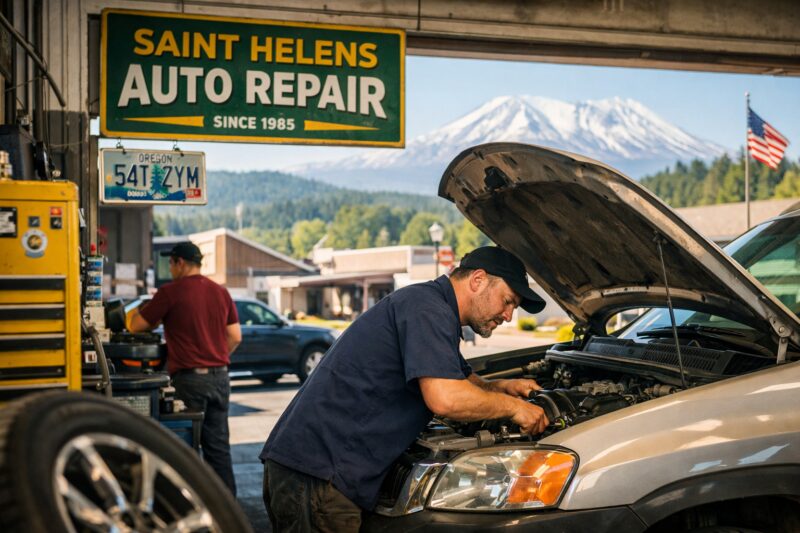
In a good workflow, diagnostics and repairs are connected by evidence. For example, if a check-engine light returns quickly after a fix, the diagnostic data should be reviewed again: is the same code returning, or is a different system now signaling a different fault? Shops that can do “re-diagnosis with evidence” should re-scan, check connectors/grounds, verify repairs under the same conditions that triggered the fault, and confirm whether the original hypothesis was wrong. The common mistake is “code-chasing,” where a shop replaces a component after seeing a code without verifying sensor readings or physical conditions. Another frequent failure mode is overlooking wiring issues—chafed harnesses, poor grounds, corroded connectors, or routing damage that produces intermittent faults.
It helps to understand which tools indicate diagnostic maturity. Many shops use scan tools and live data, multimeters for electrical tests, smoke testing for vacuum or EVAP leaks, and road testing for drivability verification. Even when a customer can’t see the tools, they should be able to see the logic. A shop should provide measurable results—such as voltage readings within expected ranges, or leak test findings—rather than vague statements like “the computer says so.” This matters because modern systems can store codes from downstream effects that won’t be fixed by replacing parts unrelated to the upstream cause.
Separate diagnostic charges are not automatically unfair. The diagnostic fee often funds scan time, test planning, road testing, and labor to interpret data. The best practice is that the diagnostic fee is credited toward approved repairs when the problem is confirmed and the customer authorizes the fix. If you’re trying to judge whether the diagnostic fee is reasonable, ask how the fee applies: what it covers, what it does not cover, and whether additional diagnostics require a new authorization.
For a local decision framework, you can align your questions with the kind of process steps described in trusted mechanic selection steps and the communication expectations outlined in reliable shop selection checklist. Those resources are helpful when you want a repeatable way to compare evidence quality, not just pricing. And for a quick read on what to expect from service workflow and responsiveness, fast accurate auto service can provide a useful lens on execution standards.
Auto Repair Options & Alternatives: What to Look For Before You Commit
Before you commit, choose between dealership service, independent shops, specialty shops, or mobile/pre-arranged service based on the repair complexity, safety urgency, and how confident you are in the shop’s diagnostic process. In commercial terms, the “best option” is the one that matches your risk level and timeline—not the one with the lowest price.
Routine maintenance is often best handled by independent shops that can provide clear service intervals, transparent parts options, and consistent documentation. If your vehicle is out of warranty, you can typically reduce cost without sacrificing reliability by selecting quality aftermarket components—provided the shop can explain warranty coverage and compatibility. Practical application: for oil service, filters, wipers, and scheduled maintenance, you’re paying for reliability maintenance rather than deep diagnostic interpretation, so the decision criteria shift toward scheduling speed, part quality, and service communication.
Out-of-warranty major repairs and complex drivability issues require more careful selection. Specialty shops can be an excellent fit when the symptom is strongly associated with a single system, like transmissions, alignment, or advanced electrical/EV issues (depending on the shop’s capabilities). However, when symptoms cross multiple systems—such as vibration that could be suspension, brakes, tires, and drivetrain mounts—you may need a generalist that can coordinate evidence across related components. A common mistake is picking a specialist for a multi-system symptom and assuming they will diagnose the full root cause without staged approvals; instead, a good shop should explain what they will test first and what they would defer to additional service if the first diagnosis points elsewhere.
Urgent safety repairs should be prioritized regardless of shop type, but you can still ask smart questions. If brakes are failing, overheating is occurring, or steering feels unstable, you should choose the fastest competent option that can document findings and provide a clear safety-related plan. Tradeoff: some alternatives like mobile service can be convenient, but complex repairs often require lift access, specialized equipment, and controlled test environments. For complex electrical diagnostics, a stationary setup plus proper inspection access can reduce misdiagnosis risk.
Compatibility checks matter when you’re selecting parts tiers. Whether you choose OEM or quality aftermarket, confirm the fit by matching the vehicle make/model/year and verifying the part warranty terms. Ask the shop how it sources components and how it handles lead times. If a repair requires parts that may be delayed, a shop should provide timeline expectations and discuss interim safety considerations rather than leaving you waiting without communication.
If you’re organizing your decision process, it can help to follow a structured approach like those found in reliable shop selection checklist and reference the location context in Saint Helens Oregon service area. Those references support planning calls and aligning your expectations with the services that shops in the Saint Helens area can realistically provide.
Advanced Considerations Most Guides Miss: Warranty, Liability, and “What If It Comes Back?”
Warranty clarity and a repeat-repair plan are often what separate a truly reliable shop from a “one-and-done” repair. If your concern returns after service, you need to know what the warranty covers, how re-diagnosis should work, and how approvals should be handled the second time—especially in Auto Repair Saint Helens Oregon where roads and driving conditions can expose marginal fixes.
A strong warranty typically includes separate coverage for parts and labor, and it should specify what counts as valid coverage. For example, if the shop replaces a component but the failure is caused by an upstream wiring issue or contamination elsewhere, you want the shop to document re-diagnosis and explain what will be covered and what might require new authorization. Practical application: ask the shop how warranty claims are processed, what documentation they keep, and whether they will re-test the system using evidence from the original repair order.
Liability and customer responsibility can become confusing when estimates are written with vague wording or when the shop expands scope without approvals. Before work begins, insist on a clear repair scope and change-control process. A good shop should get your approval before adding parts or labor that fall outside the initial estimate. If they encounter additional issues once disassembly begins, they should communicate the finding, explain the safety or operational relevance, and request authorization with an updated estimate.
Deposit/payment pitfalls are another area many guides overlook. Deposits may be reasonable for parts ordering or specialized labor scheduling, but you should ask what is refundable and under what circumstances work is canceled. Estimates are not guaranteed unless stated, so ask how uncertainty is handled. For parts orders with non-returnable items, reputable shops usually communicate that upfront. Tradeoff: if a shop is overly cautious and won’t provide any estimate at all, you may struggle to compare options; however, a shop that gives detailed estimates without acknowledging variable findings might be setting you up for conflict later.
Repeat-repair edge cases are common: intermittent faults can return after the shop’s test window ends, contamination can worsen results, and reassembled components can cause new leaks or harness stress if not handled carefully. The best response is a structured return-to-shop protocol: the shop should rescan, review prior findings, compare new symptoms to the recorded test plan, and propose a root-cause reassessment before recommending more parts. A common mistake is dismissing repeat failures with “it happens” statements or only clearing codes without re-validating the root cause. If the vehicle returns, insist on a documented path forward: what was proven last time, what is being proven this time, and how the recommendation changes.
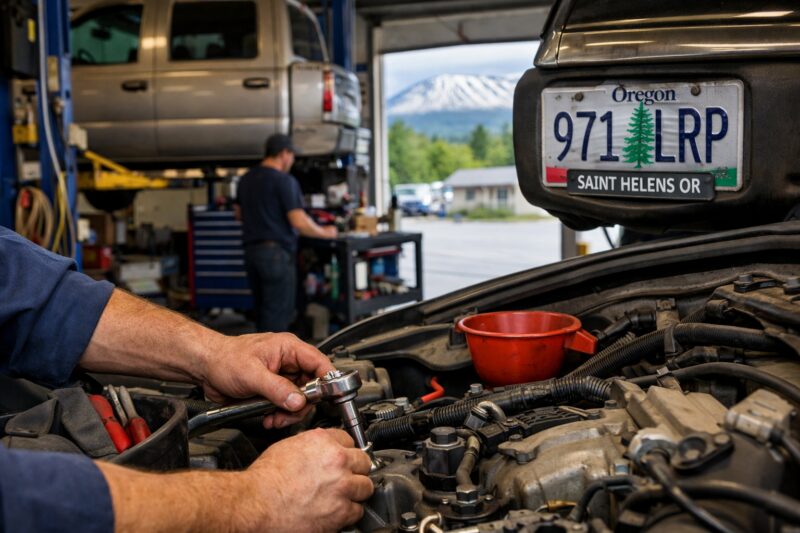
If you want a consumer-protection baseline on written estimates and repair-shop responsibilities, the FTC auto repair guidance is a helpful reference. It reinforces why written estimates and clear communication protect both parties. And for technical credibility and workforce standards, you can also cross-check general certification information through ASE. These sources support your expectation that diagnostics, documentation, and warranty terms should be more than “verbal promises.”
Common Mistakes and Misconceptions About Auto Repair in Saint Helens, Oregon
Common mistakes in Auto Repair Saint Helens Oregon usually come from choosing based on price alone or authorizing repairs without understanding the diagnostic evidence behind them. If you want to reduce total cost, focus on what the shop will do to confirm the root cause before you approve parts replacement.
A major misconception is that “any shop can diagnose equally well.” In reality, diagnostic skill and tooling matter because modern vehicles require evidence-based testing across sensor data, wiring integrity, mechanical condition, and sometimes staged verification. If you authorize repairs based on a single code, you risk paying for parts that don’t solve the true issue. Real-world scenario: an engine runs rough, and the check-engine light shows a misfire code. A low-diagnostic approach might replace spark plugs and coils immediately, but a more complete diagnostic might find an intake vacuum leak or fuel pressure problem causing the misfire. Both approaches can sound confident—only one uses a systematic test plan.
Another mistake is authorizing repairs without a written estimate or without understanding what tests led to the recommendation. Even when the shop insists the cost is “close,” ambiguity around labor hours, diagnostic scope, parts type, and warranty exclusions creates disputes. Practical application: ask for itemized details and ensure you understand what is included before work begins. If a shop can’t clearly explain the test results, consider that a diagnostic quality issue—not merely a communication style issue.
Many customers also focus solely on the lowest price and ignore scope gaps. For example, one estimate may include brake rotor resurfacing or hardware replacement, while another excludes certain items. Or one quote may assume diagnostic fee crediting and structured approvals, while another may treat the diagnostic fee as fully separate and non-creditable. The tradeoff is that a cheaper initial quote can become more expensive once you add missing items or need additional repairs due to misdiagnosis.
Seasonal and local driving conditions contribute to wear patterns that customers may misinterpret. In the Saint Helens area, wet roads and road grit can accelerate corrosion on undercarriage components and cause electrical connector issues to appear intermittently. That doesn’t mean you should chase “weather-related fixes,” but it does mean your shop should consider environmental factors when diagnosing symptoms that come and go. A common mistake is to blame corrosion only after repeated failures rather than capturing the evidence early in the diagnostic timeline.
Red flags include refusal to explain findings, pressure tactics to authorize parts quickly, vague estimates with no labor breakdown, and recommending repairs that do not tie back to your reported symptoms. If a shop says “you need it because we always do,” that’s a diagnostic shortcut. Instead, a reliable shop should connect the recommended repair to evidence from scanning, inspection, or testing. If you want a quick guide to the decision signals that matter, you can reference the structure in reliable shop selection checklist to keep calls objective.
Frequently Asked Questions About Auto Repair Saint Helens Oregon
What should I ask before approving auto repairs in Saint Helens, Oregon?
Ask for the diagnostic plan and expected diagnostic time, then confirm what the written estimate includes and what is excluded. You should also ask what parts type will be used (OEM vs aftermarket) and what approvals will be required if the shop discovers additional issues mid-job. Finally, clarify the timeline for completion and whether the diagnostic fee is credited toward approved work.
How do I compare quotes for brake repair without getting overcharged?
Compare itemized labor and parts and verify what’s included: pads, rotors, hardware, brake fluid service, and any related inspection items. Ask whether the shop will replace rotors only when measurements support it and whether it includes an inspection of calipers, slides, and brake hose condition. Check warranty terms for both parts and labor so the “cheapest” quote doesn’t become the most expensive later.
Are diagnostics fees normal, and are they creditable toward the repair?
Diagnostics fees are common because they pay for scan time, test planning, inspection, and analysis of live data. A fair shop should explain what the diagnostic covers and whether it is applied toward the approved repair. If you’re unsure, ask whether the fee is credited and how re-diagnosis is handled if the original cause is not confirmed.
What does a “written estimate” need to include to be fair?
A fair written estimate lists parts by name and quantity, labor line items with hours (or a flat-rate method), and any diagnostic fees. It should also show taxes and shop fees clearly, plus exclusions and assumptions. If new findings are likely after disassembly, the estimate should describe the change-control process for additional approvals.
How can I tell if an auto repair shop is trustworthy in Saint Helens?
Look for documentation habits: itemized estimates, clear diagnostic findings, and consistent communication about timeline and next steps. Trustworthy shops provide warranty terms in plain language, explain why recommended repairs make sense for your symptoms, and handle changes with approval. You can also evaluate credibility through proof like customer reviews and the shop’s stated diagnostic process, without assuming every positive review means every repair will be perfect.
Why does my check engine light come back after a repair?
The check engine light can return when the root cause wasn’t fully resolved, especially with intermittent faults. Sometimes a repair removes one symptom but leaves an upstream issue causing new or different codes. A good next step is re-scanning to confirm the exact code(s) and running targeted tests again rather than repeating parts replacement without evidence.
Do I need OEM parts, or are quality aftermarket parts okay?
Quality aftermarket parts can be fine, but you should confirm warranty coverage and that the part meets required specifications for your vehicle. For safety-critical components, ask how the shop verifies fitment and quality before installation. If you’re prioritizing factory-spec performance or easier warranty claims, OEM parts may be preferable.
What are the signs I should stop driving and get repairs urgently?
Stop driving and seek urgent service if you have reduced braking performance, overheating, loss of power steering, major steering/suspension instability, or visible fluid leaks. If warning lights indicate severe conditions (like rapid overheating or brake system failures), don’t delay diagnosis. Urgency exists because continued driving can cause secondary damage and raise repair costs.
How long should repairs take for common issues in 2026?
Repair time depends on diagnosis complexity, parts availability, and whether the repair requires specialized equipment or multi-step testing. A reputable shop will give you a realistic timeline based on how long diagnostics typically take and whether parts are already on hand. If a shop won’t commit to a window, ask what could change the timeline and how they’ll communicate delays.
Can a shop recommend repairs I didn’t request, and should I approve them?
Yes, a shop may recommend additional repairs if they find safety or drivability issues during inspection, but you should only approve what you understand. Ask for the evidence linking the recommendation to your symptoms and confirm how it changes the estimate and timeline. For “while you’re in there” work, you can approve when the shop explains urgency, safety impact, and why it’s cost-effective now.
If you’d like a structured pre-authorization flow, you can use trusted mechanic selection steps as a checklist framework and compare quotes using the scope approach in reliable shop selection checklist.
Conclusion
Choosing the right Auto Repair Saint Helens Oregon option in 2026 comes down to a repeatable decision framework: prioritize diagnostic quality, demand transparent written estimates, and ensure warranty terms are clear before approving repairs. When a shop proves the problem with documented findings and explains the test plan, you’re far less likely to pay for unnecessary parts or end up with repeat failures.
As you compare quotes, focus on scope clarity rather than sticker price. The most preventable disputes come from misunderstandings about labor hours, included tests, parts sourcing tiers, and what happens if new findings appear mid-job. A fair shop should use a documented approval workflow and give you change-control options when escalation becomes necessary.
Your best next step is practical: contact 2–3 Saint Helens area shops, ask the same pre-authorization questions, and compare the diagnostic evidence and estimate structure—not just the total cost. If you want a structured way to plan the calls and compare service execution, use reliable shop selection checklist and review workflow expectations at fast accurate auto service. This approach helps you avoid repeat repairs by insisting on a root-cause explanation before major parts are replaced.
Updated May 2026