
If your transmission is failing and you need expert help nearby, the fastest path is finding a shop that proves it can diagnose and document the cause. When searching for Transmission Repair Services near you, commercial drivers should expect evidence-based troubleshooting, clear estimates, and repair work backed by documentation and warranty terms.
That matters more for businesses than personal vehicles. Downtime impacts routes, maintenance schedules, customer commitments, and resale value. A repeatable process also reduces the risk of repeat failures that can return right after “successful” repairs.
In this guide, you will learn how to evaluate local transmission specialists, what to ask during intake, and how to compare repair options without getting pushed into unnecessary teardown. You will also get a decision framework for rebuild versus replacement, plus questions to spot guesswork early.
What “expert” transmission repair means for commercial vehicles
Expert transmission repair is not just skilled hands. It is a repeatable diagnostic process that connects symptoms to root causes, then matches the repair depth to the evidence.
For businesses, the expert standard starts with a technician who can explain what they found, not just what they will replace. The shop should review vehicle history, confirm the transmission type, and interpret symptoms in context. That includes how the vehicle is used, such as stop-and-go driving, towing patterns, or route variations that affect heat and wear.
Next, expert shops use data to guide decisions. They should review scan results, cross-check sensor behavior, and assess fluid condition rather than assume the transmission is the only culprit. This is where strong Intake and inspection practices pay off, especially for intermittent shifting complaints or contamination-related failures.
Finally, “expert” includes documentation. You should expect a written baseline before teardown and clear notes about what changed afterward. Tradeoffs exist: a thorough diagnosis takes time, but it can prevent paying for major work when the underlying cause sits outside the transmission.
A common mistake is confusing “good at repairs” with “good at diagnosing the cause.” If the shop skips the root-cause step, a truck can return for the same symptom after the repair is finished. This is why a structured approach beats guesswork when you need Transmission Repair Services that fit your operational needs.
Choosing the right expert for transmission service at your business
Choosing the right expert transmission shop begins before the car ever comes in. You need to match the shop’s process and capacity to your vehicle’s criticality and your maintenance calendar.
Start by prioritizing how the transmission affects your operation. A single downed delivery van might be painful, but a fleet vehicle used on active routes creates higher daily cost. That affects how you plan scheduling, approvals, and the amount of diagnosis you should demand before committing to teardown.
Then align expectations around warranty and repeatability. Ask what proof they provide that repairs address the cause, not just the symptom. In many cases, that includes test results, fluid condition observations, and a clear parts plan matched to the failure evidence.
You should also consider service-access constraints. Some commercial vehicles require towing, staging, or controlled road testing. If the shop cannot accommodate these realities, you may see delays or forced compromises in what they can verify before authorizing the next steps.
A nuance many owners miss is that intake must cover duty cycle details. If the shop only asks for a general “shifts hard” description, they may miss heat or contamination clues. For example, a shift flare that worsens after long idling can point to control or fluid concerns, not just internal wear.
Before you decide, use a trusted mechanic selection checklist to compare providers consistently. It helps you evaluate how shops intake, diagnose, explain, and document, rather than relying on marketing claims.
A step-by-step decision process for local transmission repair you can trust
A trustworthy transmission repair process moves in stages with clear decision points. It should begin with intake, continue through inspection and verification, and only then reach teardown authorization.
First comes initial contact and symptom intake. The shop should capture when the issue started, how it behaves, and what changes it causes. They should also ask about prior work, since prior parts or software updates can influence diagnosis and repair strategy.
Next, the shop conducts inspection and, when appropriate, a road test. For intermittent faults, the goal is to reproduce conditions safely, not chase random events. They should pair driving observations with scan tool live data and error code review to see whether control inputs match the complaint.
Then they review the data and decide what to test before major disassembly. This often includes evaluating fluid condition and contamination indicators, plus targeted checks that reduce uncertainty. Only after evidence supports it should they move into teardown and component-level evaluation.
For commercial use, estimates must be structured for decision-making. A strong estimate includes line-item labor and parts, plus a diagnostic fee if applicable. It should also list assumptions clearly, including what they expect to find and what triggers scope changes.
A deeper insight is how to handle “unknown cause” scenarios without wasting time. Expert shops do not drag out teardown without evidence, but they also do not stall indefinitely. They should explain which tests narrow possibilities and what they need from you to continue safely.
When you compare options later, keep the “questions to ask before paying” in mind. The right questions help ensure the estimate reflects diagnosis quality, not just replacement pricing.
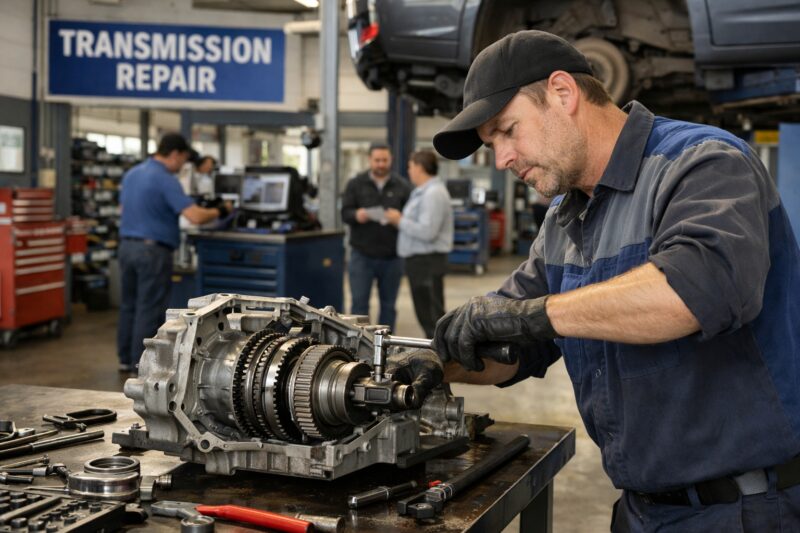
What to ask before you approve transmission repair work near you
Before you approve transmission work, you should demand clarity on diagnosis, scope, and proof. This helps you avoid vague quotes and protects your business from unnecessary teardown.
Start with scheduling and logistics. Ask when the vehicle can be staged, how they plan to communicate progress, and whether they can accommodate fleet drop-off and pickup windows. If you need multiple vehicles handled under the same service standard, confirm they can keep parts specs consistent across each unit.
Next, ask about warranty coverage and what it includes. Your goal is to understand coverage duration, exclusions, and how the shop handles return visits. Good warranty terms also require documentation, so request what paperwork they will provide and what evidence you must keep for future claims.
You should also ask what parts standard they follow. In practice, this means whether they use OE-equivalent components or another spec and how they ensure traceability. For commercial repeatability, traceability and documentation matter because they let you understand what failed and what was replaced.
Communication is a key tradeoff. Some shops can move fast but communicate less, which can create approval delays later. Others communicate frequently but take longer to schedule. Decide based on your downtime risk and confirm the cadence they will follow.
A common estimate trap is approving “replacement” without documented diagnostic findings. You should ask how they know the transmission is the cause before they authorize major labor. If they cannot show scan data, fluid condition observations, and test outcomes, ask for those items or request a second diagnostic opinion.
To compare providers fairly, review a fast reliable auto shop checklist. It helps you spot gaps in communication, documentation, and decision support.
Common mistakes that lead to repeat transmission failures and costly downtime
Repeat transmission failures usually come from weak root-cause diagnosis or incomplete repair documentation. The cost shows up twice, first as downtime and then again as repeat labor and parts.
One major mistake is skipping fluid and condition checks. Fluid condition can reveal wear patterns, metal contamination, or abnormal degradation, which helps separate internal damage from contamination and overheating causes. When shops skip these checks, they may replace parts while leaving the original cause intact.
Another mistake is replacing components without confirming the failure path. For instance, a symptom can appear transmission-related but originate in sensors, control logic, or an overheating pathway. If the shop repairs the visible symptom only, the control system can trigger similar behavior once the vehicle returns to its normal duty cycle.
Documentation gaps also cause repeat problems. If the shop cannot show what tests they ran, what parts they used, and what changes occurred after repair, your next diagnosis becomes harder. In commercial settings, that can lead to inconsistent repairs across vehicles, especially when teams share vehicles or swap parts.
Commercial fleets add unique failure patterns. Heat cycles from towing, stop-and-go routes, and long idle periods can intensify wear. If diagnosis assumes a different usage pattern than your operation, the shop may underestimate how quickly the next issue will appear.
A misconception to correct is “any shop rebuilds transmissions the same way.” Rebuild quality varies based on teardown inspections, component selection, and validation. Another misconception is “fluid changes fix everything,” even when overheating or contamination sources remain active.
A deeper nuance is why reusing worn components can backfire. If worn parts are not replaced or if clearances and procedures are not followed carefully, you can get early wear again. That often targets the clutches, control solenoids, or geartrain elements tied to the original failure mode.
Comparing repair options when you need transmission service for a fleet or business vehicle
Different transmission repair options trade depth, risk, and schedule predictability. The right choice depends on what the inspection shows and how your operation can handle downtime.
Common categories to compare include component-level repair, full rebuild, transmission replacement, and refurbishment or line-by-line overhaul. Component-level repair fits when damage is limited and evidence points to a specific failure area. Full rebuild or refurbishment makes sense when wear is broad or contamination evidence suggests deeper service is needed.
Transmission replacement is often selected when the shop finds widespread internal damage or when you need a more standardized outcome. Even then, experts warn that replacement can still be a diagnostic failure if the underlying cause remains unresolved. If overheating or contamination continues, a replaced unit can repeat the same symptom.
To compare apples-to-apples, require consistency in inputs. Ask for the same diagnostic findings across quotes, and make sure parts standards and warranty terms match. If one quote includes a stronger diagnostic step or clearer warranty documentation, that difference can justify a higher upfront cost.
The tradeoff is not only money. It includes scheduling risk, labor depth, and how you plan approvals during teardown. Your business might accept longer service if the evidence reduces the chance of repeat downtime.
Here is a practical comparison table you can use internally when you request quotes from multiple providers:
| Repair option | Best fit when inspection shows | Key tradeoffs for commercial use | What to confirm in the estimate |
|---|---|---|---|
| Component repair | Localized wear or a clear single failure point | Lower parts cost, but risk if root cause is broader | Proof of the failure path, parts standard, and warranty coverage |
| Full rebuild | Multiple worn components or evidence of deeper contamination | More labor depth, but often stronger alignment to duty cycle | Teardown findings, replacement criteria, and documentation |
| Transmission replacement | Widespread internal damage or time-critical requirements | Can repeat if cause is not resolved outside the unit | Cause correction plan, compatible calibration, and warranty terms |
| Refurbishment / overhaul | Need deeper service without a full rebuild approach | Varies by shop, so compare evidence and warranty closely | Scope boundaries, components replaced, and validation steps |
A deeper insight for fleets is how you plan for “unknown cause” during teardown. Ask how they will communicate risk levels if evidence suggests multiple contributing causes. This is where detailed estimates and scope-change checkpoints become essential.
If you want a helpful structure for comparing providers, you can also consider transmission and drivetrain services as part of your broader maintenance planning. That alignment often improves how teams schedule diagnostics and keep documentation consistent across repairs.
Advanced edge cases where transmission problems aren’t only inside the unit
Some transmission symptoms are caused by systems around the transmission, not just internal parts. Expert shops treat this as an edge case, then prove it with tests before major work.
Heat management is one of the most common external contributors. Cooling issues can mimic internal slipping or delayed shifting by elevating fluid temperature and changing viscosity. A shop should check cooling performance indicators and inspect for signs of fluid aeration or abnormal degradation patterns.
Contamination sources can also sit upstream. Debris and wrong fluid types can alter how clutches and control components behave. Even small contamination can create repeat problems if the source is not corrected during service.
Control module strategy can add another layer. Sensors, valves, and control logic can create shifting problems that look like mechanical failure. The right approach includes reviewing scan data trends, checking sensor plausibility, and validating how the transmission responds under load.
These edge cases require extra rigor. For intermittent shifting complaints, experts should document conditions where the symptom appears. They should also confirm whether any prior aftermarket modifications influenced the control logic or fluid pathway.
How to decide rebuild versus replacement becomes more complex when damage is partial versus widespread. Evidence of limited wear may favor component-level work if the non-internal cause is corrected. Evidence of broad contamination or repeated overheating patterns can justify deeper refurbishment or rebuild to restore long-term reliability.
A common mistake is failing to establish test baselines before repair. Without baseline readings and post-repair validation, you lose the ability to prove the fix worked. Ask what evidence they capture before teardown and how they confirm no new fault codes appear after repair.
Where to find expert transmission repair services near you in 2026 (and what to verify)
To find expert transmission repair services near you, start by selecting providers within your service coverage and logistics plan. Then verify their diagnostic approach, documentation habits, and ability to support commercial scheduling needs.
Local searching works best when you think in terms of access, not just distance. Commercial vehicles may require towing, staging, or coordinated dispatch timing. Choose shops that can accept your vehicle type, provide appointment availability, and coordinate transport options without forcing rushed decisions.
Beyond marketing, look for signals of diagnostic rigor. Review service history and ask what diagnostic steps they run before teardown. If you see repeated mentions of data review, fluid inspection, and clear communication, that aligns with expert expectations.
You can also verify credential concepts that relate to drivetrain repair. Many technicians pursue recognizable automotive certifications, and shops that support ongoing training often keep their diagnostic methods current. While credentials do not replace good process, they can correlate with the ability to follow evidence-based troubleshooting practices.
For fleets, confirm they can handle multiple vehicles with consistent specs. Ask how they keep parts standards aligned across each unit and how they manage approvals when teardown reveals unexpected findings. Also ask how they reproduce results under your duty cycle, not just during a generic test drive.
A deeper nuance is how to confirm “reproducibility.” Experts should explain how they validate the fix with practical checks and post-repair confirmation. If they cannot describe validation steps, you may face a repeat failure cycle.
When reading reviews, focus on repeat failures, clarity of estimates, and whether the shop explained the cause. Avoid red flags like vague quotes, pressure to authorize immediately, or complaints that communication stopped during teardown.
How to spot the most trustworthy diagnostic approach before major transmission work
True diagnosis shows measurable evidence that links symptoms to causes. If the shop cannot share what they found and how they concluded it, your estimate may be guesswork disguised as certainty.
Look for a diagnostic sequence tied to your complaint. For example, a shop should review scan tool codes and live data, then cross-check fluid condition and operational behavior. This is especially important for intermittent faults and issues that can involve contamination or sensor plausibility.
Ask to see the diagnostic items they reviewed. You should expect trouble code review, interpretation of sensor and solenoid behavior, and notes about fluid appearance and contamination indicators. Good diagnosis also includes a plan for what they will check next if initial findings do not confirm the root cause.
A common mistake is letting the shop jump straight to replacement. When that happens without diagnostic evidence, you lose time and still risk repeat failures. Another misconception is that codes alone prove the transmission is bad. Codes can point to control issues, wiring, or sensor errors that lead the transmission to behave incorrectly.
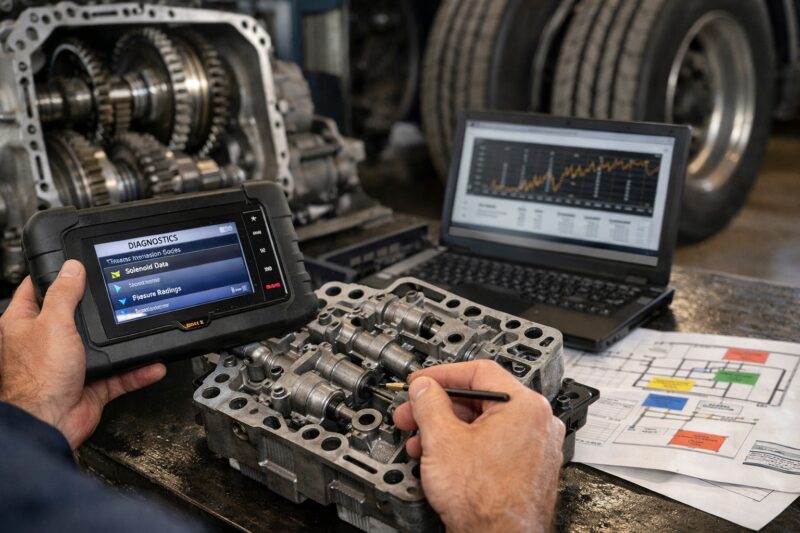
In real-world scenarios, intermittent shifting can look like worn clutches. But scan data may show control strategy responses tied to sensor inputs. If that is the case, replacing internal components without correcting the sensor or control path can waste money.
To guide your decision, use the questions to ask before paying framework. It helps you request the evidence set that experts should produce during initial diagnosis.
What to request during an initial consultation for commercial transmission repair
An initial consultation should gather facts that make diagnosis and scheduling possible. You can expect the shop to document symptoms, review history, and align the repair plan to your downtime constraints.
Begin with symptom intake. Provide when the problem started, what it feels like during shifting, and whether it happens under specific conditions like towing or route variations. Also share whether the issue is constant or intermittent, since that changes diagnostic strategy.
The shop should then request service history and vehicle details. That includes VIN or build details, transmission type, and prior work performed. For fleets, they should also ask about vehicle load patterns and shift patterns so they can evaluate whether heat or contamination might be part of the failure mode.
Practical application means you also set clear scheduling boundaries. Ask how they plan approvals before teardown and what communication cadence you can expect. If you cannot spare a vehicle for long, discuss staging and backup plans up front to prevent operational disruption.
A deeper insight is that documentation should start at intake. Experts capture baseline information so they can compare before and after repair. Without that record, it becomes hard to prove the fix and harder to support warranty claims.
If you want a consistent way to vet shops, revisit the trusted mechanic selection checklist. It helps teams compare providers in a standardized way and reduces the chance of choosing based on pricing alone.
How repair timelines for business vehicles vary and how to plan around them
Transmission repair timelines for business vehicles vary based on diagnosis quality, parts availability, and teardown findings. Your timeline plan should assume variability rather than treat estimates as fixed dates.
Scheduling variability starts with initial appointment availability. Some shops can stage vehicles quickly, while others must wait for bays and technician capacity. If you need a vehicle for active routes, ask about staging options and daily work windows early.
Parts availability also affects timeline. If a shop finds limited-damage issues, component-level repairs can keep the plan shorter. If you need a full rebuild or replacement, the schedule may extend based on sourcing, calibration needs, and validation steps.
Teardown findings can shift the plan as well. Experts pause and communicate when they see evidence that changes scope. They should explain what triggered the change and how it affects your approval decision and downtime planning.
Practical application for fleets means planning in tiers. You can prioritize vehicles with the highest route impact first, then schedule follow-ups once diagnostic results are in. This also helps you compare quotes fairly because you know what is included.
A deeper nuance is how to avoid schedule trap thinking. Even if a shop quotes a short timeline, you should confirm the diagnostic evidence they will provide before major work. Timeline alone should not replace documentation or root-cause confirmation.
If you need to coordinate repeat visits or multiple vehicles, the fast reliable auto shop checklist can help you confirm scheduling and communication standards early.
Fluid analysis is worth it because it can identify contamination, wear patterns, and overheating clues before major disassembly. That evidence can prevent misdiagnosis and reduce repeat downtime.
Why it matters for Transmission Repair Services is simple: the transmission uses fluid as both a hydraulic medium and a heat transfer path. Fluid condition can show whether damage is internal only, or if external issues contributed. For example, abnormal debris can suggest contamination that impacts valves and clutch behavior.
How it works in practice is usually straightforward. A technician evaluates fluid appearance and may use condition indicators supported by their diagnostic process. They then correlate those findings with symptom behavior and scan tool results.
Practical application: fluid analysis can help separate “symptom looks like internal failure” from “root cause is contamination or control.” If a shop sees evidence that points elsewhere, they can test upstream causes before you authorize teardown.
Tradeoffs exist. Fluid checks require time and a disciplined process to interpret correctly. If a shop performs fluid analysis but does not connect it to scan data, it becomes another step without value.
A common mistake is treating fluid analysis as a standalone answer. Fluid evidence supports conclusions, but experts should still connect it to codes, live data, and validation under load conditions.
When the underlying cause becomes clearer early, you can choose the right repair depth sooner. That is why fluid analysis aligns with robust questions to ask before paying and with documenting your baseline for warranty support.
Transmission rebuild versus transmission replacement for commercial use: how to decide
Choosing between a rebuild and replacement comes down to evidence, warranty strength, and risk of unresolved external causes. Experts decide based on what they see during inspection, not on what sounds easiest.
A rebuild is often a fit when inspection shows broad internal wear but the cause still points to controllable internal failure modes. Rebuilds also benefit commercial owners when you want detailed component service criteria tied to documented evidence. However, rebuild scheduling can vary with parts sourcing and validation steps.
Replacement can be a fit when you need a standardized solution or when damage is widespread. The tradeoff is that replacement does not automatically fix the original cause. If the vehicle experienced repeated overheating or contamination without correction, the new or remanufactured unit can fail the same way.
To decide fairly, require similar diagnostic foundations. Ask both repair options to use the same baseline evidence set and to explain what they will validate after installation. If one option includes a stronger validation process, it can reduce repeat failures.
A deeper insight is to watch for warranty depth and documentation. Reputable rebuilds and replacements typically come with coverage details and return-visit handling. You should confirm what exclusions exist and what proof you must provide for a claim.
A common misconception is that replacement always eliminates uncertainty. In reality, replacement can still be a diagnostic failure if the shop does not correct the heat, control, or contamination pathways tied to the symptom.
If your fleet needs ongoing reliability, consider how transmission and drivetrain services fit into your maintenance system. When repairs align with broader drivetrain monitoring, shops can spot contributing factors sooner.
When component repair makes more sense than a full rebuild
Component repair can make sense when inspection points to limited damage with clear evidence of a specific failure path. It often reduces parts scope and can limit downtime if the root cause is fully addressed.
How to know it fits depends on wear distribution and contamination evidence. If teardown shows a localized issue and fluid condition does not indicate widespread contamination, component-level repair may restore function efficiently. Experts should still confirm that upstream factors, like heat and control signals, are corrected.
Component repair can also help when the transmission’s overall condition looks good. For commercial vehicles, this can matter when you want to keep maintenance costs predictable while still improving reliability. The tradeoff is that you must trust the diagnostic evidence and inspection detail that led to the narrow scope.
Practical application: ask the shop to explain the decision boundary. For example, they should clarify which components they will test, which they will replace, and which they will reuse with confidence. You should also ask how they will validate the repair under load.
A common mistake is choosing component repair based on symptoms alone. If the shop identifies a cause but misses additional wear patterns, the repaired unit may still fail early. That can create a second downtime event when the business can least afford it.
Another nuance is how warranties apply to partial repairs. Ensure coverage matches the scope and that documentation clearly states what was repaired. Strong documentation supports repeat diagnosis if the symptom reappears.
For a consistent quoting process across providers, use your questions to ask before paying list to keep scope comparisons fair.
Heat or cooling-related transmission problems often show up after sustained driving, towing, or long idle periods. They can also appear as shift quality changes that worsen as temperatures rise.
How it matters is that internal repairs alone may not solve the cause. If cooling pathways are weak, fluid temperature increases and changes fluid behavior. That can cause delayed shifts, slipping-like symptoms, or fluid degradation that looks like internal wear.
What an expert shop should do is rule out non-internal causes before major teardown. That includes evaluating heat management indicators and connecting them to fluid condition observations. They should also check for signs of fluid aeration or contamination patterns that align with overheating.
Practical application for businesses is to describe the pattern clearly. Tell the shop when the symptom appears and whether it relates to load, grade, or stop-and-go cycles. That timeline helps them plan tests that narrow the cause quickly.

A deeper insight is that “heat symptoms” can mimic multiple failure modes. A shop should not assume slipping equals worn clutches, especially when scan data suggests control responses tied to temperature behavior. The common misconception is that heat concerns are “outside the transmission,” so they can be ignored.
A better approach is to treat cooling and fluid behavior as part of the transmission system performance. When experts validate that pathway, you can choose the correct repair depth with less risk of repeat failure.
How to compare transmission repair estimates from multiple shops fairly
Fair estimate comparisons require the same diagnostic findings, comparable parts standards, and clear scope assumptions. Without that, lower prices often hide missing diagnosis or weaker validation steps.
Start with diagnostics included. Ask whether the estimate includes diagnostic time, scan tool analysis, fluid condition assessment, and documented baseline readings. If one shop offers a cheaper “replace it” quote with no evidence, you should weigh that risk heavily for commercial operations.
Next, compare labor and parts line items. Look for clarity on which components are planned for replacement and which components may be reused. Also confirm the parts standard, such as OE-equivalent versus other specs, and ask how parts traceability is documented.
Then compare assumptions and scope change triggers. A strong estimate lists what conditions could expand the work after teardown. It also explains how they will communicate before you approve additional labor.
A deeper nuance is that warranty terms are part of the price comparison. A lower estimate with weak documentation or vague warranty language can cost more after a repeat failure. Ask for warranty coverage details and how the shop handles return visits and exclusions.
Practical application: keep your internal timeline and approvals ready so the shop can follow their decision process. When you compare multiple providers, use a consistent checklist and record each quote’s diagnostic evidence and validation steps.
If you need a repeatable tool for this stage, use the trusted mechanic selection checklist and your questions to ask before paying framework together.
Can you drive a vehicle to the shop if the transmission is acting up?
You may be able to drive to the shop in limited cases, but you must avoid actions that can worsen damage. The safe choice depends on how the vehicle behaves and whether it creates unsafe conditions.
How it matters is that some symptoms indicate ongoing internal damage risk. If the transmission is slipping under load or generating severe vibration, continued driving can increase wear. If the vehicle can shift only in certain gears, driving further may reduce the chance of safe evaluation.
Practical application is to prioritize safety and create a short-distance plan. If the vehicle drives smoothly at low speed and does not overheat, moving it may be reasonable. But if the vehicle hesitates strongly, has warning lights, or loses gears, towing is usually the safer approach.
Tradeoffs exist. Tow can be costly, but it can also prevent additional damage that increases repair scope and downtime. If you decide to drive, keep it gentle and avoid towing, hard acceleration, or extended idling.
A common mistake is trying to “test it one more day” or driving long routes to avoid towing. This can turn a fixable problem into widespread internal damage. Another misconception is that warning lights can be ignored if the vehicle seems drivable.
If you want to coordinate safely, ask the shop about their vehicle intake expectations. Many shops can plan towing and staging based on your symptom report, which helps them prepare staff and diagnostic equipment ahead of time.
Frequently Asked Questions About Expert Transmission Repair Services Near You
How much do transmission repair services cost for commercial vehicles near me?
Transmission Repair Services pricing varies widely based on transmission type, the depth of damage, and how much diagnosis is needed before teardown. Costs also depend on parts selection, warranty scope, and whether your repair is component-level, rebuilt, or a full replacement. In many commercial cases, expect the range to move significantly as soon as the shop confirms the root cause.
For an accurate figure, request a written estimate that itemizes diagnostic work, labor, parts standards, and any scope-change triggers. Shops should also explain what evidence supports their chosen repair depth so pricing reflects the real problem.
How long does transmission repair usually take for business vehicles in my area?
Timelines depend on scheduling availability, diagnostic results, and parts sourcing. Many repairs require additional time once teardown confirms the failure pattern and the shop plans validation steps. Turnaround can range from several days for limited component repairs to longer schedules when rebuild or replacement requires more parts and testing.
Ask how they plan approvals if new findings appear and how they validate the fix under conditions similar to your duty cycle. That helps you plan downtime without relying on a best-case date.
How do I know if a transmission shop is truly diagnosing the problem, not guessing?
A real diagnostic process ties the symptom to evidence like scan tool data trends, trouble code review, and fluid condition observations. Ask what they found and which tests support the conclusion before they authorize teardown. You should also expect them to explain why other causes were ruled out.
If they only describe symptoms and immediately suggest replacement without shared findings, that is a red flag. Expert shops communicate diagnostic evidence clearly so you can make informed decisions.
What should I request during an initial consultation for commercial transmission repair?
Request a structured symptom intake and a clear list of what vehicle details they need, such as transmission type and service history. Ask what baseline documentation they capture before teardown and how they plan approvals during scope changes. Also confirm how your schedule constraints will be handled for staging and communication.
A strong consult results in a diagnostic plan you can understand, not just a vague repair direction. The shop should also confirm warranty expectations in writing.
How long does transmission repair usually take for business vehicles, and what affects the timeline?
Transmission repair time for business vehicles depends on appointments, diagnosis depth, and what the teardown reveals. Parts availability and calibration or validation steps can also extend the schedule. If the shop must resolve external contributors like cooling concerns, the timeline can change again.
To plan well, ask how they estimate downtime, when they will communicate changes, and what evidence they use to decide next steps. That prevents surprises and helps keep fleet operations stable.
Yes, fluid analysis is often worth it because it can reveal contamination or wear patterns that support or challenge the “transmission is bad” assumption. When fluid condition aligns with scan data and observed behavior, it helps experts narrow the root cause early. That can prevent unnecessary teardown and repeat failures.
Ask what fluid checks they perform and how they interpret the results for your specific symptom pattern. A good shop will connect the findings to their diagnosis, not treat fluid analysis as a checkbox.
What’s the difference between a transmission rebuild and a transmission replacement for commercial use?
A transmission rebuild typically involves inspecting components and replacing worn parts to restore function, based on teardown evidence. A transmission replacement swaps the unit with a remanufactured or rebuilt transmission, often with a more standardized scope. The best choice depends on wear extent, contamination evidence, and whether external causes are corrected.
You should compare warranty coverage, documentation practices, and validation steps between both options. Replacement still needs root-cause correction to avoid repeating the same failure mode.
Can transmission repair be covered by warranty if the problem returns?
Warranty coverage can apply if the repair included the correct root cause and the return issue fits within the warranty terms. Most warranties require documentation of the work performed and proper return-visit handling. Exclusions can apply if the failure relates to unresolved causes or misuse, so clarity matters.
Ask how the shop handles repeat issues, what paperwork they provide, and how they diagnose the cause during a warranty claim. A strong shop will treat repeat symptoms as a testable problem.
When should I choose component repair instead of a full rebuild?
Component repair often makes sense when inspection shows limited, localized damage with evidence supporting a specific failure path. It can reduce parts scope and help control downtime when the transmission’s broader condition appears sound. The tradeoff is that component repair relies heavily on diagnostic accuracy.
Ask for the decision boundary in the estimate, including which tests confirm the limited scope. If the evidence suggests widespread wear or contamination, a rebuild or deeper overhaul may be more reliable.
Common signs include symptoms that worsen after towing, long drives, heavy loads, or extended idling. You may notice shift quality changes that appear temperature-dependent, especially after the vehicle reaches operating heat. Some vehicles may also show warning lights related to transmission behavior.
An expert shop should rule out heat contributors by reviewing diagnostic data and fluid condition and by checking heat management indicators. That prevents internal-only repairs from treating a control or cooling problem.
How do I compare transmission repair estimates from multiple shops fairly?
Compare quotes by insisting on shared diagnostic findings and consistent assumptions. Ask for line-item labor and parts standards, plus the diagnostic fee structure and scope-change triggers. Also compare warranty terms and post-repair validation practices, not just the total price.
If one estimate lacks diagnostic evidence or uses vague language about scope, it is harder to trust. Fair comparisons protect your business from paying for guesswork.
Can I drive the vehicle to the shop if the transmission is acting up?
Sometimes you can drive a vehicle briefly if it remains safe, stable, and does not overheat. However, if the transmission slips, loses gears, or causes severe vibration, driving can worsen damage. In those cases, towing is often the safer choice.
Before you move the vehicle, tell the shop what you observe and ask their recommended intake method. They can help you avoid actions that increase repair scope and downtime.
How to make your final decision and protect your business from repeat downtime
You can choose expert Transmission Repair Services near you by following a decision path that starts with evidence and ends with documentation. Verify diagnostic findings, compare repair categories with clear tradeoffs, and confirm warranty terms that match your scope.
“Expert” in real terms means the shop connects symptoms to root causes using data, fluid condition observations, and validation steps. It also means the shop provides written estimates with scope-change checkpoints, so approvals happen with clarity. That reduces the risk of being delayed by unknowns after teardown.
When you are ready to book, request a diagnostic appointment and bring your service history and symptom timeline. Use the trusted mechanic selection checklist during quoting, then apply your questions to ask before paying to ensure every estimate includes comparable diagnostic and warranty details.
Finally, plan for commercial downtime risk. Choose the repair option that matches the evidence and your operational constraints, not the quote that only looks cheaper today. With the right process, you can find Transmission Repair Services near you that support reliability, repeatable repairs, and fewer surprises for your fleet.
Updated September 2026