

If your car battery fails or won’t start, expert replacement restores reliable power safely and correctly. Many drivers search for car battery replacement services because a proper install should match the vehicle’s specs, protect sensitive electronics, and confirm the charging system is healthy. Modern vehicles also demand more stable voltage, thanks to battery management strategies and higher electrical loads in 2026. That makes correct battery selection and installation more important than a simple swap.
Quality expert car battery replacement services typically include diagnosis, correct fit and specifications, safe removal and installation, and final testing. A good provider also documents what they found and what they replaced, so you understand whether the battery was the real cause. You should leave with clear next steps if the alternator or charging system shows problems. This guide helps you choose the right shop, ask the right questions, and avoid repeat failures.
What makes battery replacement “expert” from diagnosis through final verification
Expert battery replacement is more than removing the old battery and installing a new one. It starts with confirming the true cause of the no-start or weak-start condition, then ends with checks that verify the vehicle works reliably afterward.
In a proper workflow, the technician begins with symptom intake. They ask what happened before the failure, such as slow cranking, dashboard warnings, or intermittent starts. Then they run electrical checks to separate a failed battery from a charging system fault. This matters because a weak alternator or regulator can drain a new battery quickly, even if the installation is perfect.
Diagnosis also includes confirming the right replacement specs for your exact vehicle. Battery fit is not just physical size. It includes correct battery type where applicable, correct terminal orientation, and correct ratings that match your vehicle’s electrical requirements. After fitting, safe removal and installation reduces the risk of short circuits and protects nearby wiring and electronics.
After the swap, final testing matters just as much as the initial diagnosis. A technician checks battery condition and charge status, then verifies starting performance under realistic load. In many cases, they also confirm the vehicle charges normally during operation. The result should not be “it starts today,” but “it starts and charges correctly going forward.”
A common misconception is that any new battery fixes the problem if the car starts immediately. If the alternator output is low, the battery will likely fail again. Another missed nuance involves battery sensor strategies in newer vehicles, where the system expects certain conditions after replacement. That is why a good service confirms more than voltage at the terminals.
Many shops follow a practical approach that resembles an accurate repair checklist: confirm the cause, confirm the correct part, install safely, and prove the fix. For extra guidance on how trusted repair processes work, you can review consumer-focused safety and repair information from Consumer Reports. For general principles on battery handling and safety practices, see US Department of Transportation? and OSHA guidance on electrical safety and workplace hazards. When you choose a service, use those principles as your baseline for what “expert” should look like.
How technicians distinguish battery failure from charging system problems
A professional team separates battery failure from charging system issues using targeted electrical tests. This reduces repeat failures and prevents you from paying for a new battery when the real fix is elsewhere.
Battery failure usually shows up as weak cranking or no-start after the battery loses usable charge capacity. Charging system problems can look similar at first. If the alternator or voltage regulation is failing, the battery drains under normal driving. That is why technicians check both the battery and the system that recharges it.
Typically, technicians start by assessing battery health indicators from testing equipment. They may check state of charge and overall battery condition, not just surface voltage. Then they verify charging output at idle and under load, which helps confirm the alternator can maintain proper voltage. Why it matters: installing a new battery without validating charging can shorten battery life dramatically.
Practical application is simple: ask your provider what tests they ran and what readings they recorded. If the shop only says “we replaced the battery,” that is less informative than a summary of test results. A good provider explains whether the charging system passed and what they saw that led them to replace the battery. Tradeoffs exist, though: deeper diagnosis may cost more than a basic swap, but it can prevent paying twice.
Real-world scenario: a commuter car starts fine for a week, then fails again in the same pattern. In that case, a root issue like a failing alternator, corroded ground connection, or wiring fault may be draining the new battery. Another edge case is “starts then dies,” which can involve fuel pump control, grounds, or voltage drops. An expert shop treats symptoms as a clue set, not a single assumption.
A common mistake is skipping charging checks when a battery appears weak. If the alternator output is marginal, the new battery can wear out fast. A deeper insight is that some electronic modules react to voltage behavior, so confirming stable charging improves overall reliability.
To help you evaluate how a shop communicates this process, you can reference a strong customer decision framework such as trusted mechanic selection and choosing a provider that shows their work. That same standard applies: the shop should be able to explain what failed and why they replaced the battery. If you want more on choosing repair support you can rely on, focus on how to choose a trusted mechanic in your local area.
How to choose a reliable provider for professional battery replacement
You can choose a reliable provider by demanding clarity on diagnosis, correct battery matching, and documented results. The best shops do not treat battery replacement as a one-size transaction.
Start with credentials and experience. Ask whether the technicians regularly service your vehicle model year range and whether they understand battery management behavior in newer cars. Then confirm what equipment and process they use. A good sign is when the shop describes safe handling steps, terminal inspection, and post-install verification rather than only installation.
Next, review parts sourcing and warranty terms. Ask whether they install a battery that matches your vehicle’s requirements and whether they can show the specs they chose. Warranty coverage should clearly state what parts and labor are covered and for how long. Practical application: request itemized documentation, including the battery used and the test readings performed.
Compatibility checks deserve specific attention. The correct replacement involves more than “same group size.” It includes correct terminal orientation, correct dimensions, and the right battery chemistry category when applicable, such as AGM where your vehicle uses an AGM strategy. Even the mounting and hold-down setup matters for vibration safety.
Edge cases often reveal a shop’s expertise. If your vehicle has multiple warnings, recent add-ons, or unusual behavior, you need a provider that asks follow-up questions. Avoid shops that assume a “universal battery” fit without checking codes, sensors, or fit requirements. Tradeoffs exist: shops that do deeper checks may charge a higher diagnostic fee, but they reduce the risk of repeat failures.
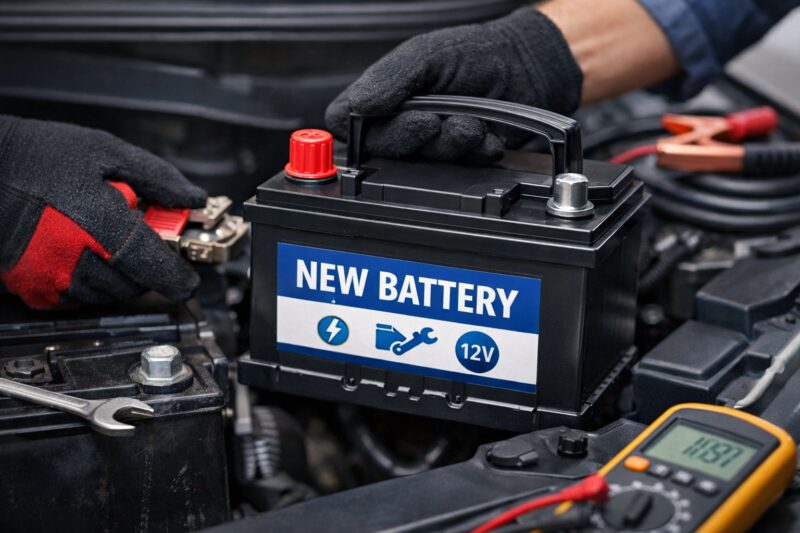
Common mistake: choosing a provider based only on price. The lowest bid might skip testing or install the wrong battery configuration. If you need a decision framework, choose the right shop by prioritizing transparent tests and compatibility documentation.
When you’re comparing providers, prioritize communication quality and risk education. That also supports choose a trusted mechanic behavior: explain the cause, show measurements, and outline options if the charging system looks questionable. A shop that cannot explain what they tested may be more likely to repeat the same guess-and-swap approach.
Common mistakes that cause new batteries to fail again soon
Repeat battery failures often come from missed diagnosis, incorrect fit, or installation errors rather than “bad luck.” Understanding the common mistakes helps you spot red flags before you approve the job.
One frequent problem is skipping diagnostic steps. If the shop installs a new battery without checking whether the charging system recharges correctly, the new unit may drain. Another issue is installing the wrong type or wrong configuration for the vehicle. Even if the battery fits physically, mismatched specs can lead to poor charging behavior and warning lights.
Installation mistakes can also reduce battery life. Loose terminals allow micro-arcing, which creates heat and corrosion over time. Inadequate cleaning can leave residue or oxidation that prevents a solid electrical connection. Using incorrect hardware or adapters can create a weak clamp fit, and that can worsen under vibration.
Practical application: when the shop finishes, ask what they did to inspect and clean the terminals and cables. Severe corrosion at the cable ends may require more than quick wiping. If you see rust that looks embedded, confirm whether the shop inspected for hidden damage and whether they recommended cable replacement if needed.
Environmental and driving factors matter too. Short trips can prevent full recharge, especially if you run heaters, seat warmers, or accessories frequently. Extreme heat can accelerate chemistry aging, while repeated cold starts can stress capacity. These factors do not excuse skipping testing, but they explain why “the car battery replacement services worked yesterday” might not hold up long term.
A common misconception is that battery replacement alone always resets the system and fixes the pattern. In reality, some vehicles may require adaptation steps after replacement, especially when battery sensors are involved. A shop should handle this as part of proper verification, not leave you with unresolved warnings.
if a battery keeps failing, the root cause is often upstream. That can include charging output problems, corroded grounds, or hidden parasitic draw from added accessories. A good provider may ask about recent installs and test for unusual drains when symptoms suggest it.
Use an accurate repair checklist to compare what different shops offer. The best services show their work and avoid “swap and hope” behavior. If you are unsure what questions to ask, the trusted mechanic selection criteria you use for other repairs apply here as well.
Replacement options compared: shop service, mobile help, and roadside fixes
Car battery replacement services can happen in a shop, through mobile assistance, or as a roadside response. The best option depends on how complex the symptoms are and whether charging diagnostics are needed.
In-shop service usually provides the most complete testing and best compatibility verification. Shops can inspect terminals, check cable condition, verify battery type, and run charging checks with the vehicle on proper equipment. This matters when you have warnings, intermittent no-starts, or recurring weak crank symptoms. If the charging system may be suspect, a shop setting can be more reliable.
Mobile/at-your-location assistance can be a good choice when convenience or access is limited. Many mobile techs carry batteries and can install quickly, which helps when you need to restore mobility fast. Tradeoff: mobile service may run fewer diagnostic checks depending on equipment and site conditions. If the symptoms suggest a deeper electrical issue, you may still need an in-shop follow-up.
Roadside jump-start with same-day replacement can help in situations where the primary issue is temporarily low charge. However, it can be risky if the alternator is failing or if there is an underlying electrical drain. Practical application: use roadside replacement when you need immediate power, then schedule a diagnostic visit if the failure pattern repeats.
Part options also vary by provider. Some shops offer economy and premium lines that differ by durability and chemistry adherence to specs. The key is matching the vehicle’s requirements and the warranty terms that support real-world reliability. A battery with a longer warranty may still underperform if it does not match the vehicle’s electrical strategy.
Scheduling and planning matter in 2026 driving conditions. If your vehicle shows multiple dashboard warnings or fails again after a short period, treat that as a sign to test before replacing again. A fast replacement can be correct, but it becomes risky when the true cause is not verified.
When deciding, choose the right shop strategy: if you suspect repeated issues, prioritize diagnostics and documentation over convenience alone. That approach aligns with choosing a trusted mechanic and ensures your next steps stay grounded in measurements.
Edge cases that require extra care during battery replacement
Some symptoms and vehicle configurations require more than standard battery replacement. Extra care helps avoid damaging electronics and prevents repeat failures caused by hidden electrical issues.
Start by separating “no-start” from “starts then dies.” A no-start can indicate a battery that cannot deliver current, while starts-then-dies may suggest voltage drops under load, ground issues, or other control problems. Charging system checks matter for both patterns because a weak alternator can pass at idle and fail under load.
Modern vehicles also include battery sensors and charging regulation strategies that react to replacement events. After installation, the vehicle may expect certain conditions before the system stabilizes. Why it matters: if the battery is not matched correctly or if adaptation steps are missed, the car can show warnings even after a successful mechanical install.
Corrosion severity changes the job. If terminal corrosion is mild, cleaning and sealing may restore a safe connection. If corrosion is severe, the cable ends may be damaged even if they look intact. A good provider evaluates whether cleaning is enough or whether cable replacement is needed.
Accessibility is another hidden variable. Batteries can be under the seat, in the trunk, or in tight engine bay locations. Extra disassembly may be needed, and that increases the chance of missing a careful step if the shop is not experienced. Tradeoffs appear : a cheaper service might skip thorough inspection of surrounding components.
Finally, consider added accessories. Dashcams, alarms, lifts, auxiliary lighting, and other add-ons can create persistent drains or unstable loads. Deeper insight: if you recently installed a new device and the problem began soon after, a provider should ask about it and test for parasitic draw when appropriate.
If you want to evaluate a shop’s readiness for these edge cases, tie it back to choose a trusted mechanic expectations. The shop should explain what extra checks they will run and why. That is often what distinguishes “generic battery swap” from expert car battery replacement services.
Questions to ask before you approve a battery replacement
You should approve a battery replacement only after you know what tests will be run and what compatibility the shop will confirm. A short pre-service checklist helps you avoid surprise charges and repeat failures.
Ask what diagnostics they will perform before replacing anything. For example, confirm whether they will test battery health, check charging output, and inspect terminal and cable condition. This matters because the battery may be a symptom, not the cause.
Next, ask how they confirm compatibility. Request the exact battery specs used, including type and rating where applicable, and confirm terminal orientation. A practical provider uses fit and compatibility checks rather than guessing from a generic catalog.
Then discuss warranty and documentation. Ask for itemized pricing that distinguishes diagnostic fees, parts, and labor. Request written results or at least a summary of test readings, so you can see what passed. Tradeoffs exist: a shop that provides test documentation may charge more, but it also gives you better evidence if something goes wrong later.
Also ask what they will do if they suspect the charging system or wiring is failing. A good provider communicates risk clearly and offers options. For example, they may recommend delaying replacement until charging issues are addressed, or they may replace the battery but schedule charging system repair first.
A common mistake is ignoring warranty wording. Some warranties cover defects in the battery, not issues caused by charging system faults or poor connections. Ask how the shop handles such cases and whether they will stand behind the diagnosis. This is where trusted mechanic selection thinking matters: strong documentation and clear policy prevent disputes.
Use this accurate repair checklist mindset when you call or arrive. If you cannot get answers in plain language, consider choosing another provider. Your questions should force clarity before the work begins.
What happens during expert car battery replacement services
A professional service starts with diagnosing the no-start or weak-start symptoms, then installs a correctly matched battery and verifies the result. The goal is safe installation plus proof that the vehicle is healthy afterward.
In a typical , the technician performs electrical checks to confirm battery condition and evaluate the charging system. They also inspect the terminals and cable connections for corrosion or damage. Then they select the correct replacement based on your vehicle’s requirements, not just the battery’s physical fit.
After safe removal and installation, the technician confirms proper connection torque and cable routing. This reduces heat buildup and protects against vibration-related failures. Finally, they perform post-install testing to verify that the battery holds charge and the vehicle starts reliably.
Practical application: you can ask for a summary of the readings or at least a description of what passed and what did not. You should also ask whether they checked charging output, not only battery voltage at rest. Tradeoffs exist if you choose roadside or minimal service; those options can skip deeper verification.
Real-world scenario: you replace a battery and still see warnings after installation. If the shop properly verifies charging and confirms system behavior, the warning may clear after correct procedures. If they skipped verification, you may be forced into repeat diagnostics quickly.
Some providers also align with choose the right shop standards by documenting compatibility and testing. That documentation helps with warranty claims and supports more informed follow-up decisions.
How to tell if you need a new battery or charging system repair
You can often tell by the pattern of symptoms and the results of electrical tests, not by guessing. Technicians confirm whether the battery failed or whether a charging problem caused the failure.
If the car struggles to crank after sitting, a battery that lost capacity is common. If the battery fails again shortly after replacement, that points to a charging system fault or electrical drain. Why it matters: replacing the battery without fixing the cause turns a one-time repair into an ongoing expense.
How it works in practice is test-driven. Shops typically check battery health first, then check charging output under load. They may also inspect grounds and wiring connections where voltage drops can occur. Then they recommend either battery replacement alone or additional charging-related repairs.
Practical application: ask your provider what tests show that the alternator or voltage regulation is passing. If they do not run charging checks, request them before approving replacement. Tradeoffs: thorough diagnosis can take more time and may include a diagnostic fee, but it reduces the odds of repeat failures.
Edge case: “starts then dies” can indicate voltage drops or other control faults beyond the battery itself. Another nuance is that accessories, aftermarket installs, and unusual drains can lower battery charge even if the alternator output looks normal. A good shop considers these possibilities before concluding the battery is the only issue.
To evaluate whether the provider is truly thorough, compare their approach to an accurate repair checklist. The strongest services explain cause-and-effect and share test outcomes. That is also consistent with trusted mechanic selection.
A bad alternator can still ruin a new battery
Yes, a failing alternator or charging regulation problem can quickly drain a brand-new battery. That is why expert car battery replacement services include verification of charging behavior.
Alternators generate power while the engine runs and keep the battery charged. If output is low, the battery compensates until it drops again. This can cause repeat no-start events, even when the battery itself is new and correctly installed.
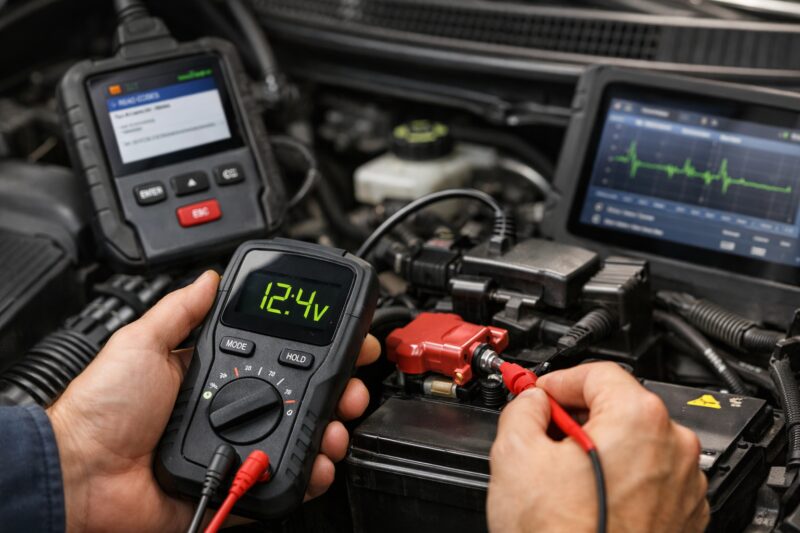
How technicians prevent this problem is by checking charging output and evaluating system stability. They look for voltage levels under different operating conditions and confirm the vehicle maintains charge during normal use. Why it matters: a correct installation cannot overcome a charging system defect.
Practical application: if your car previously had charging warnings or the battery needed frequent jumps, assume the alternator might be involved. Ask the shop whether they tested the charging system and what the readings showed. Tradeoffs exist if you choose a fast swap without diagnostics; you may be back at the shop soon.
Real-world scenario: after a battery replacement, your headlights dim at idle, or you see charging-related dashboard alerts. Those signs often mean the alternator is not delivering stable output. A good provider addresses the alternator root issue rather than only replacing the battery.
Common mistake: treating repeat battery failures as proof of poor battery quality. In many cases, the electrical system causes the failure. Deeper insight: corroded grounds and wiring issues can mimic alternator problems, so a complete check matters.
For choosing service providers that verify cause rather than guess, use choose a trusted mechanic standards. The shop should connect test results to recommendations and explain what they ruled out.
Will replacing the battery reset electronics or clear warnings
Battery replacement can clear some warnings, but it depends on how the vehicle manages its sensors and power systems. Many cars do not need special resets, while others may require procedure steps after replacement.
When power interruptions happen, modules can log faults or switch into safe states. After a correct replacement and proper charging stabilization, some warnings may disappear. Why it matters: if warnings remain, it can indicate a compatibility mismatch, an unresolved charging issue, or incomplete post-install procedures.
How it works varies by vehicle. Some systems relearn sensor values gradually during normal driving, while others may expect a service procedure. A reputable shop should explain what you should expect, including the possibility of warning lights that may clear once the vehicle completes stabilization.
Practical application: ask the provider whether they performed any battery-sensor alignment steps where applicable. Also ask what warnings to watch for after the install and when you should return if they persist. Tradeoffs: shops focused only on physical installation may not manage electronic behavior beyond basic checks.
Real-world scenario: the battery swap finishes, then the radio presets or clock reset. That is common after power loss, and it does not always signal a problem. But a persistent battery, charging, or drivetrain warning may mean deeper verification is needed.
A deeper insight is that not all warning behaviors are caused by the battery itself. Charging instability or voltage drops can trigger repeated faults. That returns us to the need for final testing and documentable verification.
If you are comparing providers, choose the right shop by prioritizing clear communication about electronics outcomes. This reduces uncertainty after installation and supports informed decisions if more work is needed.
AGM vs. standard lead-acid batteries for replacement decisions
AGM batteries and standard lead-acid batteries differ in design and suitability for some vehicles. Correct replacement means matching the battery’s chemistry category to the vehicle’s requirements.
AGM, or absorbed glass mat, uses internal separators that hold electrolyte in place. This design can help support certain charging strategies and vibration resistance. Standard lead-acid batteries use a different internal construction and may not meet the same requirements for vehicles that expect AGM behavior.
Why it matters: using the wrong type can lead to poor charging response, warning lights, or reduced longevity. How it works is that the vehicle may regulate charge differently based on battery design and expected capacity behavior. A correct service confirms the battery type your vehicle is intended to use, then installs the matching option.
Practical application: ask the shop to explain which type they install and why it matches your vehicle. If your vehicle uses AGM in its specifications, prioritize that matching chemistry. Tradeoffs: AGM options can cost more, but they are often the correct choice for vehicles that manage charge tightly.
Edge case: some vehicles with start-stop features or heavy electrical loads may have stricter battery requirements. If a shop installs a cheaper battery that “fits,” you may see repeat failure patterns. Another nuance is that terminal design and fit hardware can differ, so installation details also matter.
To avoid mistakes, choose a trusted mechanic who verifies compatibility through specs, not assumptions. This aligns with accurate repair checklist thinking and reduces the risk of mismatched battery chemistry.
Is it safe to replace a car battery yourself, or should you use a shop
Replacing a car battery yourself can be done safely, but many hazards make professional service the better choice. You may also risk damaging electronics if you disconnect or connect components incorrectly.
Battery replacement involves high current connections that can arc if tools touch the wrong terminal. It also involves chemical hazards from battery acid, especially if the battery case is damaged or leaking. In modern cars, modules and sensitive wiring layouts add complexity beyond older vehicles.
How professional service improves safety is straightforward. Technicians follow safe handling steps, protect terminals, and ensure correct cable routing. They also inspect for corrosion and verify the right battery match before final verification. Why it matters: safety plus correct compatibility reduces the odds of repeat problems.
Practical application: if you are comfortable handling mechanical tasks and have proper safety equipment, DIY may be possible. However, if your vehicle has battery sensors, unusual placement, or multiple warning lights, professional handling becomes more valuable. Tradeoffs: DIY can save labor costs, but you may lose diagnostic certainty and warranty support.
Real-world scenario: a DIY installer reconnects terminals with the wrong polarity or loosely clamps a terminal. The car may start, but it can fail soon due to heat and poor electrical contact. Another mistake is using the wrong battery type or group size, which can trigger warnings or charging behavior changes.
If you want to reduce risk, choose the right shop with a clear process and documented outcomes. That is consistent with choose a trusted mechanic behavior and helps protect both your vehicle and your time.
What to do immediately if your car won’t start after battery replacement
If your car won’t start after a battery replacement, re-check the basics first and then return for diagnostics. Safety comes first, especially because loose connections can create heat and arcing risks.
Start with immediate safety steps. Keep the hood secured, avoid shorting tools across terminals, and watch for signs of overheating. Then re-check terminal seating and clamp tightness if you have trained experience. If you do not, let the shop address it because they should have validated connections during installation.
Why this matters: a no-start after installation can come from incorrect fit, a poor terminal connection, or failure to complete proper electrical verification. It can also indicate the charging system never got addressed, especially if the vehicle showed recurring issues before the replacement.
Practical application: if the engine cranks weakly or makes new warning noises, note those details for the service . Ask the provider to retest battery condition and charging output, not just confirm the new battery’s physical presence. Tradeoffs: some cars start on the second attempt if the first crank was under load, but that does not replace verification.
Edge case: if you experience “starts then dies,” it can involve voltage stability or grounds rather than battery capacity alone. Another nuance: some electronic modules may behave oddly after power interruption and require stabilization. Still, a reputable shop should interpret the symptoms and rerun tests.
Use trusted mechanic selection standards: the provider should stand behind the installation and check what could have changed. If they ask you to wait without re-testing, request a documented electrical check before leaving again.
How long professional battery installation takes and when it may take longer
Most professional battery installations are completed within a short , but time varies based on testing and vehicle complexity. Expect a longer visit when corrosion is severe, access is difficult, or deeper charging diagnostics are needed.
For many cars, the replacement itself is quick once the correct battery is ready. The real time cost is often in diagnosis, terminal inspection, and post-install testing. Why it matters: good verification prevents repeat failures and avoids charging system blind spots.
How it works depends on the service category. In-shop jobs with full diagnostic equipment can confirm battery health and charging output in one . Mobile replacements may be faster for installation but may require follow-up testing if symptoms suggest deeper electrical issues.
Practical application: ask the provider what tasks they include in “battery replacement,” and whether they plan to test beyond basic voltage. Tradeoffs exist: a faster appointment can help if the only goal is a working vehicle today. But if the vehicle has warning lights, recurring no-start symptoms, or accessory drain concerns, additional time is justified.
Real-world scenario: a battery in the trunk or under-seat may require additional disassembly. Severe terminal corrosion can also add time because cleaning or cable replacement may be required. Another nuance is vehicles with battery sensors that may need stabilization steps after replacement.
For timeline expectations, a shop should give a realistic range when you schedule. If your symptoms are complex, ask whether they will start with diagnostic-first steps rather than immediately installing. This helps align expectations and supports choosing the right shop.
Do battery replacement services include terminal cleaning and cable inspection
Professional battery replacement should include terminal cleaning and cable inspection as part of safe, reliable installation. If corrosion is present, cleaning and inspection help prevent loose connections and hidden damage.
Terminals often develop oxidation over time. That corrosion increases resistance at the connection point and can cause heat and voltage drops. Cable ends can also corrode internally where the clamp meets the wire, which means surface cleaning alone may not fix the electrical contact.

How it works in a quality service is a visual and physical check of terminals and cable ends before and after cleaning. The technician should inspect clamp condition, cable routing, and grounding connections where accessible. Why it matters: a clean, solid electrical connection supports stable charging and reduces the chance the new battery fails early.
Practical application: ask whether they will remove corrosion, check cable integrity, and verify the clamp fit. If corrosion is severe, ask whether they recommend replacing the cable or addressing grounds. Tradeoffs exist: some low-cost services may do minimal cleaning, which can reduce reliability.
Real-world scenario: a battery is replaced, but two weeks later you get a weak-crank issue again. In many cases, the root problem is a persistent connection resistance from corrosion at the cable end or a loose clamp. A shop that performs inspection reduces this risk.
A deeper insight is that cleaning also helps the technician confirm whether the underlying metal is healthy. If it is not, the correct repair may extend beyond battery replacement.
Use an accurate repair checklist mindset to compare service offerings. Choosing a trusted mechanic means the shop can explain what they inspected and what they found, not just what they replaced.
Preventing premature battery failure after installation in 2026 driving conditions
You can prevent premature failure by matching driving habits and accessory use to how batteries recharge and handle load. Proper aftercare helps the new battery reach full charge cycles and avoid chronic undercharging.
Start with driving pattern realities. Frequent short trips can prevent full recharge, especially if you use headlights, defrosters, or cabin heat often. In colder or warmer extremes, batteries can lose usable capacity faster. Why it matters: undercharging stresses battery chemistry and increases the chance of repeated no-start events.
Next, check accessory drains. If you use dashcams, aftermarket alarms, or portable devices frequently, they can increase parasitic draw or create intermittent loads. Practical application: mention any recent add-ons to your shop, especially if the issue started after installing them.
Also watch warning behavior. If you see charging-related lights, persistent battery warnings, or unusual dimming, schedule a charging system check before the battery fully fails again. Tradeoffs exist: you may be tempted to keep replacing batteries, but the real fix is often electrical system stability.
Real-world scenario: a vehicle sits for days while parked, then starts weakly. If it requires jumps repeatedly, test for parasitic draw and charging stability rather than only replacing batteries. Another nuance is that long-term inactivity plus accessory drains can create a “slow failure” pattern.
after replacement, allow the vehicle to stabilize and confirm charging behavior with basic checks. If you hear repeated clicking or feel sudden crank weakness, treat it as a sign to investigate early.
When you want a provider who considers these details, choose the right shop with diagnostic-first thinking. That aligns with choose a trusted mechanic expectations and helps ensure your battery survives the way you actually drive.
What to look for in a warranty from a battery replacement provider
A strong warranty should cover both the battery and the installation work, with clear terms for defects and cause. The best providers explain how warranty claims work and what they document during service.
Start by separating parts coverage from labor coverage. Some warranties cover battery defects only, while labor coverage may be limited if the issue was caused by charging or installation problems. Ask whether the warranty applies if a repeat failure occurs due to a diagnosed electrical fault. Why it matters: you want protection for both the product and the service quality.
Next, request clarity on proof requirements. A provider should be able to supply documentation, such as battery specs used and test results. That makes claims faster and helps you avoid delays. Practical application: if they give you no paperwork or vague service notes, treat that as a warning sign.
Tradeoffs exist because longer warranties do not always guarantee reliability if the battery is mismatched or the charging system is failing. That is why warranty terms should align with a provider’s diagnostic responsibility. A shop that verifies cause and documents results supports better warranty outcomes.
Real-world scenario: you replace a battery and it fails early. If the shop finds alternator output is low and agrees the condition is part of warranty eligibility, you should see a clear resolution path. If they never tested charging, warranty claims can become complicated.
the most useful warranty is the one paired with an accurate repair checklist and transparent test documentation. This is where trusted mechanic selection makes a difference.
For general guidance on choosing reputable repair help and understanding consumer protections, you can also review resources from FTC about consumer rights. For battery safety basics, consult OSHA guidance on electrical hazards and safe workplace practices.
Frequently Asked Questions About Expert Car Battery Replacement Services
How much do expert car battery replacement services cost in 2026?
Prices vary based on your vehicle’s battery type, accessibility, and how much diagnostic testing is included. Many providers charge more when they also test charging output and inspect cables due to corrosion or repeated no-start symptoms. You can usually expect a wider range when the shop needs additional electrical checks before approving replacement. Ask for an itemized quote that separates parts, labor, and any diagnostic fee.
What’s the expected timeline for car battery replacement services in 2026?
Typical installs are often completed in a single , but timelines vary by shop workload and diagnosis needs. Simple replacements can be quick, while cases with warnings, heavy corrosion, or suspected charging issues may take longer for testing and verification. Mobile service may be faster for installation, yet follow-up testing can extend the overall timeline. Ask the provider for a realistic time range based on your symptoms and vehicle access.
What happens during a professional car battery replacement service?
A professional service starts with diagnosing the symptom, then safely removes the old battery. The technician installs the correct replacement based on fit and vehicle requirements. After installation, they run post-install checks to confirm stable starting and charging behavior.
How do I know if I need just a new battery or also charging system repair?
Technicians differentiate battery failure from charging problems using battery health checks and charging output tests. If the alternator or voltage regulation does not maintain proper voltage, the charging system may need repair. Some “new battery” failures happen quickly when the charging system is the true root cause.
Can a bad alternator still cause the new battery to fail?
Yes. If the alternator output is weak or unstable, the battery can drain again even after a new install. A good provider checks charging behavior as part of verification, not only battery voltage at rest.
Will replacing my battery reset any vehicle electronics or warnings?
Some settings may reset after power interruption, such as clock and radio presets. Warnings may clear after the vehicle stabilizes, but persistent charging or battery warnings can indicate a deeper issue or a missing procedure. Ask your provider what warnings to expect and when to return.
What’s the difference between an AGM battery and a standard lead-acid battery?
An AGM battery uses an absorbed glass mat to hold electrolyte and can suit vehicles that expect AGM charging behavior. Standard lead-acid batteries use a different internal structure and may not match vehicles that require AGM strategy. Matching the right type helps prevent repeat warning lights or early failure.
Is it safe to replace a car battery myself, or should I use a shop?
DIY can be risky because terminals can short and batteries can leak acid if mishandled. Modern vehicles also have sensitive electronics that benefit from professional procedures. A shop reduces the odds of loose connections, incorrect fit, or missed diagnostic causes.
What should I do immediately if my car won’t start after a battery replacement?
First, avoid repeated attempts if you see unusual sparks or overheating at the terminals. Check for obvious connection issues only if you are confident, then return to the shop for electrical re-checks. Ask them to test battery condition and charging output rather than assuming the new battery is bad.
How long does professional battery installation take, and when should I expect more time?
Most installations can be done within a standard , but time increases with severe corrosion or difficult battery access. More time is common when the shop performs deeper diagnostics for charging system concerns. If the technician must inspect cables or run multiple electrical tests, plan for longer service.
Do car battery replacement services include terminal cleaning and inspection of cables?
Reputable services inspect terminals and cables and clean corrosion before clamping. If corrosion is severe or cable damage is found, they may recommend additional repair beyond cleaning. Terminal cleaning helps maintain a low-resistance connection and supports stable starting and charging.
How can I prevent premature battery failure after installation in 2026 driving conditions?
Drive patterns matter because short trips can prevent full recharge, especially with frequent accessory use. Mention aftermarket add-ons like alarms or dashcams so the shop can consider parasitic draw when symptoms fit. If charging warnings or dimming appear, schedule a charging system check early.
What should I look for in a warranty offered by a battery replacement provider?
Look for clear coverage that addresses both the battery and installation labor where applicable. Ask whether the warranty covers defects only or also addresses failures tied to the charging system or installation process. Documentation of the battery specs used and test results supports smoother warranty claims.
Conclusion: how to get reliable starting power from true expert replacement
Expert car battery replacement services deliver reliable starting power by verifying the cause, matching the correct battery, and confirming vehicle health afterward. The best work includes safe installation, terminal and cable inspection, and final testing so you do not just “get a start,” you get dependable charging.
Your decision should follow a clear path. Choose the provider that can explain what they tested, which specs they used, and what warranty covers parts and labor. Use questions to guide approvals and compare what different shops include, especially charging system verification and post-install outcomes.
When you need to schedule, consider whether you truly need diagnosis-first service or just immediate replacement. If symptoms point to charging issues, repeat warnings, or accessory drains, it is smarter to get testing than to replace again. Start by choosing a provider with the accurate repair checklist mindset and trusted mechanic selection standards, and you’ll be far more likely to avoid repeat failures.
Updated September 2026